프로젝트 GitHub에서 보기
xcmyz/FastSpeech
xcmyz/FastSpeech has 884 GitHub stars and 212 forks. GitHot measured 0 stars in 24 hours. Last checked 2026-11-17 01:56 UTC. Last push 2023-07-06.
측정된 스타 증가
- in 24h
- 0
- in 7 days
- 업데이트 지연
- in 15 days
- 업데이트 지연
- in 1 month
- 업데이트 지연
서로 겹치는 기간의 순증가량이며 일별 합계가 아닙니다. 측정값이 없으면 비워 둡니다. 스타는 관심도를 나타내며 품질을 보장하지 않습니다.
소개
The Implementation of FastSpeech based on pytorch.
머신러닝README.md
OriginalFastSpeech-Pytorch
The Implementation of FastSpeech Based on Pytorch.
Update (2020/07/20)
- Optimize the training process.
- Optimize the implementation of length regulator.
- Use the same hyper parameter as FastSpeech2.
- The measures of the 1, 2 and 3 make the training process 3 times faster than before.
- Better speech quality.
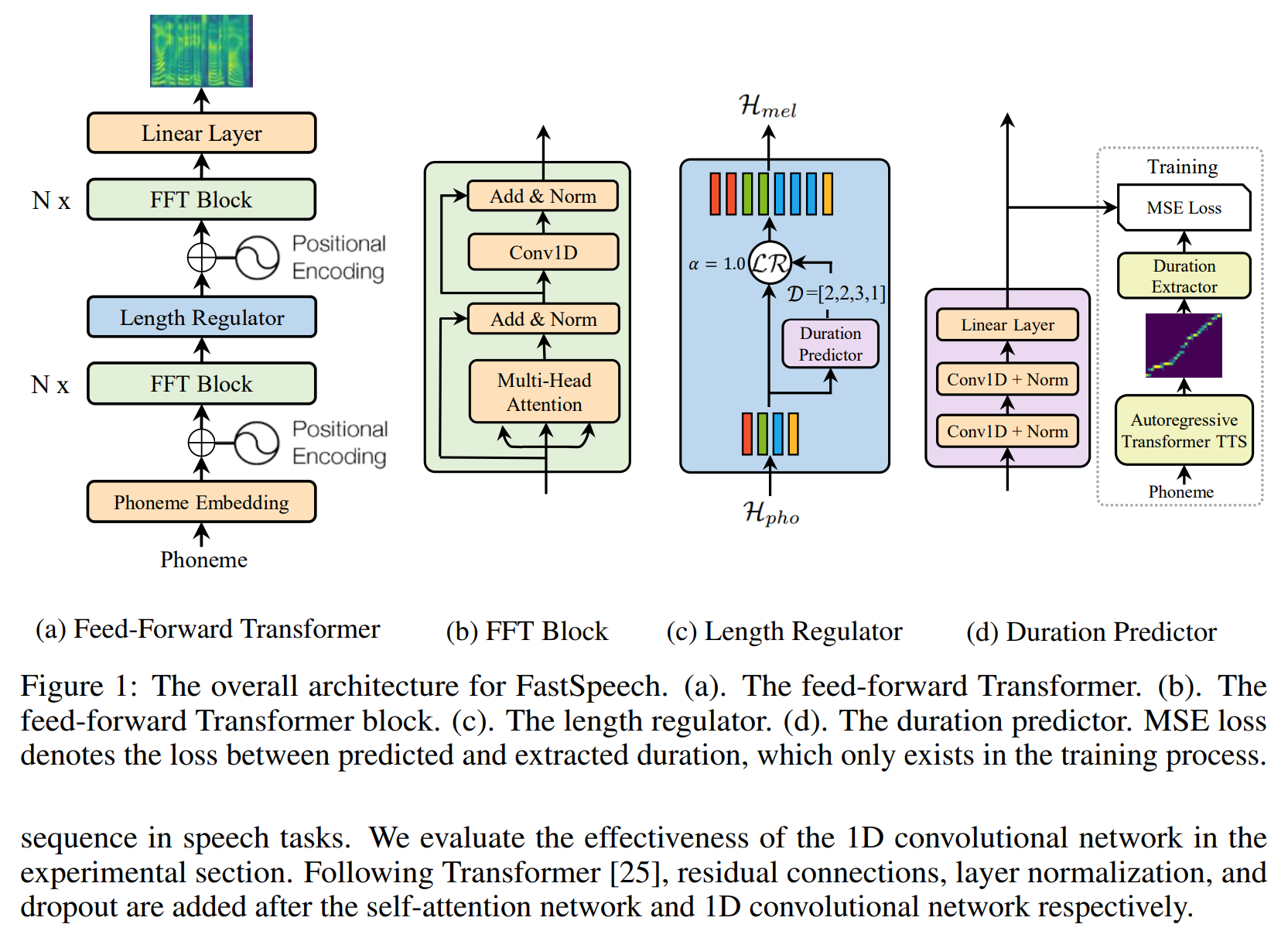
Model
My Blog
Prepare Dataset
- Download and extract LJSpeech dataset.
- Put LJSpeech dataset in
data. - Unzip
alignments.zip. - Put Nvidia pretrained waveglow model in the
waveglow/pretrained_modeland rename aswaveglow_256channels.pt; - Run
python3 preprocess.py.
Training
Run python3 train.py.
Evaluation
Run python3 eval.py.
Notes
- In the paper of FastSpeech, authors use pre-trained Transformer-TTS model to provide the target of alignment. I didn't have a well-trained Transformer-TTS model so I use Tacotron2 instead.
- I use the same hyper-parameter as FastSpeech2.
- The examples of audio are in
sample. - pretrained model.
Reference
Repository
- The Implementation of Tacotron Based on Tensorflow
- The Implementation of Transformer Based on Pytorch
- The Implementation of Transformer-TTS Based on Pytorch
- The Implementation of Tacotron2 Based on Pytorch
- The Implementation of FastSpeech2 Based on Pytorch