
plantnet/PlantNet-300K
plantnet/PlantNet-300K has 269 GitHub stars and 43 forks. GitHot measured 0 in 7 days. Last checked 2026-11-18 04:44 UTC. Last push 2026-10-30.
측정된 스타 증가
- in 24h
- 업데이트 지연
- in 7 days
- 0
- in 15 days
- 기록 수집 중
- in 1 month
- 기록 수집 중
서로 겹치는 기간의 순증가량이며 일별 합계가 아닙니다. 측정값이 없으면 비워 둡니다. 스타는 관심도를 나타내며 품질을 보장하지 않습니다.
소개
[NeurIPS2021] A plant image dataset with high label ambiguity and a long-tailed distribution
머신러닝README.md
OriginalPl@ntNet-300K
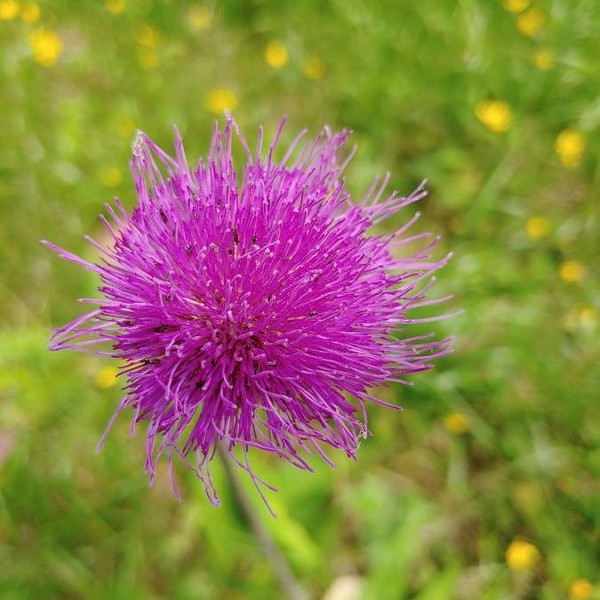
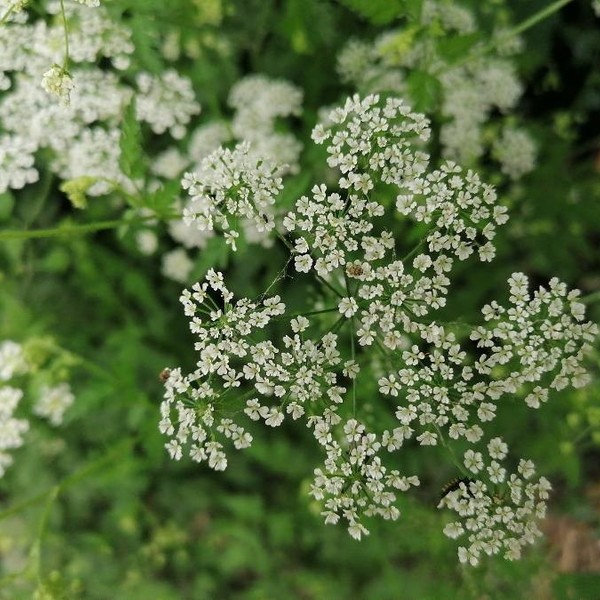

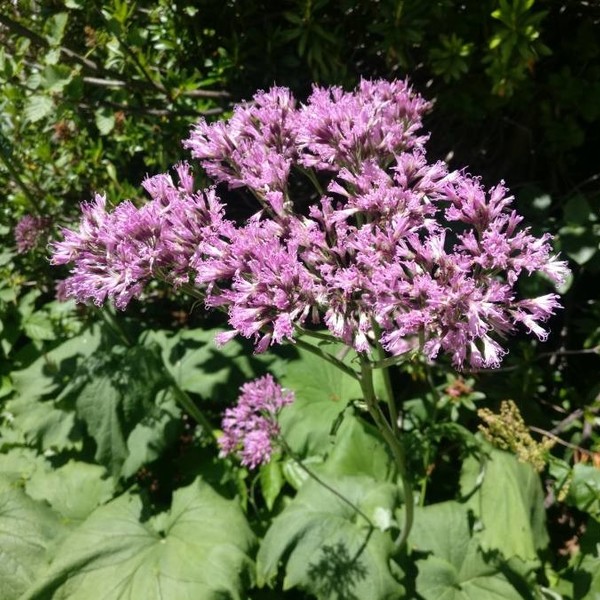
This repository contains training and inference code for Pl@ntNet-300K-v2.
The current models fine-tune recent DINOv3
ConvNeXt and Vision Transformer backbones, initialized from the LVD-1689M
pretrained weights. The original Pl@ntNet-300K-v1 benchmark code is preserved
in legacy_v1/.
Dataset
Pl@ntNet-300K-v2 contains 306,087 images from 1,000 plant species. It retains the long-tailed class distribution and high visual ambiguity of the original dataset while providing improved images resolution and species names.
The v2 dataset root must have the following layout:
plantnet300kv2/
├── images/
│   ├── train/0000/ ... 0999/
│   ├── val/0000/   ... 0999/
│   └── test/0000/  ... 0999/
├── plantnet300K_metadata.csv
└── species_metadata.csv
plantnet300K_metadata.csv associates each image hash with its numerical
species_id, split, author, license, organ, and Pl@ntNet observation. The
species_metadata.csv file maps the 1,000 species identifiers to their
scientific names, genus, family, and IUCN status. Please respect the per-image
license and attribution information when reusing images.
Installation
Python 3.10 or newer is recommended.
git clone https://github.com/plantnet/PlantNet-300K.git
cd PlantNet-300K
pip install -r requirements.txt
The DINOv3 initialization weights are downloaded from Hugging Face the first
time an architecture is constructed. They are license-gated: accept the DINOv3
license on the corresponding model page and authenticate once with
hf auth login before training or loading a model.
Fine-tuning
For example, train DINOv3 ConvNeXt-Tiny on Pl@ntNet-300K-v2 with:
python main.py \
  --model cnxt \
  --data_dir /path/to/plantnet300kv2 \
  --ckpt_dir ./checkpoints
Available architectures are:
| CLI name | Architecture | DINOv3 initialization |
|---|---|---|
cnxt |
ConvNeXt-Tiny | facebook/dinov3-convnext-tiny-pretrain-lvd1689m |
cnxs |
ConvNeXt-Small | facebook/dinov3-convnext-small-pretrain-lvd1689m |
cnxb |
ConvNeXt-Base | facebook/dinov3-convnext-base-pretrain-lvd1689m |
vits |
ViT-S/16 | facebook/dinov3-vits16-pretrain-lvd1689m |
vitsplus |
ViT-S+/16 | facebook/dinov3-vits16plus-pretrain-lvd1689m |
vitb |
ViT-B/16 | facebook/dinov3-vitb16-pretrain-lvd1689m |
The main options are:
| Argument | Default | Description |
|---|---|---|
--data_dir |
required | Pl@ntNet-300K-v2 root |
--model |
required | One of cnxt, cnxs, cnxb, vits, vitsplus, or vitb |
--ckpt_dir |
./checkpoints |
Checkpoint output directory |
--device |
cuda |
Training device |
--batch_size |
256 |
Batch size |
--num_workers |
32 |
Data-loading workers |
--epochs |
30 |
Fine-tuning epochs |
Additional optimization, augmentation, evaluation, and logging arguments are
documented in args.py.
Add --wandb to log the run to Weights & Biases. Use
--wandb_projname, --wandb_entity, and --wandb_tmpdir to configure it.
Fine-tuned models
All models below were trained with the provided code on the 1,000-class v2 dataset. Accuracy is top-1.
The complete release is available in the Pl@ntNet-300K-v2 Hugging Face collection. The links in the table provide alternate direct checkpoint downloads.
| Model | Best validation accuracy | Test accuracy | Weights |
|---|---|---|---|
| CNX-T | 0.8248 | 0.8216 | Download |
| CNX-S | 0.8303 | 0.8296 | Download |
| CNX-B | 0.8358 | 0.8331 | Download |
| ViT-S | 0.8296 | 0.8297 | Download |
| ViT-S+ | 0.8328 | 0.8293 | Download |
| ViT-B | 0.8462 | 0.8457 | Download |
Loading a model and extracting embeddings
load_model constructs the requested DINOv3 architecture, loads a fine-tuned
checkpoint, moves it to the selected device, and enables evaluation mode. A
forward pass returns both the image embedding and the 1,000 classifier logits.
from pathlib import Path

import pandas as pd
import torch
from PIL import Image

from model import load_model
from transforms import ValTransform

device = "cuda" if torch.cuda.is_available() else "cpu"
data_dir = Path("/path/to/plantnet300kv2")
model = load_model("cnxt", "/path/to/plantnet300kv2_cnxt.pth", device=device)
transform = ValTransform()

image = transform(Image.open("images/1.jpg").convert("RGB"))
images = image.unsqueeze(0).to(device)

with torch.inference_mode():
    embeddings, logits = model(images)

predicted_species_id = logits.argmax(dim=1).item()
species_metadata = pd.read_csv(data_dir / "species_metadata.csv")
species_name = species_metadata.loc[
    species_metadata["species_id"] == predicted_species_id,
    "full_species",
].item()

print(f"Predicted species: {species_name} (ID: {predicted_species_id:04d})")
The outputs are also named, so output.embeddings and output.logits can be
used instead of tuple unpacking. Class indices follow sorted species_id order;
for v2 this is 0000 through 0999. Use species_metadata.csv to recover the
corresponding species name.
Citation
For the Pl@ntNet-300K dataset, please cite:
@inproceedings{plantnet-300k,
  author    = {Garcin, Camille and Joly, Alexis and Bonnet, Pierre and
               Lombardo, Jean-Christophe and Affouard, Antoine and
               Chouet, Mathias and Servajean, Maximilien and
               Lorieul, Titouan and Salmon, Joseph},
  booktitle = {NeurIPS Datasets and Benchmarks 2021},
  title     = {{Pl@ntNet-300K}: a plant image dataset with high label
               ambiguity and a long-tailed distribution},
  year      = {2021}
}
For the training configuration, please cite:
@misc{moummad2026,
  title         = {Energy-Efficient Plant Monitoring via Knowledge Distillation},
  author        = {Ilyass Moummad and Reda Bensaid and Kawtar Zaher and
                   Hervé Goëau and Jean-Christophe Lombardo and Joseph Salmon and
                   Pierre Bonnet and Alexis Joly},
  year          = {2026},
  eprint        = {2604.27178},
  archivePrefix = {arXiv},
  primaryClass  = {cs.CV},
  url           = {https://arxiv.org/abs/2604.27178}
}