
hardmaru/write-rnn-tensorflow
hardmaru/write-rnn-tensorflow has 701 GitHub stars and 164 forks. GitHot measured 0 stars in 24 hours and 0 in 7 days. Last checked 2026-11-21 09:33 UTC. Last push 2018-02-10.
측정된 스타 증가
- in 24h
- 0
- in 7 days
- 0
- in 15 days
- 기록 수집 중
- in 1 month
- 기록 수집 중
서로 겹치는 기간의 순증가량이며 일별 합계가 아닙니다. 측정값이 없으면 비워 둡니다. 스타는 관심도를 나타내며 품질을 보장하지 않습니다.
소개
Generative Handwriting using LSTM Mixture Density Network with TensorFlow
머신러닝README.md
OriginalGenerative Handwriting Demo using TensorFlow
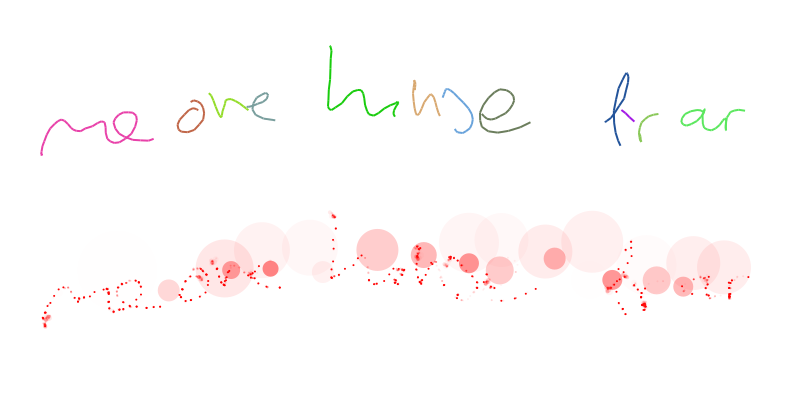
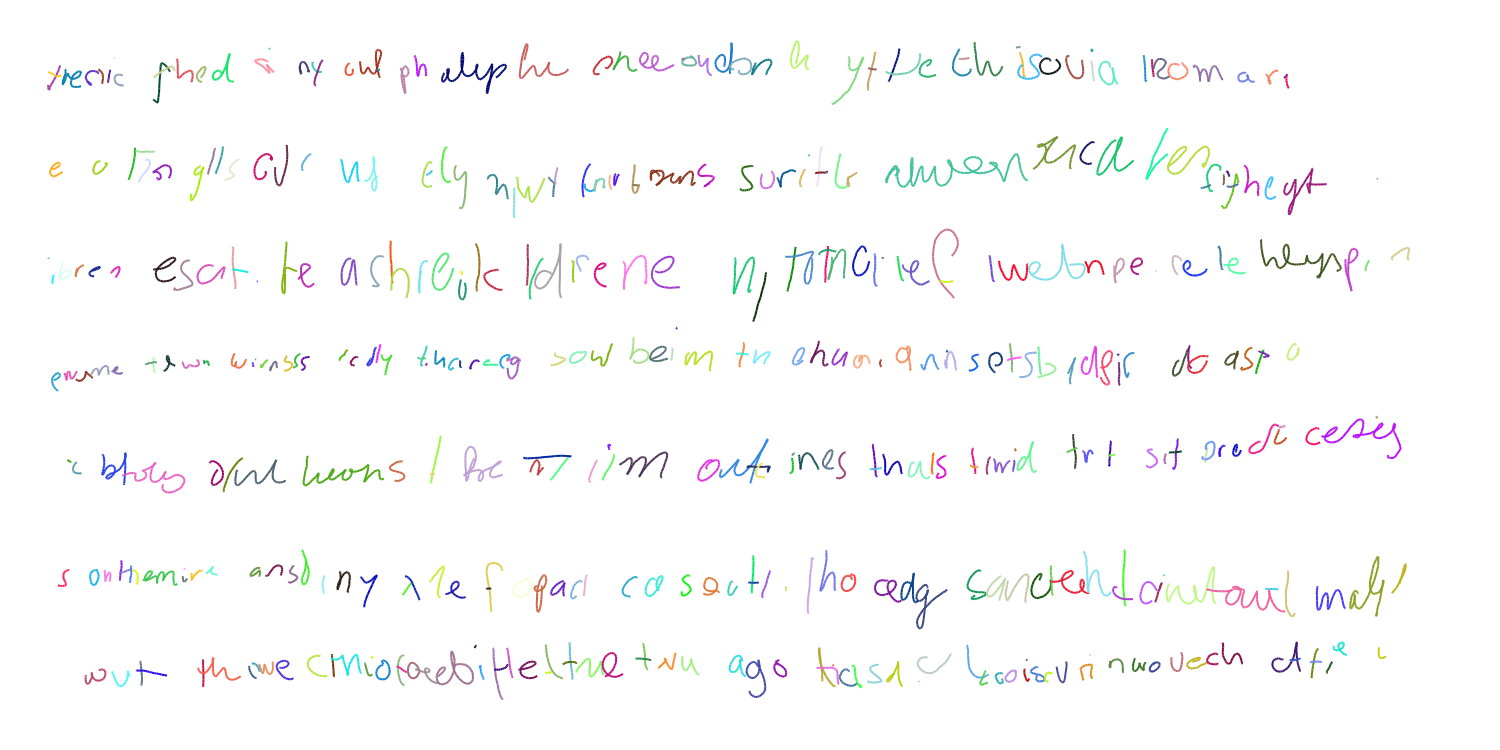
An attempt to implement the random handwriting generation portion of Alex Graves' paper.
See my blog post at blog.otoro.net for more information.
How to use
I tested the implementation on TensorFlow r0.11 and Pyton 3. I also used the following libraries to help:
svgwrite
IPython.display.SVG
IPython.display.display
xml.etree.ElementTree
argparse
pickle
Training
You will need permission from these wonderful people people to get the IAM On-Line Handwriting data. Unzip lineStrokes-all.tar.gz into the data subdirectory, so that you end up with data/lineStrokes/a01, data/lineStrokes/a02, etc. Afterwards, running python train.py will start the training process.
A number of flags can be set for training if you wish to experiment with the parameters. The default values are in train.py
--rnn_size RNN_SIZE             size of RNN hidden state
--num_layers NUM_LAYERS         number of layers in the RNN
--model MODEL                   rnn, gru, or lstm
--batch_size BATCH_SIZE         minibatch size
--seq_length SEQ_LENGTH         RNN sequence length
--num_epochs NUM_EPOCHS         number of epochs
--save_every SAVE_EVERY         save frequency
--grad_clip GRAD_CLIP           clip gradients at this value
--learning_rate LEARNING_RATE   learning rate
--decay_rate DECAY_RATE         decay rate for rmsprop
--num_mixture NUM_MIXTURE       number of gaussian mixtures
--data_scale DATA_SCALE         factor to scale raw data down by
--keep_prob KEEP_PROB           dropout keep probability
Generating a Handwriting Sample
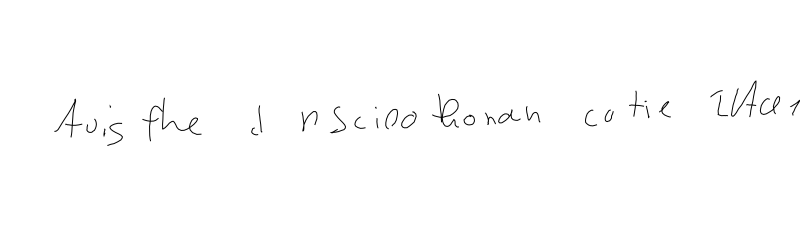
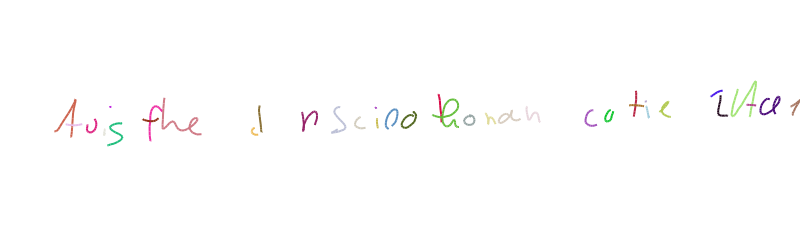
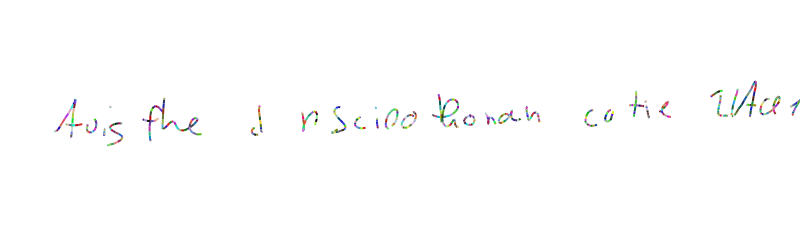
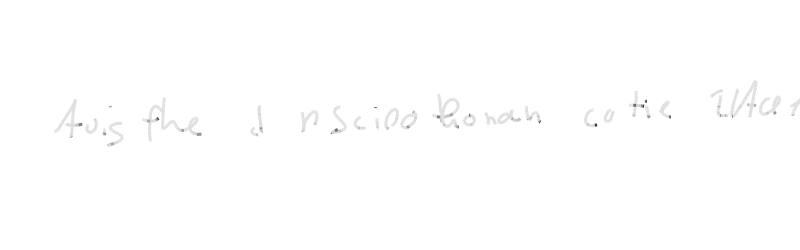
I've included a pretrained model in /save so it should work out of the box. Running python sample.py --filename example_name --sample_length 1000 will generate 4 .svg files for each example, with 1000 points.
IPython interactive session.
If you wish to experiment with this code interactively, just run %run -i sample.py in an IPython console, and then the following code is an example on how to generate samples and show them inside IPython.
[strokes, params] = model.sample(sess, 800)
draw_strokes(strokes, factor=8, svg_filename = 'sample.normal.svg')
draw_strokes_random_color(strokes, factor=8, svg_filename = 'sample.color.svg')
draw_strokes_random_color(strokes, factor=8, per_stroke_mode = False, svg_filename = 'sample.multi_color.svg')
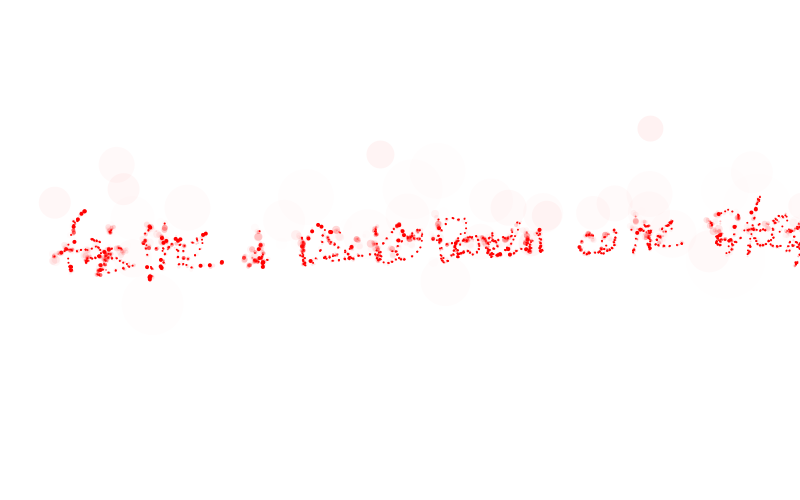
draw_strokes_eos_weighted(strokes, params, factor=8, svg_filename = 'sample.eos.svg')
draw_strokes_pdf(strokes, params, factor=8, svg_filename = 'sample.pdf.svg')
Have fun-
License
MIT