프로젝트 GitHub에서 보기
XinArkh/VNect
XinArkh/VNect has 251 GitHub stars and 42 forks. GitHot measured 0 stars in 24 hours. Last checked 2026-11-21 20:25 UTC. Last push 2024-07-24.
측정된 스타 증가
- in 24h
- 0
- in 7 days
- 기록 수집 중
- in 15 days
- 기록 수집 중
- in 1 month
- 기록 수집 중
서로 겹치는 기간의 순증가량이며 일별 합계가 아닙니다. 측정값이 없으면 비워 둡니다. 스타는 관심도를 나타내며 품질을 보장하지 않습니다.
소개
Real-time 3D human pose estimation, implemented by tensorflow
머신러닝README.md
OriginalVNect
A tensorflow implementation of VNect: Real-time 3D Human Pose Estimation with a Single RGB Camera.
For the caffe model/weights required in the repository: please contact the author of the paper.
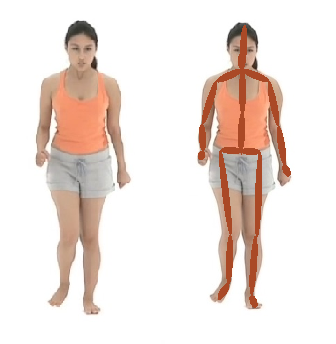
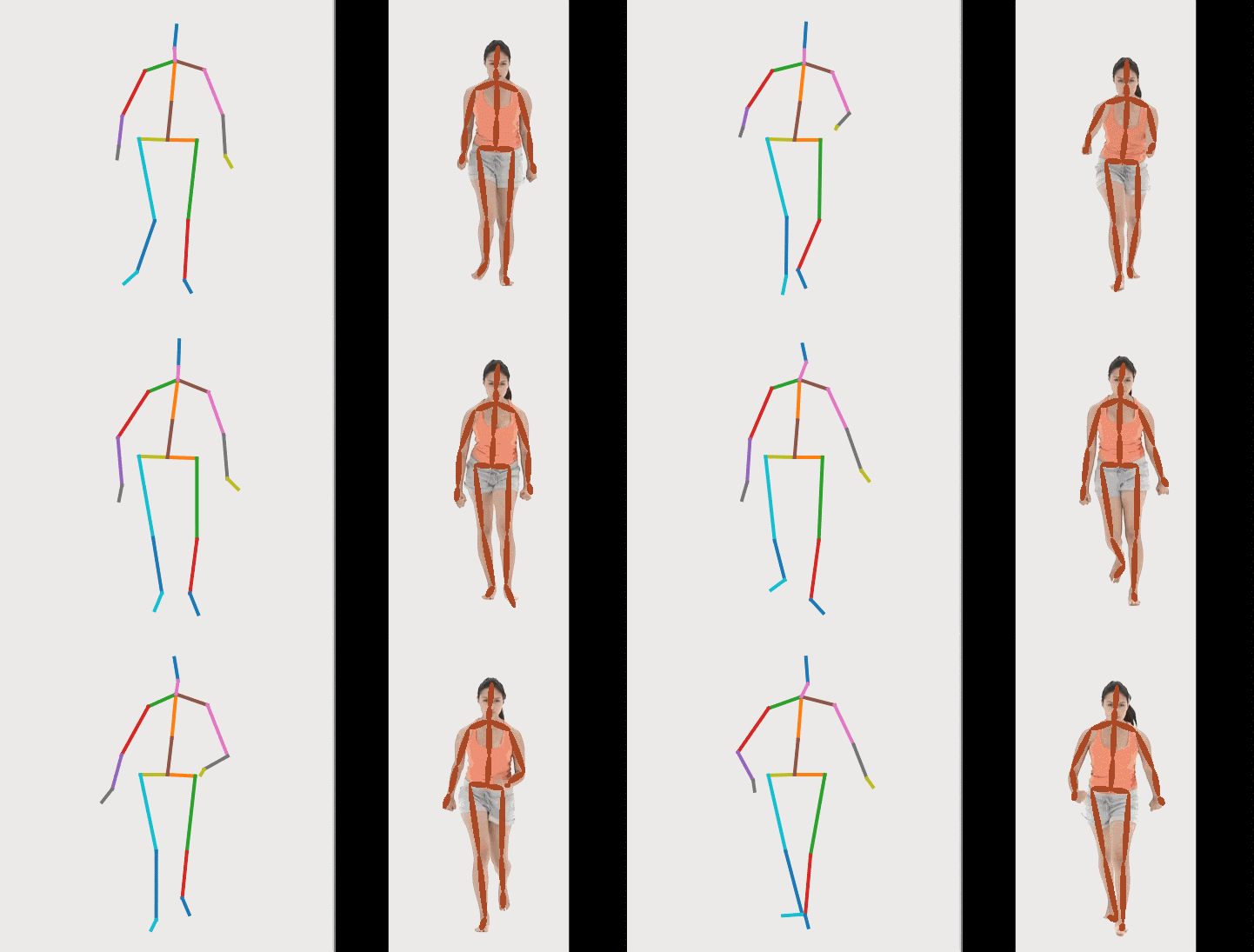
Environments
- Python 3.x
- tensorflow-gpu 1.x
- pycaffe
Usage
Preparation
- Drop the pretrained caffe model into
models/caffe_model. - Run
init_weights.pyto generate tensorflow model weights.
Scripts
run_estimator.pyis a script for video stream.- (Recommended)
run_estimator_ps.pyis a multiprocessing version script. Notice that inrun_estimator.py, the 3D plotting function may shut down occasionally depending on the matplotlib version .run_estimator_ps.pyresolves this issue. run_pic.pyis a script for a picture.
- (Deprecated)
benchmark.pyis a class implementation containing all the elements needed to run the model. - (Deprecated)
run_estimator_robot.pyadditionally provides ROS network and/or serial connection for communication in robot controlling. - (Deprecated) The training script
train.pyis not complete yet (I failed to reconstruct the model: ( So do not use it. Also pulling requests are welcomed.
[Tips] To run the scripts for video stream:
click left mouse button to initialize the bounding box implemented by a simple HOG method;
trigger any keyboard input to exit while running.
Notes
- With some certain programming environments, the 3D plotting function (by matplotlib) in
run_estimator.pyshuts down. In this case, userun_estimator_ps.pyinstead. - The input image is in BGR color format and the pixel value is mapped into a range of [-0.4, 0.6).
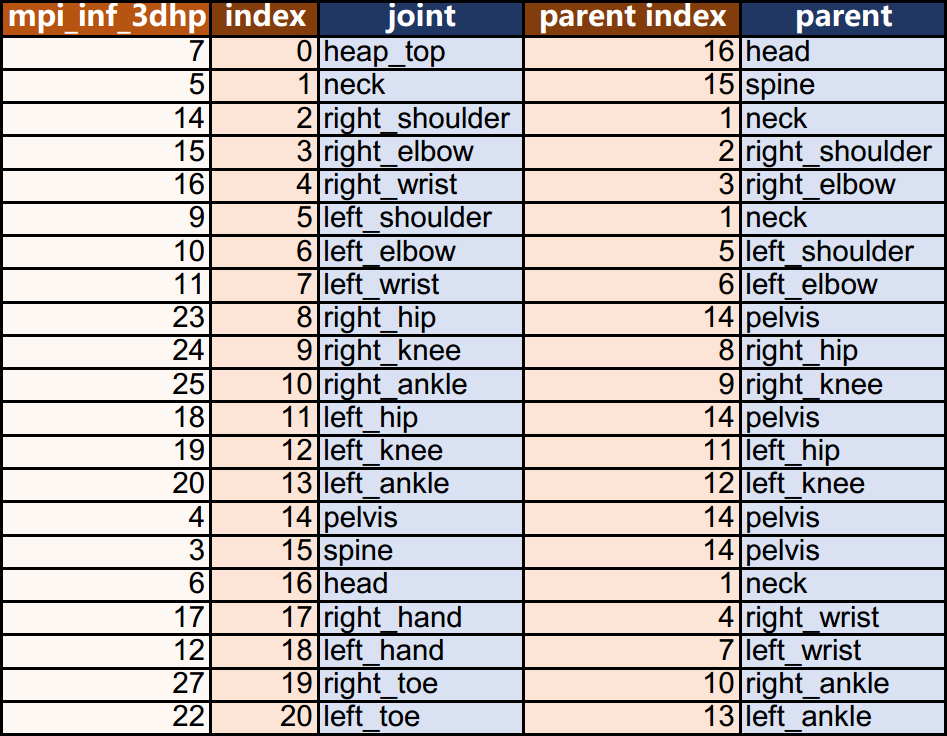
- The joint-parent map (detailed information in
materials/joint_index.xlsx):
- Here I have a sketch to show the joint positions (don't laugh lol):
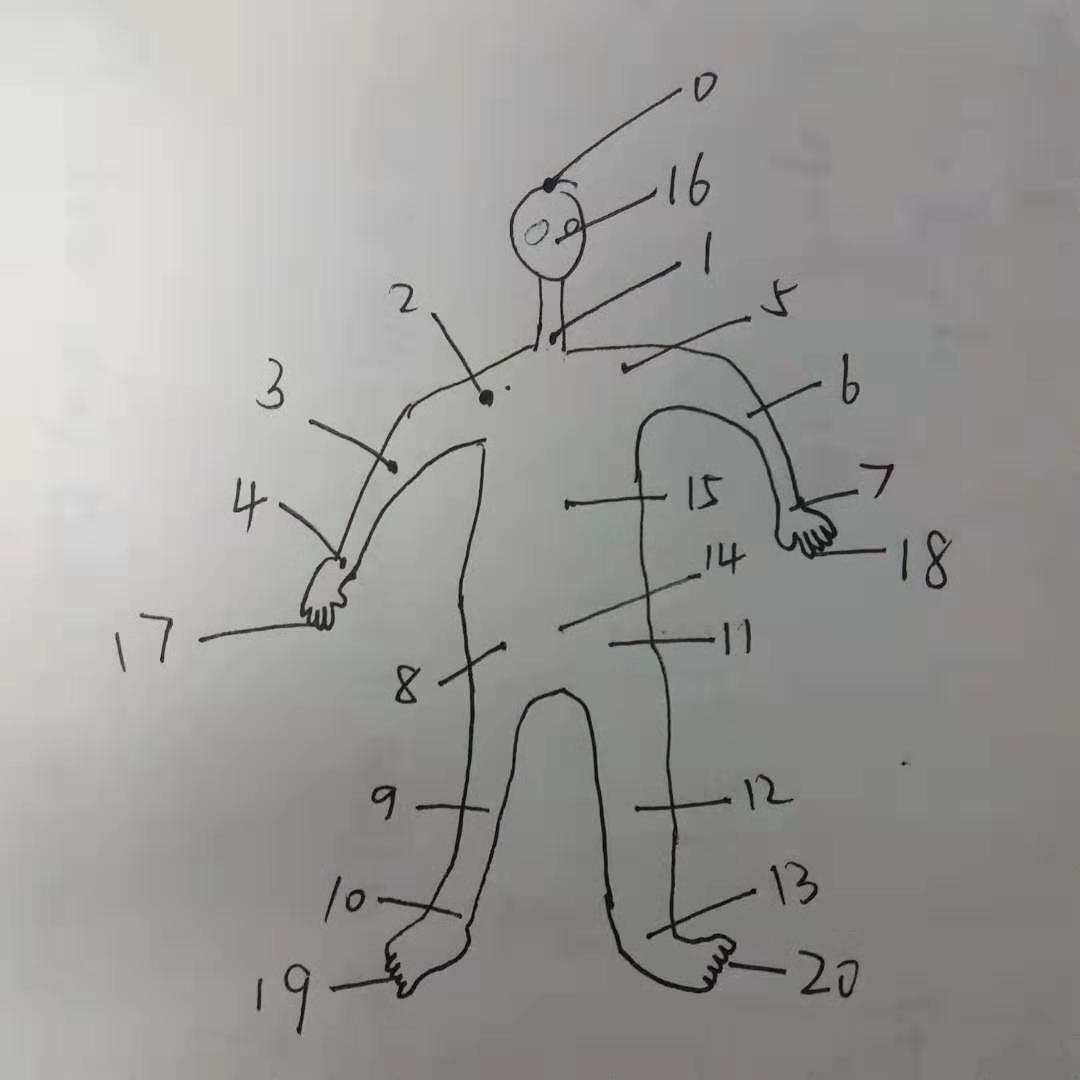
- Every input image is assumed to contain 21 joints to be found, which means it is easy to fit wrong results when a joint is actually not in the picture.
About Training Data
For MPI-INF-3DHP dataset, refer to my another repository.
Reference Repositories
- original MATLAB implementation provided by the paper author.
- timctho/VNect-tensorflow
- EJShim/vnect_estimator
관련 프로젝트 살펴보기
불러오는 중…