
Alfredvc/paac
Alfredvc/paac has 201 GitHub stars and 58 forks. GitHot measured 0 stars in 24 hours and 0 in 7 days. Last checked 2026-11-22 01:46 UTC. Last push 2017-06-03.
측정된 스타 증가
- in 24h
- 0
- in 7 days
- 0
- in 15 days
- 기록 수집 중
- in 1 month
- 기록 수집 중
서로 겹치는 기간의 순증가량이며 일별 합계가 아닙니다. 측정값이 없으면 비워 둡니다. 스타는 관심도를 나타내며 품질을 보장하지 않습니다.
소개
Open source implementation of the PAAC algorithm presented in Efficient Parallel Methods for Deep Reinforcement Learning
머신러닝README.md
OriginalEfficient Parallel Methods for Deep Reinforcement Learning
This repository contains an open source implementation of the PAAC algorithm presented in Efficient Parallel Methods for Deep Reinforcement Learning.
PAAC is a conceptually simple advantage actor-critic algorithm designed to run efficiently on a GPU, offering A3C like performance in under 12 hours of training.
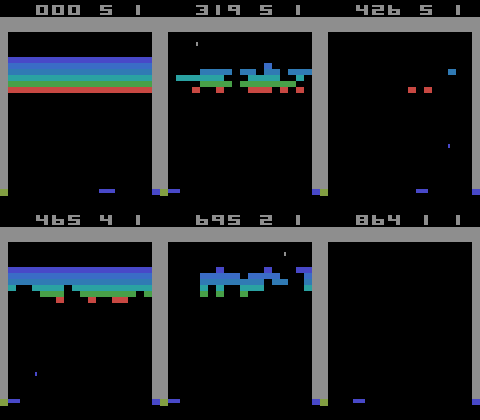
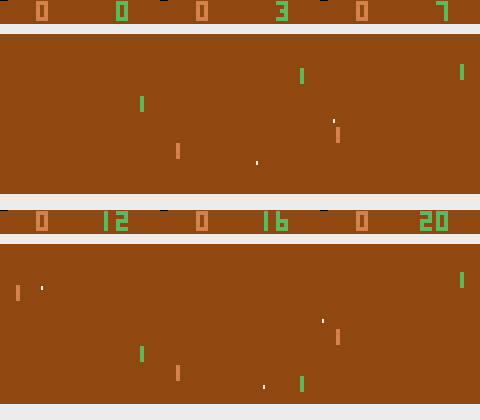
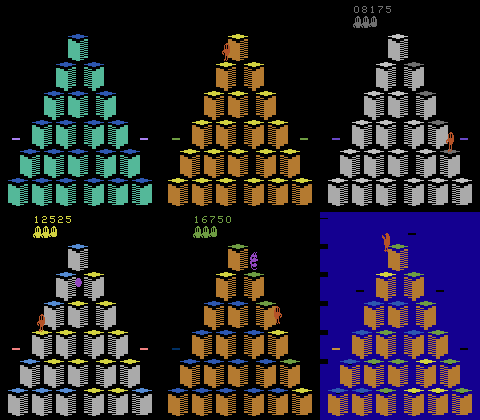
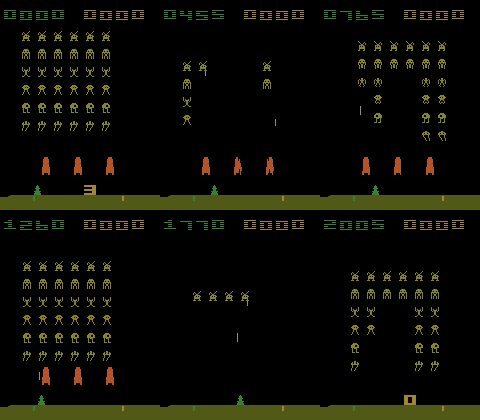
Runing via docker (recommended)
- Follow the instructions to install nvidia-docker
- Clone this repository
- Run the container with
nvidia-docker run -it -v <absolute-path>/paac:/root/paac -p 6006:6006 alfredvc/tf1-ale.
A CPU version of the docker container is also provided and can be run with docker run -it -v <absolute-path>/paac:/root/paac -p 6006:6006 alfredvc/tf1-ale:cpu.
When running on the CPU pass the device flag -d '/cpu:0' to the training script.
Runing locally
Requirements
- Python 3.4+
- TensorFlow 1.0+
- Arcade-Learning-Environment
- cython (pip3 package)
- scikit-image (pip3 package)
- python3-tk
Training the agent
To train an agent to play, for example, pong run
python3 train.py -g pong -df logs/
For pong, the agent will begin to learn after about 5 million frames, and will learn an optimal policy after about 15 million frames.
Training can be stopped, for example by using Ctrl+c, and then resumed again by running python3 train.py -g pong -df logs/.
On a setup with an Intel i7-4790k CPU and an Nvidia GTX 980 Ti GPU with default settings, you can expect around 3000 timesteps (global steps) per second. Training for 80 million timesteps requires under 8 hours.
Qbert
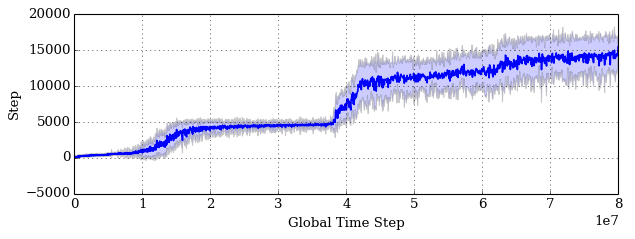
Visualizing training
- Open a new terminal
- Attach to the running docker container with
docker exec -it CONTAINER_NAME bash - Run
tensorboard --logdir=<absolute-path>/paac/logs/tf. - In your browser navigate to localhost:6006/
If running locally, skip step 2.
Testing the agent
To test the performance of a trained agent run python3 test.py -f logs/ -tc 5
Output:
Performed 5 tests for seaquest.
Mean: 1704.00
Min: 1680.00
Max: 1720.00
Std: 14.97
Generating gifs
Gifs can be generated from stored network weights, for example a gif of the agent playing breakout can be generated with
python3 test.py -f pretrained/breakout/ -gn breakout
This may take a few minutes.
Pretrained models
Pretrained models for some games can be found here. These models can be used as starting points for training on the same game, other games, or to generate gifs.
Adapting the code
This codebase was designed to be easily modified to new environments and new neural network architectures.
Adapting to a new environment
The codebase currently contains a single environment, namely atari_emulator.py. To train on a new environment, simply
create a new class that inherits from BaseEnvironment and modify environment_creator.py to create an instance of your new environment.
Adapting to new neural network architectures
The codebase contains currently two neural network architectures, the architecture used in Playing Atari with Deep Reinforcement Learning, and the architecture from Human-level control through deep reinforcement learning. Both adapted to an actor-critic algorithm.
To create a new architecture follow the pattern demonstrated in NatureNetwork and NIPSNetwork.
Then create a new class that inherits from both the PolicyVNetwork andYourNetwork. For example: NewArchitecturePolicyVNetwork(PolicyVNetwork, YourNetwork). Then use this class in train.py.
Citing PAAC
If you use PAAC in your research, we ask that you please cite our paper:
@ARTICLE{2017arXiv170504862C,
   author = {{Clemente}, A.~V. and {Castej{\'o}n}, H.~N. and {Chandra}, A.
	},
    title = "{Efficient Parallel Methods for Deep Reinforcement Learning}",
  journal = {ArXiv e-prints},
archivePrefix = "arXiv",
   eprint = {1705.04862},
 primaryClass = "cs.LG",
 keywords = {Computer Science - Learning},
     year = 2017,
    month = may,
   adsurl = {http://adsabs.harvard.edu/abs/2017arXiv170504862C},
  adsnote = {Provided by the SAO/NASA Astrophysics Data System}
}
The paper has been accepted as a poster to The Multi-disciplinary Conference on Reinforcement Learning and Decision Making (citation to come).
Disclaimer
The code in this repository is not the code used to generate the results from the paper, but should give similar results. Some changes have been made:
- Gradient clipping default value changed from 40.0 to 3.0.
- Entropy regularization constant default changed from 0.01 to 0.02.
- Using OpenAI Gym results in an increase in training time of 33%. This is because converting the image from RGB to Grayscale in python is slow.
관련 프로젝트 살펴보기
불러오는 중…