项目 在 GitHub 查看
xcmyz/FastSpeech
xcmyz/FastSpeech has 884 GitHub stars and 212 forks. GitHot measured 0 stars in 24 hours and 0 in 7 days. Last checked 2026-11-25 02:14 UTC. Last push 2023-07-06.
实测星标增长
- 24小时
- 0
- 7天
- 0
- 15天
- 正在收集历史
- 1个月
- 正在收集历史
各周期内的星标净变化,周期相互重叠,并非每日新增。缺失的测量保持空白。星标代表关注度,不代表软件质量。
关于
基于 PyTorch 的 FastSpeech 实现。
机器学习README.md
原文FastSpeech-Pytorch
The Implementation of FastSpeech Based on Pytorch.
Update (2020/07/20)
- Optimize the training process.
- Optimize the implementation of length regulator.
- Use the same hyper parameter as FastSpeech2.
- The measures of the 1, 2 and 3 make the training process 3 times faster than before.
- Better speech quality.
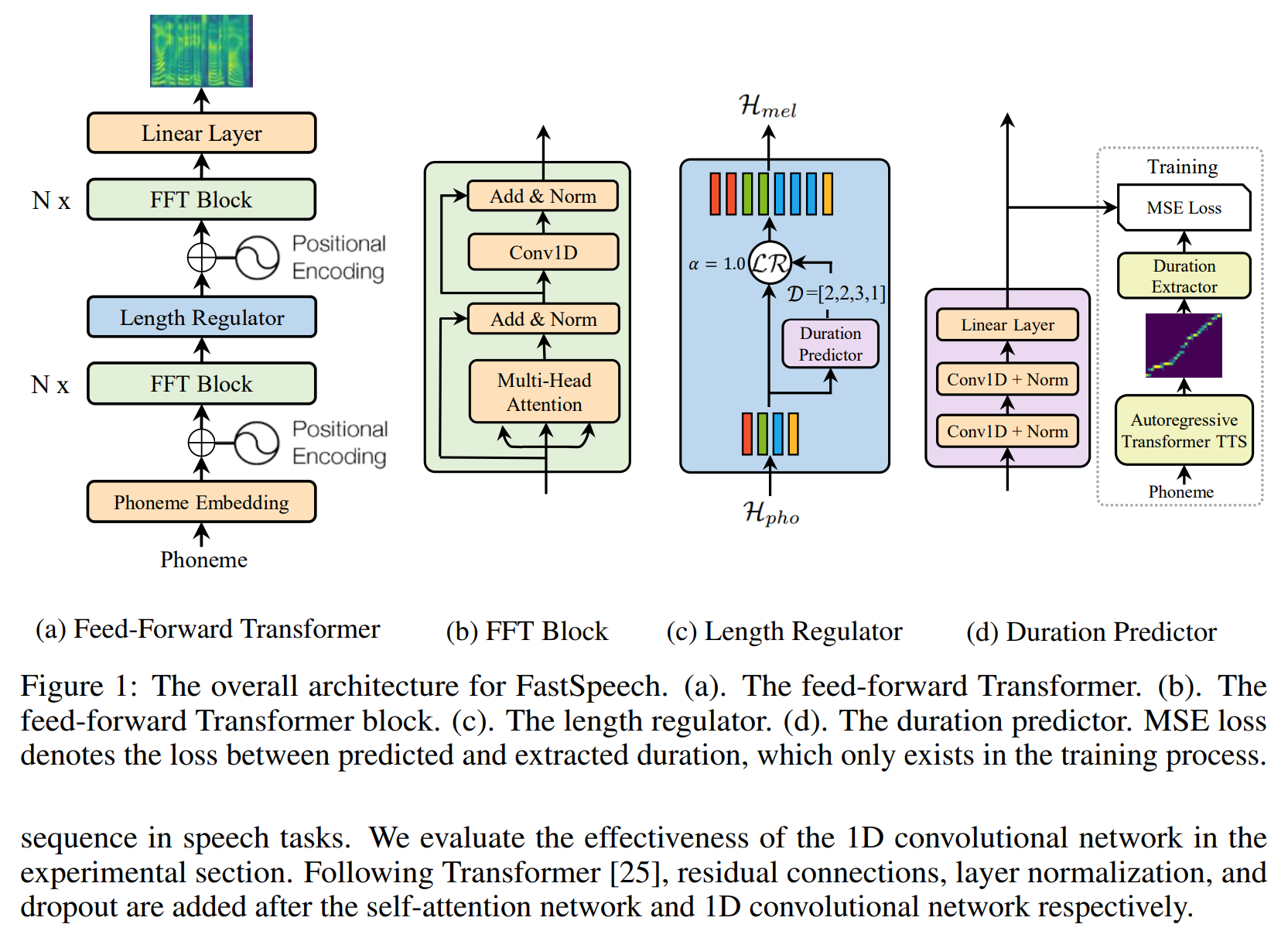
Model
My Blog
Prepare Dataset
- Download and extract LJSpeech dataset.
- Put LJSpeech dataset in
data. - Unzip
alignments.zip. - Put Nvidia pretrained waveglow model in the
waveglow/pretrained_modeland rename aswaveglow_256channels.pt; - Run
python3 preprocess.py.
Training
Run python3 train.py.
Evaluation
Run python3 eval.py.
Notes
- In the paper of FastSpeech, authors use pre-trained Transformer-TTS model to provide the target of alignment. I didn't have a well-trained Transformer-TTS model so I use Tacotron2 instead.
- I use the same hyper-parameter as FastSpeech2.
- The examples of audio are in
sample. - pretrained model.
Reference
Repository
- The Implementation of Tacotron Based on Tensorflow
- The Implementation of Transformer Based on Pytorch
- The Implementation of Transformer-TTS Based on Pytorch
- The Implementation of Tacotron2 Based on Pytorch
- The Implementation of FastSpeech2 Based on Pytorch
Paper
探索相关项目
加载中…