项目 在 GitHub 查看




taki0112/Tensorflow-Cookbook
taki0112/Tensorflow-Cookbook has 2,738 GitHub stars and 457 forks. GitHot measured 0 stars in 24 hours, -1 in 7 days, and -3 in 15 days. Last checked 2026-11-19 16:20 UTC. Last push 2020-02-09.
实测星标增长
- 24小时
- 0
- 7天
- -1
- 15天
- -3
- 1个月
- 正在收集历史
各周期内的星标净变化,周期相互重叠,并非每日新增。缺失的测量保持空白。星标代表关注度,不代表软件质量。
关于
Simple Tensorflow Cookbook for easy-to-use
机器学习README.md
原文
Web page
Tensorflow 2 Cookbook
Contributions
In now, this repo contains general architectures and functions that are useful for the GAN and classificstion.
I will continue to add useful things to other areas.
Also, your pull requests and issues are always welcome.
And write what you want to implement on the issue. I'll implement it.
How to use
Import
ops.py- operations
- from ops import *
utils.py- image processing
- from utils import *
Network template
def network(x, is_training=True, reuse=False, scope="network"):
    with tf.variable_scope(scope, reuse=reuse):
        x = conv(...)

        ...

        return logit
Insert data to network using DatasetAPI
Image_Data_Class = ImageData(img_size, img_ch, augment_flag)

trainA_dataset = ['./dataset/cat/trainA/a.jpg',
                  './dataset/cat/trainA/b.png',
                  './dataset/cat/trainA/c.jpeg',
                  ...]
trainA = tf.data.Dataset.from_tensor_slices(trainA_dataset)
trainA = trainA.map(Image_Data_Class.image_processing, num_parallel_calls=16)
trainA = trainA.shuffle(buffer_size=10000).prefetch(buffer_size=batch_size).batch(batch_size).repeat()

trainA_iterator = trainA.make_one_shot_iterator()
data_A = trainA_iterator.get_next()

logit = network(data_A)
- See this for more information.
Option
padding='SAME'- pad = ceil[ (kernel - stride) / 2 ]
pad_type- 'zero' or 'reflect'
sn- use spectral_normalization or not
Caution
- If you don't want to share variable, set all scope names differently.
Weight
weight_init = tf.truncated_normal_initializer(mean=0.0, stddev=0.02)
weight_regularizer = tf.contrib.layers.l2_regularizer(0.0001)
weight_regularizer_fully = tf.contrib.layers.l2_regularizer(0.0001)
Initialization
Xavier: tf.contrib.layers.xavier_initializer()USE """tf.contrib.layers.variance_scaling_initializer()""" if uniform : factor = gain * gain mode = 'FAN_AVG' else : factor = (gain * gain) / 1.3 mode = 'FAN_AVG'He: tf.contrib.layers.variance_scaling_initializer()if uniform : factor = gain * gain mode = 'FAN_IN' else : factor = (gain * gain) / 1.3 mode = 'FAN_OUT'Normal: tf.random_normal_initializer(mean=0.0, stddev=0.02)Truncated_normal: tf.truncated_normal_initializer(mean=0.0, stddev=0.02)Orthogonal: tf.orthogonal_initializer(1.0) / # if relu = sqrt(2), the others = 1.0
Regularization
l2_decay: tf.contrib.layers.l2_regularizer(0.0001)orthogonal_regularizer: orthogonal_regularizer(0.0001) & orthogonal_regularizer_fully(0.0001)
Convolution
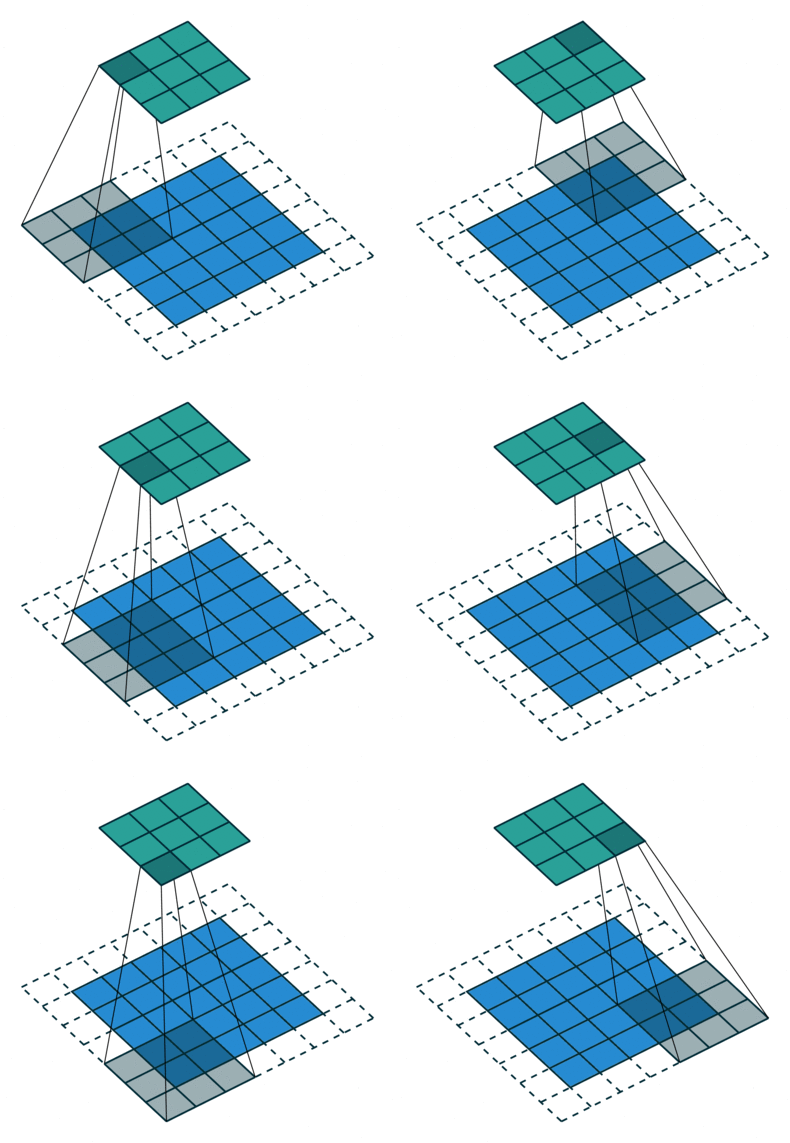
basic conv
x = conv(x, channels=64, kernel=3, stride=2, pad=1, pad_type='reflect', use_bias=True, sn=True, scope='conv')
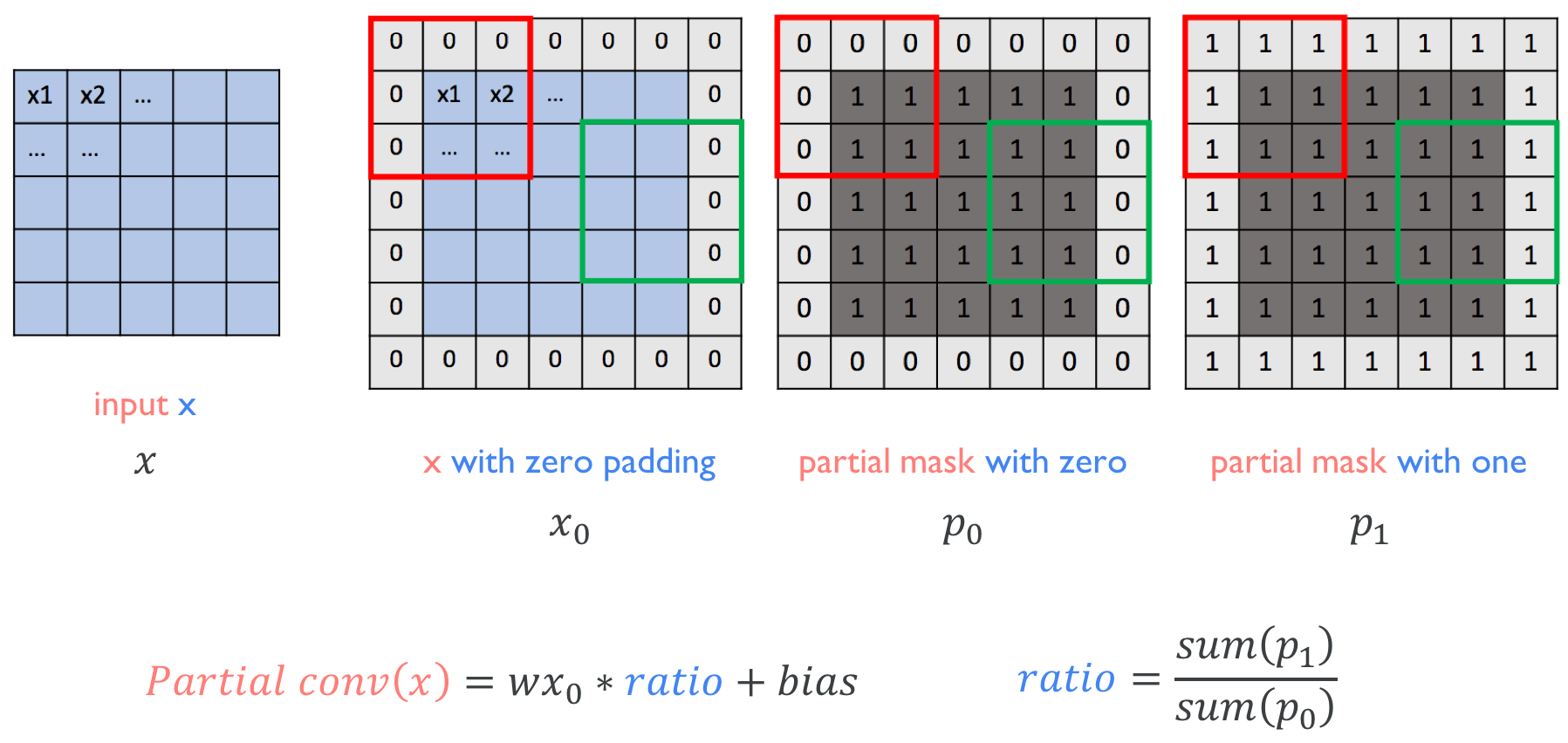
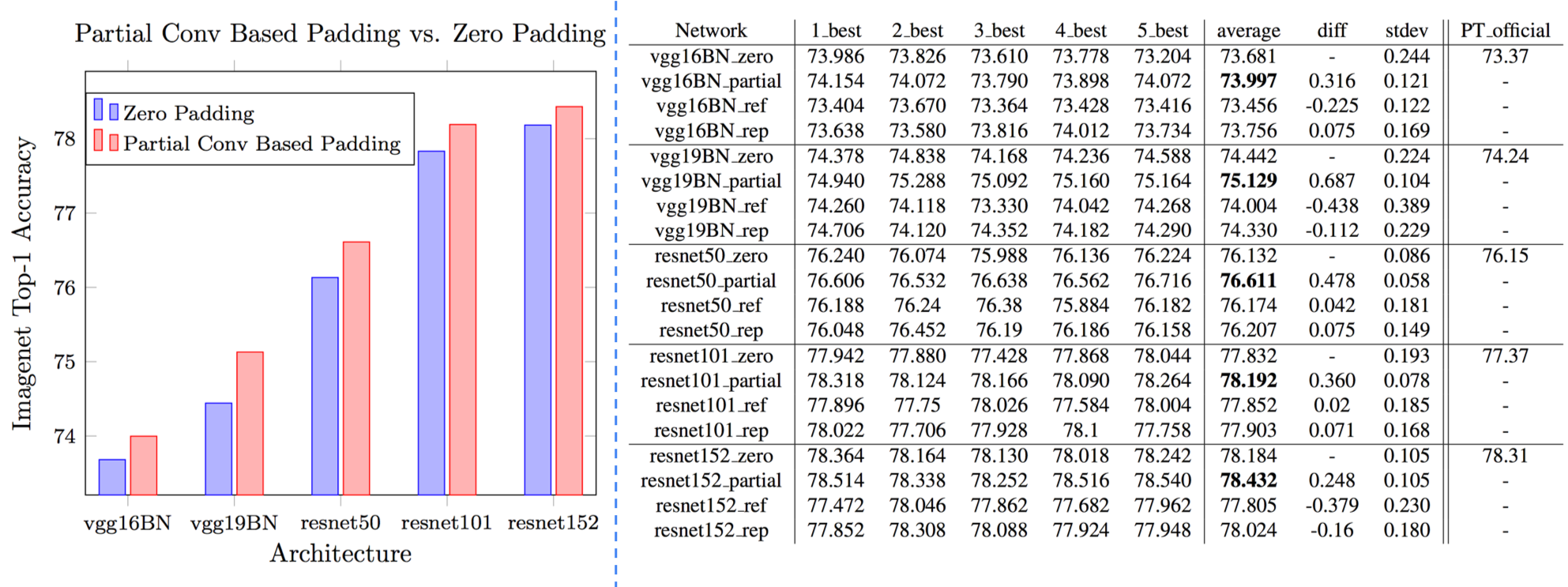
partial conv (NVIDIA Partial Convolution)
x = partial_conv(x, channels=64, kernel=3, stride=2, use_bias=True, padding='SAME', sn=True, scope='partial_conv')
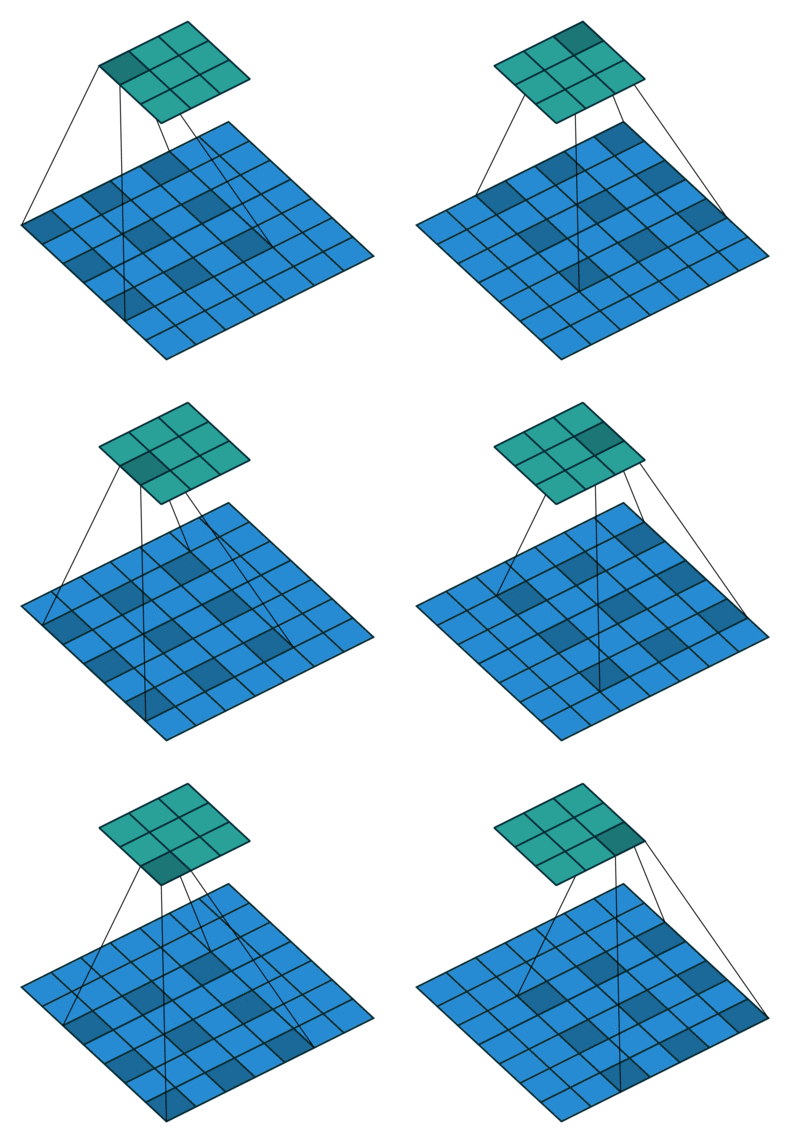
dilated conv
x = dilate_conv(x, channels=64, kernel=3, rate=2, use_bias=True, padding='VALID', sn=True, scope='dilate_conv')
Deconvolution
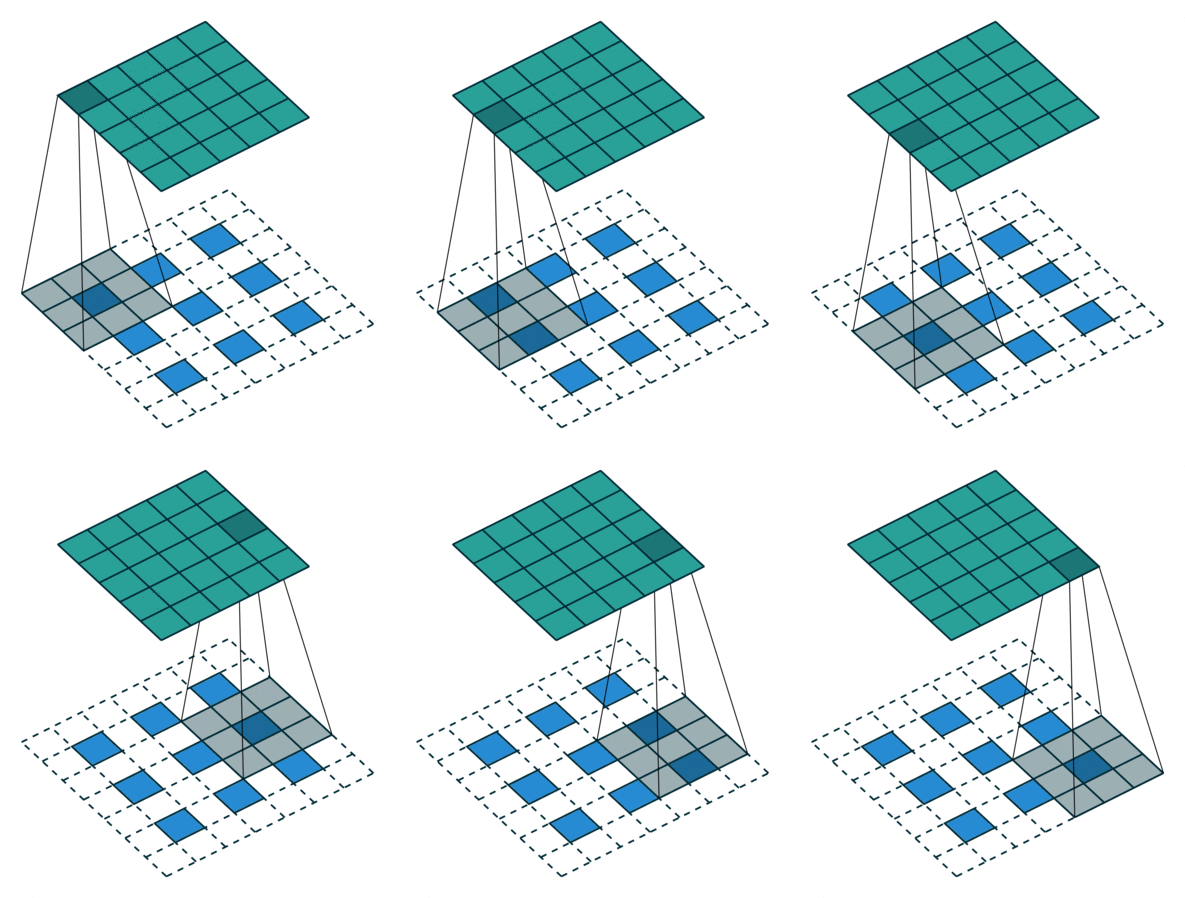
basic deconv
x = deconv(x, channels=64, kernel=3, stride=1, padding='SAME', use_bias=True, sn=True, scope='deconv')
Fully-connected
x = fully_connected(x, units=64, use_bias=True, sn=True, scope='fully_connected')
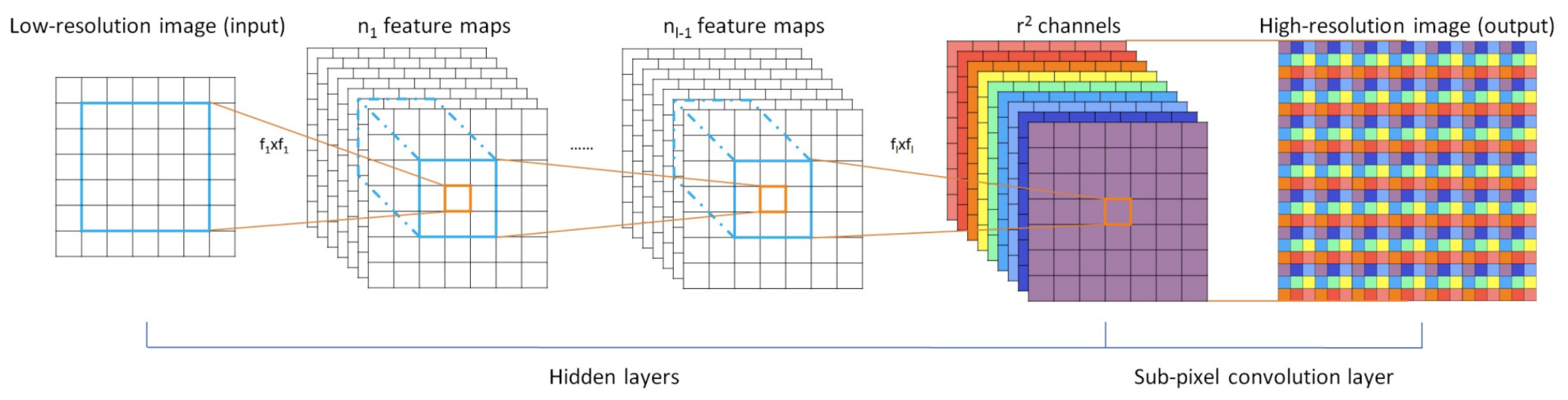
Pixel shuffle
x = conv_pixel_shuffle_down(x, scale_factor=2, use_bias=True, sn=True, scope='pixel_shuffle_down')
x = conv_pixel_shuffle_up(x, scale_factor=2, use_bias=True, sn=True, scope='pixel_shuffle_up')
down===> [height, width] -> [height // scale_factor, width // scale_factor]up===> [height, width] -> [height * scale_factor, width * scale_factor]
Block
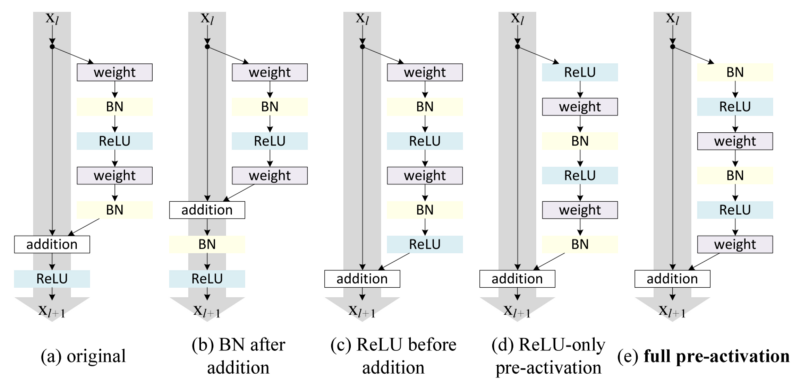
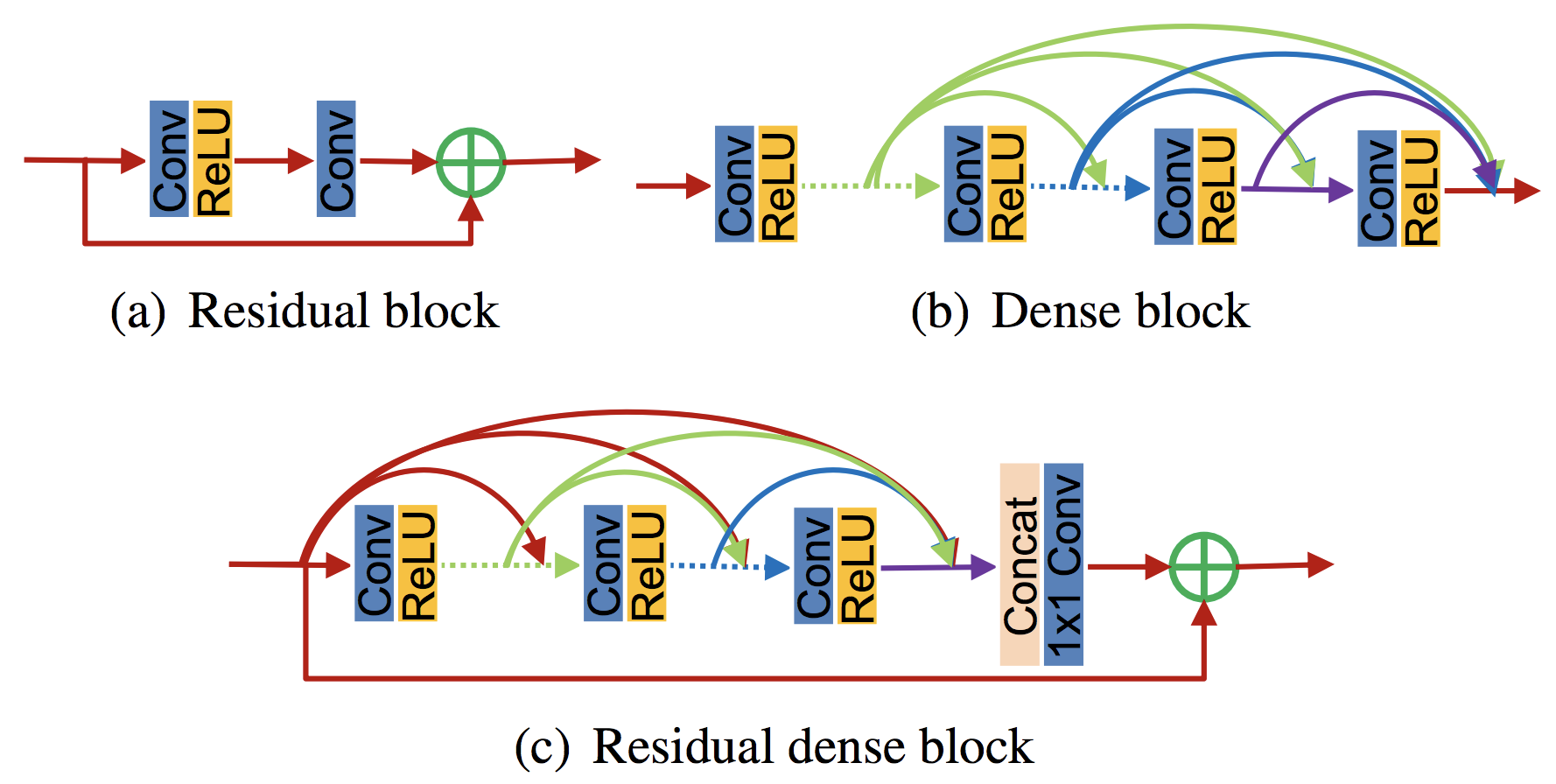
residual block
x = resblock(x, channels=64, is_training=is_training, use_bias=True, sn=True, scope='residual_block')
x = resblock_down(x, channels=64, is_training=is_training, use_bias=True, sn=True, scope='residual_block_down')
x = resblock_up(x, channels=64, is_training=is_training, use_bias=True, sn=True, scope='residual_block_up')
down===> [height, width] -> [height // 2, width // 2]up===> [height, width] -> [height * 2, width * 2]
dense block
x = denseblock(x, channels=64, n_db=6, is_training=is_training, use_bias=True, sn=True, scope='denseblock')
n_db===> The number of dense-block
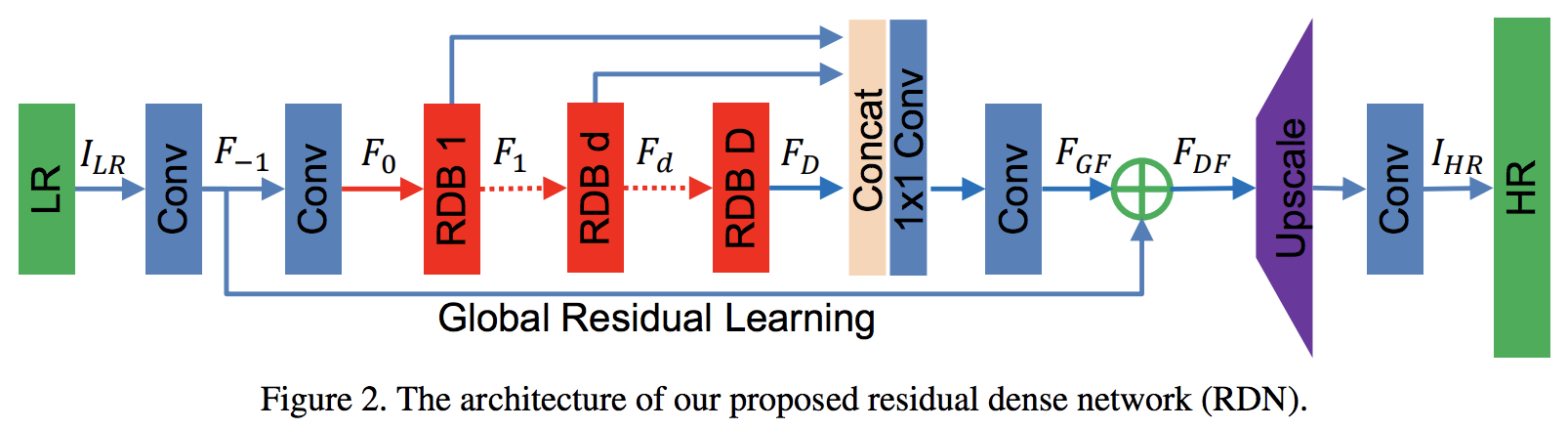
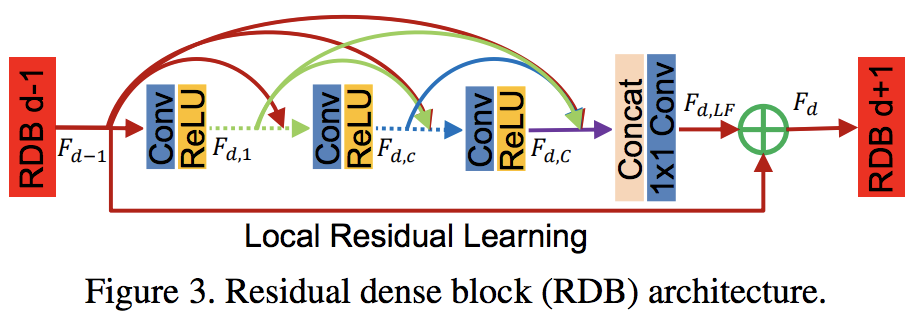
residual-dense block
x = res_denseblock(x, channels=64, n_rdb=20, n_rdb_conv=6, is_training=is_training, use_bias=True, sn=True, scope='res_denseblock')
n_rdb===> The number of RDBn_rdb_conv===> per RDB conv layer
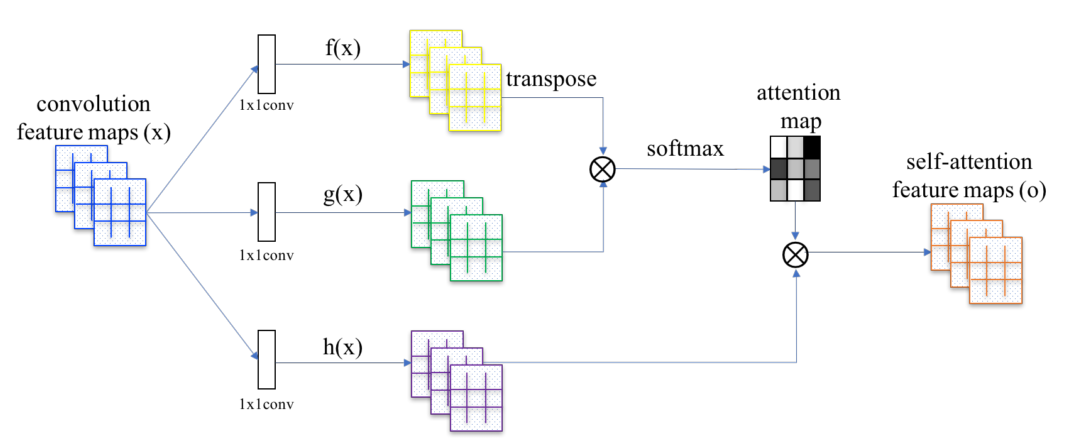
attention block
x = self_attention(x, use_bias=True, sn=True, scope='self_attention')
x = self_attention_with_pooling(x, use_bias=True, sn=True, scope='self_attention_version_2')

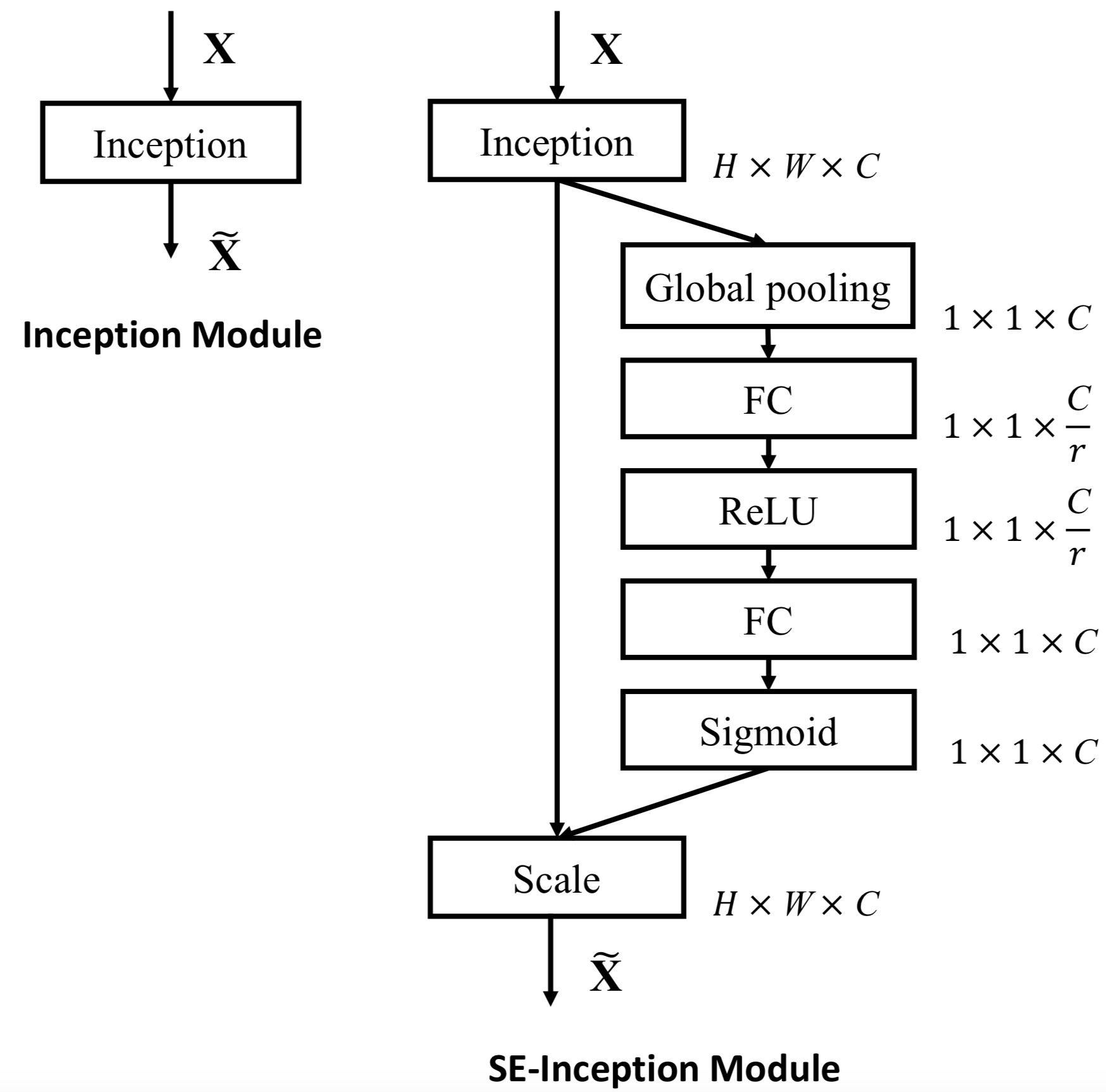
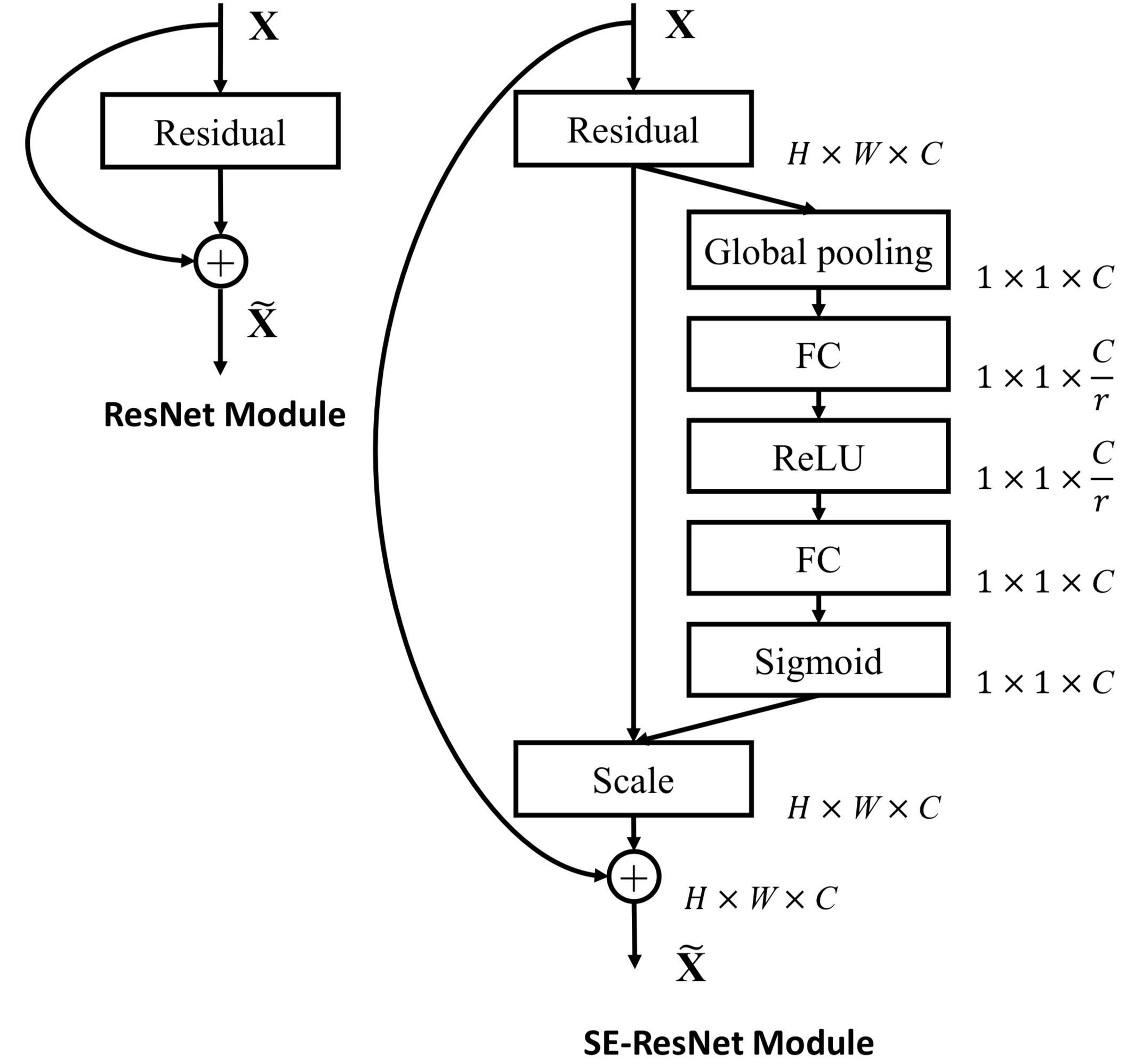
x = squeeze_excitation(x, ratio=16, use_bias=True, sn=True, scope='squeeze_excitation')

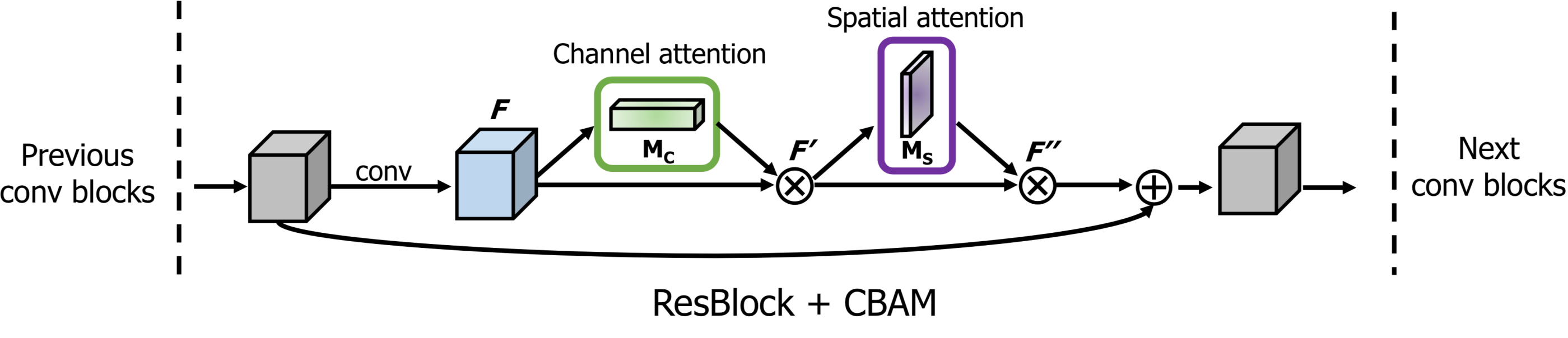
x = convolution_block_attention(x, ratio=16, use_bias=True, sn=True, scope='convolution_block_attention')

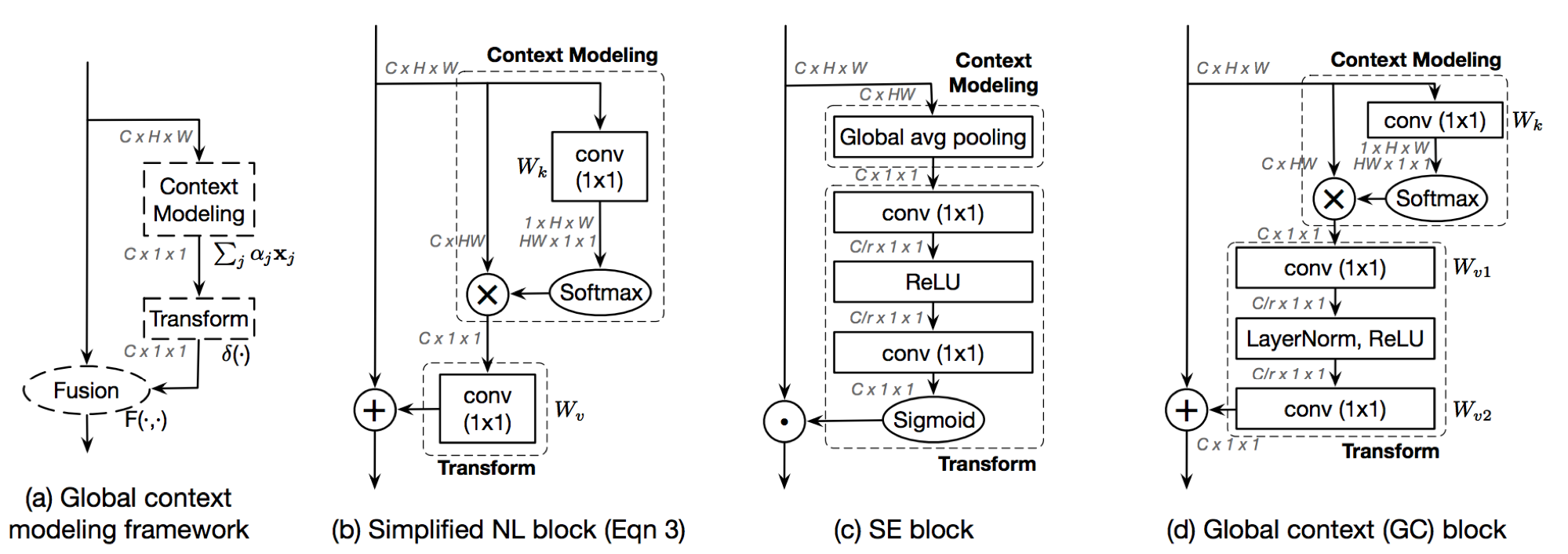
x = global_context_block(x, use_bias=True, sn=True, scope='gc_block')

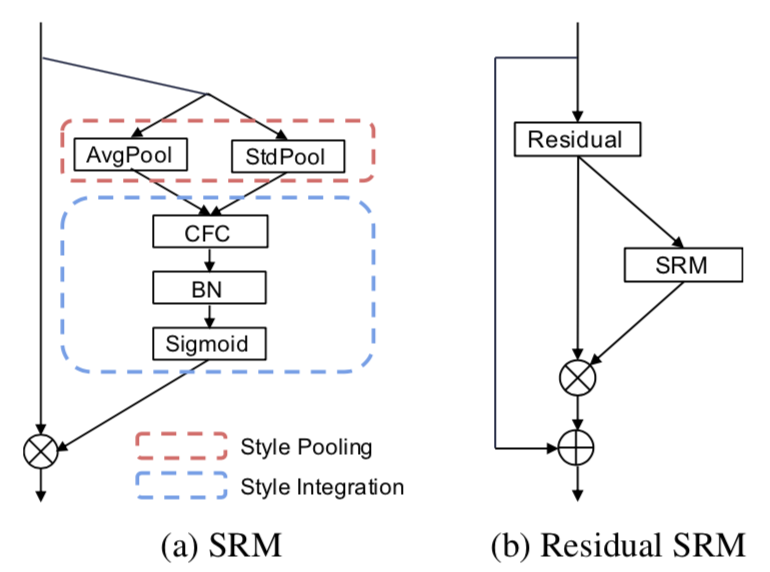
x = srm_block(x, use_bias=False, is_training=is_training, scope='srm_block')
Normalization
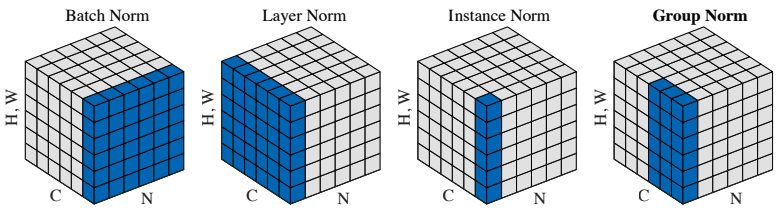
x = batch_norm(x, is_training=is_training, scope='batch_norm')
x = layer_norm(x, scope='layer_norm')
x = instance_norm(x, scope='instance_norm')
x = group_norm(x, groups=32, scope='group_norm')

x = pixel_norm(x)

x = batch_instance_norm(x, scope='batch_instance_norm')
x = layer_instance_norm(x, scope='layer_instance_norm')
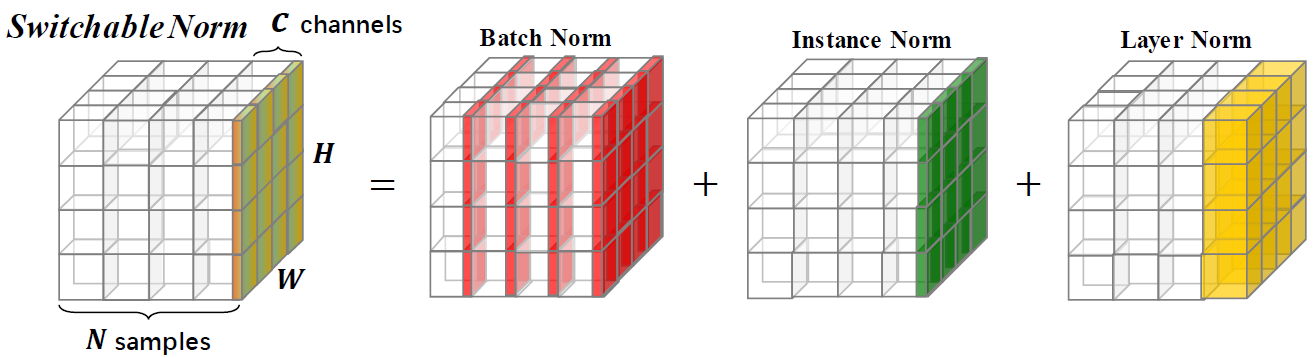
x = switch_norm(x, scope='switch_norm')

x = condition_batch_norm(x, z, is_training=is_training, scope='condition_batch_norm'):

x = adaptive_instance_norm(x, gamma, beta)
x = adaptive_layer_instance_norm(x, gamma, beta, smoothing=True, scope='adaLIN')
- See this for how to use
condition_batch_norm - See this for how to use
adaptive_instance_norm - See this for how to use
adaptive_layer_instance_norm&layer_instance_norm
Activation
x = relu(x)
x = lrelu(x, alpha=0.2)
x = tanh(x)
x = sigmoid(x)
x = swish(x)
x = elu(x)
Pooling & Resize
x = nearest_up_sample(x, scale_factor=2)
x = bilinear_up_sample(x, scale_factor=2)
x = nearest_down_sample(x, scale_factor=2)
x = bilinear_down_sample(x, scale_factor=2)

x = max_pooling(x, pool_size=2)
x = avg_pooling(x, pool_size=2)

x = global_max_pooling(x)
x = global_avg_pooling(x)

x = flatten(x)
x = hw_flatten(x)
Loss
classification loss
loss, accuracy = classification_loss(logit, label)

loss = dice_loss(n_classes=10, logit, label)
regularization loss
g_reg_loss = regularization_loss('generator')
d_reg_loss = regularization_loss('discriminator')
- If you want to use
regularizer, then you should write it
pixel loss
loss = L1_loss(x, y)
loss = L2_loss(x, y)
loss = huber_loss(x, y)
loss = histogram_loss(x, y)

loss = gram_style_loss(x, y)

loss = color_consistency_loss(x, y)
histogram_lossmeans the difference in the color distribution of the image pixel values.gram_style_lossmeans the difference between the styles using gram matrix.color_consistency_lossmeans the color difference between the generated image and the input image.
gan loss
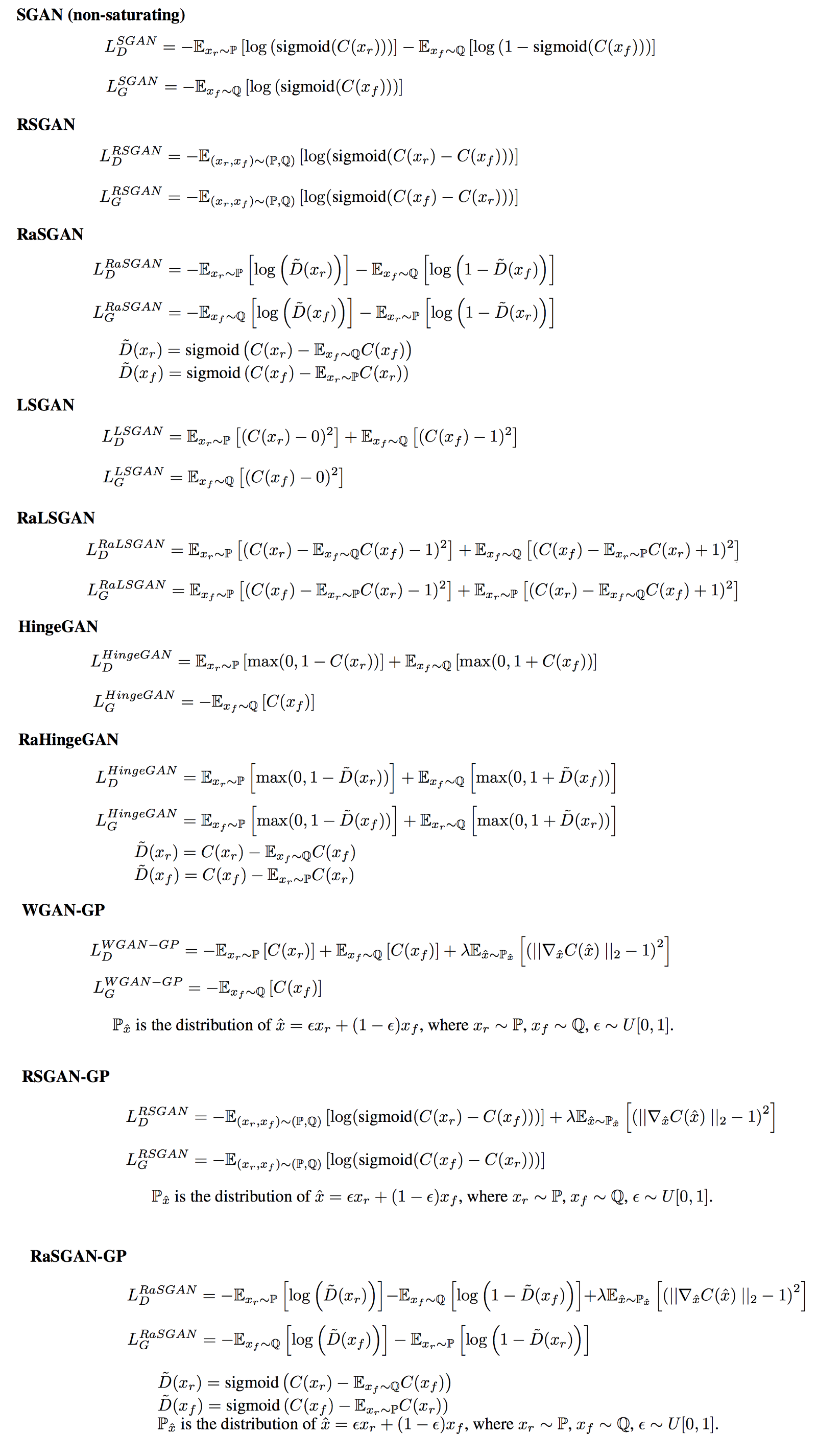
d_loss = discriminator_loss(Ra=True, loss_func='wgan-gp', real=real_logit, fake=fake_logit)
g_loss = generator_loss(Ra=True, loss_func='wgan-gp', real=real_logit, fake=fake_logit)
Ra- use relativistic gan or not
loss_func- gan
- lsgan
- hinge
- wgan-gp
- dragan
- See this for how to use
gradient_penalty
vdb loss
d_bottleneck_loss = vdb_loss(real_mu, real_logvar, i_c) + vdb_loss(fake_mu, fake_logvar, i_c)
kl-divergence (z ~ N(0, 1))
loss = kl_loss(mean, logvar)