
neka-nat/probreg
关于
使用概率模型进行点云配准的 Python 包(Coherent Point Drift、GMMReg、SVR、GMMTree、FilterReg、Bayesian CPD)
创作与媒体可以做什么
- Open3D interface
- Rigid and non-rigid transformation
实测星标增长
- 24小时
- 0
- 7天
- -1
- 15天
- 0
- 1个月
- 正在收集历史
各周期内的星标净变化,周期相互重叠,并非每日新增。缺失的测量保持空白。星标代表关注度,不代表软件质量。
README.md
原文



Probreg is a library that implements point cloud registration algorithms with probablistic model.
The point set registration algorithms using stochastic model are more robust than ICP(Iterative Closest Point). This package implements several algorithms using stochastic models and provides a simple interface with Open3D.
Core features
- Open3D interface
- Rigid and non-rigid transformation
Algorithms
- Maximum likelihood when the target or source point cloud is observation data
- Coherent Point Drift (2010)
- Extended Coherent Point Drift (2016) (add correspondence priors to CPD)
- Color Coherent Point Drift (2018)
- FilterReg (CVPR2019)
- Variational Bayesian inference
- Distance minimization of two probabilistic distributions
- Hierarchical Stocastic model
Transformations
| type | CPD | SVR, GMMReg | GMMTree | FilterReg | BCPD (experimental) |
|---|---|---|---|---|---|
| Rigid | Scale + 6D pose | 6D pose | 6D pose | 6D pose (Point-to-point, Point-to-plane, FPFH-based) |
- |
| NonRigid | Affine, MCT | TPS | - | Deformable Kinematic (experimental) |
Combined model (Rigid + Scale + NonRigid-term) |
CUDA support
You need to install cupy.
pip install cupy
Installation
You can install probreg using pip.
pip install probreg
Or install probreg from source.
git clone https://github.com/neka-nat/probreg.git --recursive
cd probreg
pip install -e .
Getting Started
This is a sample code that reads a PCD file and calls CPD registration. You can easily execute registrations from Open3D point cloud object and draw the results.
import copy
import numpy as np
import open3d as o3
from probreg import cpd

# load source and target point cloud
source = o3.io.read_point_cloud('bunny.pcd')
source.remove_non_finite_points()
target = copy.deepcopy(source)
# transform target point cloud
th = np.deg2rad(30.0)
target.transform(np.array([[np.cos(th), -np.sin(th), 0.0, 0.0],
                           [np.sin(th), np.cos(th), 0.0, 0.0],
                           [0.0, 0.0, 1.0, 0.0],
                           [0.0, 0.0, 0.0, 1.0]]))
source = source.voxel_down_sample(voxel_size=0.005)
target = target.voxel_down_sample(voxel_size=0.005)

# compute cpd registration
tf_param, _, _ = cpd.registration_cpd(source, target)
result = copy.deepcopy(source)
result.points = tf_param.transform(result.points)

# draw result
source.paint_uniform_color([1, 0, 0])
target.paint_uniform_color([0, 1, 0])
result.paint_uniform_color([0, 0, 1])
o3.visualization.draw_geometries([source, target, result])
Resources
Results
Compare algorithms
| CPD | SVR | GMMTree | FilterReg |
|---|---|---|---|
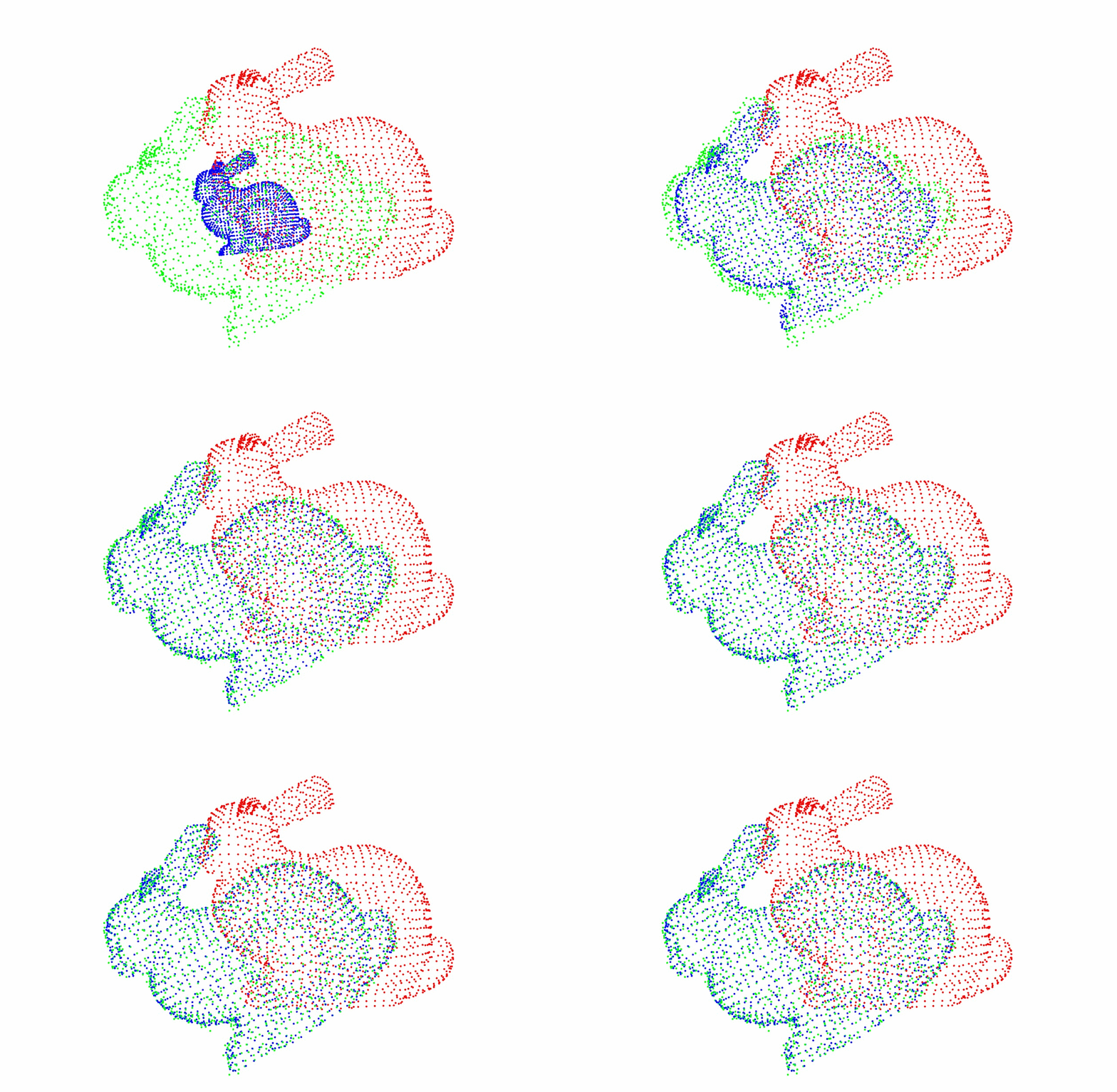 |
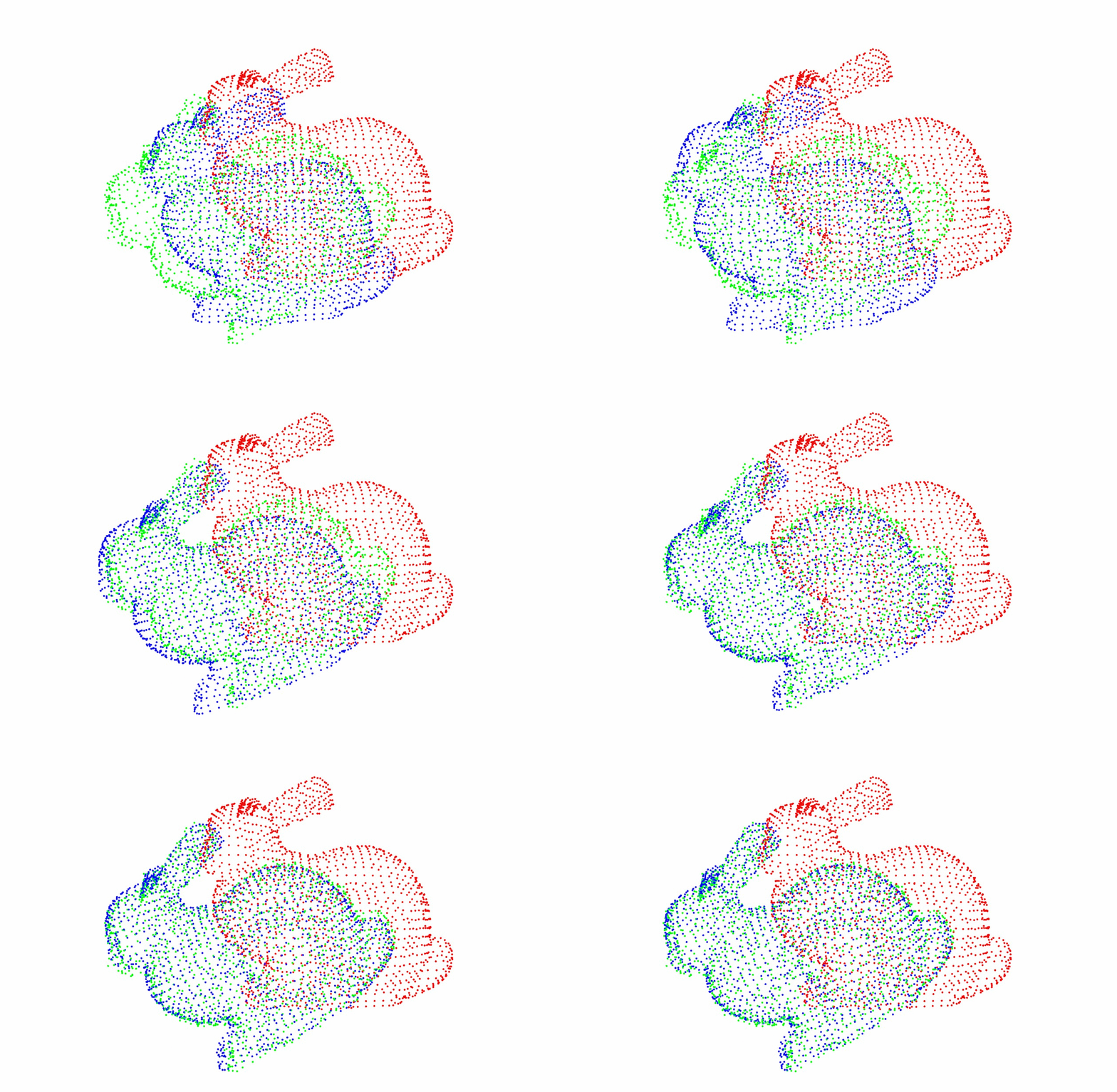 |
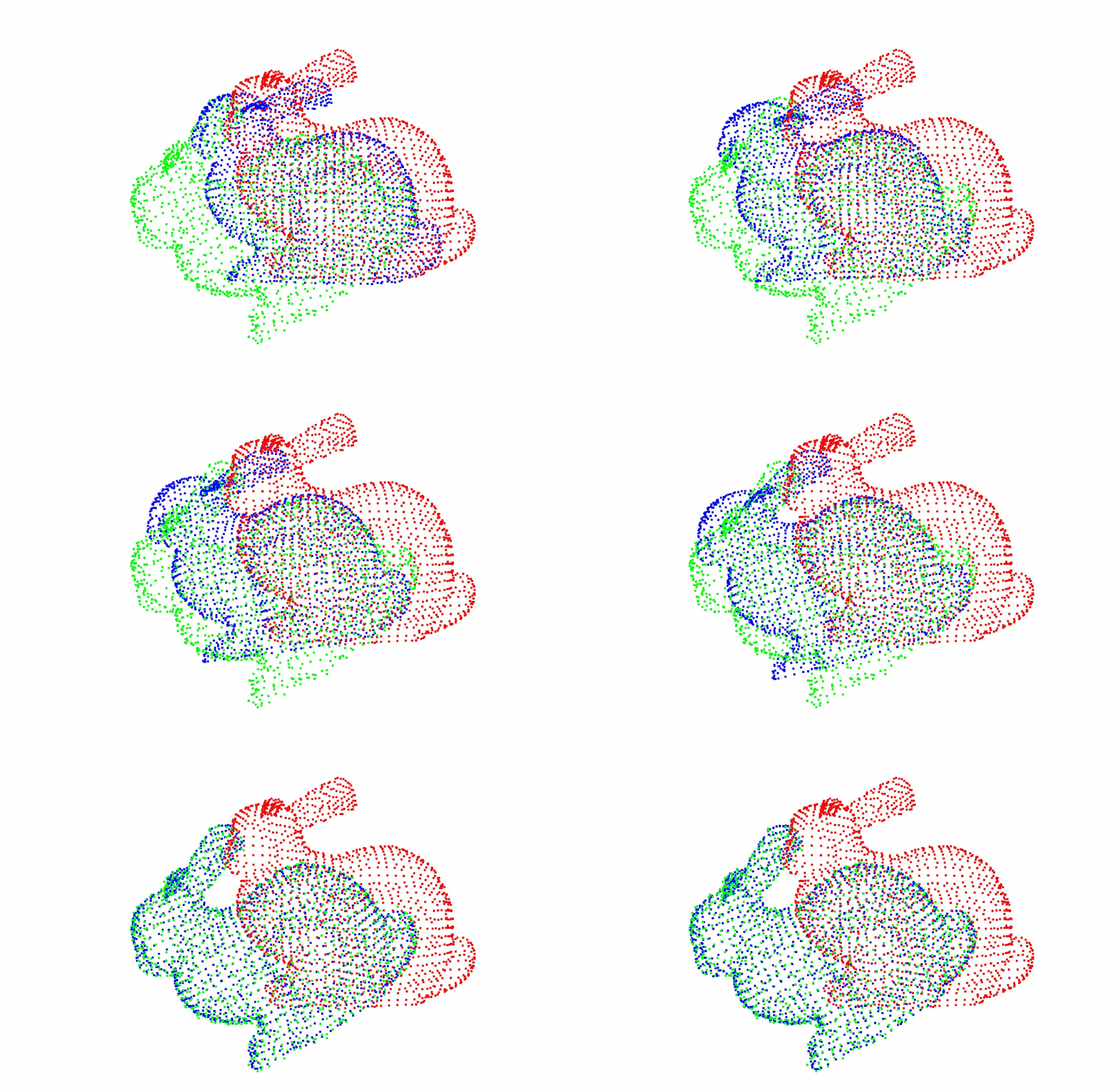 |
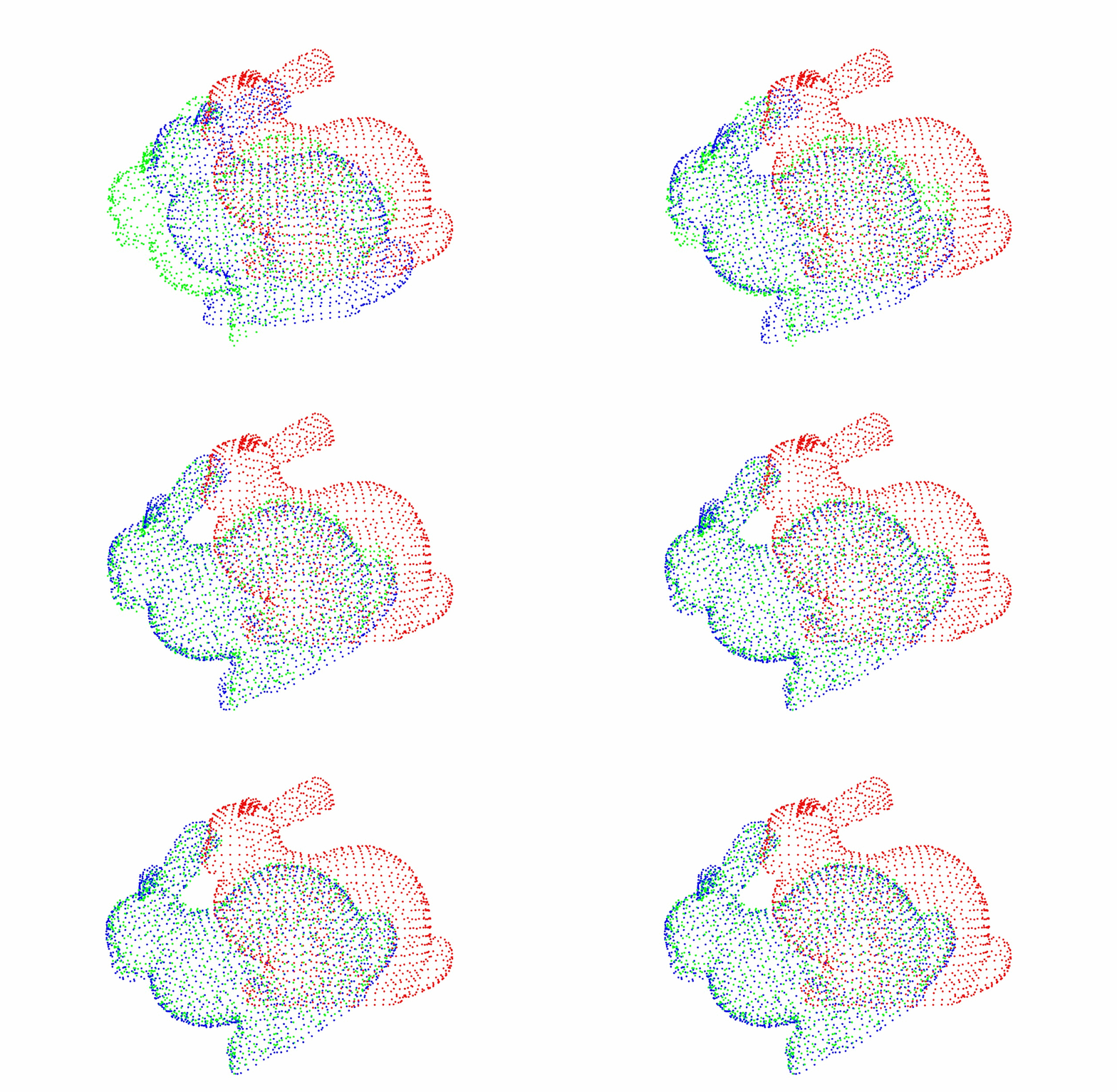 |
Noise test
| ICP(Open3D) | CPD | FilterReg |
|---|---|---|
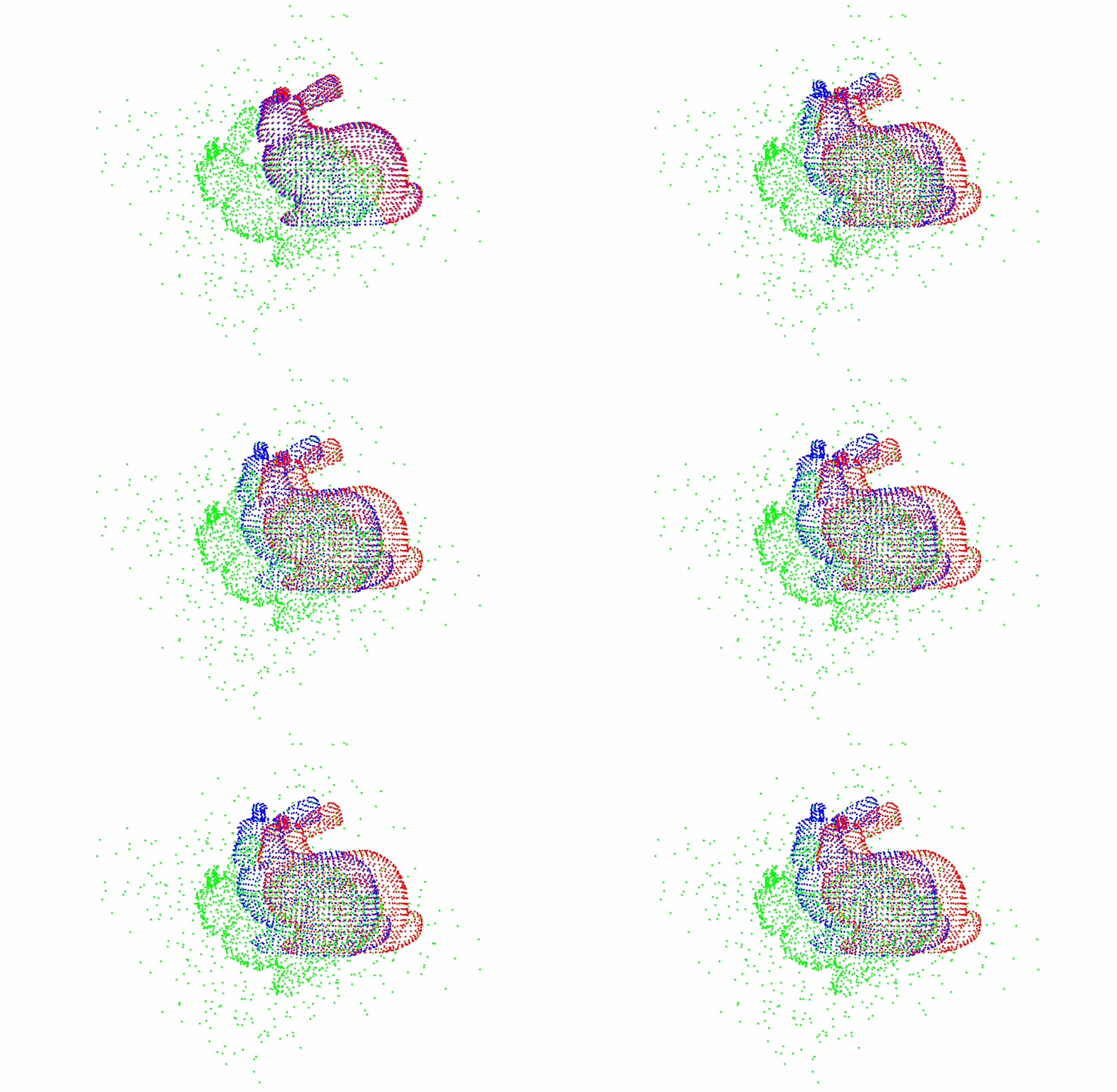 |
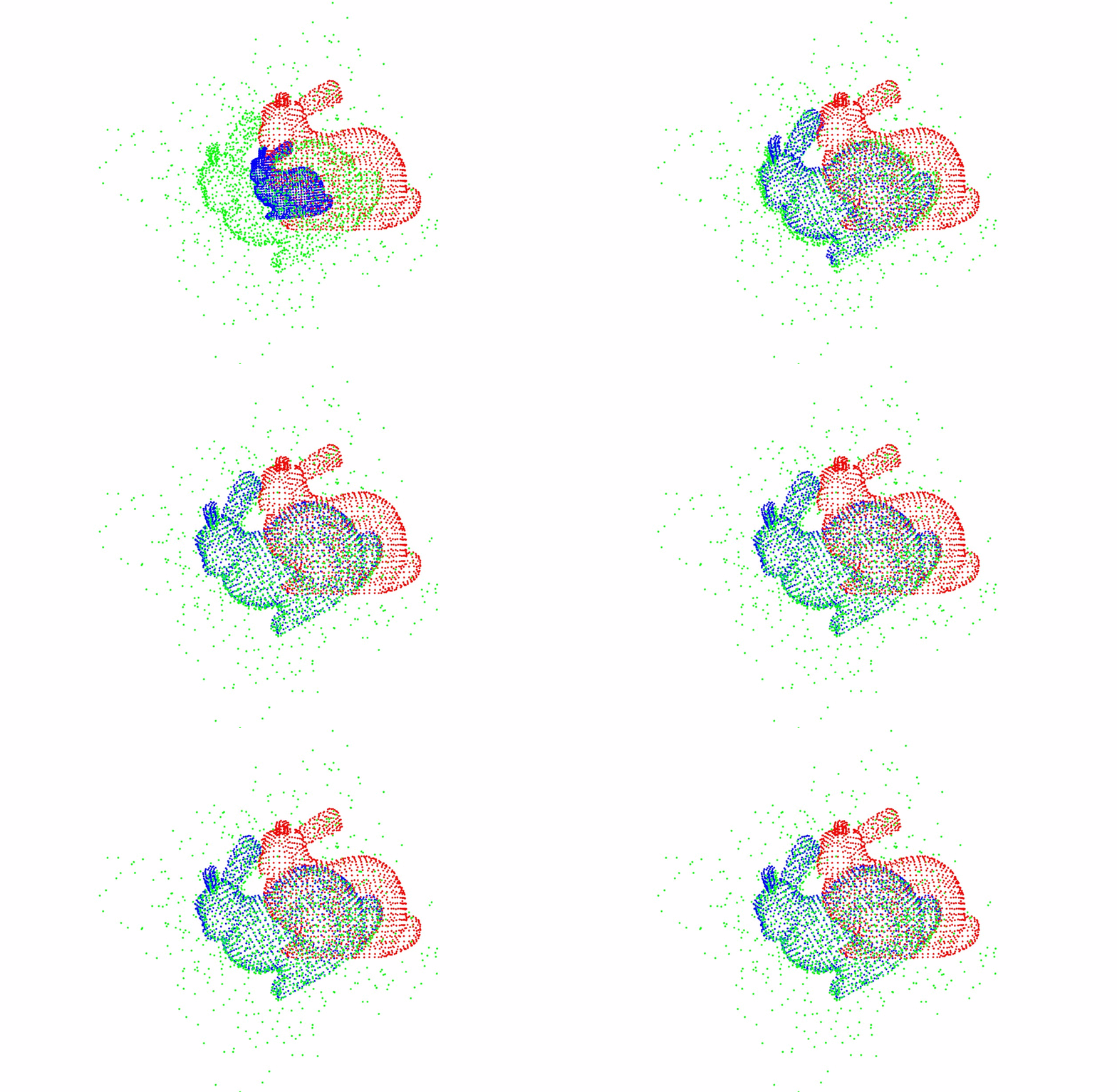 |
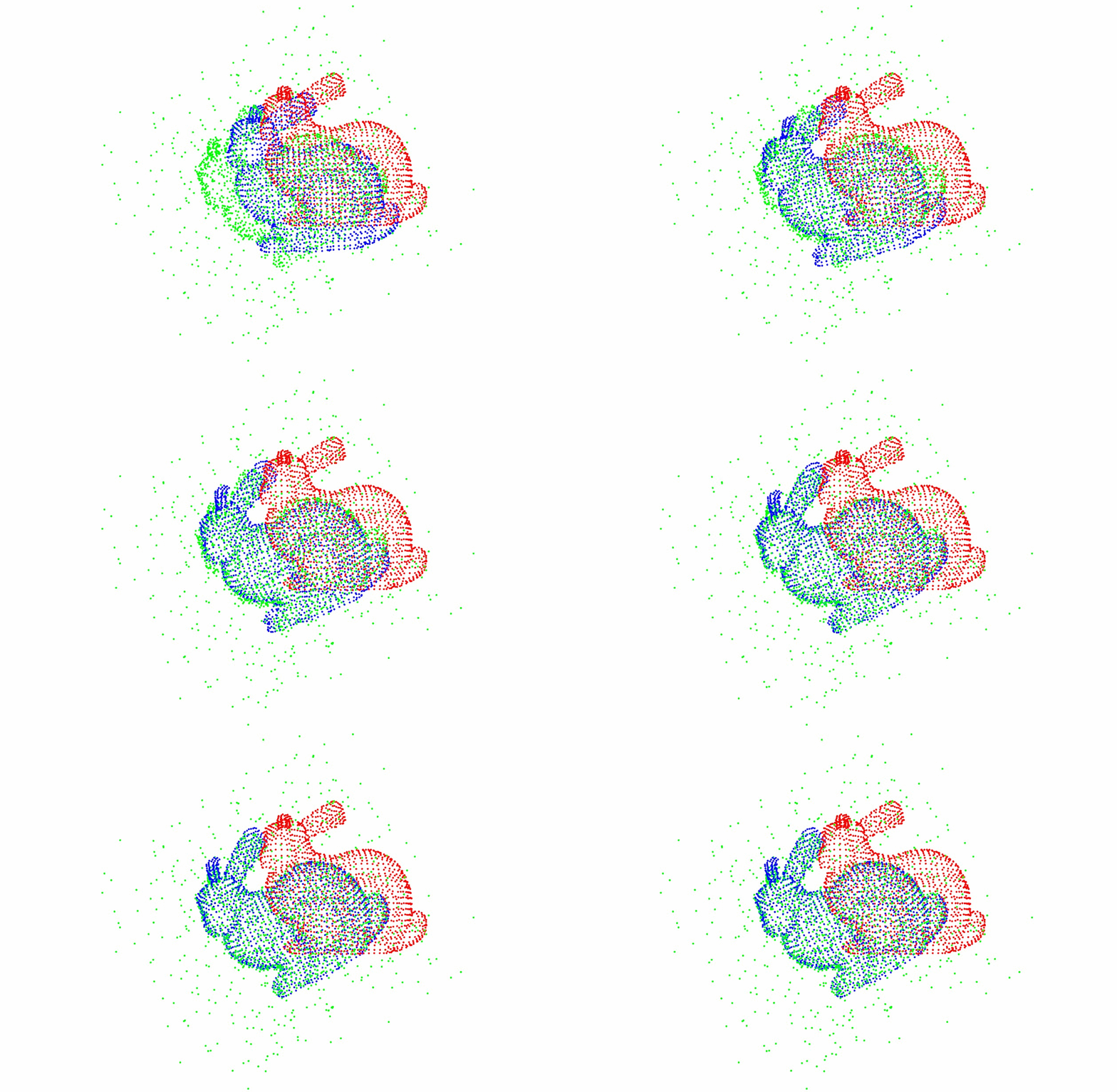 |
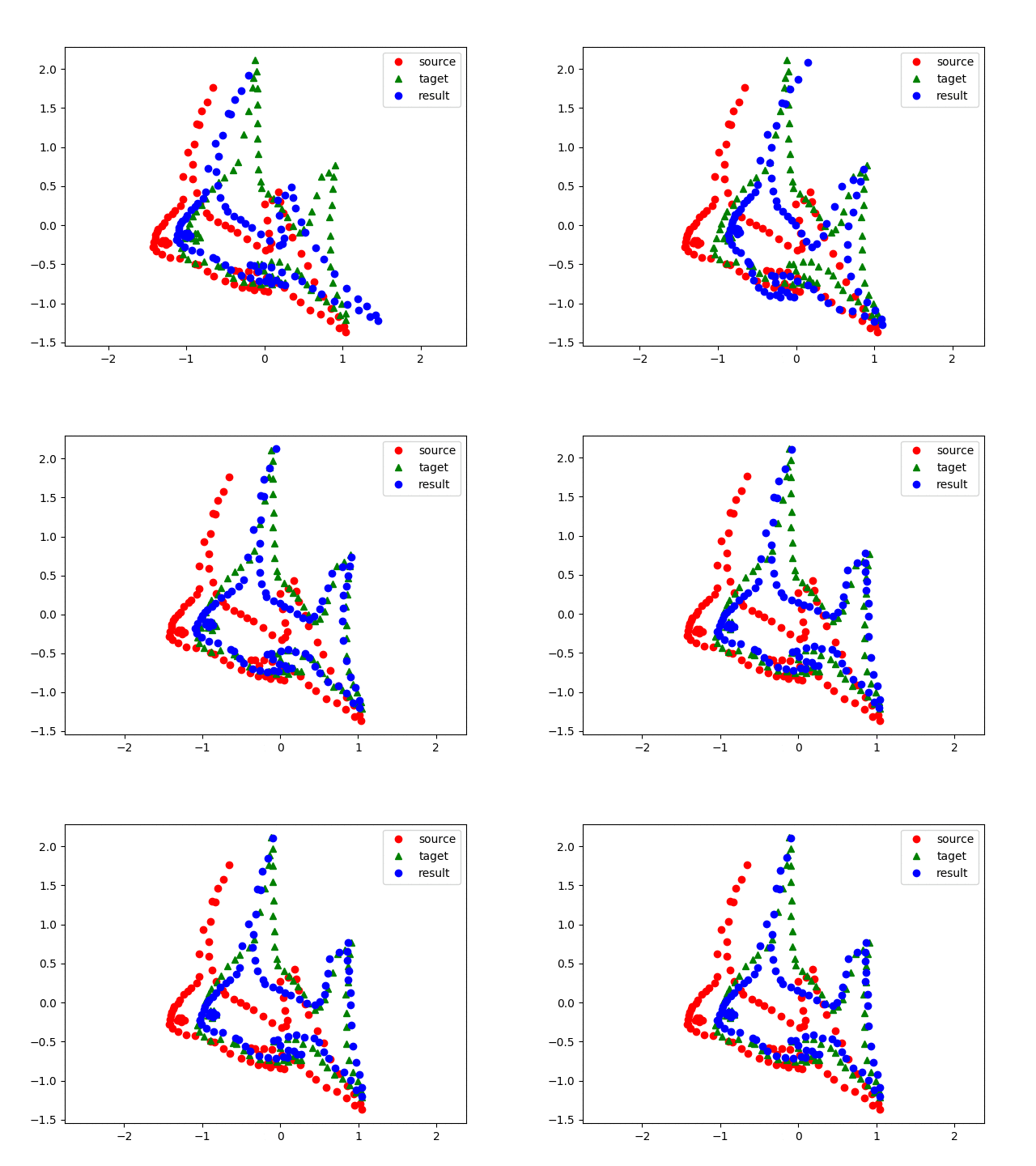
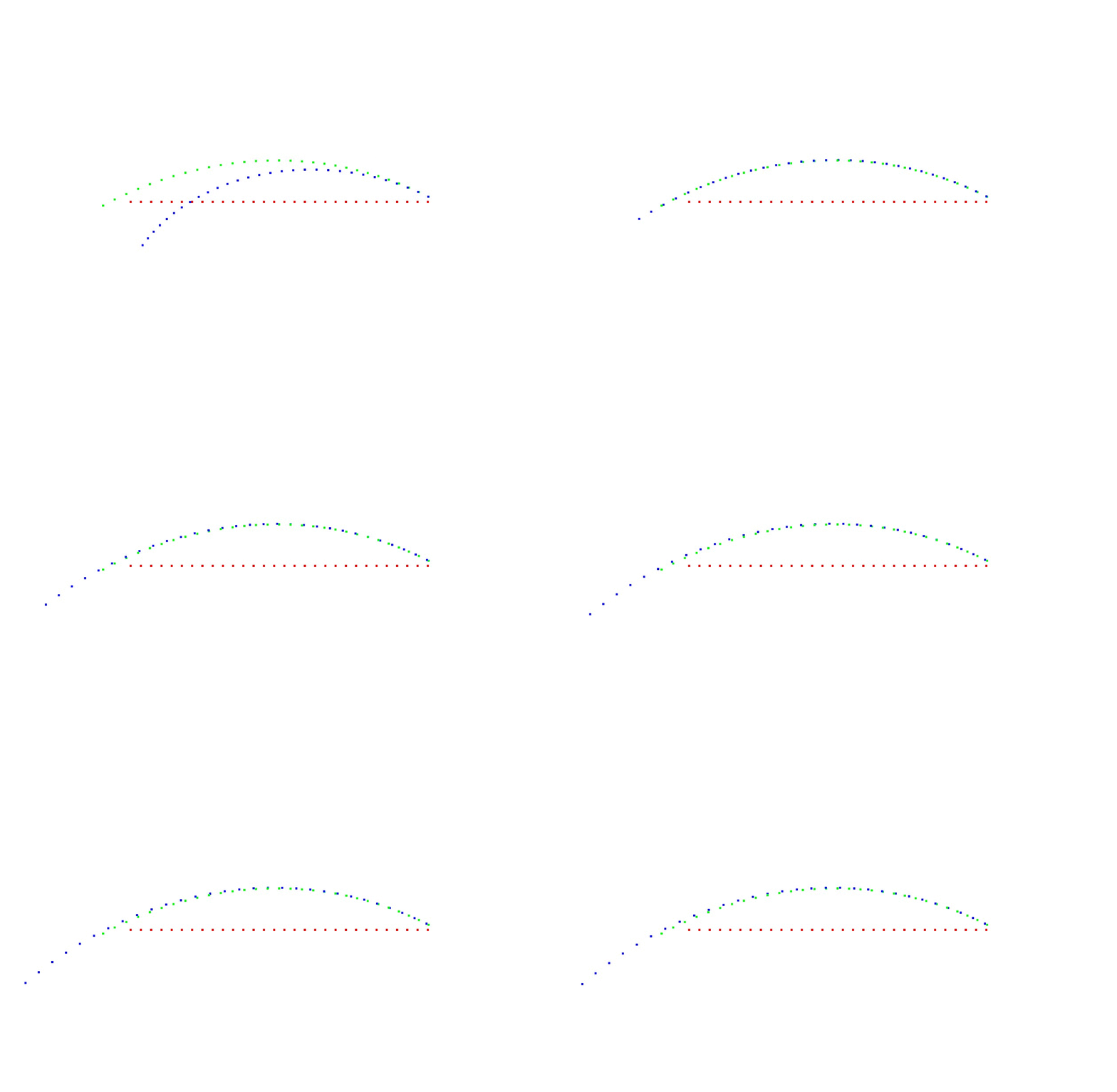
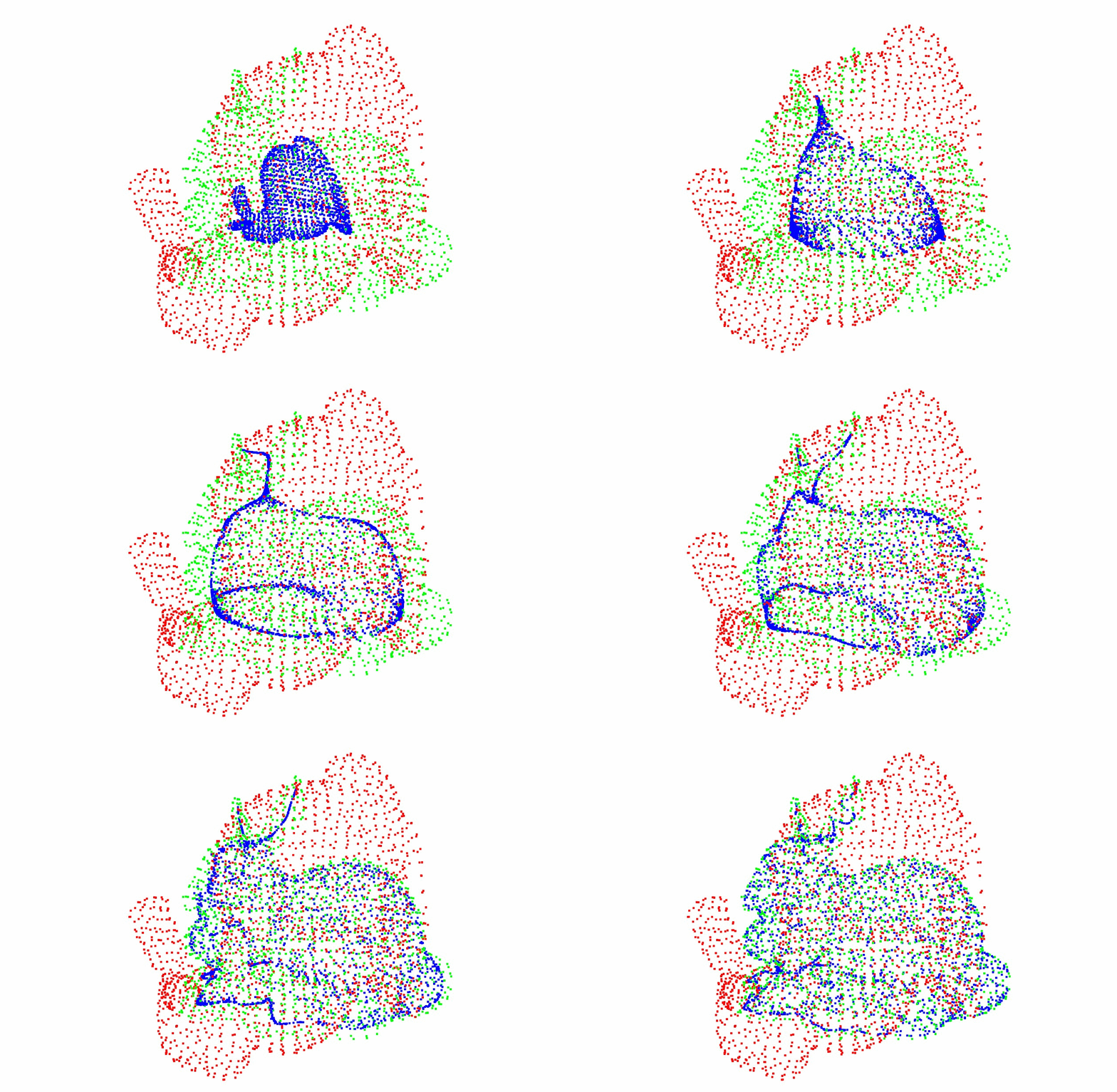
Non rigid registration
| CPD | SVR | Filterreg | BCPD |
|---|---|---|---|
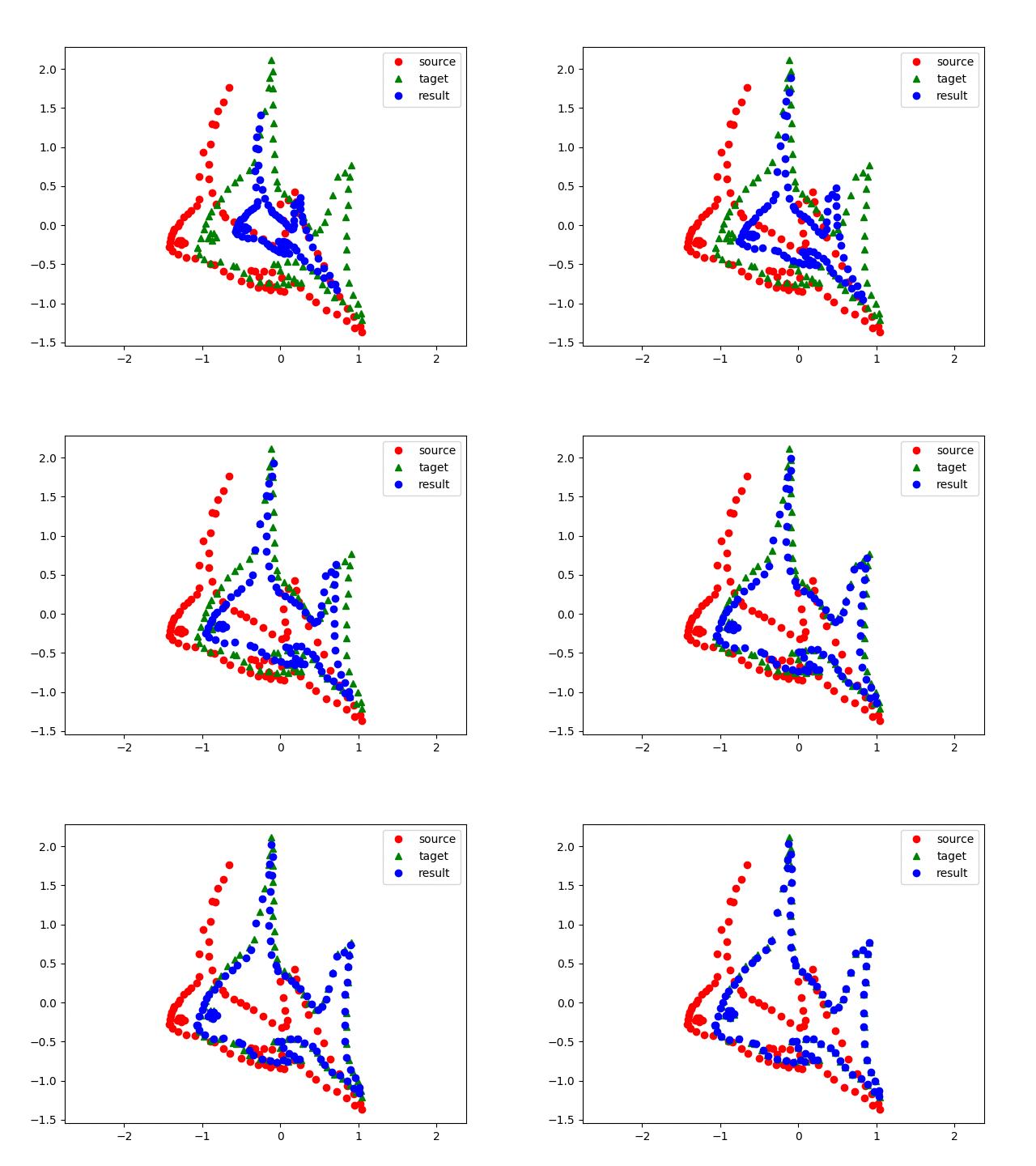 |
 |
 |
 |
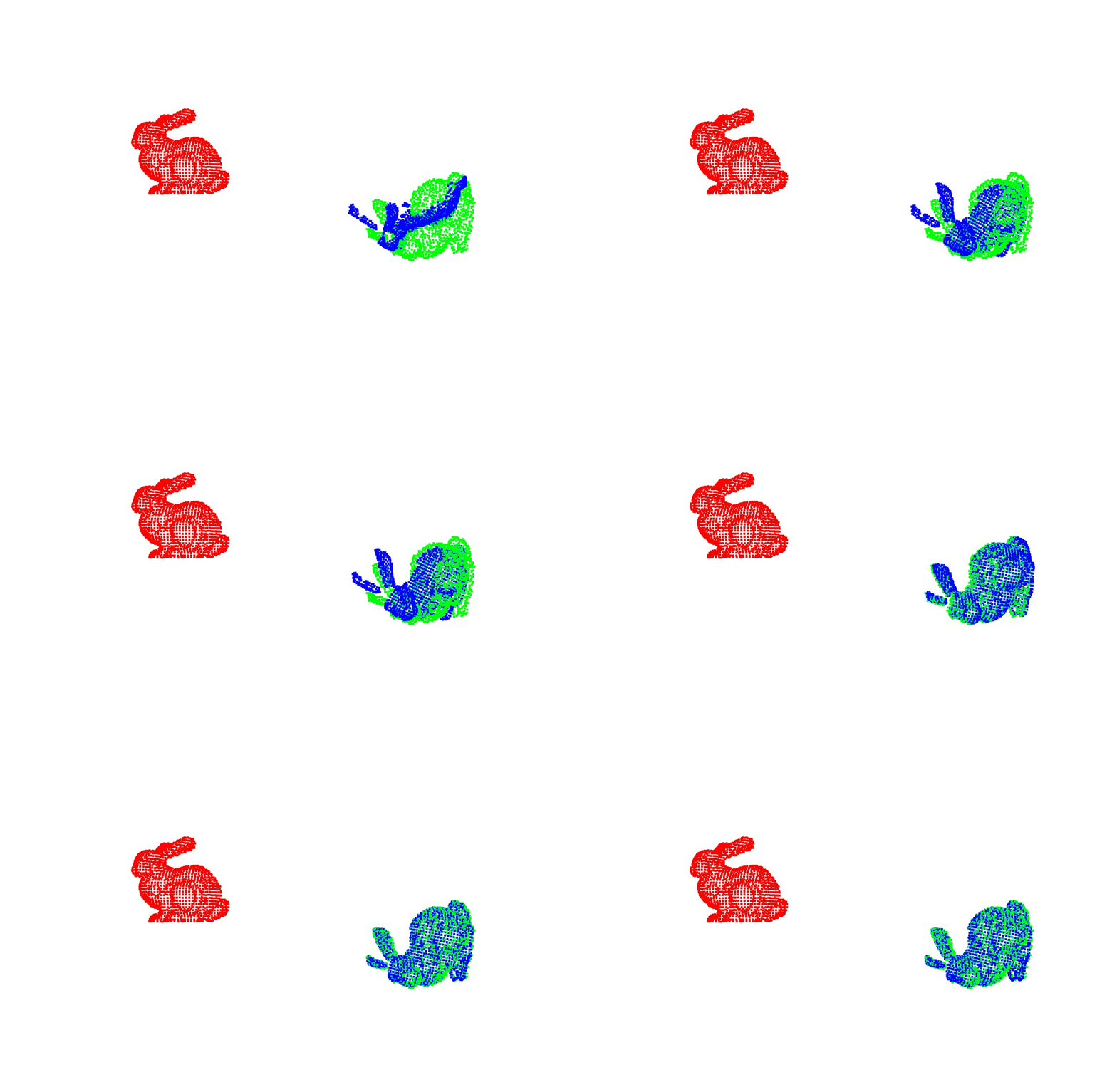
Feature based registration
| FPFH FilterReg |
|---|
 |
Time measurement
Execute an example script for measuring time.
OMP_NUM_THREADS=1 python time_measurement.py

# Results [s]
# ICP(Open3D):  0.0014092829951550812
# CPD:  0.038112225010991096
# SVR:  0.036476270004641265
# GMMTree:  0.10535842599347234
# FilterReg:  0.005098833993542939
Citing
@software{probreg,
    author = {{Kenta-Tanaka et al.}},
    title = {probreg},
    url = {https://probreg.readthedocs.io/en/latest/},
    version = {0.1.6},
    date = {2019-9-29},
}
探索相关项目
加载中…