
ibis-project/ibis has 6,700 GitHub stars and 786 forks. GitHot measured -1 stars in 24 hours and +4 in 7 days. Last checked 2026-11-13 04:38 UTC. Last push 2026-11-06.
the portable Python dataframe library
实测星标增长
- 24小时
- -1
- 7天
- +4
- 15天
- 正在收集历史
- 1个月
- 正在收集历史
各周期内的星标净变化,周期相互重叠,并非每日新增。缺失的测量保持空白。星标代表关注度,不代表软件质量。
README.md
原文Ibis


What is Ibis?
Ibis is the portable Python dataframe library:
- Fast local dataframes (via DuckDB by default)
- Lazy dataframe expressions
- Interactive mode for iterative data exploration
- Compose Python dataframe and SQL code
- Use the same dataframe API for more than 20 backends
- Iterate locally and deploy remotely by changing a single line of code
See the documentation on "Why Ibis?" to learn more.
Getting started
You can pip install Ibis with a backend and example data:
pip install 'ibis-framework[duckdb,examples]'
💡 Tip
See the installation guide for more installation options.
Then use Ibis:
>>> import ibis
>>> ibis.options.interactive = True
>>> t = ibis.examples.penguins.fetch()
>>> t
┏━━━━━━━━━┳━━━━━━━━━━━┳━━━━━━━━━━━━━━━━┳━━━━━━━━━━━━━━━┳━━━━━━━━━━━━━━━━━━━┳━━━━━━━━━━━━━┳━━━━━━━━┳━━━━━━━┓
┃ species ┃ island    ┃ bill_length_mm ┃ bill_depth_mm ┃ flipper_length_mm ┃ body_mass_g ┃ sex    ┃ year  ┃
┡━━━━━━━━━╇━━━━━━━━━━━╇━━━━━━━━━━━━━━━━╇━━━━━━━━━━━━━━━╇━━━━━━━━━━━━━━━━━━━╇━━━━━━━━━━━━━╇━━━━━━━━╇━━━━━━━┩
│ string  │ string    │ float64        │ float64       │ int64             │ int64       │ string │ int64 │
├─────────┼───────────┼────────────────┼───────────────┼───────────────────┼─────────────┼────────┼───────┤
│ Adelie  │ Torgersen │           39.1 │          18.7 │               181 │        3750 │ male   │  2007 │
│ Adelie  │ Torgersen │           39.5 │          17.4 │               186 │        3800 │ female │  2007 │
│ Adelie  │ Torgersen │           40.3 │          18.0 │               195 │        3250 │ female │  2007 │
│ Adelie  │ Torgersen │           NULL │          NULL │              NULL │        NULL │ NULL   │  2007 │
│ Adelie  │ Torgersen │           36.7 │          19.3 │               193 │        3450 │ female │  2007 │
│ Adelie  │ Torgersen │           39.3 │          20.6 │               190 │        3650 │ male   │  2007 │
│ Adelie  │ Torgersen │           38.9 │          17.8 │               181 │        3625 │ female │  2007 │
│ Adelie  │ Torgersen │           39.2 │          19.6 │               195 │        4675 │ male   │  2007 │
│ Adelie  │ Torgersen │           34.1 │          18.1 │               193 │        3475 │ NULL   │  2007 │
│ Adelie  │ Torgersen │           42.0 │          20.2 │               190 │        4250 │ NULL   │  2007 │
│ …       │ …         │              … │             … │                 … │           … │ …      │     … │
└─────────┴───────────┴────────────────┴───────────────┴───────────────────┴─────────────┴────────┴───────┘
>>> g = t.group_by("species", "island").agg(count=t.count()).order_by("count")
>>> g
┏━━━━━━━━━━━┳━━━━━━━━━━━┳━━━━━━━┓
┃ species   ┃ island    ┃ count ┃
┡━━━━━━━━━━━╇━━━━━━━━━━━╇━━━━━━━┩
│ string    │ string    │ int64 │
├───────────┼───────────┼───────┤
│ Adelie    │ Biscoe    │    44 │
│ Adelie    │ Torgersen │    52 │
│ Adelie    │ Dream     │    56 │
│ Chinstrap │ Dream     │    68 │
│ Gentoo    │ Biscoe    │   124 │
└───────────┴───────────┴───────┘
💡 Tip
See the getting started tutorial for a full introduction to Ibis.
Python + SQL: better together
For most backends, Ibis works by compiling its dataframe expressions into SQL:
>>> ibis.to_sql(g)
SELECT
  "t1"."species",
  "t1"."island",
  "t1"."count"
FROM (
  SELECT
    "t0"."species",
    "t0"."island",
    COUNT(*) AS "count"
  FROM "penguins" AS "t0"
  GROUP BY
    1,
    2
) AS "t1"
ORDER BY
  "t1"."count" ASC
You can mix SQL and Python code:
>>> a = t.sql("SELECT species, island, count(*) AS count FROM penguins GROUP BY 1, 2")
>>> a
┏━━━━━━━━━━━┳━━━━━━━━━━━┳━━━━━━━┓
┃ species   ┃ island    ┃ count ┃
┡━━━━━━━━━━━╇━━━━━━━━━━━╇━━━━━━━┩
│ string    │ string    │ int64 │
├───────────┼───────────┼───────┤
│ Adelie    │ Torgersen │    52 │
│ Adelie    │ Biscoe    │    44 │
│ Adelie    │ Dream     │    56 │
│ Gentoo    │ Biscoe    │   124 │
│ Chinstrap │ Dream     │    68 │
└───────────┴───────────┴───────┘
>>> b = a.order_by("count")
>>> b
┏━━━━━━━━━━━┳━━━━━━━━━━━┳━━━━━━━┓
┃ species   ┃ island    ┃ count ┃
┡━━━━━━━━━━━╇━━━━━━━━━━━╇━━━━━━━┩
│ string    │ string    │ int64 │
├───────────┼───────────┼───────┤
│ Adelie    │ Biscoe    │    44 │
│ Adelie    │ Torgersen │    52 │
│ Adelie    │ Dream     │    56 │
│ Chinstrap │ Dream     │    68 │
│ Gentoo    │ Biscoe    │   124 │
└───────────┴───────────┴───────┘
This allows you to combine the flexibility of Python with the scale and performance of modern SQL.
Backends
Ibis supports more than 20 backends:
- Apache DataFusion
- Apache Druid
- Apache Flink
- Apache Impala
- Apache PySpark
- Athena
- BigQuery
- ClickHouse
- Databricks
- DuckDB
- Exasol
- Materialize
- MySQL/MariaDB
- Oracle
- Polars
- PostgreSQL
- RisingWave
- SingleStoreDB
- SQL Server
- SQLite
- Snowflake
- Trino
How it works
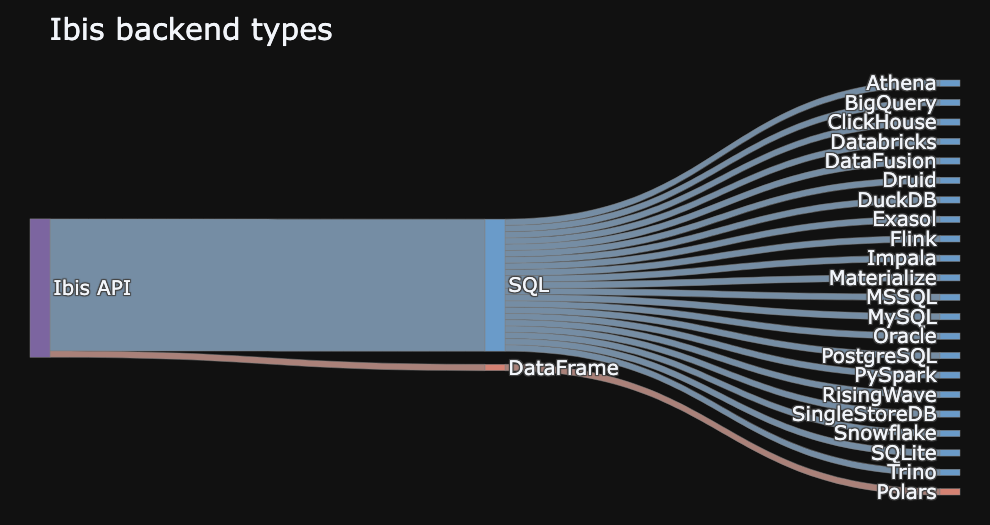
Most Python dataframes are tightly coupled to their execution engine. And many databases only support SQL, with no Python API. Ibis solves this problem by providing a common API for data manipulation in Python, and compiling that API into the backend’s native language. This means you can learn a single API and use it across any supported backend (execution engine).
Ibis broadly supports two types of backend:
- SQL-generating backends
- DataFrame-generating backends
Portability
To use different backends, you can set the backend Ibis uses:
>>> ibis.set_backend("duckdb")
>>> ibis.set_backend("polars")
>>> ibis.set_backend("datafusion")
Typically, you'll create a connection object:
>>> con = ibis.duckdb.connect()
>>> con = ibis.polars.connect()
>>> con = ibis.datafusion.connect()
And work with tables in that backend:
>>> con.list_tables()
['penguins']
>>> t = con.table("penguins")
You can also read from common file formats like CSV or Apache Parquet:
>>> t = con.read_csv("penguins.csv")
>>> t = con.read_parquet("penguins.parquet")
This allows you to iterate locally and deploy remotely by changing a single line of code.
💡 Tip
Check out the blog on backend agnostic arrays for one example using the same code across DuckDB and BigQuery.
Community and contributing
Ibis is an open source project and welcomes contributions from anyone in the community.
- Read the contributing guide.
- We care about keeping the community welcoming for all. Check out the code of conduct.
- The Ibis project is open sourced under the Apache License.
Join our community by interacting on GitHub or chatting with us on Zulip.
For more information visit https://ibis-project.org/.
Governance
The Ibis project is an independently governed open source community project to build and maintain the portable Python dataframe library. Ibis has contributors across a range of data companies and institutions.
探索相关项目
Asabeneh/30-Days-Of-Python
30 Days of Python 编程挑战是一份循序渐进的指南,用于在 30 天内学习 Python 编程语言。这项挑战可能需要超过 100 天。请按自己的节奏进行。这些视频或许也有帮助:https://www.youtube.com/channel/UC7PNRuno1rzYPb1xLa4yktw
78,618 星标grafana/grafana
开放且可组合的可观测性与数据可视化平台。可对来自 Prometheus、Loki、Elasticsearch、InfluxDB、Postgres 等众多数据源的指标、日志和追踪进行可视化。
77,859 星标redis/redis
对于正在构建实时数据驱动应用的开发者而言,Redis 是首选、速度最快且功能最丰富的缓存、数据结构服务器和文档与向量查询引擎。
77,472 星标apache/superset
Apache Superset 是一个数据可视化与数据探索平台
75,495 星标