
hardness1020/learn-agent-architecture
hardness1020/learn-agent-architecture has 1,218 GitHub stars and 123 forks. GitHot measured +4 stars in 24 hours and +15 in 7 days. Last checked 2026-11-10 22:19 UTC. Last push 2026-10-21.
Learn AI agents from scratch.
实测星标增长
- 24小时
- +4
- 7天
- +15
- 15天
- 更新延迟
- 1个月
- 更新延迟
各周期内的星标净变化,周期相互重叠,并非每日新增。缺失的测量保持空白。星标代表关注度,不代表软件质量。
README.zh-CN.md
原文Learn Agent Architecture
学会现代 AI agent 如何围绕 LLM 打造。




English · 繁體中文 · 简体中文 · 日本語 · 한국어
模型负责推理,harness(外层架构)则负责把推理变成可控的行动。工具怎么执行、状态怎么保留、副作用怎么限制,以及多个 loop 怎么协调,都不是一次模型调用能处理的事。
这个 repo 会逐章拆解 harness 的核心组件,包括 loop、tool、memory、permission、context、task 和 interface。 读完之后,你会更容易看懂各种 agent。coding 工具、聊天助手和自动化运行器看起来差很多,但核心差异通常都来自 harness 的设计选择。
如果想把单一主题学得更深,也可以接着看这三个延伸 repo:
- learn-agent-memory:把 memory loop 扩展成适合 production 的完整 memory 子系统。
- learn-deepseek-harness:从零重建 deepseek-harness,每一章专注拆解一个 plugin 接口。
- EvalGrill:把 agent 应用的真实案例转成可重现、可验证的 eval set。
目录: Agent loop · 学习方法 · 研究的系统 · 各章节 · 文件结构 · 执行示例
Agent loop
大多数 agent 都共享同一套控制流程:调用模型、执行它要求的工具、把结果加回对话,然后再次调用模型。
这个 loop 很小。大部分的工程都在它周围:分发工具、把关副作用、管理 context、保存状态,还有协调其他 loop。
学习方法
每一章都可以独立阅读,并从四个固定角度切入:
- 问题: 这一层为什么存在,又要解决什么。
- 核心机制: 通用的设计方式与控制流程。
- 实际做法: 真实系统如何实现同一个概念。
- 常见问题: 哪些地方容易出错,以及如何处理。
建议的学习方式:
- 照顺序读。每一章都建立在前一层之上。
- 遇到可执行的章节,先读
src/loop.py,再跑它的demo.py。 - 比较相邻章节的
src/diff,差异通常就是该章新加入的机制。
研究的系统
每个系统都是下面各章节的实现示例。
| 系统 | 大家为什么用它 | 值得看的地方 | 覆盖章节 | 研究版本 |
|---|---|---|---|---|
| Claude Code | 站在前沿的 coding agent:改文件、跑指令,直接在真实 repo 里完成改动。 | 完整 harness 架构,从这里读起 | 0 到 23(全部) | v2.1.88 |
| Hermes Agent | 长期助手:记得你、学会你的工作流程,还能跨平台跑任务。 | Memory、skills、always-on channels | 7、9、14、16、19、21、22 | v2026.7.1 |
| mini-swe-agent | 研究基准:一个 bash 工具,约 150 行。 | 最小的完整 loop、budget、eval harness | 0 到 3、8、10、11、20 到 23 | v2.4.5 |
| deepseek-harness | Plugin 优先的 harness:连 loop 都是可替换的 plugin。 | Plugin 扩展点、durable session log、ACP | 1 到 8、10 到 14、16 到 21 | dsh-v0.1.0-rc.7 |
| (更多陆续加入) |
之后可以再加入更多系统,例如 OpenClaw 和 aider。 另外有两个延伸 repo:learn-agent-memory 专讲 memory 这一层, learn-deepseek-harness 则是从零开始学 deepseek-harness。
各章节
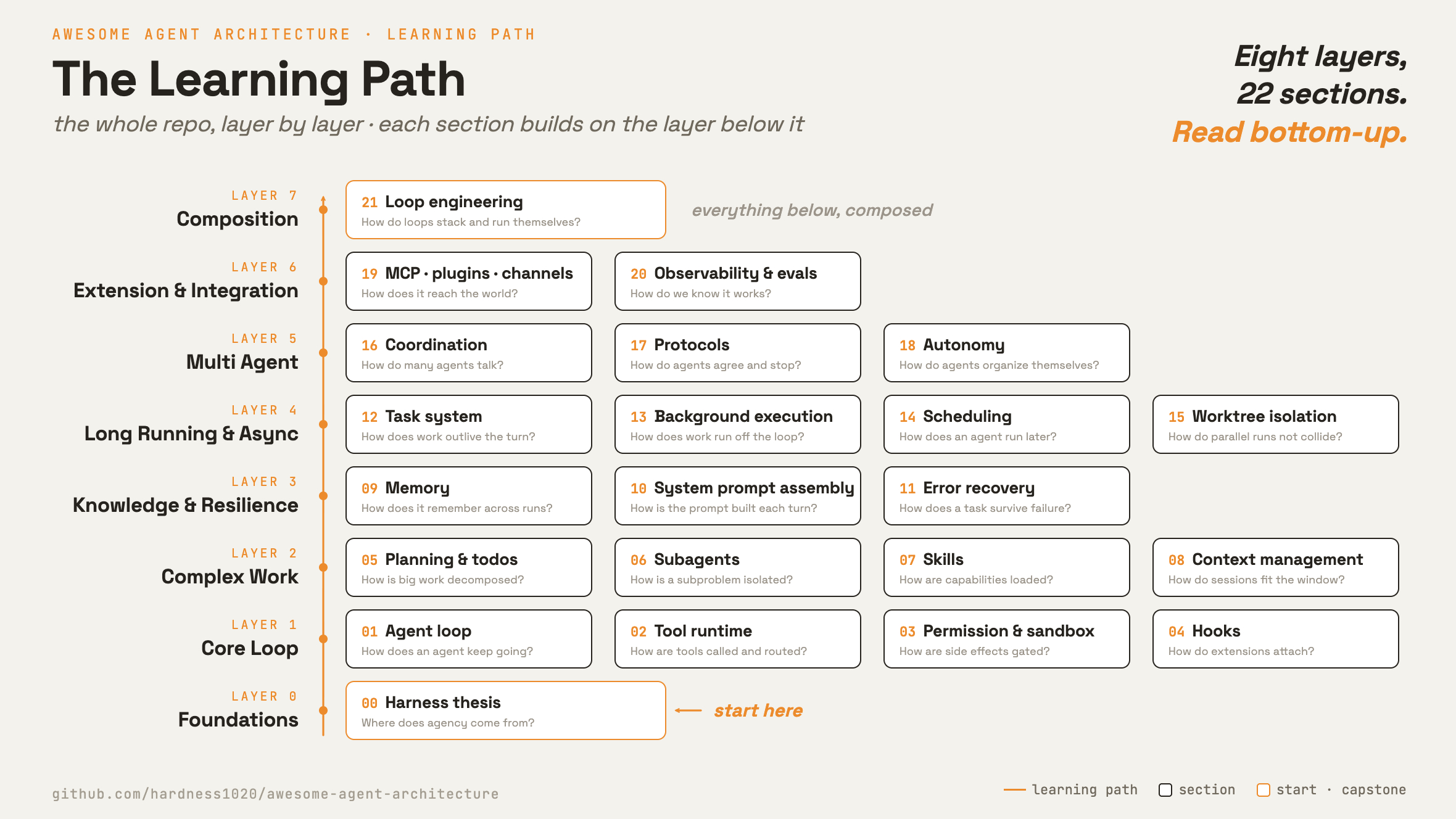
八层,从最基本的 loop 一路到能自己运转的 harness。每一行都连到一篇可独立阅读的说明。
learn-agent-memory 会继续延伸第 9 章,用十个阶段把基础 memory loop 扩展到 production 规模。
| # | 章节 | 问题 | 关键机制 |
|---|---|---|---|
| 第 0 层 · 基础 | |||
| 0 | Harness thesis | agency(能动性)从哪里来? | Model vs harness, actions, observations, permissions |
| 第 1 层 · 核心 loop | |||
| 1 | Agent loop | agent 怎么持续运作? | messages[], loop, stop_reason |
| 2 | Tool runtime | 工具怎么被调用和路由? | Registry, schemas, dispatch, deferred search |
| 3 | Permission & sandbox | 副作用怎么被管控? | Permission modes, approvals, sandboxing |
| 4 | Hooks | 扩展功能怎么挂进 loop? | PreToolUse, PostToolUse, lifecycle events |
| 第 2 层 · 复杂工作 | |||
| 5 | Planning & todos | 大工作怎么拆解? | Plan mode, todo list, approval before edits |
| 6 | Subagents | 子问题怎么被隔离? | Fresh messages[], delegation, child loop |
| 7 | Skills | 能力怎么按需加载? | SKILL.md, catalog, progressive disclosure |
| 8 | Context management | 长对话怎么控制在 context window 内? | Budgeting, stubs, compaction, summaries |
| 第 3 层 · 知识与韧性 | |||
| 9 | Memory | 它如何跨运行保留记忆? | Selection, recall, extraction, consolidation |
| 10 | System prompt assembly | 每一轮的 prompt 怎么生成? | Prompt sections, live state, cache boundaries |
| 11 | Error recovery | 长任务怎么在失败中存活? | Retries, overflow recovery, fallback model |
| 第 4 层 · 长时间执行与异步 | |||
| 12 | Task system | 工作怎么跨越单一轮次持续存在? | Task records, dependencies, locks |
| 13 | Background execution | 工作怎么在主 loop 之外执行? | Handles, task state, notification queue |
| 14 | Scheduling | agent 怎么在之后才执行? | Cron, sleep, remote triggers, queues |
| 15 | Worktree isolation | 并行工作怎么避免冲突? | Git worktrees, cwd binding, safe cleanup |
| 第 5 层 · 多 Agent | |||
| 16 | Coordination | 多个 agent 怎么沟通? | Inboxes, broadcasts, permission bubbling |
| 17 | Protocols | agent 怎么达成共识并干净收尾? | Plan approval, shutdown handshakes |
| 18 | Autonomy | agent 怎么自我组织? | Idle cycle, task claiming, self organization |
| 第 6 层 · 扩展与集成 | |||
| 19 | MCP / plugins / channels | harness 怎么连到外面的世界? | Transports, channels, tool pool assembly |
| 20 | Observability & evaluation | 我们怎么知道它有效? | Tracing, metrics, evals, failure analysis |
| 23 | Evaluation | 怎么知道这次改动有没有让它变好? | Eval environments, resets, judges, Pass^k |
| 第 7 层 · 组合 | |||
| 21 | Loop engineering | loop 怎么叠成一个能自己运转的系统? | Verification loop, triggers, budgets, maturity levels |
| 22 | Graph engineering | 什么时候该让代码决定下一步,而不是问 model? | Nodes, coded edges, cycles, agents as nodes, typed decision edges |
文件结构
24 篇章节说明都已备齐,从 00-harness-thesis/ 一路到 23-evaluation/。
learn-agent-architecture/
├── README.md                  # 最上层地图
├── sections/                  # 每个章节一个文件夹
│   ├── 00-harness-thesis/     # 每章一份 README.md
│   ├── 01-agent-loop/src/     # 可执行的代码链从这里开始
│   ├── ...
│   └── 23-evaluation/
└── references/                # 原始出处与前人成果
每个章节文件夹都是 NN-name/ 格式,里面有一份 README.md。
第 1 到 23 章还带有可执行的 src/。代码一章一章累积上去。
每一章添加一个机制,并让 loop.py 演进,所以对比相邻两章的 diff,就能看出改了什么。
超出单一章节篇幅的深入主题,会独立成自己的 repo。 learn-agent-memory 把第 9 章的 memory loop 扩展成完整子系统。 learn-deepseek-harness 从零开始学 deepseek-harness,每次拆解一个 plugin 扩展点。
执行示例
第 1 到 23 章都附有可执行的示例。从 repo 根目录配置一次就好:
uv venv
uv pip install -r requirements.txt
cp .env.example .env        # then add your ANTHROPIC_API_KEY
固定版本的依赖软件包放在 requirements.txt。.env 已被 gitignore,内容包含:
ANTHROPIC_API_KEY- 可选的
ANTHROPIC_MODEL - 可选的
ANTHROPIC_BASE_URL
每个可执行的章节都有:
test.py:离线检查,不需要密钥。demo.py:对 API 的实时示例。
python sections/01-agent-loop/src/test.py         # offline
uv run python sections/01-agent-loop/src/demo.py  # live
参与贡献
- 添加一个系统。 把新的 agent 放进同一套章节结构里。
- 深化某一章。 补上一个机制、更清楚的图,或更精准的出错分析。
- 修正内容。 这些都是从源代码、文档和实际行为重建出来的。欢迎附上出处的修正。
请优先采用有名字、可查证的机制,而不是臆测。记得引用出处。 完整的 PR 检查列表见 CONTRIBUTING.md。
参考资料
- claude-code: Claude Code 源代码备份,用来对照机制名称与实现路径。
- hermes-agent: 开源 agent harness(MIT),作为第二个研究系统。
- mini-swe-agent: 极简 SWE agent(MIT),作为第三个研究系统。
- deepseek-harness: 以 plugin 为基础的 agent harness(MIT),作为第四个研究系统。
- learn-claude-code: 以代码为主的 harness 重建与章节架构。
- EvalGrill: 应用第 23 章做法的延伸工具 (Apache-2.0),把 agent 应用的真实案例做成 eval set。
- Anthropic Agent Skills 最佳实践: skills 的渐进式披露层级。
- Anthropic prompt caching: cache 断点、TTL、计价与 token 下限。
- cobusgreyling/loop-engineering: loop 的组成模块与成熟度分级。
- LangChain · The art of loop engineering: 四层堆叠的 loop。
- Addy Osmani · Loop engineering: 由模块组合出的 agent loop。
- MindStudio · What is loop engineering: 自主工作流的目标条件。
- Lilian Weng · Harness engineering for self-improvement: 改进 loop,以及放在 loop 外的把关。
- LangChain · 3 years of graph engineering: node、edge、cycle,以及把 agent 当 node。
- Anthropic · Building effective agents: workflow 与 agent 的分界,加上五种 workflow 图形。
- Google · Why we built ADK 2.0: 用代码选路,以及 node 之间的 context 隔离。
- TypeSafe Jev docs:带类型的 decision model,request 的约定和答案的形状。
第 22 章在
decide.py把它接到 graph 的 edge 上。 - ai-agent-book: 《深入理解 AI Agent》(李博杰著,Apache-2.0)。第 6 章是评估本章的主要出处。
致谢
感谢这些收录清单把本项目列进去:
探索相关项目
affaan-m/ECC
智能体执行与控制框架的性能优化系统。面向 Claude Code、Codex、Opencode、Cursor 等,涵盖技能、本能、记忆、安全与研究优先的开发。
301,418 星标NousResearch/hermes-agent
与你一同成长的智能体
262,749 星标multica-ai/andrej-karpathy-skills
一个用于改进 Claude Code 行为的 CLAUDE.md 文件,源自 Andrej Karpathy 对 LLM 编程陷阱的观察。
232,247 星标firecrawl/firecrawl
借助来自网络及其他来源的数据,强化你的 AI 智能体。正在构建面向超级智能的资料库。🔥
200,932 星标