
dbt-labs/dbt has 14,136 GitHub stars and 2,665 forks. GitHot measured +24 in 7 days. Last checked 2026-11-09 11:43 UTC. Last push 2026-11-04.
dbt 帮助数据分析师和数据工程师运用软件工程师构建应用程序时采用的实践来转换数据。
实测星标增长
- 24小时
- 更新延迟
- 7天
- +24
- 15天
- 更新延迟
- 1个月
- 更新延迟
各周期内的星标净变化,周期相互重叠,并非每日新增。缺失的测量保持空白。星标代表关注度,不代表软件质量。
README.md
原文


[!WARNING] dbt v1 development has moved to the
1.latestbranch. Themainbranch now contains all the Apache 2.0 source code of dbt v2.0 — a ground-up rewrite of dbt in Rust. If you're looking for the v1 Python implementation of the dbt framework, switch to1.latest.
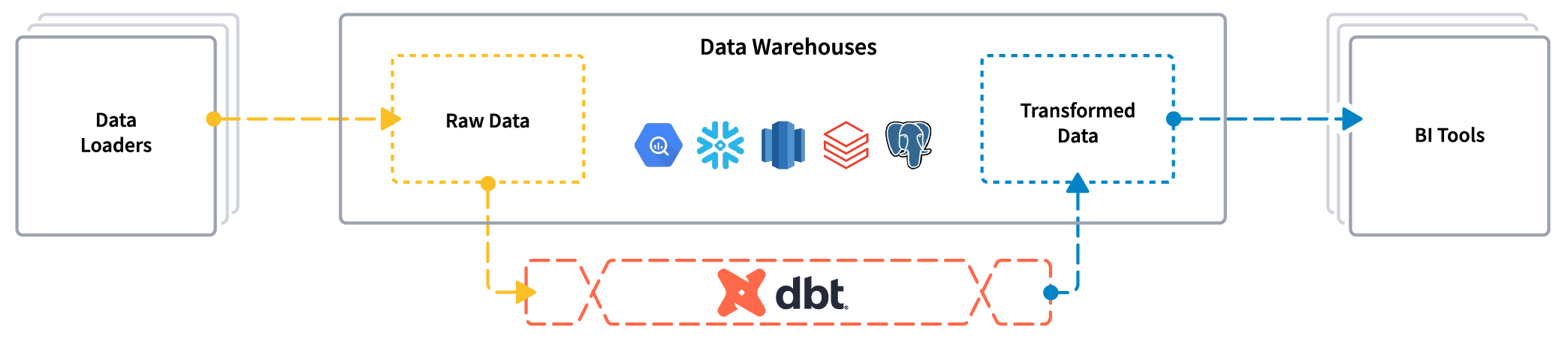
dbt enables data analysts and engineers to transform their data using the same practices that software engineers use to build applications.
About dbt v2.0
dbt v2.0 is engineered for performance at scale. It parses, compiles, and runs projects in a fraction of the time compared to v1. The source code in this repository is available to everyone under the standard Apache 2.0 license. dbt is a distribution of the dbt repository with dbt-specific customizations released under a dbt product license.
The big shifts from v1:
- Faster — parse and compile times are dramatically improved, especially on the largest dbt projects.
- Stricter — a tightly-defined language specification enforces correctness at parse time.
- More scalable artifacts — v2.0 produces Parquet artifacts that can be easily queried, joined, and analyzed to understand your dbt project. The artifacts encompass everything in the JSON artifacts (e.g.
manifest.json), which continue to be produced for backwards compatibility. - Easier to install — distributed as a single self-contained binary, with no Python runtime or dependency management required.
- A completely revamped local documentation experience — dbt docs is now powered by those new artifacts and capable of scaling to large projects.
Supported operating systems and architectures
dbt v2.0 and its drivers are compiled per operating system and architecture.
Legend:
- 🟢 — Supported today
- 🟡 — Not yet supported
| Operating system | x86-64 | ARM |
|---|---|---|
| macOS | 🟢 | 🟢 |
| Linux | 🟢 | 🟢 |
| Windows | 🟢 | 🟡 |
Understanding dbt
Analysts using dbt can transform their data by simply writing select statements, while dbt handles turning these statements into tables and views in a data warehouse.
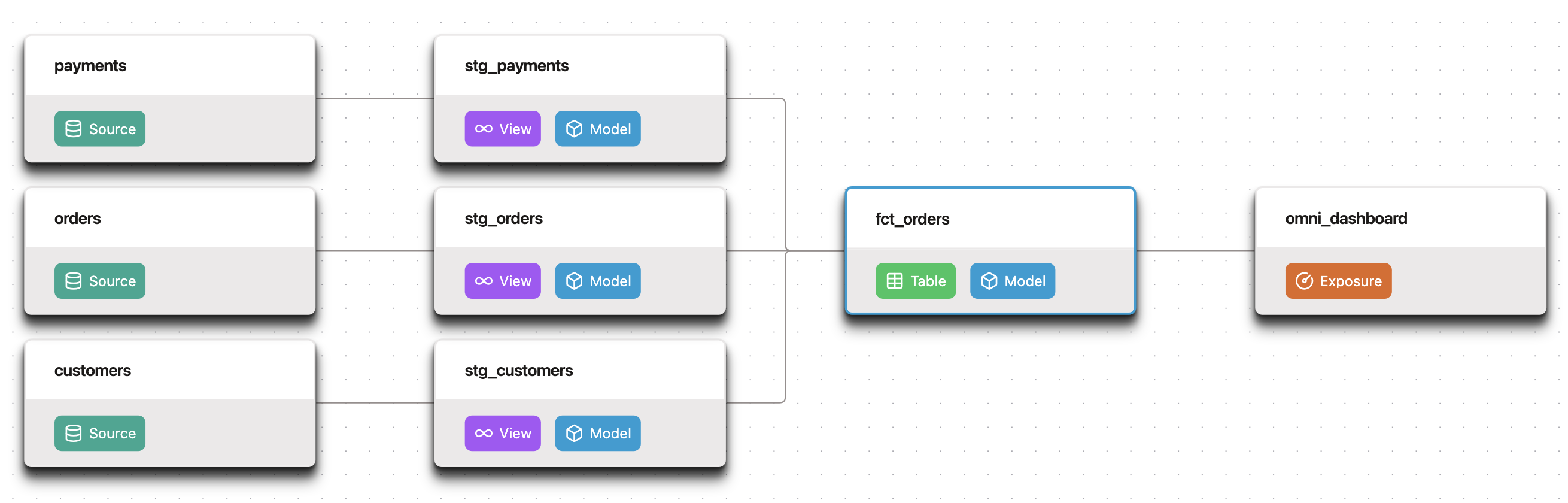
These select statements, or "models", form a dbt project. Models frequently build on top of one another – dbt makes it easy to manage relationships between models, and visualize these relationships, as well as assure the quality of your transformations through testing.
Getting started
- Install dbt
- Read the introduction and viewpoint
- Explore the dbt platform for an enhanced collaboration experience.
Join the dbt Community
- Be part of the conversation in the dbt Community Slack
- Read more on the dbt Community Discourse
Reporting bugs and contributing code
- Want to report a bug or request a feature? Let us know and open an issue
- Want to help us build dbt? Check out the Contributing Guide
Code of Conduct
Everyone interacting in the dbt project's codebases, issue trackers, chat rooms, and mailing lists is expected to follow the dbt Code of Conduct.
License
The source code in this repository is licensed under the Apache License 2.0.
探索相关项目
Asabeneh/30-Days-Of-Python
30 Days of Python 编程挑战是一份循序渐进的指南,用于在 30 天内学习 Python 编程语言。这项挑战可能需要超过 100 天。请按自己的节奏进行。这些视频或许也有帮助:https://www.youtube.com/channel/UC7PNRuno1rzYPb1xLa4yktw
78,486 星标grafana/grafana
开放且可组合的可观测性与数据可视化平台。可对来自 Prometheus、Loki、Elasticsearch、InfluxDB、Postgres 等众多数据源的指标、日志和追踪进行可视化。
77,790 星标redis/redis
对于正在构建实时数据驱动应用的开发者而言,Redis 是首选、速度最快且功能最丰富的缓存、数据结构服务器和文档与向量查询引擎。
77,332 星标apache/superset
Apache Superset 是一个数据可视化与数据探索平台
75,455 星标