
gaussctrl
ActiveVisionLab
136stars
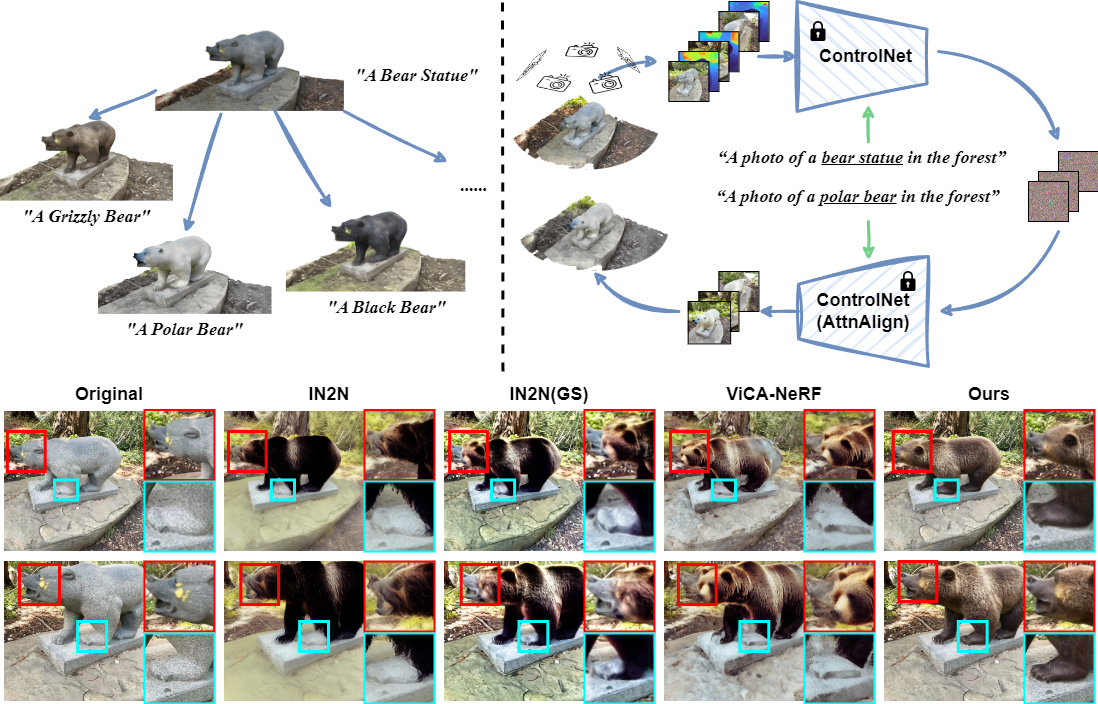
[ECCV 2024] GaussCtrl: Multi-View Consistent Text-Driven 3D Gaussian Splatting Editing
Train, evaluate, and run machine learning models.
ActiveVisionLab
[ECCV 2024] GaussCtrl: Multi-View Consistent Text-Driven 3D Gaussian Splatting Editing

AdalbertoCq
Deep Learning Specialization courses by Andrew Ng, deeplearning.ai

adalca
Neural networks toolbox focused on medical image analysis

adalkiran
A holistic way of understanding how Llama and its components run in practice, with code and detailed documentation.

Adam-duan
[ICCV 2025] This is the official PyTorch codes for the paper: "DiT4SR: Taming Diffusion Transformer for Real-World Image Super-Resolution"

adambielski
PyTorch implementation of NIPS 2017 paper Dynamic Routing Between Capsules
adambielski

Siamese and triplet networks with online pair/triplet mining in PyTorch

AdamCobb
PyTorch-based library for Riemannian Manifold Hamiltonian Monte Carlo (RMHMC) and inference in Bayesian neural networks

Adamdad
[NeurIPS2022] Deep Model Reassembly
Adamdad
I transfer the backend of yolov3 into Mobilenetv1,VGG16,ResNet101 and ResNeXt101

adamp87
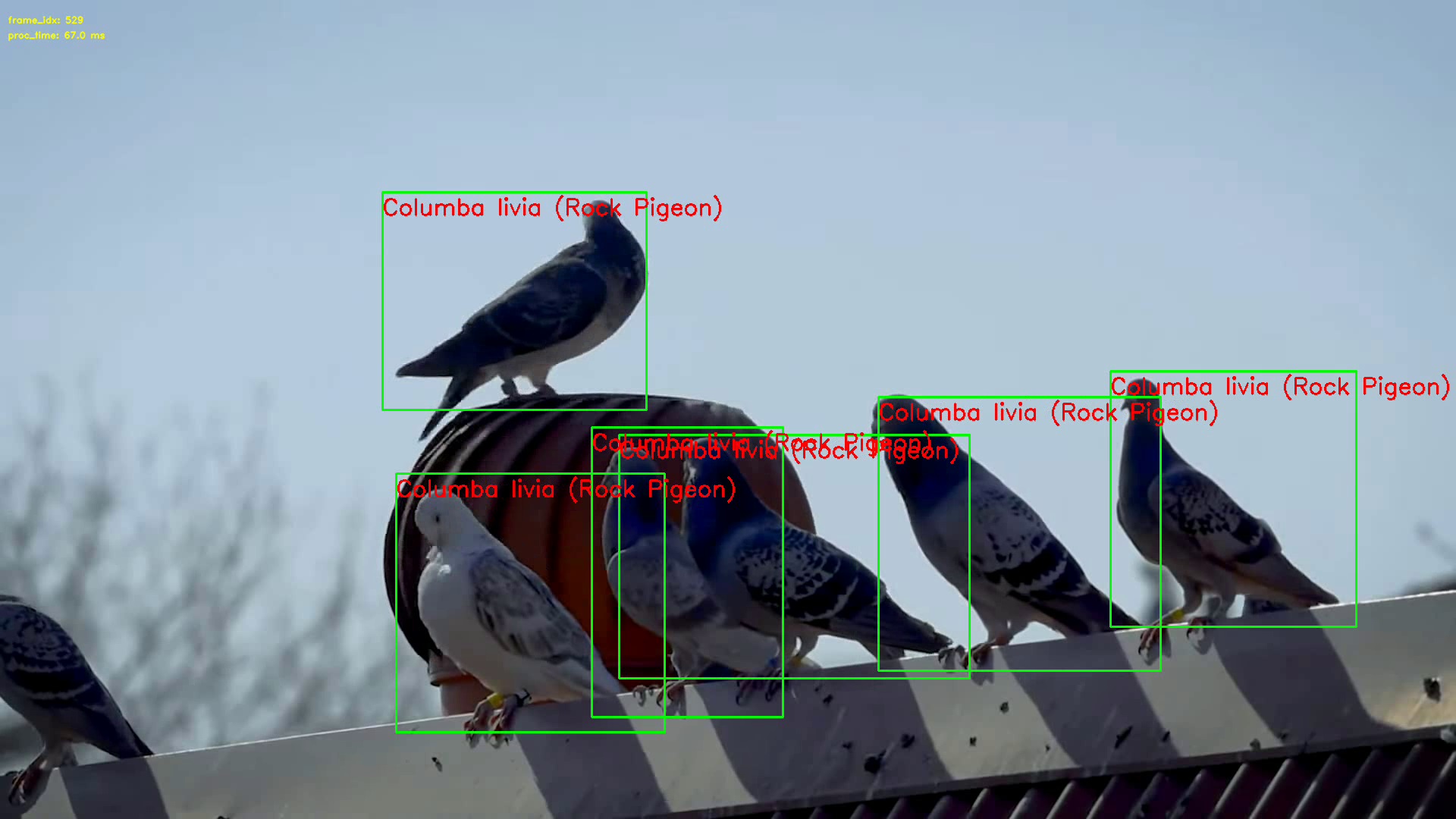
Pigeon Repellent with Artificial Intelligence

adapt-python
Awesome Domain Adaptation Python Toolbox

adapter-hub
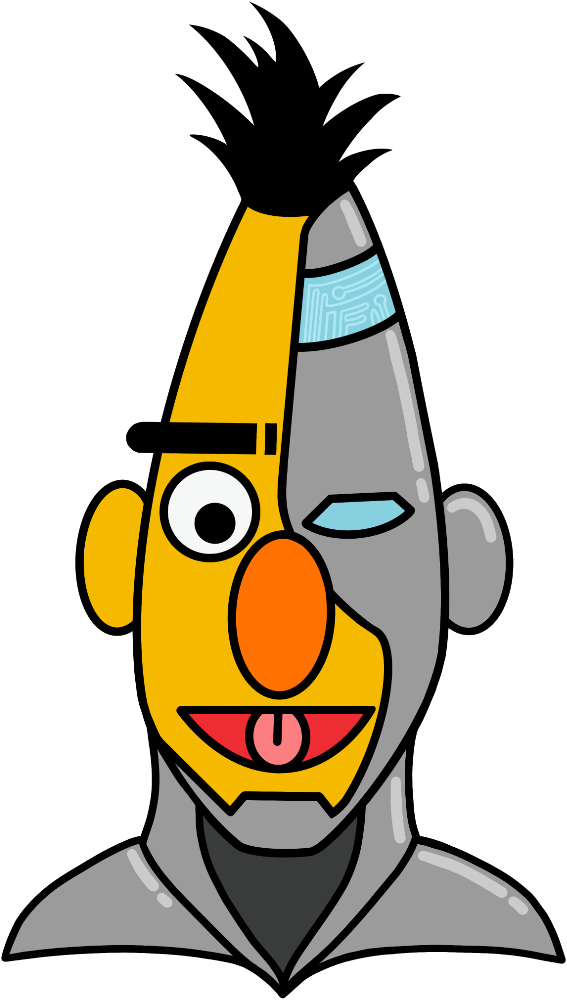
A Unified Library for Parameter-Efficient and Modular Transfer Learning

AdaptInfer
A Curated List of Computational Biology Datasets Suitable for Machine Learning

adaptive-machine-learning

CapyMOA does efficient machine learning for data streams in Python. CapyMOA is a toolbox of methods and evaluators for: classification, regression, clustering, anomaly detection, semi-supervised learning, online continual learning, and drift detection for data streams.

AdaptiveMotorControlLab
Learnable latent embeddings for joint behavioral and neural analysis - Official implementation of CEBRA

adaptyvbio
Versatile computational pipeline for processing protein structure data for deep learning applications.

AdArya125
'Primer to Machine Learning' is a comprehensive guide covering essential topics in machine learning, including statistics, data preprocessing, supervised and unsupervised learning, neural networks, deep learning, NLP, time series analysis, and reinforcement learning. Perfect for beginners and intermediates.

AdeDZY
K-NRM: End-to-End Neural Ad-hoc Ranking with Kernel Pooling
An (unofficial) implementation of Focal Loss, as described in the RetinaNet paper, generalized to the multi-class case.

AdeelMufti
High(ish) frequency trading bot for cryptocurrencies, using Machine Learning for future price predictions

adeshpande3
Tutorial on GANs
adeshpande3
Sentiment Analysis with LSTMs in Tensorflow
adeshpande3
List of all the lessons learned, best practices, and links from my time studying machine learning
