
mattmacy/vnet.pytorch
Sobre
A PyTorch implementation for V-Net: Fully Convolutional Neural Networks for Volumetric Medical Image Segmentation
Aprendizado de máquinaCrescimento medido de estrelas
- em 24 h
- 0
- em 7 dias
- 0
- em 15 dias
- Coletando histórico
- em 1 mês
- Coletando histórico
Variações líquidas em períodos sobrepostos, não totais diários. Medições ausentes ficam em branco. Estrelas indicam interesse, não qualidade.
README.md
OriginalA PyTorch implementation of V-Net
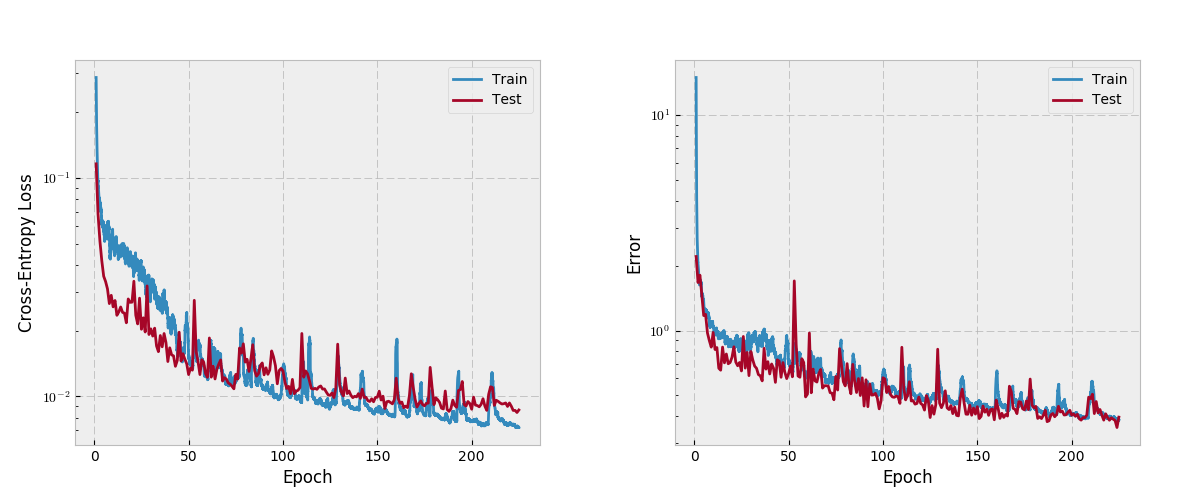
Vnet is a PyTorch implementation of the paper V-Net: Fully Convolutional Neural Networks for Volumetric Medical Image Segmentation by Fausto Milletari, Nassir Navab, and Seyed-Ahmad Ahmadi. Although this implementation is still a work in progress, I'm seeing a respectable 0.355% test error rate and a Dice coefficient of .9825 segmenting lungs from the LUNA16 data set after 249 epochs. The official implementation is available in the faustomilletari/VNet repo on GitHub.
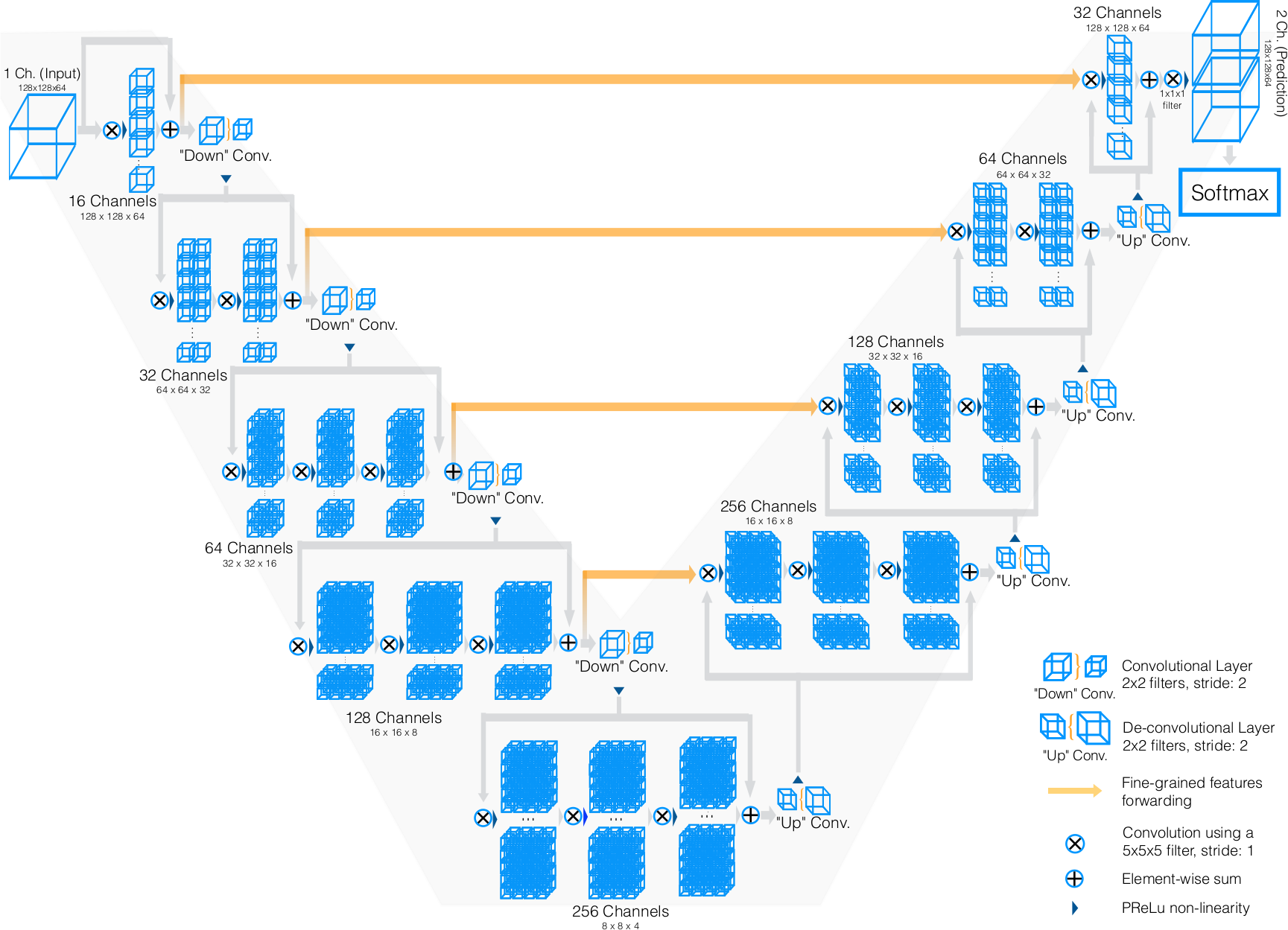
This implementation relies on the LUNA16 loader and dice loss function from the Torchbiomed package.
Differences with the official version
This version uses batch normalization and dropout. Lung volumes in CTs are ~10% of the scan volume - a not too unreasonable class balance. For this particular test application I've added the option of using NLLoss instead of the Dice Coefficient.
What does the PyTorch compute graph of Vnet look like?
You can see the compute graph here, which I created with make_graph.py, which I copied from densenet.pytorch which in turn was copied from Adam Paszke's gist.
Credits
The train.py script was derived from the one in the densenet.pytorch repo.
Explore projetos relacionados
Carregando…