
xioacd99/study-is-wonderful
xioacd99/study-is-wonderful has 2,115 GitHub stars and 150 forks. GitHot measured 0 stars in 24 hours and +1 in 7 days. Last checked 2026-11-12 17:01 UTC. Last push 2022-04-01.
awesome public courses and wonderful study resource
Measured star growth
- in 24h
- 0
- in 7 days
- +1
- in 15 days
- Update delayed
- in 1 month
- Update delayed
Net star changes over overlapping periods, not daily totals. Missing measurements are left blank. Stars measure attention, not software quality.
README.md
OriginalStudy Is Wonderful
跨学科公开课与技术博客精选
A multidisciplinary collection of open courses and technical blogs
收集跨学科好课与技术文章,让学习更有趣。无论你想打好基础,还是探索新领域,都欢迎一起学习、分享与进步。
Discover great courses and technical articles across disciplines. Whether you are building foundations or exploring something new, come learn, share, and grow with us!
本项目已恢复维护,欢迎通过 Issue 推荐资源或反馈问题,也欢迎提交 Pull Request。
This project is maintained again. Issues and pull requests are welcome for recommendations, corrections, and improvements.
课程列表较长,推荐使用 Chrome 扩展 Smart TOC,在页面右侧生成可跳转目录。
For easier navigation through this long list, try the Chrome extension Smart TOC, which adds a navigable table of contents to the side of the page.
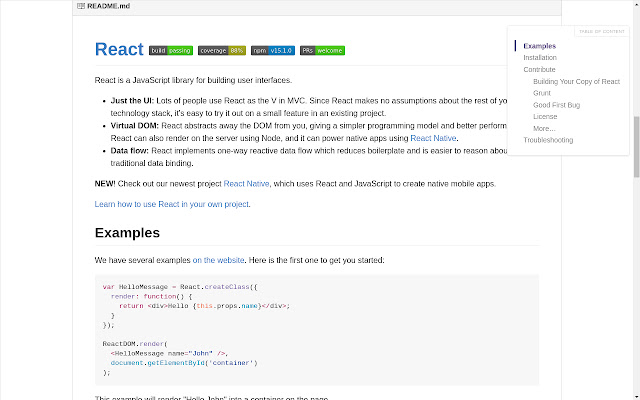
目录 Contents
- 数学 Math
- 计算机科学 Computer Science
- 人工智能 Artificial Intelligence
- 经济学 Economics
- 物理学 Physics
- 心理学 Psychology
- 社会科学 Social Sciences
- 生物学 Biology
- 哲学与艺术 Philosophy and Arts
- 其他 Others
- 技术博客 Technical blogs
数学 Math
-
练习像数学家一样提问、推理,并用证明解释答案为什么成立。
Practice asking questions, reasoning and explaining why an answer is true with a proof.
-
认识利用凸性寻找最优解的方法,就像寻找碗底的最低点。
Explore how convexity can help find an optimal solution, like finding the bottom of a bowl.
傅里叶变换及其应用 / The Fourier Transform and Its Applications

认识傅里叶变换如何把复杂信号拆成不同频率的成分。
See how the Fourier transform breaks a complex signal into frequencies.
矩阵论与应用 / Matrix Theory and Applications
用向量和矩阵整齐地表示数据与方程,并探索它们的应用。
Use vectors and matrices to organize data and equations and explore their applications.
-
学习用凸优化在满足限制的选择中寻找最好结果。
Learn how convex optimization finds the best result among constrained choices.
最优化进阶与随机方法 / Advanced Optimization and Stochastic Methods
探索寻找最优解的方法,以及如何处理带有随机性的情况。
Explore optimization methods and how to handle randomness.
离散微分几何 / Discrete Differential Geometry
用离散的点和网格来研究曲线、曲面与几何形状。
Study curves, surfaces and geometric shapes using discrete points and meshes.
-
探索怎样在各种可能选择中找到符合条件的最优解。
Explore how to find the best feasible solution among possible choices.
-
研究如何用计算机算出近似答案,并分析误差。
Study how computers find approximate answers and how to analyze error.
-
研究随时间变化、结果带有不确定性的过程。
Study processes that change over time with uncertain outcomes.
-
学习用数值计算近似解决难以直接求解的数学问题。
Learn numerical ways to approximate solutions to hard mathematical problems.
-
用概率描述不确定性,例如事情发生的可能性。
Use probability to describe uncertainty, such as how likely an event is.
-
研究群、环等抽象结构,以及其中运算遵循的规则。
Study abstract structures such as groups and rings and the rules of their operations.
-
学习用概率和随机变量描述不确定的结果。
Learn to describe uncertain outcomes using probability and random variables.
-
学习从数据中估计、比较并作出有依据的判断。
Learn to estimate, compare and make informed judgments from data.
离散随机过程 / Discrete Stochastic Processes
研究随机事件如何在一系列时刻或状态中演变。
Study how random events evolve across times or states.
-
用频率的视角研究函数与信号,就像把声音分解成音调。
Study functions and signals through frequencies, like breaking sound into tones.
-
学习用向量和矩阵解决线性方程,理解空间中的方向。
Use vectors and matrices to solve linear equations and understand directions in space.
-
探索向量、矩阵和线性变换怎样描述数据与空间。
Explore how vectors, matrices and linear transformations describe data and space.
-
研究离散对象,例如逻辑命题、集合和由点线组成的图。
Study discrete objects such as logical statements, sets and graphs of points and links.
-
探索包含虚数的复数和复函数如何帮助解决数学问题。
Explore complex numbers and functions and how they help solve mathematical problems.
-
用方程描述变化,例如物体的位置怎样随时间改变。
Use equations to describe change, such as how an object’s position changes over time.
图论与可加组合学 / Graph Theory and Additive Combinatorics
研究点和连线组成的图,以及数字集合相加产生的组合规律。
Study graphs of points and links and patterns formed by adding sets of numbers.
-
研究弯曲空间中的距离与曲率,像理解地球表面的几何。
Study distance and curvature in curved spaces, such as the surface of Earth.
-
研究当每个人的选择都会影响别人时,如何分析策略。
Study strategies when each person’s choices affect others.
计算机科学 Computer Science
理论计算机科学中的重要思想 / Great Ideas in Theoretical Computer Science
用数学的眼光认识计算机能解决什么问题,以及解决问题需要多少资源。
Explore what computers can solve and how much work solutions require, using mathematical ideas.
计算机教育中缺失的一课 / The Missing Semester of Your CS Education
认识程序员常用的工具,比如命令行、调试工具和版本管理。
Meet tools programmers use, such as the command line, debuggers, and version control.
CS50X 计算机入门 / CS50X Introduction to Computer Science
从零认识计算机科学与编程,学习如何把问题拆成计算机可以执行的步骤。
Start learning computer science and programming by breaking problems into steps a computer can follow.
编程方法学 / Programming Methodology
学习编程的方法,练习把一个大问题拆成容易处理的小步骤。
Learn programming methods and practice breaking big problems into manageable steps.
-
认识计算机的硬件、软件和数据,并接触变量与循环等编程概念。
Meet computer hardware, software, and data, along with programming ideas such as variables and loops.
计算机科学与 Python 编程导论 / Introduction to Computer Science and Programming in Python

用 Python 学习编程基础,练习用小程序解决问题。
Learn programming basics in Python and practice solving problems with small programs.
-
认识经典算法,了解计算机解决问题时可以采用的步骤。
Explore classic algorithms, or step-by-step methods computers can use to solve problems.
算法导论 / Introduction to Algorithms
入门算法,学习如何设计解决问题的步骤并思考它们的效率。
Get started with algorithms by thinking about steps for solving problems and how efficiently they work.
高级数据结构 / Advanced Data Structures
学习高级数据结构,也就是组织和使用数据的进阶方法。
Explore advanced data structures, or more sophisticated ways to organize and use data.
-
学习高级算法,探索解决计算问题的进阶方法。
Explore advanced algorithms and more sophisticated ways to solve computational problems.
数据结构与算法设计 / Data Structures and Algorithm Design
学习如何组织数据并设计算法,让程序有条理地解决问题。
Learn how to organize data and design algorithms that help programs solve problems systematically.
-
学习数据结构,也就是让程序存放、查找和处理数据的方法。
Learn data structures, the ways programs store, find, and work with data.
CS106B 编程抽象 / CS106B Programming Abstractions

用编程抽象把复杂问题拆开,学习递归和数据结构等解决问题的工具。
Use programming abstractions to manage complexity and learn tools such as recursion and data structures.
CSE 373《算法设计手册》 / CSE 373 "The Algorithm Design Manual"

学习分析算法,比较搜索、排序和图算法等方法需要多少时间与空间。
Analyze algorithms by comparing the time and space needed for searching, sorting, graph algorithms, and more.
计算机系统介绍 / Introduction to Computer Systems
认识计算机系统,探索软件和硬件如何协作运行程序。
Explore computer systems and how software and hardware work together to run programs.
操作系统与系统编程 / Operating System and Systems Programming
认识操作系统如何为程序提供运行环境,并了解系统编程。
Explore how operating systems provide an environment for programs and learn about systems programming.
-
学习操作系统的基本概念,认识管理计算机资源的软件。
Learn the basic ideas behind operating systems, the software that manages computer resources.
-
认识分布式系统,探索多台计算机如何协作完成任务。
Explore distributed systems and how multiple computers work together on tasks.
计算机系统安全 / Computer Systems Security
学习计算机系统安全,认识保护系统和信息的基本问题。
Explore computer systems security and the basic challenges of protecting systems and information.
-
通过伯克利 CS 61C 课程学习计算机科学。
Study computer science through Berkeley’s CS 61C course.
-
从程序员的角度认识计算机系统,了解机器代码、内存和网络等概念。
See computer systems from a programmer’s perspective, including machine code, memory, and networking.
-
走近计算机内部,学习 C 语言、内存和机器代码如何影响程序运行。
Look inside computer systems and learn how C, memory, and machine code shape program execution.
-
学习操作系统的基本概念,认识管理计算机资源的软件。
Learn the basic ideas behind operating systems, the software that manages computer resources.
CMU·应用数据科学 / CMU·Applied Data Science
了解怎样用数据和计算方法解决实际问题。
Explore how data and computational methods can help solve practical problems.
加州伯克利·数据科学原理与技术 / UC Berkeley·Principles and Techniques of Data Science
学习清理、分析和展示数据,并用数据建立预测。
Explore how to clean, analyze and visualize data, and use it to make predictions.
加州理工·数据驱动算法设计 / Caltech·Data-Driven Algorithm Design
探索如何利用数据帮助设计算法。
Explore how data can help guide the design of algorithms.
斯坦福·大数据概论 / Stanford·Introduction to Big Data
了解如何处理和挖掘大规模数据。
Explore how to process and mine large datasets.
哈佛·大数据算法 / Harvard·Big Data Algorithms
探索处理大量数据时使用的算法。
Explore algorithms for working with large amounts of data.
-
学习从海量数据中寻找有用模式的方法。
Explore methods for finding useful patterns in massive datasets.
CMU·数据库系统介绍 / CMU·Introduction to Database Systems
了解数据库如何存储数据,以及怎样高效地查询它。
Explore how databases store data and support efficient queries.
CMU·数据库系统 / CMU·Database Systems
探索数据库系统如何组织、访问和管理数据。
Explore how database systems organize, access and manage data.
加州伯克利·数据库导论 / UC Berkeley·Introduction to Databases
了解数据库如何处理查询和同时发生的事务。
Explore how databases handle queries and concurrent transactions.
CMU·并行计算结构与编程 / CMU·Parallel Computer Architecture and Programming
探索怎样让多个处理单元一起工作,并编写利用它们的程序。
Explore how multiple processors work together and how to program them.
加州伯克利·并行计算应用 / UC Berkeley·Applications of Parallel Computing
了解如何用并行计算更快地解决计算问题。
Explore how parallel computing can help solve computational problems faster.
加州伯克利·并行程序设计导论 / UC Berkeley·Introduction to Parallel Programming
学习将任务分给多个处理单元同时执行的编程思路。
Explore programming ideas for dividing work among processors that run together.
康奈尔·软件工程 / Cornell·Software Engineering
了解团队如何规划、设计、构建和测试软件。
Explore how teams plan, design, build and test software.
CMU·智能系统软件工程 / CMU·Software Engineering for Intelligent Systems
探索如何为包含人工智能组件的系统设计和维护软件。
Explore how to design and maintain software with AI components.
-
了解编译器如何把一种程序语言转换成另一种形式;原链接目标待核实。 原目录中该链接被两个不同课程复用,目标待核实。
Explore how compilers translate programs; the original link’s target remains unverified. This link is reused for two different entries; its target needs verification.
康奈尔·高级编译原理 / Cornell·Advanced Compilers
深入探索把程序转换成计算机可执行形式的编译技术。
Explore advanced compiler techniques for translating programs.
CMU·计算机网络 / CMU·Computer Networks
了解计算机网络如何连接设备并传递信息。
Explore how computer networks connect devices and carry information.
斯坦福·计算机网络 / Stanford·Computer Networks
探索数据如何通过网络在计算机之间传送。
Explore how data travels between computers over networks.
斯坦福·网络安全 / Stanford·Network Security
了解保护网络和网络通信安全的基本问题。
Explore basic challenges in protecting networks and communications.
CMU·计算机图形学 / CMU·Computer Graphics
探索计算机如何用数学和程序生成图像。
Explore how computers use mathematics and programs to create images.
闫令琪·现代计算机图形学入门 / Lingqi Yan·Introduction to Modern Computer Graphics
通过光栅化、光线追踪等方法,了解计算机如何生成图像。
Explore how computers create images using methods such as rasterization and ray tracing.
MIT·计算机图形学 / MIT·Computer Graphics
了解计算机图形学中生成和表示图像的基本思路。
Explore basic ideas for creating and representing images with computers.
CMU·人机交互系列讲座 / CMU·Human-Computer Interaction Lecture Series
探索人们如何与计算机系统互动。
Explore how people interact with computer systems.
普林斯顿·比特币与加密技术 / Princeton·Bitcoin and Cryptocurrency Technologies
了解比特币及其背后的密码学技术。
Explore Bitcoin and the cryptographic technologies behind it.
斯坦福·密码学 / Stanford·Cryptography
了解用数学方法保护信息的密码学。
Explore cryptography, which uses mathematics to help protect information.
斯坦福·C++ 中的抽象编程 / Stanford·Programming Abstractions in C++
学习用 C++ 的抽象工具组织和解决编程问题。
Explore how abstractions in C++ help organize and solve programming problems.
MIT·计算机程序的构造与解释 / MIT·Structure and Interpretation of Computer Programs
通过构造和理解程序,探索计算机科学的基本思想。
Explore foundational computer science ideas by constructing and understanding programs.
MIT·信号与系统 / MIT·Signals and Systems
了解如何描述和分析随时间变化的信号与系统。
Explore how to describe and analyze signals and systems that change over time.
奥本海姆·MIT·信号与系统 / Oppenheim·MIT·Signals and Systems
了解信号如何经过系统发生变化,以及怎样用数学分析这些变化。
Explore how systems transform signals and how mathematics can describe those changes.
MIT·计算结构 / MIT·Computation Structures
探索计算机如何由基本电路和构件组成。
Explore how computers are built from circuits and basic components.
MIT·python 编程 / MIT·Python Programming
学习使用 Python 表达想法并编写程序。
Explore how to express ideas and write programs in Python.
MIT·区块链与金钱 / MIT·Blockchain and Money
探索区块链与货币、金融之间的关系。
Explore the relationship between blockchains, money and finance.


人工智能 Artificial Intelligence
斯坦福 CS336:从零构建语言模型(第一讲) / Stanford CS336: Language Modeling from Scratch (Lecture 1)

从第一讲认识语言模型与分词,开启对大模型构建方法的学习。
Start exploring how language models are built, beginning with an overview and tokenization.
浙江大学大模型原理与技术 / Zhejiang University: Principles and Techniques of Large Models
从语言模型基础出发,学习大模型架构、微调与检索增强生成等内容。
Learn about language model foundations, architectures, fine-tuning, and retrieval-augmented generation.
CMU·人工智能 (研究生) / CMU·Artificial Intelligence (Graduate)
了解让计算机表现出智能的基本思路。
Explore basic ideas for making computers behave intelligently.
李宏毅·Deep Learning Theory / Hung-yi Lee·Deep Learning Theory
从理论角度理解深度神经网络为什么可能有效。
Explore theoretical ideas about why deep neural networks can work.
李宏毅·Next Step of Machine Learning / Hung-yi Lee·Next Step of Machine Learning
思考机器学习可以向哪些方向继续发展。
Consider possible next steps in machine learning.
李宏毅·Advanced Topics in Deep Learning / Hung-yi Lee·Advanced Topics in Deep Learning
探索深度学习中更深入的研究主题。
Explore advanced research topics in deep learning.
李宏毅·机器学习-v1 / Hung-yi Lee·Machine Learning-v1
学习让计算机从数据中发现规律的机器学习方法。
Learn about machine learning, where computers find patterns in data.
李宏毅·机器学习-v2 / Hung-yi Lee·Machine Learning-v2
学习让计算机从数据中发现规律的机器学习方法。
Learn about machine learning, where computers find patterns in data.
李宏毅·机器学习-v1 / Hung-yi Lee·Machine Learning-v1
学习让计算机从数据中发现规律的机器学习方法。
Learn about machine learning, where computers find patterns in data.
李宏毅·机器学习-TA 补充课 / Hung-yi Lee·Machine Learning: TA Supplement
学习让计算机从数据中发现规律的机器学习方法。
Learn about machine learning, where computers find patterns in data.
-
了解使用多层神经网络从数据中学习的深度学习。
Explore deep learning, which uses multilayer neural networks to learn from data.
MIT·机器学习 / MIT·Machine Learning
了解计算机如何从数据中学习,并用学到的规律作预测。
Explore how computers learn patterns from data and use them to make predictions.
斯坦福·人工智能原理与技术 / Stanford·Principles and Techniques of Artificial Intelligence
了解设计能搜索、推理和学习的人工智能系统的基本思路。
Explore principles for building AI systems that search, reason and learn.
-
通过搜索、推理和学习等方法,认识人工智能的基础。
Explore AI foundations through ideas such as search, reasoning and learning.
-
了解如何用数据训练模型,以及怎样判断模型的表现。
Explore how models learn from data and how their performance can be assessed.
李宏毅·GAN-2018 / Hung-yi Lee·GAN-2018
认识生成对抗网络:两个模型相互较量,帮助生成新数据。
Explore generative adversarial networks, where two models compete to help generate new data.
李宏毅·GAN-2017 / Hung-yi Lee·GAN-2017
认识生成对抗网络:两个模型相互较量,帮助生成新数据。
Explore generative adversarial networks, where two models compete to help generate new data.
CMU·自然语言处理 / CMU·Natural Language Processing
了解计算机如何处理和分析人类语言。
Explore how computers process and analyze human language.
斯坦福·深度自然语言处理 / Stanford·Deep Natural Language Processing
了解如何用神经网络帮助计算机处理语言。
Explore how neural networks can help computers process language.
CMU·高级自然语言处理 / CMU·Advanced Natural Language Processing
深入探索计算机分析人类语言的方法。
Explore advanced methods for computers to analyze human language.
-
探索用深度学习处理人类语言的方法。
Explore deep-learning methods for processing human language.
李宏毅·Deep Reinforcement Learning / Hung-yi Lee·Deep Reinforcement Learning
了解智能体如何通过尝试和反馈学习行动,并结合深度学习。
Explore how an agent can learn actions from trials and feedback using deep learning.
斯坦福·强化学习 / Stanford·Reinforcement Learning
了解智能体如何根据行动后的反馈改进决策。
Explore how an agent improves its decisions using feedback from its actions.
MIT·识别,估计和学习 / MIT·Identification, Estimation, and Learning
探索如何根据观察识别、估计和学习系统的规律。
Explore identification, estimation and learning from observations.
加州伯克利·深度强化学习 / UC Berkeley·Deep Reinforcement Learning
探索结合神经网络与反馈学习的深度强化学习。
Explore deep reinforcement learning, which combines neural networks with learning from feedback.
加州伯克利·统计机器学习 / UC Berkeley·Statistical Machine Learning
从统计角度理解机器如何从数据中学习。
Explore how machines learn from data through a statistical lens.
斯坦福·统计学习 / Stanford·Statistical Learning
学习利用统计方法从数据中建立模型和做预测。 原目录中该链接被两个不同课程复用,目标待核实。
Explore statistical methods for modeling data and making predictions. This link is reused for two different entries; its target needs verification.
CMU·结构化数据机器学习 / CMU·Machine Learning for Structured Data
探索如何让机器学习处理具有内部关系或结构的数据。
Explore machine learning for data with internal structure or relationships.
加州理工·机器学习与统计推断基础 / Caltech·Foundations of Machine Learning and Statistical Inference
探索机器学习与统计推断的基础:如何从数据中学习和判断。
Explore foundations of learning and statistical inference from data.
李宏毅·Structured Learning / Hung-yi Lee·Structured Learning
了解如何让模型学习彼此有关联的输出。
Explore how models can learn outputs that have relationships or structure.
斯坦福·图机器学习 / Stanford·Machine Learning with Graphs
探索如何用机器学习分析由节点和连接组成的图。
Explore machine learning on graphs made of nodes and connections.
-
了解让机器人感知环境并行动的机器人学。
Explore robotics and the challenge of making robots perceive and act.
MIT·医疗机器学习 / MIT·Machine Learning for Healthcare
探索机器学习如何帮助分析医疗相关数据。
Explore how machine learning can help analyze healthcare data.
经济学 Economics
-
认识金融市场如何连接投资、融资和风险。
Explore how financial markets connect investment, funding and risk.
-
研究个人和企业如何作选择,以及价格怎样受供需影响。
Study choices by people and firms and how supply and demand affect prices.
-
学习用金融理论理解资产价值、投资和风险。
Use financial theory to understand asset values, investment and risk.
-
探索心理因素怎样影响人们的经济选择。
Explore how psychology influences people’s economic choices.
物理学 Physics
-
探索量子力学如何描述原子等微观世界。
Explore how quantum mechanics describes the microscopic world of atoms and particles.
-
认识广义相对论如何用弯曲的时空解释引力。
See how general relativity explains gravity through curved spacetime.
弦理论和 M 理论 / String Theory and M Theory
探索用弦和更广泛的 M 理论描述基本物理的想法。
Explore ideas in string theory and M-theory for describing fundamental physics.
心理学 Psychology
心理统计学 / Psychological Statistics
学习用统计方法分析心理学研究收集的数据。
Learn statistical methods for analyzing data from psychology research.
社会认知心理学 / Social and Cognitive Psychology
探索我们如何理解别人,以及社会环境如何影响思考。
Explore how we understand others and how social settings shape thought.
心理学导论 / Introduction to Psychology
认识心理学如何研究思考、情绪和行为。
Discover how psychology studies thought, emotion and behavior.
-
探索心理学怎样研究优势、幸福感和积极关系。
Explore how psychology studies strengths, well-being and positive relationships.
心理学导论 / Introduction to Psychology
了解心理学如何研究人的思想、感受和行为。
Learn how psychology investigates thoughts, feelings and behavior.
-
探索幸福和生活满意度可以怎样被理解与研究。
Explore how happiness and life satisfaction can be understood and studied.
社会科学 Social Sciences
现代社会理论基础 / Foundations of Modern Social Theory
认识社会思想家怎样解释社会、制度和人与人的关系。
Discover how social thinkers explain society, institutions and human relationships.
-
探索资本主义中企业、市场与社会之间的关系。
Explore relationships among businesses, markets and society under capitalism.
政治哲学导论 / Introduction to Political Philosophy
通过思想家的问题,思考政府、自由与公正。
Think about government, freedom and justice through the questions of political thinkers.
生物学 Biology
- 人类行为生物学 / Human Behavioral Biology
探索大脑、身体和环境怎样共同影响人类行为。
Explore how brains, bodies and environments interact to shape human behavior.
哲学与艺术 Philosophy and Arts
- 美学 / Aesthetics
思考什么是美,以及我们为什么会对艺术产生不同感受。
Consider what beauty is and why people respond differently to art.
其他 Others
几何折叠算法 / Geometric Folding Algorithms
用算法研究纸张、连杆和多面体怎样折叠。
Use algorithms to study how paper, linkages and polyhedra can fold.
-
探索如何把一个点子发展成创业项目。
Explore how an idea can grow into a startup.
SCI 论文写作课程 / Scientific Paper Writing
学习怎样更清楚地写作和表达科学研究。
Learn to write and explain scientific research more clearly.
欧丽娟说红楼梦 / Ou Lijuan on Dream of the Red Chamber
跟随欧丽娟解读《红楼梦》中的人物和文化。
Explore characters and culture in Dream of the Red Chamber with Ou Lijuan.
罗翔讲刑法 / Luo Xiang on Criminal Law
通过罗翔的讲解认识刑法及其基本问题。
Explore criminal law and its basic questions through Luo Xiang’s explanations.
-
学习更仔细地聆听音乐中的节奏、旋律与结构。
Learn to listen more closely to rhythm, melody and musical structure.
文学理论导论 / Introduction to Literary Theory
探索文学理论如何帮助我们提出问题并理解作品。
Explore how literary theory helps us ask questions and interpret writing.
-
探索识别情绪和应对压力的方法。
Explore ways to recognize emotions and respond to stress.
谈判概论 / Introduction to Negotiation
学习分析谈判中各方的目标,并寻找双方都能接受的结果。
Learn to analyze each side’s goals and seek outcomes they can accept.
技术博客 Technical blogs
智能体与 AI 编程 Agents and AI coding
Codex 编排的开源规范 Symphony / An open-source spec for Codex orchestration: Symphony

了解如何以任务看板协调编码智能体的工作区、执行与人工审查。
See how a task board can coordinate coding agents, their workspaces, and human review.
用并行 Claude 团队构建 C 编译器 / Building a C compiler with a team of parallel Claudes

通过构建编译器的实验,了解多个智能体协作、测试与长期运行的经验和限制。
Explore lessons and limits of coordinating and testing multiple agents through a compiler-building experiment.
轻量编排器:让路由器少做一点 / The Thin Orchestrator

了解如何把流程调度与专业推理分开,让编排器负责顺序和检查,专门的智能体处理具体任务。
Learn to separate workflow coordination from domain reasoning, with an orchestrator managing order and checks while specialist agents handle individual tasks.
CodeMender:用 AI 协助修复代码漏洞 / Introducing CodeMender: an AI agent for code security

了解智能体如何定位漏洞根因、生成补丁并用程序分析和测试检查改动,以及人工审查在发布前的作用。
Explore how an agent finds vulnerability root causes, creates patches, and checks changes with program analysis and testing, with human review before submission.
AI 评测 AI evaluation
LifeVal:评估 AI 完成日常任务的能力 / LifeVal
认识围绕日常实际需求构建的评测,关注 AI 能否帮助人们完成任务。
Explore an evaluation of how well AI helps people complete practical everyday tasks.
设计能应对 AI 能力进步的技术评测 / Designing AI-resistant technical evaluations
通过性能工程招聘测试的多轮改版,思考怎样在 AI 能力提升时继续评估人的问题分析与工具构建能力。
Follow successive redesigns of a performance-engineering hiring test to explore how to assess human problem-solving and tool-building as AI improves.
用强化学习训练对齐审计员 / Training Alignment Auditors via Reinforcement Learning
认识如何训练模型调查另一个模型的隐藏行为,并了解奖励设计与正常样本如何影响审计质量和误报。
Learn how models can be trained to investigate another model’s hidden behaviors, and how reward design and benign examples affect audit quality and false positives.
用自我评估扩展滥用检测 / Scaling Misuse Detection with Self-Assessment
了解模型如何在回复后复用对话计算来初步检查潜在滥用,以及为什么这类检查仍需与其他安全措施配合。
Explore how a model can reuse conversation computation to screen for potential misuse after responding, and why this screening still needs other safeguards.
工程基础设施 Engineering infrastructure
- OpenAI 如何扩展 Git / Scaling Git at OpenAI
了解 Pando 如何保持 Git 兼容,同时支持并行分支写入和高吞吐读取。
Explore how Pando supports concurrent branch updates and high-throughput reads while retaining Git compatibility.
科研与工程应用 Science and engineering applications
用 Google Antigravity 开展智能体化学信息学 / Agentic cheminformatics with Google Antigravity
了解智能体如何整理分子数据、调用化学计算工具并提出候选分子,以及为什么计算结果仍需实验验证。
Explore how agents organize molecular data, use chemistry tools, and propose candidate molecules, and why computational results still need experimental validation.
加速物理世界的工程设计 / Accelerating engineering for the physical world
了解 AI 如何协助机械设计、电路、固件与仿真,并认识制造公差和装配要求仍需工程人员审查的原因。
See how AI can assist mechanical design, electronics, firmware, and simulation, and why engineers still need to review manufacturing tolerances and assembly requirements.
Explore related projects
sindresorhus/awesome
😎 Awesome lists about all kinds of interesting topics [NOTE: Pull requests are temporarily disabled until I have a chance to catch up with the existing ones]
536,069 starsEbookFoundation/free-programming-books
:books: Freely available programming books
401,512 starsnilbuild/developer-roadmap
Interactive roadmaps, guides and other educational content to help developers grow in their careers.
371,929 starsvinta/awesome-python
The definitive list that answers "I want to do X in Python, which tool should I use?"
334,394 stars