Projects View on GitHub
xcmyz/FastSpeech
xcmyz/FastSpeech has 884 GitHub stars and 212 forks. GitHot measured 0 stars in 24 hours. Last checked 2026-11-15 02:56 UTC. Last push 2023-07-06.
Measured star growth
- in 24h
- 0
- in 7 days
- Collecting history
- in 15 days
- Collecting history
- in 1 month
- Collecting history
Net star changes over overlapping periods, not daily totals. Missing measurements are left blank. Stars measure attention, not software quality.
About
The Implementation of FastSpeech based on pytorch.
Machine LearningREADME.md
OriginalFastSpeech-Pytorch
The Implementation of FastSpeech Based on Pytorch.
Update (2020/07/20)
- Optimize the training process.
- Optimize the implementation of length regulator.
- Use the same hyper parameter as FastSpeech2.
- The measures of the 1, 2 and 3 make the training process 3 times faster than before.
- Better speech quality.
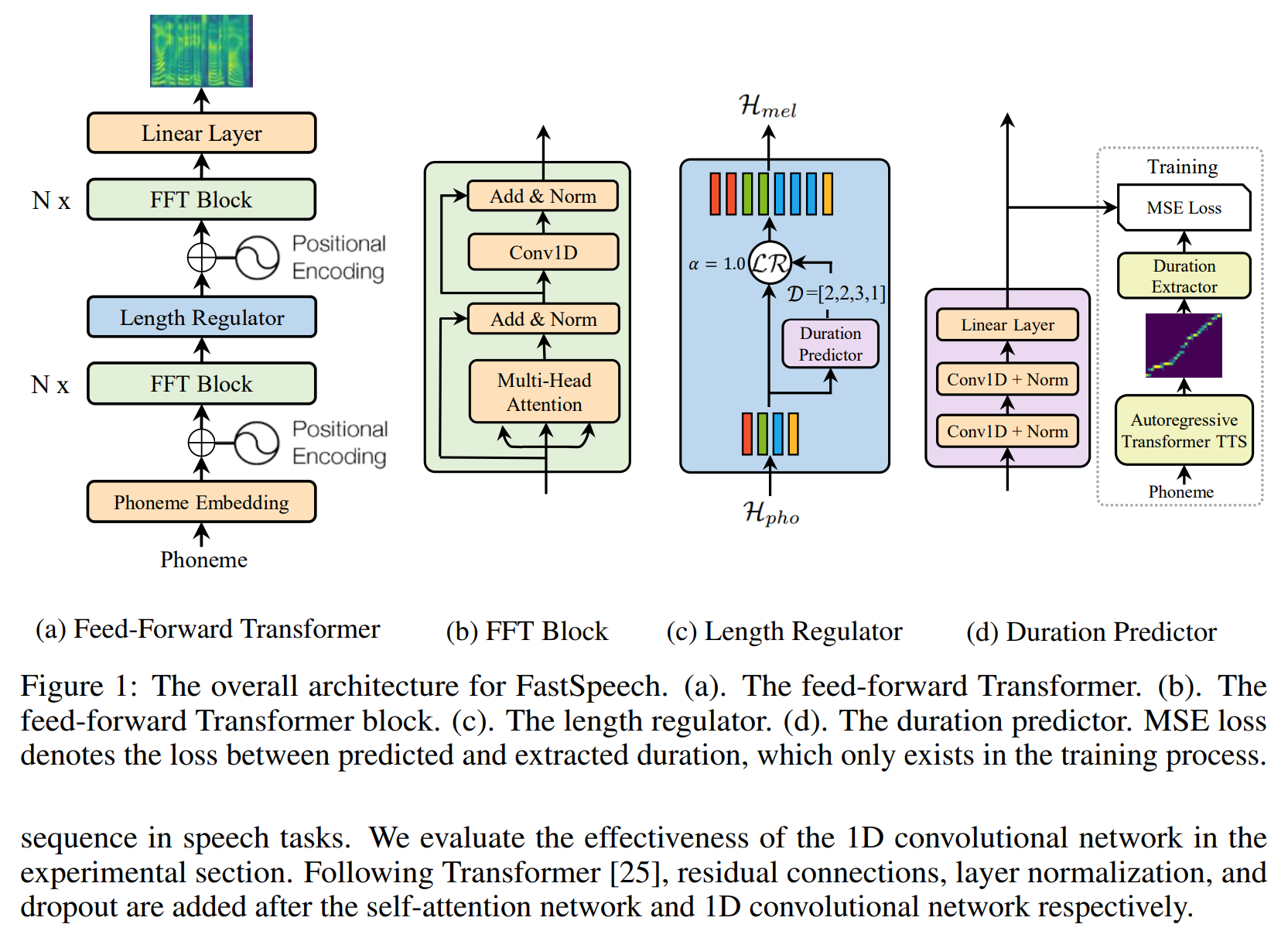
Model
My Blog
Prepare Dataset
- Download and extract LJSpeech dataset.
- Put LJSpeech dataset in
data. - Unzip
alignments.zip. - Put Nvidia pretrained waveglow model in the
waveglow/pretrained_modeland rename aswaveglow_256channels.pt; - Run
python3 preprocess.py.
Training
Run python3 train.py.
Evaluation
Run python3 eval.py.
Notes
- In the paper of FastSpeech, authors use pre-trained Transformer-TTS model to provide the target of alignment. I didn't have a well-trained Transformer-TTS model so I use Tacotron2 instead.
- I use the same hyper-parameter as FastSpeech2.
- The examples of audio are in
sample. - pretrained model.
Reference
Repository
- The Implementation of Tacotron Based on Tensorflow
- The Implementation of Transformer Based on Pytorch
- The Implementation of Transformer-TTS Based on Pytorch
- The Implementation of Tacotron2 Based on Pytorch
- The Implementation of FastSpeech2 Based on Pytorch