
tttg2010/tj-short
tttg2010/tj-short has 26 GitHub stars and 3 forks. GitHot measured 0 stars in 24 hours. Last checked 2026-11-14 17:34 UTC. Last push 2026-11-06.
Measured star growth
- in 24h
- 0
- in 7 days
- Collecting history
- in 15 days
- Collecting history
- in 1 month
- Collecting history
Net star changes over overlapping periods, not daily totals. Missing measurements are left blank. Stars measure attention, not software quality.
About
Codex / WorkBuddy 短剧带货 Skill:salpx 生成分镜首帧,salpx Wan 3.0 直出 2–30 秒视频(多图/视频/音频参考、原生音轨、口型同步),支持美国市场本地化与剧本保真。
AIREADME.en.md
OriginalTJ Short | Codex Ecommerce Short-Drama Skill
Use Codex to turn a product image into an ecommerce short-drama project: product analysis, target-region lock, character dossier boards, high-conflict scripts, 4x3 first-frame grids, 9:16 shot frames, model-specific prompts, captions, and delivery checks. The current default production route uses salpx gpt-image-2.5-sunburst for storyboard/first-frame images and salpx Wan 3.0 (wan3.0-*) for video clips.

Overview
TJ Short is a public-safe Codex Skill template for ecommerce short dramas. It is not only a writing framework and not only a video API wrapper. It lets Codex move a product image through a complete production chain:
product analysis -> target-region lock -> three briefs -> product proof bible -> four libraries plus shot table (role / scene / product-prop / evidence + 12-shot production table) -> character dossier boards -> salpx gpt-image-2.5-sunburst 4x3 first-frame grid -> auto-cut 12 independent 9:16 first frames -> salpx Wan 3.0 prompts/API submission (text / first frame / first+last frame / multi-reference) -> captions and ad cutdown plan.
The split is clear:
- Codex is the production brain: judgment, writing, files, prompts, manifests, captions, reviews, and privacy checks.
- salpx is the image execution relay: runs
gpt-image-2.5-sunburstfor product-proof images, storyboard grids, and clean 9:16 first frames. - salpx Wan 3.0 is the default and only video execution layer: takes accepted first frames or reference materials plus script-locked prompts and returns raw clips. Images and video share one
SALPX_API_KEY.
Skill Card
| Item | Description |
|---|---|
| One-line positioning | A Codex Skill for generating ecommerce short-drama projects, producing images through salpx, and producing video through salpx Wan 3.0 |
| Input | Product image, product name, audience, product action, proof, CTA |
| Output | briefs, product proof bible, episode script, storyboard, first frames, video-model prompts, caption plan, ad cutdowns, US-market localization checklist |
| First-stage success | Validate 1 main episode plus 2 ad cutdowns before expanding into a series |
| Recommended video route | Default salpx / wan3.0-720p; optional wan3.0-1080p, wan3.0-hm-*, omni_flash, Seedance2, Veo |
| Not for | Pure hard ads, products without demonstrable action, projects without proof, or claims promising medical/financial results |
It is useful for:
- pet products, consumer products, and tool products
- teams validating 1 main episode plus 2 ad cutdowns
- creators who want Codex to turn product assets into structured short-drama project files
- creators using salpx for storyboard/first-frame images and salpx Wan 3.0 for video (including 30s takes and image/video/audio references)
- teams selling to US audiences through TikTok Shop US, Amazon US, or other US ecommerce channels
- teams turning ecommerce short-drama production into a reusable skill or SOP
Core rule:
The product is not the hero. Characters, pets, relationships, and consequences come first. The product proves the truth later.
Version Highlights
| Version | Key updates |
|---|---|
| v0.9.2 | Banner replaced. The vector assets/salpx-banner.svg (which still described the retired MiniMax H3 route) is removed in favour of assets/salpx-banner.png (1280x427), generated end to end by gpt-image-2.5-sunburst with typography and imagery in a single pass. It now reflects the current route: salpx images plus Wan 3.0 video, 2-30s takes, native audio, lip sync. |
| v0.9.1 | Default image model raised from gpt-image-2 to gpt-image-2.5-sunburst. .env.example, the image client default, and every SOP step were updated. API shape and flags are unchanged, so projects that pin the old model in .env keep working. Optional variants: gpt-image-2.5-flare, gpt-image-2.5-1k, and the XY- 1k/2k/4k lines. |
| v0.9.0 | Video layer migration: MiniMax H3 is retired and salpx Wan 3.0 (wan3.0-480p/720p/1080p, plus the independent wan3.0-hm-* line) becomes the default and only video route. Images and video now share one SALPX_API_KEY. Added scripts/wan3_video_client.py (stdlib only; first frame / first+last frame / up to 10 reference images / 5 reference videos / 5 reference audios / document / web link; --dry-run quotes without spending) and docs/wan3-api-production.md. Video capability expands to 2-30s single takes, native audio, and reference-audio-driven lip-sync and singing. Added a hard cost gate: model, resolution, seconds, and price must be stated and approved before every submission. Deleted the H3 client and docs, dropped all H3_* variables, and made the client reject any base URL containing zhongbiao or h3.. Breaking for projects still calling the H3 route. |
| v0.8.29 | Added a cinematic shot-design rule: seven elements (frame size, angle, composition, lighting, color grade, camera movement, pacing) and four reusable scene formulas (emotional build-up, suspense, romance, pressure) for the shot table's camera:/emotion_shift: fields; added a camera-as-witness prompt law (shooting process over finished result, exclusion lists, camera behavior on the timeline) as a selective realism layer that does not override existing Seedance2 motion/compliance rules. |
| v0.8.28 | Added grid-first cost control: generate one 4x3 contact sheet first, then auto-cut 12 independent 9:16 first frames; do not generate 12 standalone first frames upfront unless explicitly requested or the grid/cut workflow fails. |
| v0.8.27 | Corrected the Seedance2 visible-person first-frame flow: from the grid/first-frame stage, generate face_pencil strong / medium / blur_feature candidates for the same shot, precheck them one by one, then choose the passing frame with the most complete face and acting information; no-person product frames are only for API smoke tests or product-evidence shots. |
| v0.8.26 | Added production-ready salpx API flow: gpt-image-2 image generation, omni_flash, seedance-2-mini-480p, and Veo video generation, plus a reusable client for submit, poll, and download. |
| v0.8.25 | Added Volcengine Seedance2 prompt rules and model routing: Seedance2, omni, and Veo use separate prompt shapes, duration rules, references, and review strategies. |
| v0.8.24 | Added Seedance2 filed role asset chain: character dossier board -> provider filing -> filed asset ID -> video generation with the filed asset; clarified that a watermark is not filing proof. |
| v0.8.23 | Added character dossier board workflow: main portrait, three views, expression sheet, wardrobe/material details, product-contact details, and concise info panel as the standard role-subject example. |
| v0.8.22 | Added AniShort-style subject libraries: role, scene, product/prop, and evidence libraries before the 12-shot production table. |
| v0.8.22 | Added Seedance2 visible-face lessons: face_pencil and blur_feature before changing shot design. |
| v0.8.22 | Added startup gate, salpx.com registration, and API Key setup reminders. |
Full history: docs/changelog.md
Why Try It
- It is a Codex Skill, not just documentation
- Codex handles strategy, scripts, storyboards, first frames, prompts, and delivery checklists
- salpx executes
gpt-image-2.5-sunburstimage generation for storyboards and first frames; salpx Wan 3.0 generates video clips from accepted first frames or reference materials and prompts - US-targeted projects are rebuilt for US characters, locations, dialogue, captions, CTAs, and platform context instead of translating Chinese ecommerce short-drama habits
- Avoids the weak "pain point -> product -> happy customer -> CTA" ad pattern
- Builds conflict, misunderstanding, and relationship pressure before product explanation
- Uses product as evidence: records, actions, procedures, behavior changes, or key objects
- Tests three clips first: hook, product evidence, ending hook
- Uses grid-first first-frame production: one 4x3 contact sheet -> auto-cut 12 independent 9:16 frames; standalone frames are for failed cells, selected retakes, or trial-clip polish only
- Treats Wan 3.0 as an integer 2-30s single-take route, defaulting to 5s for trials and 8-10s for story beats; omni remains an optional fixed 10-second route
- Separates video models: Wan 3.0 picks
text_to_video/first_frame/first_last_frame/referenceand labels materials as image 1, video 1, audio 1 inside the prompt; Seedance2 uses ordered media labels and subject definitions; omni describes motion after the first frame; Veo uses cinematic scene/camera language - For Seedance2 visible faces, prefers character dossier board -> provider filing -> filed asset reference; a watermark is not filing proof
- Seedance2 visible-human projects must create dossier deliverables first:
角色主体库.md,人物备案板需求.md, andSeedance2参考包计划.md - Uses strict phases: startup only diagnoses and offers A/B/C; after selection, generate project files and dossier deliverables before storyboard grids, video prompts, or submissions
- Keeps character dossier boards for design, filing, and review; for video generation, extracts face close-up, full/half-body wardrobe, scene, product, motion, and audio references
- Seedance2 official first frames/grids should not downgrade the whole image to manga/anime. For each visible-person shot, generate
face_pencilstrong,face_pencilmedium, andblur_featurecandidates, precheck them one by one, then choose the passing frame with the most complete face and acting information. - No-person product frames are only for API smoke tests or product-evidence shots; they must not silently replace visible-face acting shots.
- Seedance2 prompts must refer to media by order, such as
图片1,视频1, and音频1, rather than using asset IDs as character names - If filing is unavailable or still rejected, uses
face_pencilorblur_featurevirtual-character repair before changing shot design - Keeps pacing decisions in post-production
- Includes privacy and key-safety checks before public release
US-Market Localization
When the target region is US, United States, TikTok Shop US, or Amazon US, TJ Short locks the project to a US market context from the start. It does not translate a Chinese ecommerce short drama into English.
Required:
- Dialogue and subtitles default to natural American English unless the user explicitly requests bilingual output.
- Character names, jobs, household dynamics, conflict style, humor, shopping behavior, and CTA language must feel plausible for US short-form ecommerce.
- Scenes should use everyday US contexts such as apartments, suburban homes, kitchens, garages, dorms, pet stores, clinics, gyms, offices, driveways, and sidewalks.
- Phone UI, orders, pricing, time, address style, buttons, and CTA copy should follow US conventions and USD when pricing is shown.
- CTAs should use US-native wording such as
Shop now,Check TikTok Shop,Get yours today, orAvailable on Amazon. - Medical, supplement, financial, child, pet-health, beauty, safety, and other regulated categories need evidence-based phrasing and review notes where appropriate.
Blocked by default in US-locked projects:
Chinese livestream/ecommerce jargon
RMB pricing
WeChat/private-message CTAs
Chinese hospital, residential-compound, street-sign, or app-UI defaults
Chinese short-drama family/workplace tropes directly translated into English
If a US-locked artifact contains those mismatches, it is marked locale_mismatch_us_market and must be fixed before first-frame or video generation.
Seedance2 Visible Faces
Short-drama clips often need facial acting. Do not default to faceless crops.
Hard gate: create role dossier deliverables before first-frame grids and video prompts. A generic reference asset table is not enough.
Workflow gate:
- Startup phase: product diagnosis and A/B/C only.
- After brief selection: generate product proof bible, role subject library, character dossier spec, and Seedance2 reference package plan.
- After the role gate passes: generate 12-shot storyboard, 4x3 first-frame grid, cut report, and model-specific prompt packs.
Cost gate: do not generate 12 standalone first frames upfront. Standard flow is 4x3 grid -> cut 12 frames -> precheck -> retake only failed cells or selected trial cells.
For Seedance2 visible-person official first frames, start the candidate workflow at the grid/first-frame stage:
- If salpx or the selected provider supports role/person filing, file the character dossier board first, then use the provider-scoped filed asset ID for Seedance2 generation.
- Keep the original filed platform reference; downloading and re-uploading may lose filing status.
- Extract single-person references from the dossier board:
图片1 = face close-up,图片2 = full/half-body wardrobe, plus scene, product, motion, or audio references. - Generate three candidates for the same shot:
face_pencil_strong,face_pencil_medium, andblur_feature(blurred main frame + facial-feature sheet). - Precheck each candidate through Seedance2 or a controlled one-shot test.
- Among passing candidates, choose the one with the most complete face information and clearest acting; do not resubmit a failed frame unchanged.
- Define the subject in prompt text:
将图片1中的面部特征、图片2中的服装造型定义为林夏, then keep using the same role label.
Forbidden default: turning official first frames into full manga, anime, illustration, or commercial storyboard style when face review is risky. That is only a preview style board, not the production first frame.
No-person product frames are valid only for product-evidence shots or salpx API smoke tests. They are not the default production fallback for rejected visible-face acting shots.
Note: a LibTV-style watermark is not filing proof, and real filing IDs should not be committed to public repos. Public examples should use placeholders such as asset-YYYYMMDDHHMMSS-xxxxx.
Full SOP: docs/seedance2-face-compliance.md
How It Compares
| Compared With | Where It Is Stronger | Where TJ Short Fits Better |
|---|---|---|
| OnlyShot | Deeper, heavier ecommerce short-drama production system | Lighter public Codex install for fast product validation |
| short-drama | Stronger for entertainment series and general drama structure | More focused on conversion, product proof, and ad cutdowns |
| Emily2040/seedance-2.0 | Stronger video generation discipline and state tracking | Brings those ideas into a Codex ecommerce delivery chain |
| salpx video models | Execute omni, Seedance2, Veo, and other image-to-video generation | Codex handles judgment, scripts, prompts, manifests, and checks |
| Editing tools | Better for subtitles, dubbing, compositing, publishing | Better for creating the ecommerce short-drama structure from product assets |
Detailed fair comparison: docs/comparison.md
Case Preview
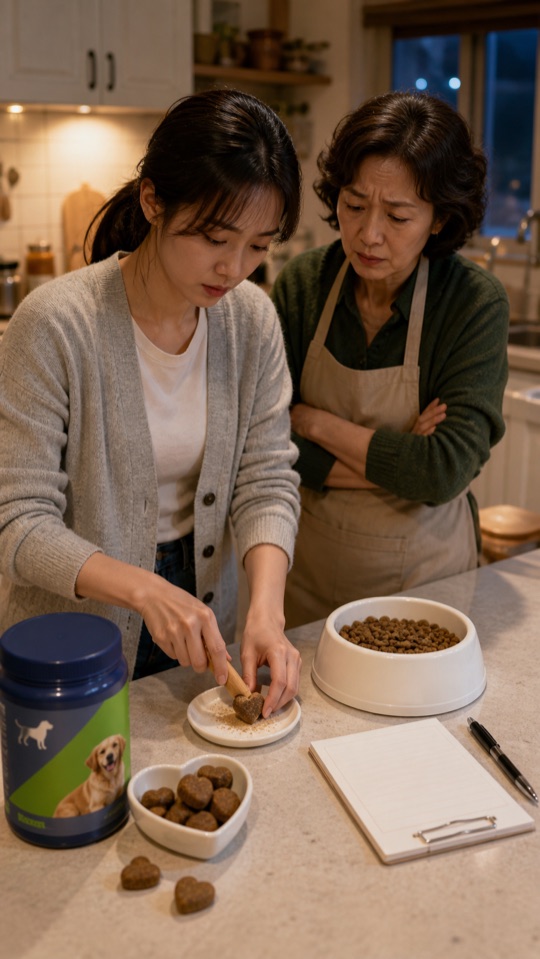
Sanitized pet ecommerce short-drama example. These first frames represent the hook, product evidence, and ending hook.
Character Dossier Board
Key role subjects should not rely on a single attractive portrait. A reusable character dossier board locks the main portrait, front/side/back views, expression set, wardrobe/material details, product-contact behavior, and visual keywords. Later first-frame, storyboard, and video prompts should reference this role subject instead of reinventing the character in every shot.

| Hook: send-away pressure | Product evidence | Ending hook |
|---|---|---|
 |
 |
 |
Example script: examples/xiderdl-lucky/ep01-high-conflict.md
Deliverables
| Deliverable | Purpose | Required |
|---|---|---|
| Product proof bible | Defines user, product action, proof, and claim boundaries | Yes |
| Three briefs | Lets the team choose the story engine before writing scripts | Yes |
| Four libraries plus shot table | Role, scene, product/prop, evidence libraries, and a 12-shot production table | Yes |
| Character dossier boards | Lock key roles with main portrait, three views, expression sheet, wardrobe/materials, and product-contact behavior | Yes |
| Seedance2 filed asset table | Tracks fictional role filing status, filed asset ID placeholder, board version, and provider scope | Required for Seedance2 visible-face routes |
| High-conflict episode script | 60-90 second episode with a strong first 5 seconds | Yes |
| 12-shot production table | Each shot references subject libraries and focuses on action, emotion, camera, and dialogue | Yes |
| Three test first frames | Selects the hook, product-proof, and ending-hook frames from the 4x3 grid cuts for test generation | Yes |
| Image-to-video prompts | Script-locked prompts for salpx Wan 3.0 (declaring duration / ratio / material order) | Yes |
| Clip contracts | Defines what each clip can and cannot do | Yes |
| Reference role map | Separates first frame, product image, caption, and video reference duties | Yes |
| Generation manifest | Tracks model, frame, prompt, status, and output path | Yes |
| Voiceover and caption list | Source of truth for post-production subtitles | Yes |
| Caption plan | Ensures Wan 3.0 raw clips receive subtitles in post | Yes |
| Ad cutdown scripts | 35-60 second paid-media cuts from the main episode | Recommended |
| Release scorecard | Decides publish, review-only, or rewrite | Recommended |
Workflow Architecture
flowchart TD
  A["User in Codex: ecommerce short drama + product image"] --> B["Codex invokes TJ Short Skill"]
  B --> C["Codex product analysis"]
  C --> D["Codex generates three briefs"]
  D --> E["User chooses one story engine"]
  E --> F["Codex writes product proof bible"]
  F --> R["Codex builds four libraries: role / scene / product-prop / evidence"]
  R --> G["Codex writes high-conflict script + 12-shot production table"]
  G --> H["Codex creates role reference package + 4x3 first-frame grid"]
  H --> I["Auto-cuts 12 independent 9:16 first frames and prechecks them"]
  I --> J["Codex writes clip contracts + reference role map"]
  J --> K["Codex compiles salpx Wan 3.0 video prompts"]
  K --> L["salpx /v1/videos runs first-frame, first+last-frame, or multi-reference"]
  L --> M["Returns raw clips"]
  M --> N["Codex reviews story / product / lip sync / caption plan"]
  N --> O{"Did the three tests pass?"}
  O -- "Yes" --> P["Codex expands to all 12 shots"]
  O -- "No" --> Q["Codex one-variable retake or rewrite"]
  P --> R["Captions + dubbing + ad cutdowns"]
Environment
| Item | Requirement |
|---|---|
| Codex | Install and run the TJ Short Skill |
| Git | Clone and version control |
| Python | Python 3.9+ |
| Python dependency | requests |
| Image service | salpx relay / gpt-image-2.5-sunburst |
| Video service | salpx relay / Wan 3.0 (single route, shares the image key) |
| Recommended model | Default: salpx / wan3.0-720p; optional: wan3.0-1080p, wan3.0-hm-*, omni_flash, seedance-2-mini-480p, Veo variants |
| Aspect ratio | 9:16 |
| Clip duration | Wan 3.0: integer 2-30s, billed per second; default 5s for trials, 8-10s for story beats. omni optional fixed 10s; Seedance2/Veo follow model rules |
| Caption strategy | No burned-in subtitles during generation; add captions in post |
Repository Contents
| Path | Description |
|---|---|
skill/SKILL.md |
Skill file that can be copied into the Codex skills directory |
README.md |
Full Chinese documentation |
README.en.md |
Full English documentation |
docs/comparison.md |
Fair comparison with OnlyShot, short-drama, Emily2040/seedance-2.0, salpx, and editing tools |
docs/changelog.md |
Version changelog |
docs/methodology.md |
Ecommerce short-drama methodology |
docs/privacy-and-release.md |
Public-release privacy and key checklist |
docs/seedance2-face-compliance.md |
Seedance2 visible-face, face_pencil, and blur_feature compliance notes |
docs/salpx-api-production.md |
salpx API guide for gpt-image-2.5-sunburst storyboard grids, first frames, and product-proof images |
docs/wan3-api-production.md |
salpx Wan 3.0 guide: model and price ladder, billing and holds, material combination rules, submit, poll, download, error map |
examples/xiderdl-lucky/ |
Sanitized sample script and screenshots |
prompts/omni-fixed-10s-template.md |
salpx / omni_flash fixed 10-second prompt template |
scripts/salpx_production_client.py |
Generic salpx image production client; salpx video remains optional fallback |
scripts/wan3_video_client.py |
salpx Wan 3.0 video submit, poll, and download client (stdlib only) |
Installation
Option A: Install As A Codex Skill
git clone https://github.com/tttg2010/tj-short.git
mkdir -p ~/.codex/skills/tj-short
cp tj-short/skill/SKILL.md ~/.codex/skills/tj-short/SKILL.md
If you use WorkBuddy, copy skill/SKILL.md together with docs/, scripts/, prompts/, assets/, examples/, and .env.example into ~/.workbuddy/skills/tj-short/, then open a new session. No extra install command is needed.
After installing or updating the Skill, restart Codex. Otherwise Codex may still use an old cached Skill:
重新启动codex!
重新启动codex!
重新启动codex!
To fully test production from Codex, register at salpx.com and get an API key. Image generation (gpt-image-2.5-sunburst) and video generation (wan3.0-*) share that single key. Put it in local .env:
SALPX_API_KEY=your_salpx_api_key
SALPX_BASE_URL=https://www.salpx.com/v1
SALPX_IMAGE_MODEL=gpt-image-2.5-sunburst
SALPX_VIDEO_MODEL=wan3.0-720p
Without a salpx API key, Codex can still generate product analysis, scripts, storyboards, first-frame prompts, and manifests, but cannot submit image or video jobs.
Then say in Codex:
短剧带货启动
Or:
Use TJ Short to turn this product image into an ecommerce short-drama project.
Option B: Use The Scripts And Templates Only
git clone https://github.com/tttg2010/tj-short.git
cd tj-short
python3 -m pip install requests
cp .env.example .env
Register at salpx.com, get an API key, and fill in SALPX_API_KEY in your local .env — image and video share it. Follow .env.example. Keep real keys local only.
Never commit real keys. .env is ignored by git.
Usage SOP
Step 0: Start Inside Codex
Recommended starter:
短剧带货启动
After Codex gives A/B/C briefs, copy the next step:
短剧带货,选 A,地区 美国,图片模型 salpx / gpt-image-2.5-sunburst,视频模型 salpx / wan3.0-720p(可选 wan3.0-1080p、wan3.0-hm-*、omni_flash、seedance-2-mini-480p),产品是:your product in one sentence
Codex should analyze the product and produce three briefs first. It should not jump straight into a full script.
Startup gate:
- When the user says
短剧带货启动, Codex must not immediately generate a full production package. - If no product image or product information is provided, Codex must ask for the product first. It must not invent generic workplace, fashion, or relationship examples.
- Even when the user says "generate video", follow this order first: product diagnosis -> three briefs -> user chooses A/B/C.
- Full production requires
SALPX_API_KEYfor both image generation and video generation (wan3.0-*).
Step 1: Codex Product Diagnosis
Answer:
- What are you selling?
- Who is it for?
- What product action can be shown?
- What proof makes it believable?
If product action and proof are unclear, do not generate video yet.
Step 2: Write Three Briefs
Each brief should include:
- story engine
- character relationship
- first 5-second crisis
- misunderstanding and truth
- product evidence position
- main selling point
- CTA
- AI video feasibility
Only after one brief is selected should you write the full episode.
Step 3: Codex Writes The High-Conflict Episode
Recommended rhythm:
0-5s: external pressure or relationship threat
5-20s: dialogue conflict
20-40s: misunderstanding escalates
40-55s: truth begins to appear
55-70s: product enters as evidence
70-90s: relationship turn + next hook
Step 4: Create One 4x3 First-Frame Grid, Then Cut 12 9:16 Frames
Do not generate 12 standalone first frames, and do not create three extra images solely for the trial clips. The standard cost-controlled workflow is:
- Generate one cuttable 4x3 grid with 12 cells, one per episode shot.
- Auto-cut 12 clean 9:16 first frames and save a cut report.
- Precheck each cell for story, role, product, subtitle, and border issues.
- Select
HC-01(opening hook),HC-09(product evidence), andHC-12(ending hook) from those cuts for the three trial clips.
Generate a standalone frame only if the grid cannot be cut, a cell fails precheck, the user explicitly requests it, or a selected trial clip needs a higher-quality retake. Official frames must be clean 9:16 full-frame images with no subtitles, inset, white border, or blurred background extension.
Step 5: Codex Compiles Prompts, salpx Generates Images, Wan 3.0 Generates Video
If you need to generate storyboards, first frames, or product-proof images first, use gpt-image-2.5-sunburst:
python3 scripts/salpx_production_client.py --env .env image \
  --model gpt-image-2.5-sunburst \
  --prompt "vertical 9:16 ecommerce short-drama first frame..." \
  --size 1024x1792 \
  --out-dir outputs/images \
  --name ep01-shot01
All video runs through salpx Wan 3.0 (wan3.0-*) using the same SALPX_API_KEY as image generation. The most common route is first-frame image-to-video: pass the accepted 9:16 first frame as first_frame.
python3 scripts/wan3_video_client.py --env .env video \
  --model wan3.0-720p \
  --prompt "8-second vertical 9:16 US TikTok Shop short-drama clip, no subtitles, no extra props..." \
  --duration 8 \
  --ratio 9:16 \
  --first-frame path/to/first-frame.png \
  --wait \
  --out outputs/videos/shot-01.mp4
Add --last-frame when the clip needs strict first/last-frame control (first_last_frame mode; cannot be mixed with reference materials):
python3 scripts/wan3_video_client.py --env .env video \
  --model wan3.0-720p \
  --prompt "Animate naturally from the first frame and finish on the last frame. No subtitles." \
  --duration 6 --ratio 9:16 \
  --first-frame path/to/first-frame.png \
  --last-frame path/to/last-frame.png \
  --wait --out outputs/videos/shot-01.mp4
Use reference mode for identity lock, camera transfer, voice, or lip-sync (up to 10 reference images; up to 5 reference videos totaling 15s; up to 5 reference audios totaling 15s):
python3 scripts/wan3_video_client.py --env .env video \
  --model wan3.0-1080p \
  --prompt "Image 1 is the lead, image 2 is the product pack; video 1 sets the camera move; audio 1 is her voice, lips must follow audio 1" \
  --duration 10 --ratio 9:16 \
  --ref-image path/to/character.png \
  --ref-image path/to/product.png \
  --ref-video path/to/dance.mp4 \
  --ref-audio path/to/voice.mp3 \
  --wait --out outputs/videos/shot-01.mp4
Pricing and the cost gate:
| Model | Resolution | CNY per second | 5s | 10s | 30s |
|---|---|---|---|---|---|
wan3.0-480p |
480P | 0.21 | 1.05 | 2.10 | 6.30 |
wan3.0-720p |
720P | 0.42 | 2.10 | 4.20 | 12.60 |
wan3.0-1080p |
1080P | 0.84 | 4.20 | 8.40 | 25.20 |
wan3.0-hm-480p |
480P | 0.28 | 1.40 | 2.80 | 8.40 |
wan3.0-hm-720p |
720P | 0.56 | 2.80 | 5.60 | 16.80 |
wan3.0-hm-1080p |
1080P | 1.11 | 5.55 | 11.10 | 33.30 |
With a reference video attached, billing is price x (output seconds + reference video seconds). The submit-time hold assumes the 15s cap and is settled afterwards; failed or timed-out tasks are refunded in full. --dry-run validates materials and quotes without spending.
Before any submission, state the model, resolution, output seconds, whether a reference video is attached, and the computed price, then wait for consent. A 30s 1080p clip is CNY 25.20 and must never be submitted on assumption.
Full details: docs/wan3-api-production.md.
omni_flash (fixed 10s) plus Seedance2 and Veo remain as optional legacy routes. Their request shapes differ from Wan 3.0; do not mix them.
Step 6: Codex Reviews Clips
Check:
- Did the clip complete its narrative job?
- Did it reveal later information too early?
- Did the product become a hard ad?
- Did it create subtitles, garbled text, inset frames, or borders?
- Did dialogue belong to the right speaker?
- Does it need post dubbing?
Only expand to all 12 shots after the three tests pass.
Step 7: Codex Prepares Final Delivery
The final episode should include:
- subtitles
- dubbing or usable original audio
- low-mixed original sound
- preview frames
- release score
- ad cutdowns
Raw clips without subtitles are not final publishable videos.
Star Rating Criteria
If a user can complete these actions within 30 minutes, the skill deserves 5 stars:
| Rating | Standard |
|---|---|
| 1/5 | Concept only; unclear how to start inside Codex |
| 2/5 | Codex can write a script but cannot enter video production |
| 3/5 | Codex can create first frames and prompts but lacks review criteria |
| 4/5 | Codex can run three test clips and knows how to retake failures |
| 5/5 | Codex can go from product image to main episode, cutdowns, captions, and release checks |
References
This workflow openly credits:
- OnlyShot: ecommerce short-drama thinking, product evidence, projectized delivery
- short-drama: episode structure, storyboard, video-production workflow
- Emily2040/seedance-2.0: clip contracts, project state capsule, reference role map, one-variable retake
This is not an official distribution of those projects. It is a public-safe reusable practice template.
Keywords
Codex skill, Codex ecommerce short drama, ecommerce short-drama skill, shoppable short video, AI product video, product image to video, image-to-video, salpx Wan 3.0, wan3.0, 30-second video, multi-reference, reference video, reference audio, lip sync, salpx, salpx relay, gpt-image-2.5-sunburst, omni_flash, Seedance 2.0, seedance-2-mini-480p, Veo, AI video generation, short-drama storyboard, 4x3 first-frame grid, 9:16 first frame, character dossier board, role asset filing, Seedance2 face compliance, face_pencil, blur_feature, US-market localization, product proof, ecommerce video workflow, short-form commerce, TikTok Shop content, cross-border ecommerce video, prompt engineering.
Public Safety
This repository does not include:
- real API keys
.env- private product source images
- API responses
- task IDs
- download URLs
- local absolute paths
- generated video files