
tr-nc/re-flora
tr-nc/re-flora has 75 GitHub stars and 8 forks. GitHot measured 0 stars in 24 hours, +1 in 7 days, and +3 in 15 days. Last checked 2026-11-16 20:55 UTC. Last push 2026-11-02.
Measured star growth
- in 24h
- 0
- in 7 days
- +1
- in 15 days
- +3
- in 1 month
- Collecting history
Net star changes over overlapping periods, not daily totals. Missing measurements are left blank. Stars measure attention, not software quality.
About
An experimental relaxation voxel game built in Rust with Vulkan, inviting you to cultivate a living voxel island at your own pace.
Creative & MediaREADME.md
OriginalRe: Flora
Cultivate a living voxel garden at your own pace.
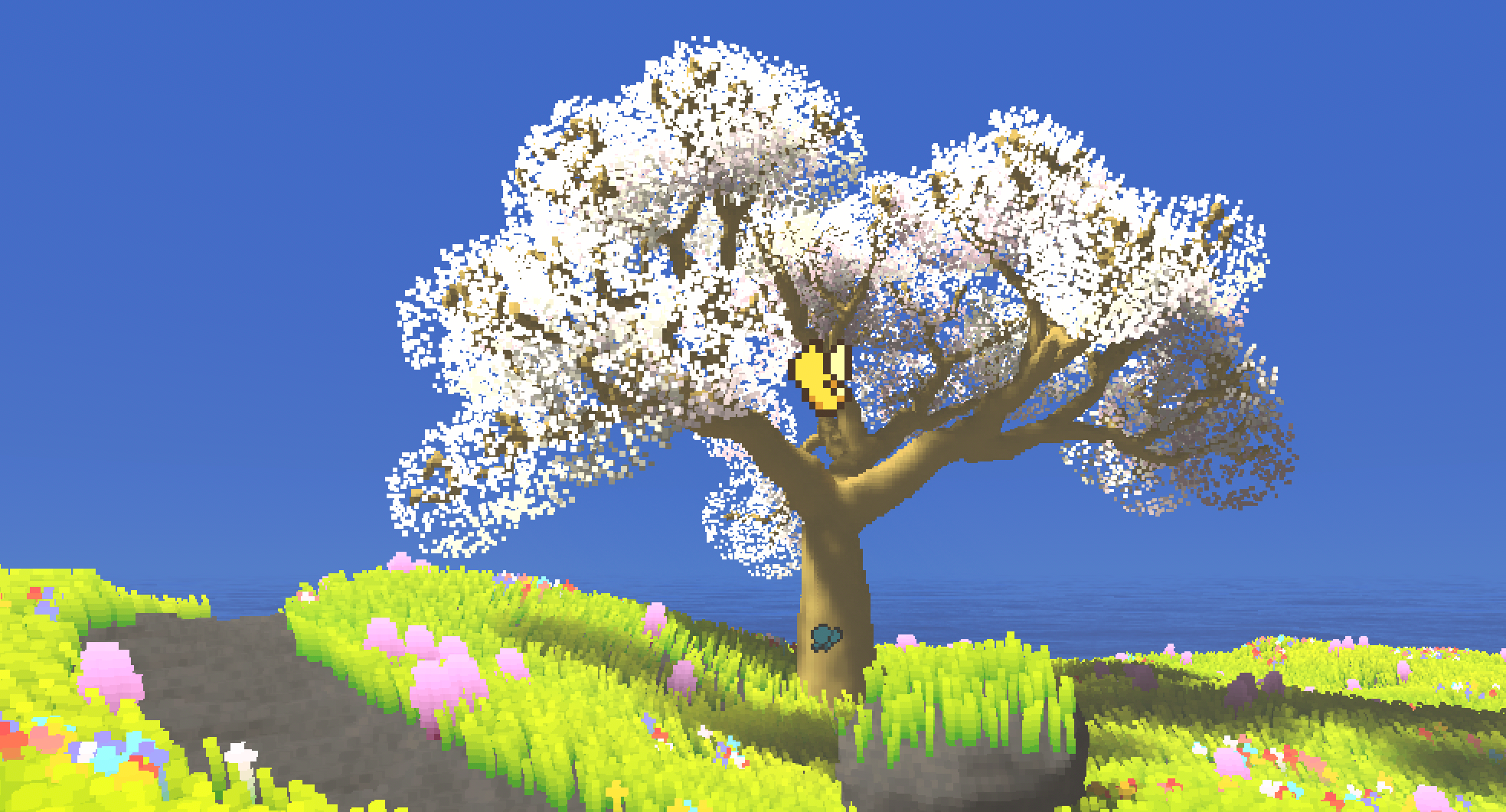
Re: Flora is an experimental, full-screen gardening game about shaping a small natural place, planting freely, and seeing the world respond. It is designed as an active but low-pressure escape: the garden asks for your attention while you are inside it, but it does not ask you to organize your life around it.
Download
Download the latest Re: Flora release
The latest release page provides packaged builds for Windows, macOS, and Fedora. Download the archive for your platform, extract the complete folder, and run Re: Flora from inside it.
Each archive contains the README and playing guide from the release that produced it. The main
branch may describe interactions that are not in the latest tagged package yet, so follow the guide
inside the downloaded archive when it differs from this page.
You need a Vulkan-capable GPU with a current graphics driver. RTX hardware, the Vulkan SDK, Rust, and other development tools are not required to play a packaged release. The macOS package includes its Vulkan-on-Metal runtime.
See Playing Re: Flora for platform launch notes, controls, and a short guide to the current prototype.
Current Development State
The current development build is an evolving prototype. It can:
- inhabit and explore a low-resolution 3D voxel island;
- shape and smooth terrain;
- grow, arrange, trim, and remove flora without a visible placement grid;
- water, till, and inspect local soil;
- place trees and sprinklers;
- experience dynamic light, wind, water, particles, wildlife, and spatial sound.
The complete care, harvest, and seed-circulation loop is the current product milestone, not a claim about the latest packaged release. See First Garden Moment for that scope.
Start Exploring
After launch:
- Use WASD or the arrow keys and the mouse to look around the garden.
- Press G to switch between the orbit editing camera and free-look movement.
- Press 1 to select Grow. Choose Type → Flora and a variety, then hold the left mouse button over soil. Choose Type → Tree to plant a tree with one click.
- Press 6 to select Water and hold the left mouse button over the planted area.
- Press Esc whenever you want to leave.
The full control reference is in Playing Re: Flora.
Direction
Re: Flora is being shaped as a Restorative Garden for adults who want a deliberate break from modern work:
I spent time with my garden. It responded to me, and it became more mine.
Read the canonical game direction and current product roadmap.
Open Source and Feedback
Re: Flora is open source. Player impressions, bug reports, screenshots, and videos are welcome in GitHub Issues.
If you want to build the project or contribute code, read CONTRIBUTING.md. Local build setup and engineering validation live in Development Guide, outside this player-facing README.
Acknowledgements
- egui-ash-renderer
- TheMaister, Khronos Group, and the broader graphics-programming community
License
Re: Flora uses separate licenses for code and assets:
- Code: GPL-3.0
- Project-owned assets: CC BY-NC-SA 4.0, unless stated otherwise.
- Third-party assets: their own licenses apply, not the general asset license. For example, Pixelify Sans uses SIL OFL 1.1; NH172 HRTF data uses CC BY-SA 3.0; and FAST noise includes EA's BSD-3-Clause notice. Consult each asset folder's provenance and license notes; presence in this repository is not evidence of redistribution permission.
See the asset inventory for tracked resources, runtime usage, provenance gaps, and asset-repository separation recommendations.