
spy4x/seed
spy4x/seed has 33 GitHub stars and 4 forks. GitHot measured 0 stars in 24 hours. Last checked 2026-11-09 09:14 UTC. Last push 2026-11-05.
Seed: the free SaaS starter built on web standards. Runs on Deno. Sign-in with 2FA, groups with roles, per-member Stripe billing, realtime, an offline app, an admin panel and a public website, wired together. MIT-licensed, built in public.
Measured star growth
- in 24h
- 0
- in 7 days
- Update delayed
- in 15 days
- Update delayed
- in 1 month
- Update delayed
Net star changes over overlapping periods, not daily totals. Missing measurements are left blank. Stars measure attention, not software quality.
README.md
OriginalSeed
Seed: the free SaaS starter built on web standards. Runs on Deno. The groundwork of your SaaS, already built: sign-in with a second factor, groups with roles, per-member Stripe billing, realtime, an offline app and an admin area, on Postgres and Docker Compose. MIT-licensed, usable today, built in public.


Try the live demo → · Website · Architecture · Deploy · All docs · Start a product
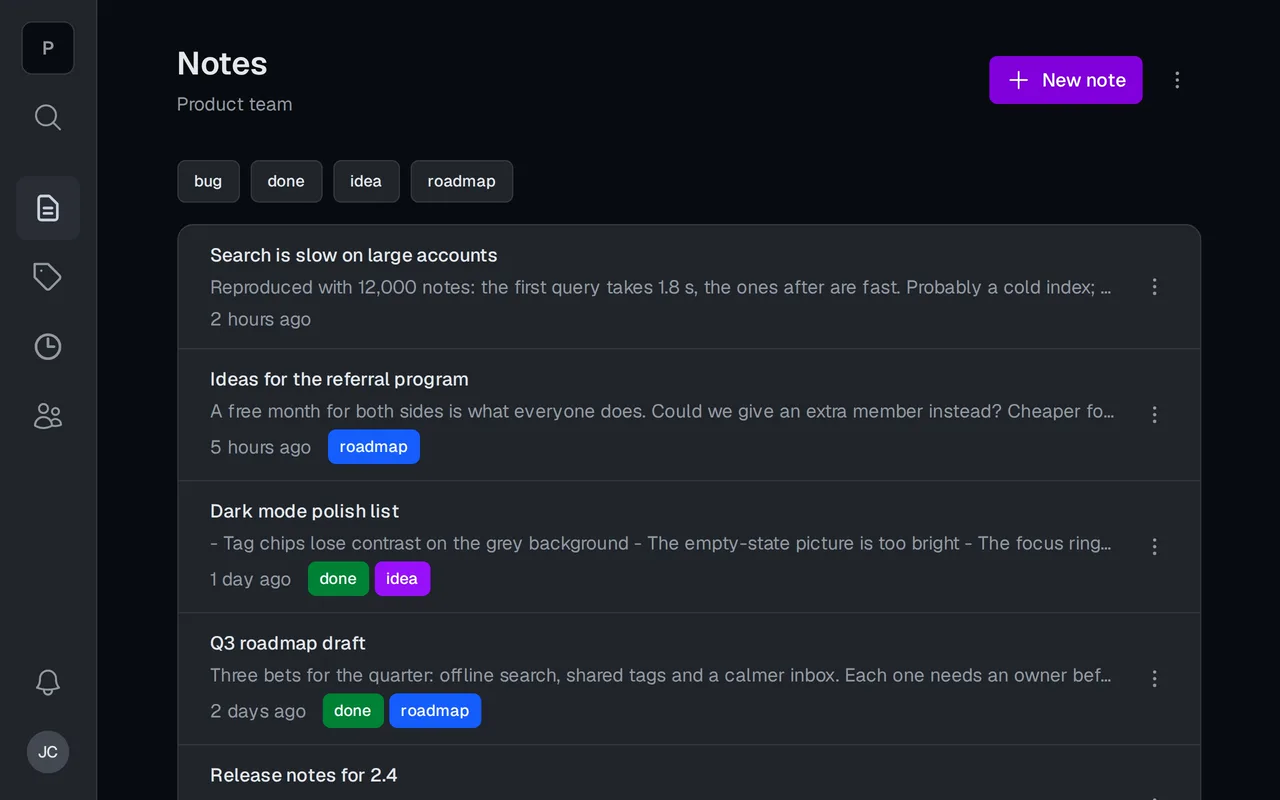
Create your repository from it, fill in the env file, and you start with a product that already has accounts, a second factor, tenancy and a place for background work. A new user signs up and gets an account, a session and a first group in one database transaction. Groups are the only tenancy boundary, so the same membership checks and roles cover a person's own data and shared workspaces.
It exists because every SaaS MVP needs the same groundwork before its first feature. The reusable
parts live here and in the published @spy4x/* packages; product rules
stay out.
Status: usable today, and still growing in public. On main now: passkeys, Google and
GitHub sign-in, email sign-in codes, guest accounts, a second factor, groups with roles and invitations,
Stripe billing per member, notes (the reference feature), the file store, notifications in the app,
by web push and in Telegram, nine languages, an offline SPA, the admin panel, and a public website
with a blog and a newsletter. All of it is tested in CI, and most of it runs in the
live demo with made-up people. Not built yet: the Android and
desktop apps, and the rest of the
open issues.
Why Seed
- Tenancy from day one. Every user gets a group at sign-up; every group uses the same IDs, membership checks and roles, from viewer to owner. A group can be renamed, deleted and, for 30 days, restored, and a person always keeps at least one.
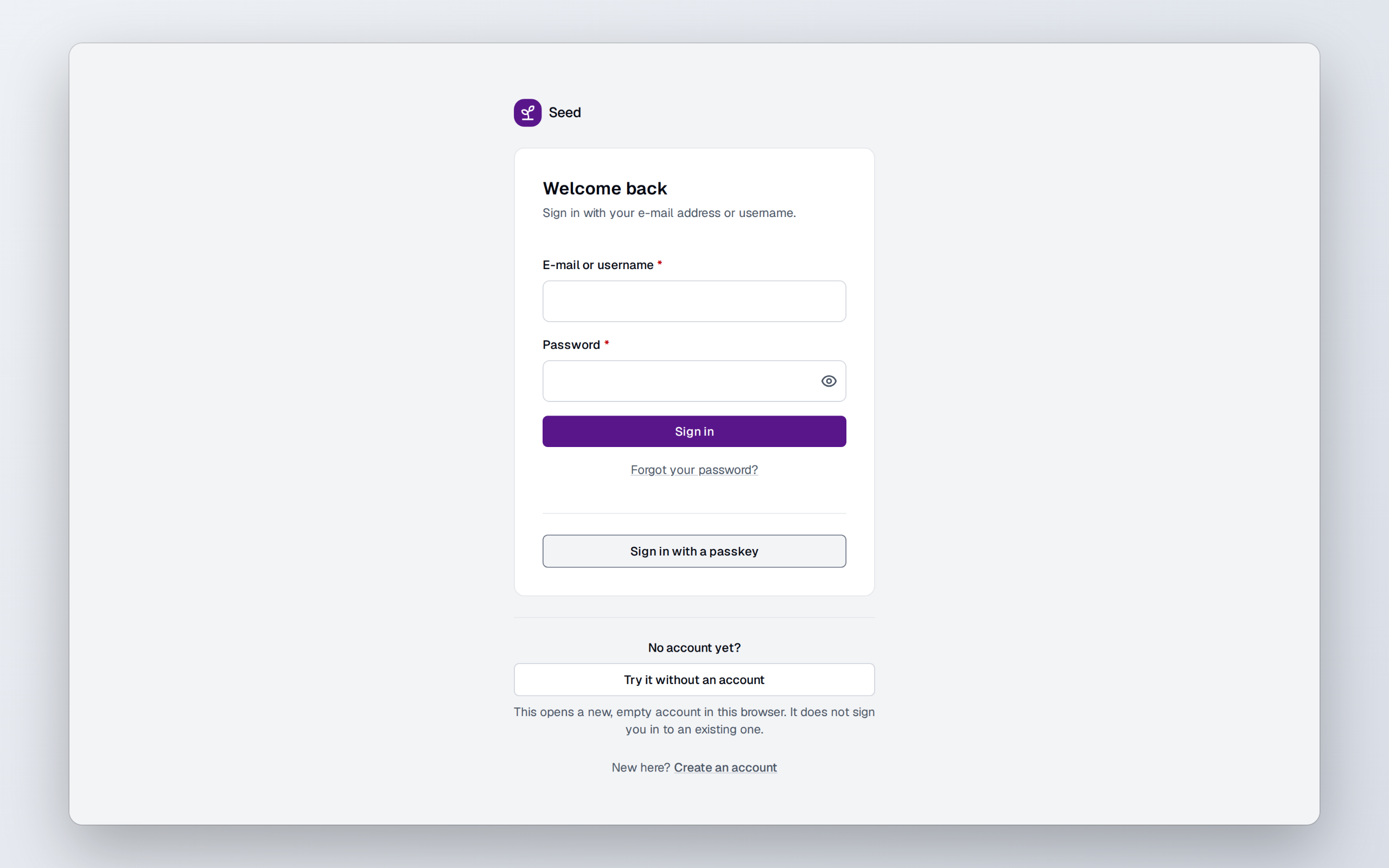
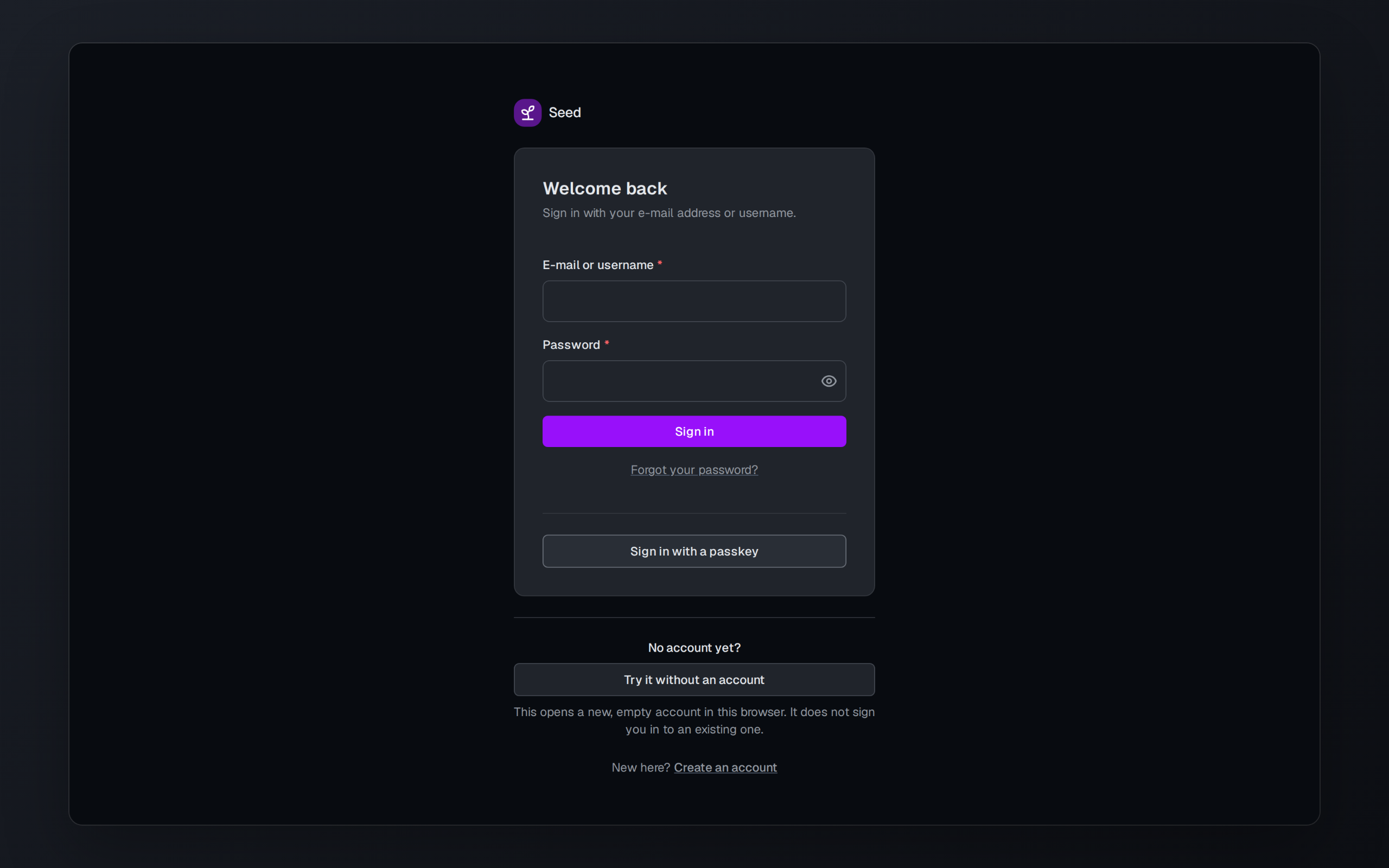
- Sign-in that is done. E-mail and password with a confirmation code, passkeys, Google and GitHub, and email sign-in codes. A visitor can start in a guest account with one click and add a sign-in method later, keeping their data. An authenticator app adds a second factor, people see and end their sessions, and personal API tokens are stored only as hashes.
- Billing per member, through Stripe. A free plan with limits, a 14-day trial, quantities that follow the member count and a grace period after a failed payment: docs/billing.md.
- Nine languages. The SPA, the admin panel, the website and the mails speak English, German, Spanish, French, Brazilian Portuguese, Russian, Japanese, Simplified Chinese and Arabic, which reads right to left.
- A file store. Garage, a bundled S3 store, keeps images and PDFs on notes and profile pictures. Uploads go through signed links, and photos become small AVIF and WebP copies with their metadata removed: docs/files.md.
- Notifications. In the app, by web push on a phone or desktop, and in Telegram once a person links the bot: docs/telegram.md.
- Offline-first SPA. The SPA keeps the last notes and groups in IndexedDB (the shared data cache), opens with no network, and queues note writes with their idempotency keys. It sends them on reconnect and shows a stale write as a conflict to settle, never as a silent overwrite. The layer sits in one folder, so a product that does not want it deletes the folder, follows the removal steps in docs/offline.md and keeps an online SPA.
- An admin panel on its own host. Operators find a person and see their sign-in methods, sessions and groups, refund a payment, write the blog, look after the newsletter's subscribers and rerun a failed job. Every action goes to the audit log.
- A public website. Server-rendered by a small Fresh-compatible layer built with Vite, and usable with JavaScript off: pricing, legal pages, a blog with an RSS feed, and a newsletter with double opt-in and one-click unsubscribe: docs/apps.md.
- CQRS with an outbox. Commands, queries and events go through one bus. Every group change
writes its event to
outbox_events, and the worker drains that table. - Safe API defaults. Every mutation must come from the web app's own origin, and group lists page with HMAC-signed cursors.
- Built on web standards. Hono handlers take a Fetch
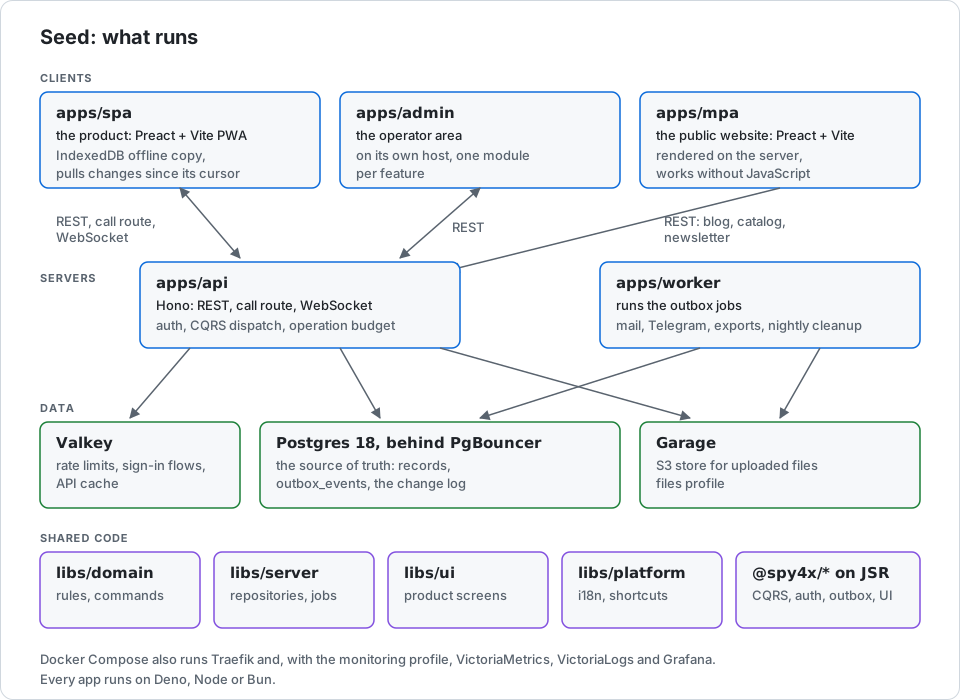
Requestand return aResponse; password hashes and cursor signatures use Web Crypto; live updates travel over a standard WebSocket; everything is an ES module. The servers run on Deno 2 in Docker on any Linux host you control, and the clients run in any modern browser. - Operations included. Docker Compose for development and single-node production: Traefik, Postgres, Valkey, VictoriaMetrics, VictoriaLogs and Grafana.
Use it if you are starting a multi-user web product and want auth, tenancy and operations settled before the first feature. Skip it if you deploy to serverless functions rather than a server you run.
Runtime plan
Seed runs on Deno today: the servers run on Deno 2 in Docker, and the tasks and tests use Deno. Seed is moving to run unchanged on Deno, Node and Bun (#623). There is no date yet.
Most of the code is already independent of the runtime, because it is built on web standards: Fetch
Request and Response, Web Crypto, WebSocket and ES modules. On 9 October 2026 the Deno team
announced one more year of support for the runtime, with monthly
bug-fix and security releases, after which it ends its own development; Deno stays open source.
Running on all three runtimes keeps that choice with you. Seed never used Deno Deploy, so Deploy's
shutdown does not affect a Seed product.
Quick start
Requires Deno 2 and Docker. The services run in Docker; the tasks that set them up run on Deno. The GitHub CLI is optional: GitHub's "Use this template" button and a clone do the same as the first line.
gh repo create my-product --template spy4x/seed --private --clone
cd my-product
deno task init
deno task dev
init checks that Docker runs, copies infra/envs/.env.example to infra/envs/.env, generates
every secret and the web push keys, records the Seed commit your copy came from, and asks for the
project name. dev starts Traefik, unless one already runs, then
Postgres, Valkey, the API, the worker, the SPA and the monitoring. Then open http://app.localhost.
Get started walks through it step by step: what opens where, and what to do
when a step fails.
Or ask your AI agent:
Create my new product "Acme" from https://github.com/spy4x/seed and run it locally
To use Podman, set CONTAINER_PROVIDER=podman in the env file and start Traefik with
deno task proxy:start, which calls Docker.
To keep taking Seed's fixes and features in your product later, see docs/products.md.
The rest of the local stack (monitoring, migrations, demo data, resetting the database) is in docs/local-stack.md.
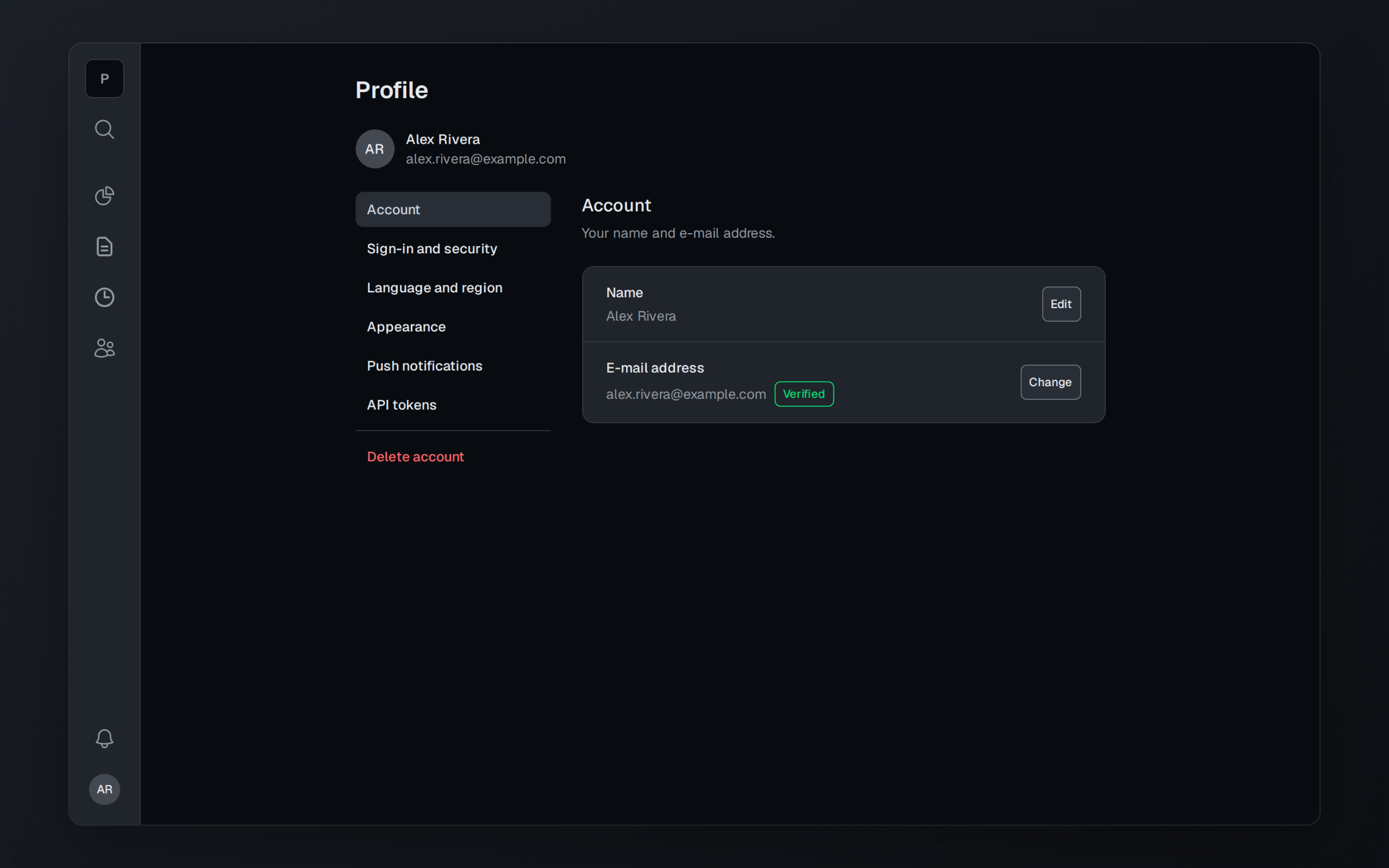
What you get
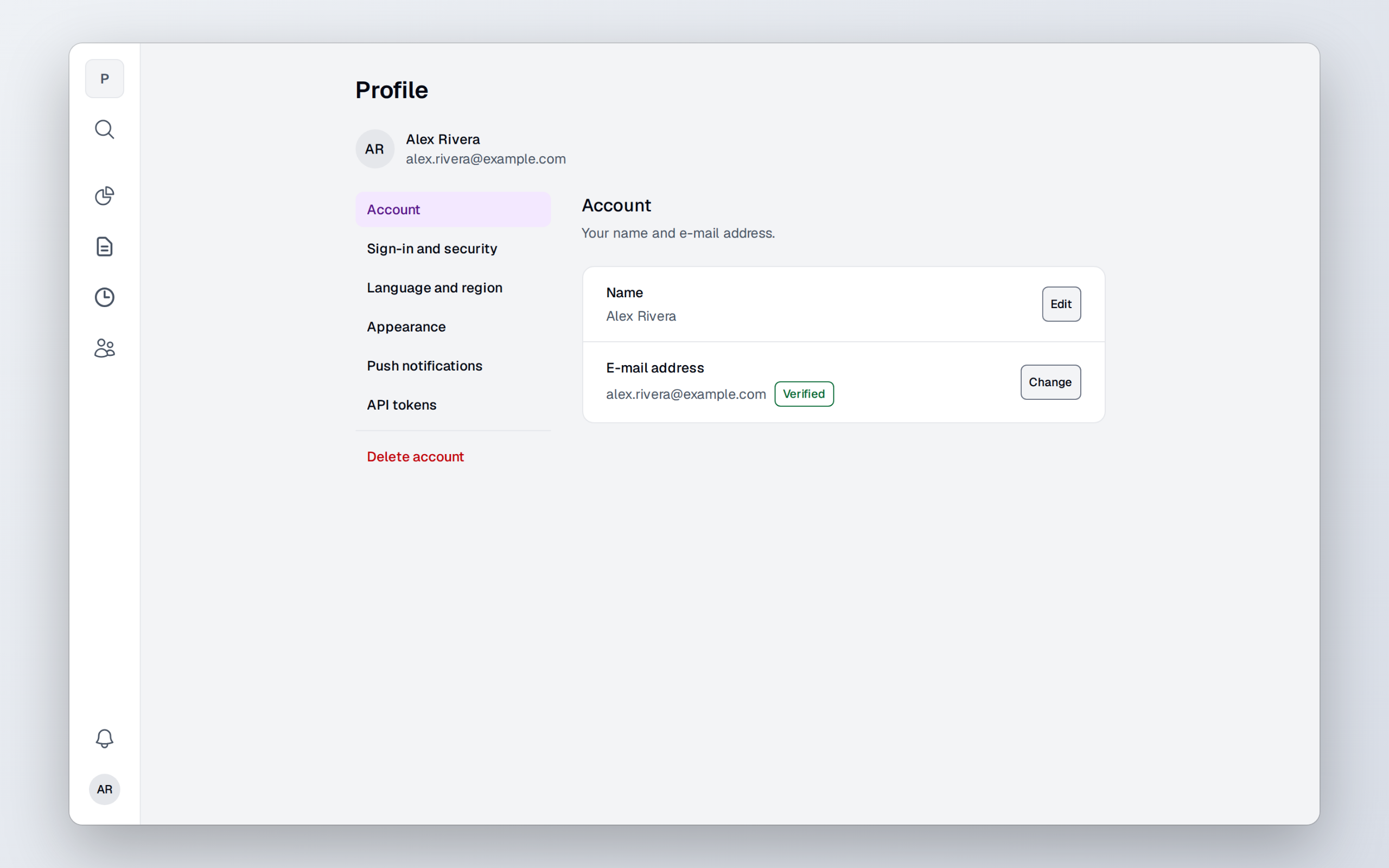
| Light | Dark |
|---|---|
 |
 |
 |
 |
The admin panel, on its own host, in a 58-second video on the website:
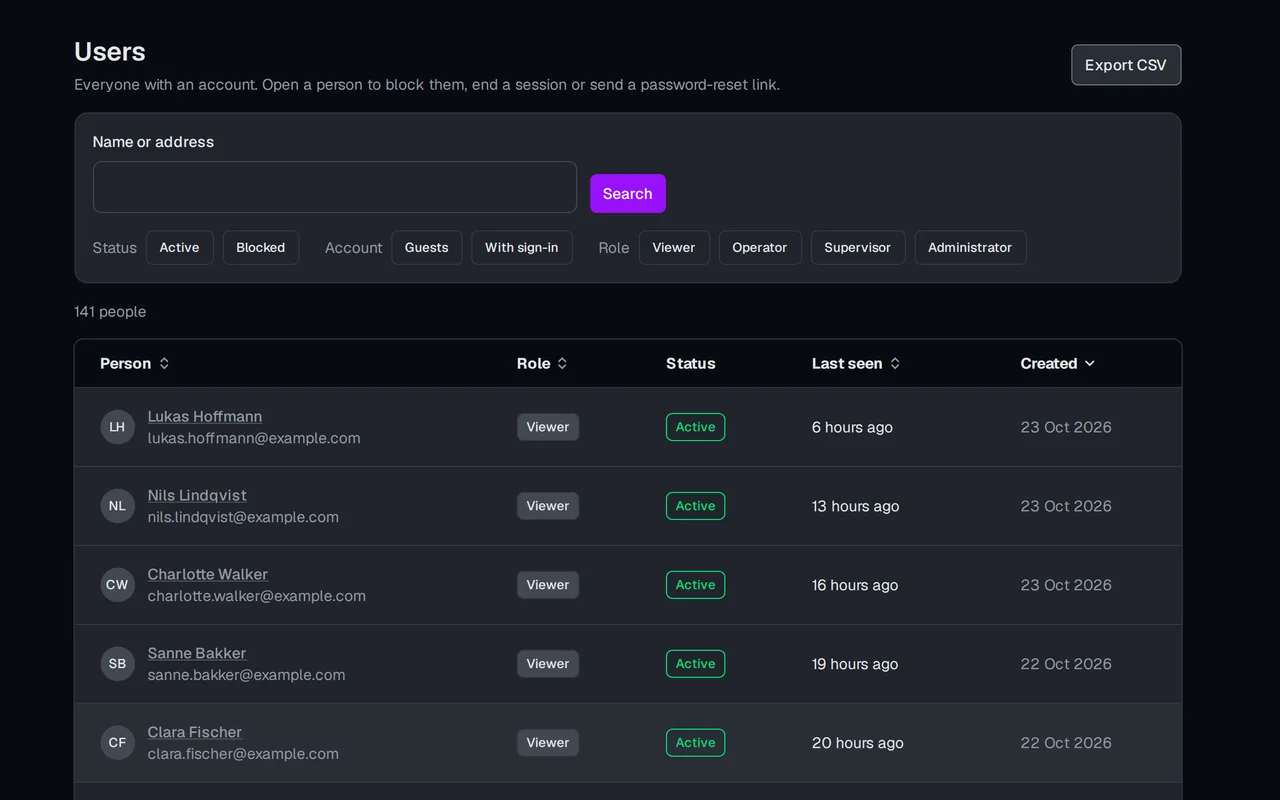
The screenshots, the GIF and the video show made-up people;
docs/screenshots/record.ts records the pictures again from a running
app, and docs/screenshots/admin-video.ts
(deno task video:admin) the video.
How the parts fit together
Documentation
Also on the website: seedsaas.com/docs, every guide below that is not internal, with the changelog at seedsaas.com/changelog.
- The three apps: the SPA, the admin app and the public website.
- Deploy to a server: the first deploy. Then updates, certificates, operator access, several projects and releases.
- Settings: every variable of the env file.
- Guest accounts
- Sign in with Google and GitHub
- Backups: set up, and restore and rehearse.
- The file store: Garage or another S3 store, signed uploads and downloads.
- Every task and the browser tests.
- Add your first feature, then the aggregate reference.
- Everything else
Development
deno task check           # lint, format check, type check and unit tests
deno task hooks:install   # runs the checks before every commit
deno task e2e:local       # browser tests on a stack of their own
See CONTRIBUTING.md for the rules and docs/handoff.md for the traps in this codebase.
Built by
I'm Anton Shubin, a senior full-stack engineer and tech lead. Seed is the foundation I build client SaaS MVPs on. Need an MVP built for your product? That's my day job →
Licensed under MIT. Copyright (c) 2026 Anton Shubin.
Made by Anton Shubin · antonshubin.com/tools/seed
Explore related projects
awesome-selfhosted/awesome-selfhosted
A list of Free Software network services and web applications which can be hosted on your own servers
335,506 starsimmich-app/immich
High performance self-hosted photo and video management solution.
118,568 starsStirling-Tools/Stirling-PDF
#1 PDF Application on GitHub that lets you edit PDFs on any device anywhere
96,149 starslouislam/uptime-kuma
A fancy self-hosted monitoring tool
93,389 stars