
rakeshnitb23/toolism
rakeshnitb23/toolism has 54 GitHub stars and 27 forks. GitHot measured 0 stars in 24 hours. Last checked 2026-11-15 08:21 UTC. Last push 2026-11-10.
Measured star growth
- in 24h
- 0
- in 7 days
- Collecting history
- in 15 days
- Collecting history
- in 1 month
- Collecting history
Net star changes over overlapping periods, not daily totals. Missing measurements are left blank. Stars measure attention, not software quality.
About
Measure and safely cut the token cost of LLM tool and MCP schemas, with equivalence checking and a CI gate.
AIREADME.md
Originaltoolism





Your agent pays for its tool definitions on every single request. toolism measures that cost and cuts it, without changing which tool calls are valid.
Every tool you give an LLM (OpenAI function, Anthropic tool, MCP server tool) is sent as JSON
Schema with every request. Schema generators such as Pydantic, FastMCP, zod-to-json-schema and
OpenAPI converters pad that JSON with things the model already knows: titles that repeat the
property name, anyOf wrappers for optional fields, default: null, $schema URIs, unused
$defs. toolism removes exactly that, proves or tests that the result accepts the same tool
calls, and gives you a CI gate so the cost can't creep back up.
On 14 tool sets (159 tools from 13 popular MCP servers, including the official reference servers,
GitHub, Playwright, Notion, Context7 and AWS docs, plus one generated Pydantic server), the default safe rules cut tool-definition tokens by
37.4% in total, with a median of 11.3% per tool set: 22% on the official git server, 34% on
a typical Pydantic-typed server, 73% on Notion (which copies the same nine $defs into all 24
tools; 18 of them use none).
Lean, hand-tuned schemas save almost nothing, and the benchmark shows those
too.
Install
pip install toolism                 # CLI + Python API
pip install "toolism[verify]"       # + equivalence verification (hypothesis-jsonschema)
pip install "toolism[mcp]"          # + read tools straight from an MCP server
pip install "toolism[all]"          # everything, incl. Anthropic's exact token counter
Or run it without adding it to a project:
uvx toolism measure tools.json                    # one-off run with uv
uvx --from "toolism[mcp]" toolism measure --mcp "uvx mcp-server-time"   # with an extra
pipx install "toolism[mcp]"                       # isolated, always-on-PATH install
30-second tour
Measure what your tools cost (OpenAI, Anthropic and MCP JSON are detected automatically):
$ toolism measure examples/mcp_tools.json
Tool definition tokens
┏━━━━━━━━━━━━━━━━━┳━━━━━━━━┳━━━━━━━━━━━━┓
┃ Tool            ┃ Tokens ┃ % of total ┃
┡━━━━━━━━━━━━━━━━━╇━━━━━━━━╇━━━━━━━━━━━━┩
│ create_contact  │    354 │      50.0% │
│ log_activity    │    178 │      25.1% │
│ search_contacts │    176 │      24.9% │
└─────────────────┴────────┴────────────┘
708 tokens across 3 tools (average 236) — tiktoken:o200k_base (approximate)
Slim them. The JSON goes to stdout in the same format and envelope as the input; the report goes to stderr:
$ toolism slim examples/mcp_tools.json -o tools.slim.json
Slimmed 3 tools: 708 → 457 tokens (−251, −35.5%) — tiktoken:o200k_base (approximate), level safe
Savings by rule
┏━━━━━━━┳━━━━━━━━━━━━━━━━━━━━━━━━┳━━━━━━━━┳━━━━━━━┓
┃ Rule  ┃ Name                   ┃ Tokens ┃ Tools ┃
┡━━━━━━━╇━━━━━━━━━━━━━━━━━━━━━━━━╇━━━━━━━━╇━━━━━━━┩
│ SL001 │ redundant-title        │   −111 │     3 │
│ SL002 │ nullable-anyof         │    −42 │     3 │
│ SL003 │ null-default           │    −33 │     3 │
│ SL004 │ inline-defs            │    −42 │     2 │
│ SL005 │ description-whitespace │     −6 │     3 │
│ SL006 │ echo-description       │    −17 │     1 │
└───────┴────────────────────────┴────────┴───────┘
Point it at a live MCP server instead of a file with --mcp:
$ toolism measure --mcp "npx -y @modelcontextprotocol/server-github"
--mcp runs that command exactly as your shell would, with your environment, so only point it
at servers you would run anyway. See SECURITY.md.
Or measure every server your MCP client already lists, with one row per server and a total:
$ toolism measure --mcp-config ~/.cursor/mcp.json
--mcp-config reads the mcpServers object of a client config such as
claude_desktop_config.json, .cursor/mcp.json or a Claude Code .mcp.json, and starts each
stdio server in turn with its command, args and env. --mcp-timeout applies to each server.
The total counts all the servers' tools as one list, the way the model receives them. Remote
(url) and disabled entries are skipped, and a server that fails is listed without stopping the
rest. It exits 0 when at least one server was measured and 2 when none could be. env values
are passed as written, so ${VAR} placeholders are not expanded.
Preview what slimming changes, as a unified diff per changed tool:
toolism diff examples/mcp_tools.json
toolism diff examples/mcp_tools.json --level annotations -o tools.diff
toolism diff --mcp "python my_server.py" --mcp-timeout 30
toolism diff examples/mcp_tools.json --exit-code  # exits 1 if changes found (CI)
The preview shows normalized JSON for each tool's name, description and input schema.
Unchanged tools are omitted; a tool-order change alone produces no diff. --level,
--enable, --disable and --option select the same rewrites as slim. The preview runs
locally without a reporting-tokenizer call. Use - for stdin, --output to write a file,
and --exit-code to exit 1 when differences are found.
Use --mcp COMMAND instead of a file to preview a live stdio server; --mcp-timeout SECONDS
sets the server timeout (60 seconds by default).
Gate it in CI against a committed baseline:
$ toolism check tools.json -b .toolism/baseline.json --update-baseline   # once, then commit it
Wrote .toolism/baseline.json: 457 tokens across 3 tools (tiktoken:o200k_base).

$ toolism check tools.json -b .toolism/baseline.json --max-increase 5%   # in CI
toolism check FAILED
Total: 708 tokens across 3 tools (baseline 457, +251, +54.9%) — tiktoken:o200k_base (approximate)
  ✗ total grew by 251 tokens (+54.9%), over the allowed 5%
Changed tools
┏━━━━━━━━━━━━━━━━━┳━━━━━━━━━━┳━━━━━┳━━━━━━━━┓
┃ Tool            ┃ Baseline ┃ Now ┃ Change ┃
┡━━━━━━━━━━━━━━━━━╇━━━━━━━━━━╇━━━━━╇━━━━━━━━┩
│ create_contact  │      212 │ 354 │   +142 │
│ log_activity    │      123 │ 178 │    +55 │
│ search_contacts │      122 │ 176 │    +54 │
└─────────────────┴──────────┴─────┴────────┘
(Here the baseline was taken from the slimmed tools, and someone then shipped the unslimmed
schemas again.) Without --max-increase, any growth over the baseline fails; --max-total and
--max-tool set absolute caps.
Exit codes: 0 OK, 1 budget exceeded (or a verification rollback with --fail-on-rollback),
2 usage or input error, 3 tokenizer unavailable.
What it changes
Before, as the MCP Python SDK generates it:
"occurred_on": {"anyOf": [{"format": "date", "type": "string"}, {"type": "null"}],
                "default": null, "title": "Occurred On"},
"priority": {"$ref": "#/$defs/Priority", "default": "normal"}
...
"$defs": {"Priority": {"enum": ["low", "normal", "high"], "title": "Priority", "type": "string"}},
"title": "log_activityArguments"
After toolism slim, which accepts exactly the same arguments:
"occurred_on": {"type": ["string", "null"], "format": "date"},
"priority": {"enum": ["low", "normal", "high"], "type": "string", "default": "normal"}
| Rule | What it removes | Default |
|---|---|---|
SL001 redundant-title |
titles that repeat the property, $defs key or tool name |
✓ |
SL002 nullable-anyof |
anyOf: [{type: X}, {type: null}] → type: [X, "null"], keeping string keywords such as format |
✓ |
SL003 null-default |
default: null on optional properties (kept for strict tools) |
✓ |
SL004 inline-defs |
unused $defs; inlines definitions used exactly once |
✓ |
SL005 description-whitespace |
docstring indentation, trailing spaces, blank-line runs | ✓ |
SL006 echo-description |
descriptions that only repeat the property name (user_id: "The user ID") |
✓ |
SL007 stable-order |
nothing; sorts tools so prompt-cache prefixes stay stable | --enable |
SL008 noop-keywords |
required: [], additionalProperties: true and other defaults |
✓ |
SL009 schema-uri |
the root $schema URI when the schema means the same in every draft |
✓ |
SL010 single-allof |
single-branch allOf wrappers, when merging keeps validation identical |
✓ |
SL101 max-description-length |
truncates long descriptions at a sentence boundary | --level annotations |
SL102 drop-examples |
examples / example |
--level annotations |
SL103 drop-titles |
every schema title |
--level annotations |
SL104 dedupe-descriptions |
property descriptions that repeat a sentence or line of the tool description | --level annotations |
Every rule is documented, with its exact conditions, in docs/rules.md
(toolism rules lists them too).
Safety levels and verification
--level safe(default): every rule is validation-equivalent, meaning the slim schema accepts exactly the same tool calls as the original. It removes only information the model already has.--level annotations: also drops annotation text that might help the model (examples, titles, long or repeated descriptions). Validation is still unchanged; measure the effect on your own evals.--verify(toolism[verify]) checks every changed schema in both directions. It proves equivalence when only annotations changed, and otherwise searches for a counterexample with hypothesis-jsonschema. When a tool has a counterexample, toolism finds the rules responsible and reverts only their changes; if it can't single them out, the whole tool is restored to its original. In CI, every schema the default rules change in the benchmark corpus is checked this way.
OpenAI strict: true tools are respected: anything strict mode requires (required listing every
property, additionalProperties: false) is left alone.
Python API
import toolism

toolset = toolism.load("tools.json")  # or toolism.parse(list_of_dicts)
print(toolism.measure(toolset).total)

result = toolism.slim(toolset, level="safe", verify=True)
print(result.report.saved, result.report.saved_pct)
toolism.dump(result.toolset, "tools.slim.json")  # same format and envelope as the input
In an agent, slim once and send the slim tools with every request:
tools = toolism.slim_tools(my_tools)  # same shape back (OpenAI, Anthropic or MCP dicts)
client.messages.create(model=..., tools=tools, messages=...)
slim_tools is cached by input and returns fresh objects each call. See
examples/agent_startup.py (Anthropic SDK) and
examples/openai_startup.py (OpenAI SDK).
Stability
The public API is every name in toolism.__all__ (functions such as load, measure, slim
and slim_tools, plus the models and errors), the CLI commands and their options, the exit codes,
and the GitHub Action's inputs and outputs. Anything under a leading underscore or not exported
from toolism is internal and can change at any time.
Before 1.0, a minor release (0.x → 0.y) may change the public API, but only after the old behaviour has been deprecated with a warning for at least one minor release, and every such change is listed in the CHANGELOG. Patch releases never change it. Rule ids are never reused, and a rule's safety level never becomes less safe.
To print the before/after token saving for a file of tools (offline, heuristic tokenizer), see examples/measure_savings.py.
GitHub Action
Inputs
| Input | Description | Default |
|---|---|---|
source |
Path to a tool definitions JSON file. Use this or mcp. |
Empty |
mcp |
Command that starts a stdio MCP server. Use this or source. |
Empty |
mcp-timeout |
Maximum seconds to wait for the MCP server to start. | 60 seconds |
baseline |
Committed baseline file to compare against. | .toolism/baseline.json |
max-increase |
Allowed growth over the baseline, as tokens and/or a percentage. | No growth |
max-total |
Fail if total tokens exceed this value. | No limit |
max-tool |
Fail if any single tool exceeds this value. | No limit |
tokenizer |
heuristic, tiktoken:<encoding> or anthropic:<model>. |
tiktoken:o200k_base |
update-baseline |
Write the baseline instead of checking. | false |
allow-tokenizer-change |
Permit a baseline tokenizer mismatch. | false |
python-version |
Python used to run toolism. | 3.12 |
Outputs
| Output | Description |
|---|---|
status |
pass, fail or error. |
total |
Total tool definition tokens now. |
delta |
Change against the baseline in tokens (empty without a baseline). |
summary-file |
Markdown summary file for a sticky pull request comment. |
# .github/workflows/tool-tokens.yml
on: pull_request
jobs:
  tool-tokens:
    runs-on: ubuntu-latest
    steps:
      - uses: actions/checkout@v7
      - id: toolism
        uses: rakeshnitb23/[email protected]
        with:
          source: tools.json                  # or: mcp: "npx -y @your/mcp-server"
          baseline: .toolism/baseline.json
          max-increase: 5%
The result is added to the job summary. Outputs: status (pass/fail/error), total,
delta and summary-file. To post the summary as a pull request comment, add a step after it:
      - uses: marocchino/sticky-pull-request-comment@v2
        if: always()
        with:
          path: ${{ steps.toolism.outputs.summary-file }}
pre-commit
The same gate runs locally before each commit with pre-commit:
# .pre-commit-config.yaml
repos:
  - repo: https://github.com/rakeshnitb23/toolism
    rev: v0.2.0
    hooks:
      - id: toolism-check
        args: [tools.json, --baseline, .toolism/baseline.json, --max-increase, "5%"]
        files: ^tools\.json$
The hook runs whenever a matching file is staged. Create the baseline once with
toolism check tools.json -b .toolism/baseline.json --update-baseline and commit it.
Token counts
| Tokenizer | Use it for |
|---|---|
tiktoken:o200k_base (default) |
OpenAI models; a good approximation elsewhere |
heuristic |
offline, no dependencies; within ~3% of o200k on the benchmark |
anthropic:<model> |
provider-reported counts from Anthropic's count_tokens API (needs ANTHROPIC_API_KEY) |
Persistent API count cache
Reuse Anthropic counts between runs by setting TOOLISM_CACHE_DIR=.cache/toolism to opt in.
Persistence is disabled by default. Use a trusted cache directory; see the
persistent API count cache guide
for setup, limits and security details.
For machine-readable reports, see JSON output: measure -f json,
slim -r json, and check -f json share the versioned toolism_report: 1 format.
The default tokenizer downloads its vocabulary file (a few MB) once on first use. Offline, behind
a proxy that blocks it, or in locked-down CI, use -t heuristic, or download it once and point
TIKTOKEN_CACHE_DIR at the cache (in GitHub Actions, cache that directory with actions/cache).
Counts are taken on a provider-neutral rendering of each tool. Providers wrap tools in their own
prompt format, which adds overhead per tool that no schema change can remove. Reports always name
the tokenizer and say whether the count is approximate. Set a default with TOOLISM_TOKENIZER.
Environment variables
| Variable | Read in | What it does | When unset |
|---|---|---|---|
TOOLISM_TOKENIZER |
tokenizers/__init__.py |
Default tokenizer when -t/--tokenizer isn't given (same forms as -t) |
tiktoken:o200k_base |
TOOLISM_CACHE_DIR |
tokenizers/anthropic_tokenizer.py |
Opt-in directory for bounded persistent Anthropic count snapshots | Persistence disabled (also when empty) |
TOOLISM_DEBUG |
cli.py, loaders/mcp.py |
Any non-empty value shows the full traceback instead of a one-line error:, and passes an --mcp or --mcp-config server's stderr through to yours |
One-line errors; the server's stderr is captured and hidden |
NO_COLOR |
cli.py |
If set (to any value), terminal output is not coloured | Coloured when writing to a terminal |
TIKTOKEN_CACHE_DIR |
tiktoken | Where the tiktoken:* vocabulary is cached, so it can be reused offline |
tiktoken's default cache in the system temp directory |
ANTHROPIC_API_KEY |
tokenizers/anthropic_tokenizer.py |
Needed for -t anthropic:<model> |
anthropic: tokenizers fail with exit code 3 |
GITHUB_STEP_SUMMARY |
cli.py |
toolism check appends its Markdown summary to this file (set by GitHub Actions) |
No step summary is written |
A server started with --mcp or --mcp-config inherits toolism's environment. The GitHub Action
also reads its inputs as INPUT_* variables and uses GITHUB_OUTPUT and RUNNER_TEMP; these are
set by the runner and don't need to be set by hand.
How it differs
- Prompt and context compressors (for example LLMLingua or Headroom) shrink messages, documents and tool results at runtime, often with a model in the loop. toolism works on tool definitions, is deterministic, and keeps validation identical. The two approaches complement each other.
- Gateways and proxies (for example LiteLLM) route requests and track cost; they send your schemas as they are. toolism makes those schemas smaller before they leave.
- Loading fewer tools (tool search or dynamic selection) cuts the number of tools sent; toolism cuts the cost of each tool you do send.
Estimate tool-definition cost
Pass the provider's current input-token price yourself:
toolism measure tools.json --price 3
--price is a positive, finite USD price per million input tokens. Table and Markdown
reports add the cost per 1,000 requests; JSON adds a cost object only when requested.
This uses the counted tool-definition tokens and inherits the tokenizer's accuracy.
It excludes provider wrapping, caching, other prompt content, and output tokens.
No provider prices are bundled with toolism.
FAQ
How much money does this save? Tokens saved per request × requests ÷ 1,000,000 × your
model's input price per million tokens. For the three tools in the tour above (251 tokens saved
per request), an agent making 1M requests a month on a model priced at, say, $3 per million input
tokens saves 251 × $3 = $753 a month. Use -t anthropic:<model> for exact Claude counts, and
check your provider's current prices.
Doesn't prompt caching make this pointless? No, it makes it cheaper. Cached tokens still fill
the context window, any change to the tool list misses the cache, and on Anthropic cache writes
cost more than normal input. Cache reads are discounted, not free (Anthropic bills them at a
tenth of the input price), so slimmer tools are cheaper cached and uncached. If your agent assembles tools in a varying order, --enable SL007
keeps the cached prefix stable.
Will the model behave differently? At the safe level, the model sees the same information,
minus duplicates of what the property names and types already say. Any prompt change can shift
outputs slightly, so if tool-call accuracy matters, compare on your evals. That matters most for
--level annotations.
Is tiktoken accurate for Claude or Gemini? Not exactly, which is why reports say
"approximate". Use -t anthropic:<model> for exact Claude counts. Relative savings are stable
across tokenizers: within about 2 percentage points in the benchmark.
Which tool fields does toolism count? It counts a compact, provider-neutral JSON
rendering of each function tool's name, optional description, and input schema (rendered as
parameters, including MCP inputSchema). Top-level MCP fields such as annotations,
title, execution, and outputSchema are not counted or slimmed; they are preserved in
the serialized output. A title inside the input schema is different: it is counted and
may be optimized. Opaque provider built-in tools are passed through uncounted. Clients and
providers decide which tool metadata reaches the model, so toolism's reported counts need
not equal the full model-input token cost.
Top contributors
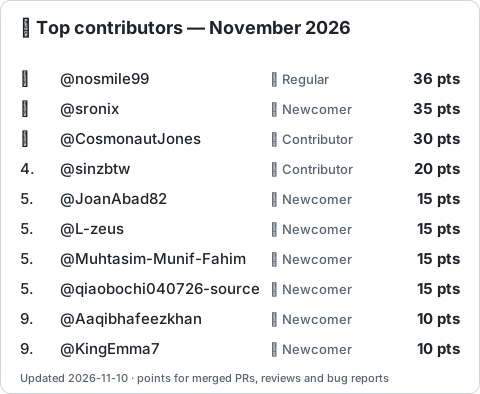
Updated on every merged PR. Merged PRs, written reviews and confirmed bug reports earn points: see Points and levels and the full leaderboard.
Contributing
New rules, tokenizers and formats are welcome. A rule is one small module plus a fixture file; see CONTRIBUTING.md for the 3-step guide and a list of ideas. Everyone taking part is expected to follow the Code of Conduct.