
oshinop/claudette
About
A drop-in Claude Code runs on your remote machine over ssh, its tools work on your local files.
Developer ToolsMeasured star growth
- in 24h
- +2
- in 7 days
- +56
- in 15 days
- Collecting history
- in 1 month
- Collecting history
Net star changes over overlapping periods, not daily totals. Missing measurements are left blank. Stars measure attention, not software quality.
README.md
Original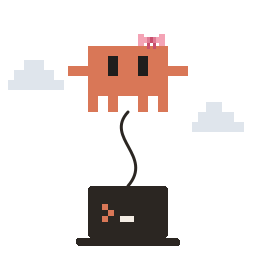
claudette




English · 简体中文
A drop-in claude that runs Claude Code on another machine, reached over ssh, and its tools on this
one: your files, builds and git stay on the local machine, while the remote machine holds the login.
What you get
- A drop-in
claude: anything that launches Claude Code launches claudette unchanged, and your settings, permission rules, hooks, skills, plugins and MCP servers apply as they would locally. - Little load on the local machine: Claude Code itself runs on the remote machine, so a modest machine keeps many agents going at once, with no Claude Code install or login of its own.
- No telemetry from the local machine: claudette sends none, and Claude Code's own comes from the remote machine.
- Sessions that survive the local machine sleeping or the network dropping.
Use cases
- T3 Code and Paseo run many Claude threads at once; with claudette, all of them run on a Mac mini at home instead of the local machine (setup: T3 Code, Paseo).
- magpie lends a Claude subscription to Codex, OpenCode and other agents; with claudette, the subscription signed in on the remote machine serves the local machine's agents (setup).
- Clients that speak ACP, such as Zed, JetBrains AI Assistant, Toad and acpc, run Claude through the claude-agent-acp adapter; with claudette behind it, Claude runs on the remote machine and works on the local machine's files (setup).
Set up
curl -fsSL https://raw.githubusercontent.com/oshinop/claudette/main/scripts/install.sh | CLAUDETTE_HOST=mini sh
claudette +doctor                               # checks ssh and the remote machine
ln -s "$(command -v claudette)" ~/bin/claude    # a folder on PATH, ahead of any other claude
claudette +update installs a newer release later; claudette's own commands mention one when it is
out. Installation and configuration covers what both machines need, the
other settings, updating, and why a link rather than an alias.
Use
Run claude as you always do. Usage covers what's specific to claudette and what
to watch out for, and hosts how to point T3 Code, Paseo, an ACP client or an Agent
SDK program at it.
Development
Building needs Rust 1.88 or later through rustup, and zig with cargo-zigbuild, which link the static Linux builds:
brew install zig && cargo install --locked cargo-zigbuild
scripts/build.sh     # dist/claudette-{darwin,linux}-{arm64,x64}; the macOS builds need a Mac
cargo test           # unit tests
scripts/test.sh      # end-to-end tests, in containers (needs Docker)
CI runs the unit tests on Linux and macOS, the four builds with the installer, and the end-to-end
tests. Pushing a tag that matches Cargo.toml's version, such as v0.1.0, publishes a release with
the builds and their SHA256SUMS, which the install script downloads.
Contributing
Issues and pull requests are welcome on GitHub.
- Bug reports: include the output of
claudette +doctor, both machines' operating systems, and the host if one launched claudette (T3 Code, Paseo, an ACP client). Thelogsetting (configuration) records every frame and mount request. It contains prompts and file contents, so share only the relevant part. - Hosts and clients: a report that a host from hosts works or doesn't, with its version and what you tried, helps as much as code.
- Pull requests:
cargo testandscripts/test.shshould pass. CI runs both, plus the four release builds and the installer. A change in behavior comes with a test that would catch it breaking: unit tests sit beside the code, and end-to-end tests intests/e2edrive the real Claude Code in containers (testing). Update the docs the change makes stale, including the coverage list indocs/testing.md, and their Chinese versions indocs/zh-CN(README_zh-CN.mdfor this file). There is no formatter configuration: follow the style of the file you change.
Acknowledgements
The idea of running Claude Code remotely while replacing its file and shell tools with local ones of the same names and inputs comes from cc-remote by AkaraChen.
More
- Design: the workspace, settings, MCP servers, the relay
- Startup latency
- Testing
- Limitations
Explore related projects
Loading…