
notelix/notelix
notelix/notelix has 58 GitHub stars and 8 forks. GitHot measured 0 stars in 24 hours, 0 in 7 days, and 0 in 15 days. Last checked 2026-11-15 19:45 UTC. Last push 2026-10-30.
Measured star growth
- in 24h
- 0
- in 7 days
- 0
- in 15 days
- 0
- in 1 month
- Update delayed
Net star changes over overlapping periods, not daily totals. Missing measurements are left blank. Stars measure attention, not software quality.
About
An open source web note taking / highlighter software - Please star if you like this project
ProductivityREADME.md
Originalnotelix
An open source web note taking / highlighter software (with backend).

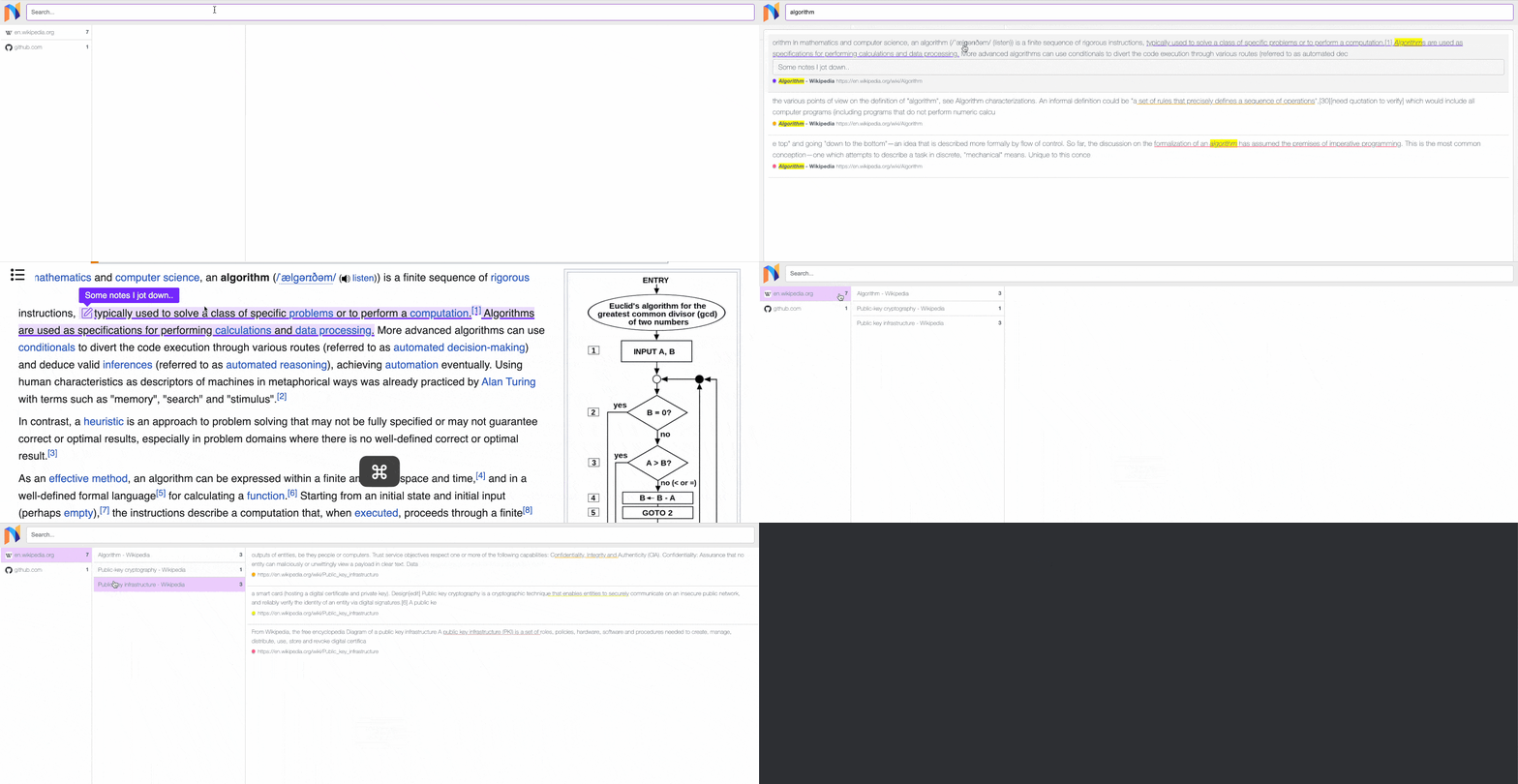
Notelix features:
- Powerful and reliable web highlighting (powered by MIT-licensed @notelix/web-marker)
- Adding notes to highlights
- A search engine for your highlights and notes (powered by MeiliSearch)
- An app to manage your highlights and notes in one place
- Optional client-side encryption (and an optional agent that runs on user's machine if they have client-side encryption enabled and want features such as the search engine)
- Use as a chrome plugin (download a zip and install it to try), or use it as a service and integrate it into your website / project without requiring users to install a plugin (try it)
- Works well with darkreader
- More features coming soon...
Product surfaces
Notelix uses one responsive visual system across the public website, Chrome extension popup, full-page reading library, embedded highlighting playground, and in-page highlight/note controls. These surfaces include light and dark themes, keyboard-visible focus states, and explicit loading, empty, error, and confirmation states.
The packaged extension is written to chrome-extension/extension-build. Run
the rendered browser smoke test with a local Chrome/Chromium binary:
cd chrome-extension
CHROME_PATH=/path/to/chrome xvfb-run -a npx --yes [email protected] smoke:browser
building and running chrome extension
cd chrome-extension
./build-extension.sh
Then Load unpacked from chrome://extensions/
building and running backend
cd ./server
cp .env.dev.example .env.dev
sed -i "s/replace-with-a-random-secret/$(openssl rand -hex 32)/" .env.dev

# start server in dev mode

docker build . -f ./Dockerfile.dev -t notelix:dev
docker-compose -f docker-compose.dev.yml --env-file .env.dev -p notelix-dev up -d
The production image includes the public product website and the embedded highlighting playground. Build it from the repository root so the image can compile both the server and the browser content script:
docker build . -f server/Dockerfile.prod -t notelix:prod
Architecture

Running notelix agent (only necessary when client-side encryption is enabled)
cd server
cp .env.agent.example .env.agent
sed -i "s/replace-with-a-random-secret/$(openssl rand -hex 32)/" .env.agent
sed -i "s/replace-with-another-random-secret/$(openssl rand -hex 32)/" .env.agent
# Copy the Notelix ID shown by chrome://extensions, then replace the placeholder:
sed -i "s/replace-with-your-notelix-extension-id/YOUR_EXTENSION_ID/" .env.agent
docker build . -f ./Dockerfile.agent -t notelix:agent
docker-compose -f docker-compose.agent.yml --env-file .env.agent -p notelix-agent up -d
Wait a bit, refresh a tab in Chrome, then wait a bit for data to sync.
After successful data sync, you will be able to use advanced features such as searching, with client-side encryption enabled.
Public DEV server
https://public-dev.notelix.com/
Note: this server is free-to-use, but doesn't provide any guarantee regarding availability or data safety.
In fact, this database will be reset when there is major Notelix API change. (expected every year).
Only use this dev server when you are trying out Notelix.
For production use, please host your own server (see building and running backend), and use cron + pg_dump
or https://github.com/wal-g/wal-g to backup your database.
Using Notelix Embedded to add it to your website without requiring users to install a browser extension
Try here. See server/public/embedded/index.html and server/public/assets/embedded.js for the integration code.
The embedding page can choose the language and theme before loading the content script:
window.NotelixEmbeddedConfig = {
  server: "https://public-dev.notelix.com",
  staticToken: "<user token>",
  rootElementClassName: "notelix-enabled",
  language: "zh-CN", // `en` (default) or `zh-CN`
  theme: "light", // `auto` (default), `light`, or `dark`
};
Invalid or missing language values fall back to English. auto preserves the
existing behavior: Notelix uses a dark embedded surface when Dark Reader is
active and a light surface otherwise.
A note about LICENSE: If you want to integrate Notelix into your project using the above method, it's okay not to disclose source code of your project. You only need to disclose source code for any changes made directly to Notelix.
Contact me if you have questions regarding LICENSE / for custom licensing.