
kaanarici/Emblem
kaanarici/Emblem has 32 GitHub stars and 6 forks. GitHot measured +1 stars in 24 hours and +1 in 7 days. Last checked 2026-11-12 07:44 UTC. Last push 2026-10-26.
An iPhone assistant that answers with native SwiftUI pages
Measured star growth
- in 24h
- +1
- in 7 days
- +1
- in 15 days
- Update delayed
- in 1 month
- Update delayed
Net star changes over overlapping periods, not daily totals. Missing measurements are left blank. Stars measure attention, not software quality.
README.md
OriginalEmblem
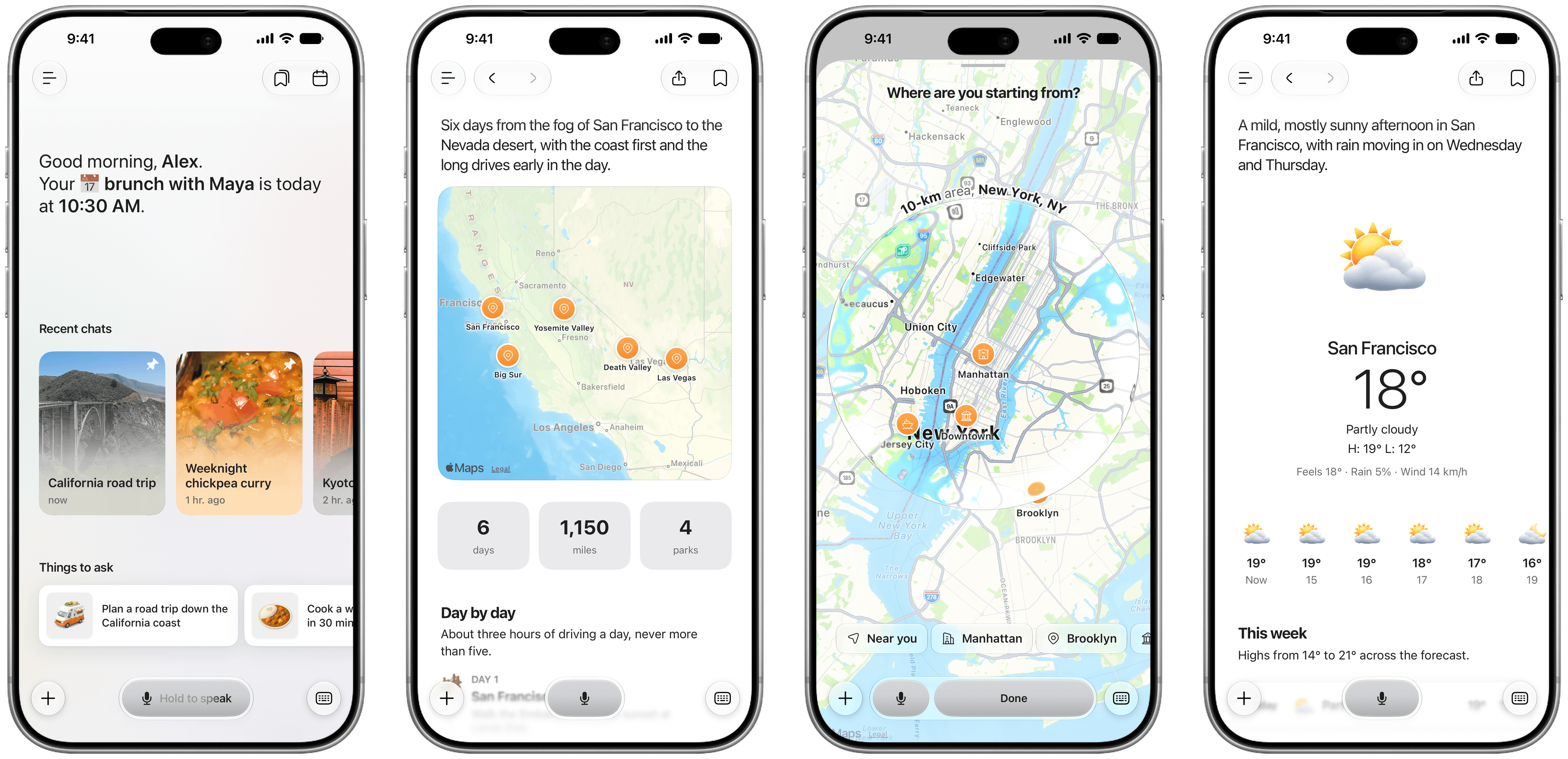
Ask anything. Get a page, not a paragraph.
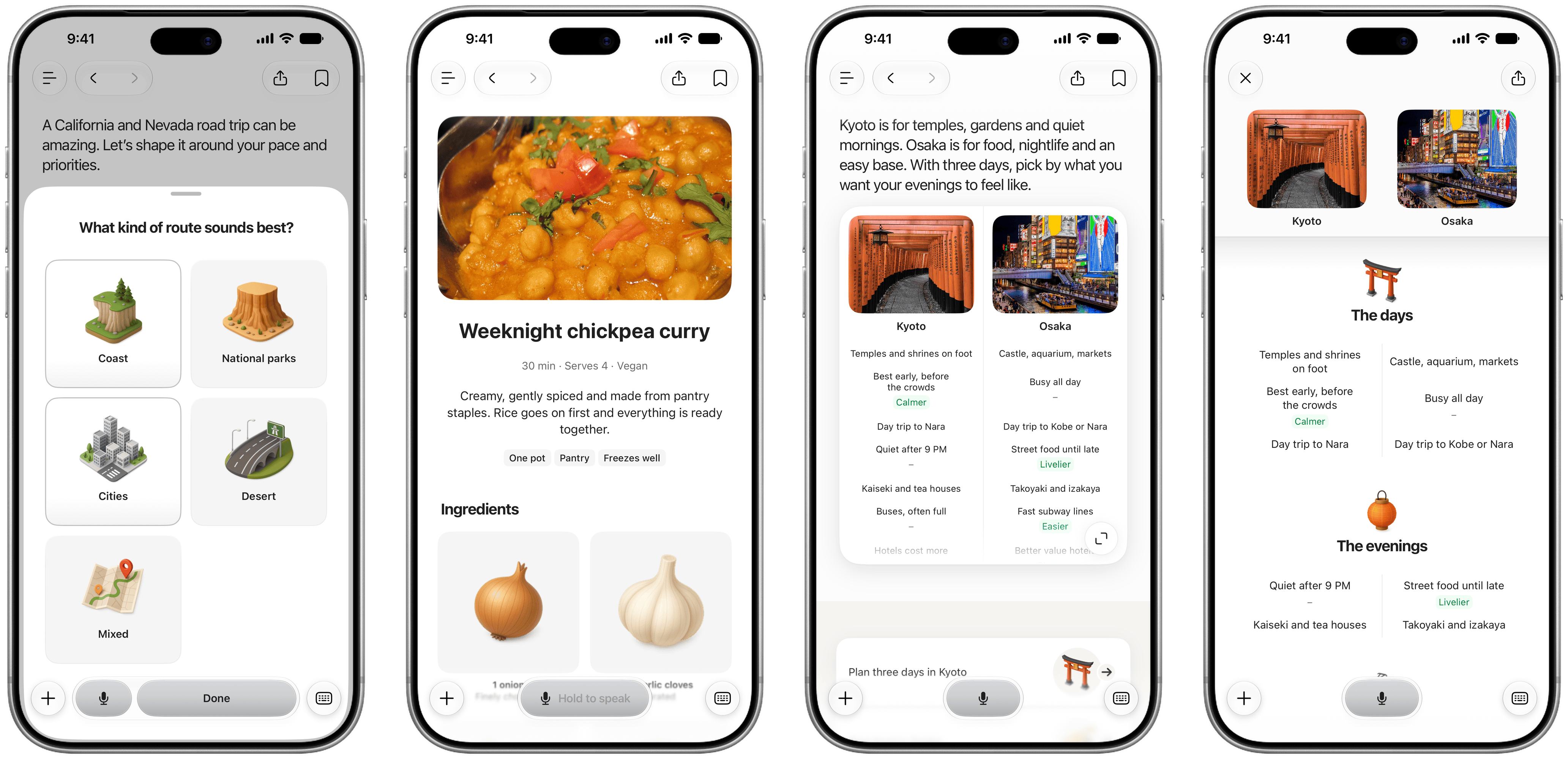
Emblem is an iPhone assistant that answers with native pages. Ask about a trip and you get a map and a day-by-day plan. Ask for dinner and you get the recipe as step cards. Ask which of two things to pick and you get them side by side. It is written in SwiftUI and is open source.
What it does
- Answers become pages. Maps, timelines, recipes, comparisons, charts, cards, quizzes and more. The server streams typed blocks and the phone draws each one natively as it arrives.
- It asks before it guesses. When a request is open-ended, a sheet of quick questions comes first.
- Map lens. Pick an area by moving the map under a glass lens.
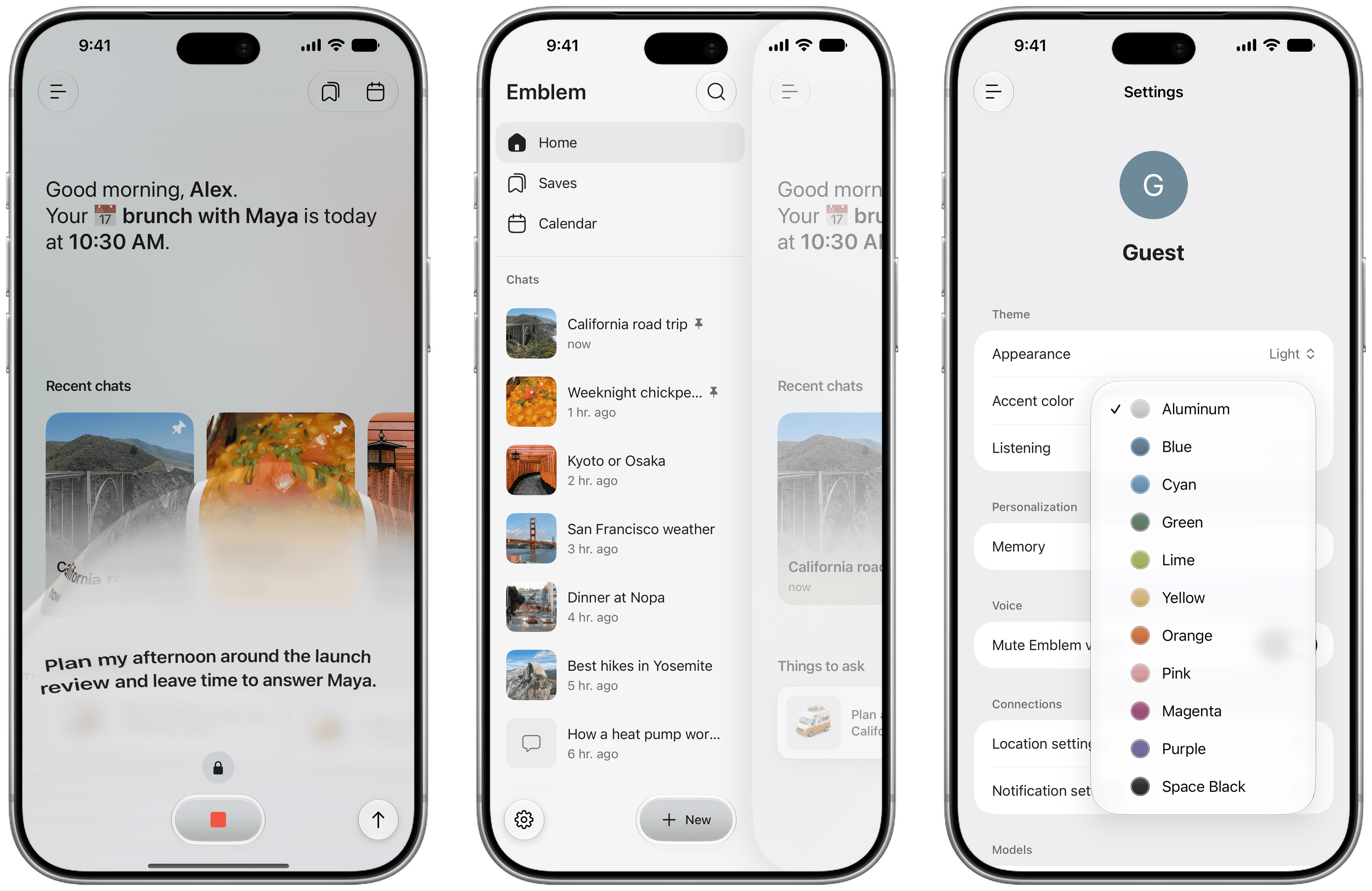
- Voice. Hold the mic and a glass wave rises while you speak. Slide up to keep listening hands-free.
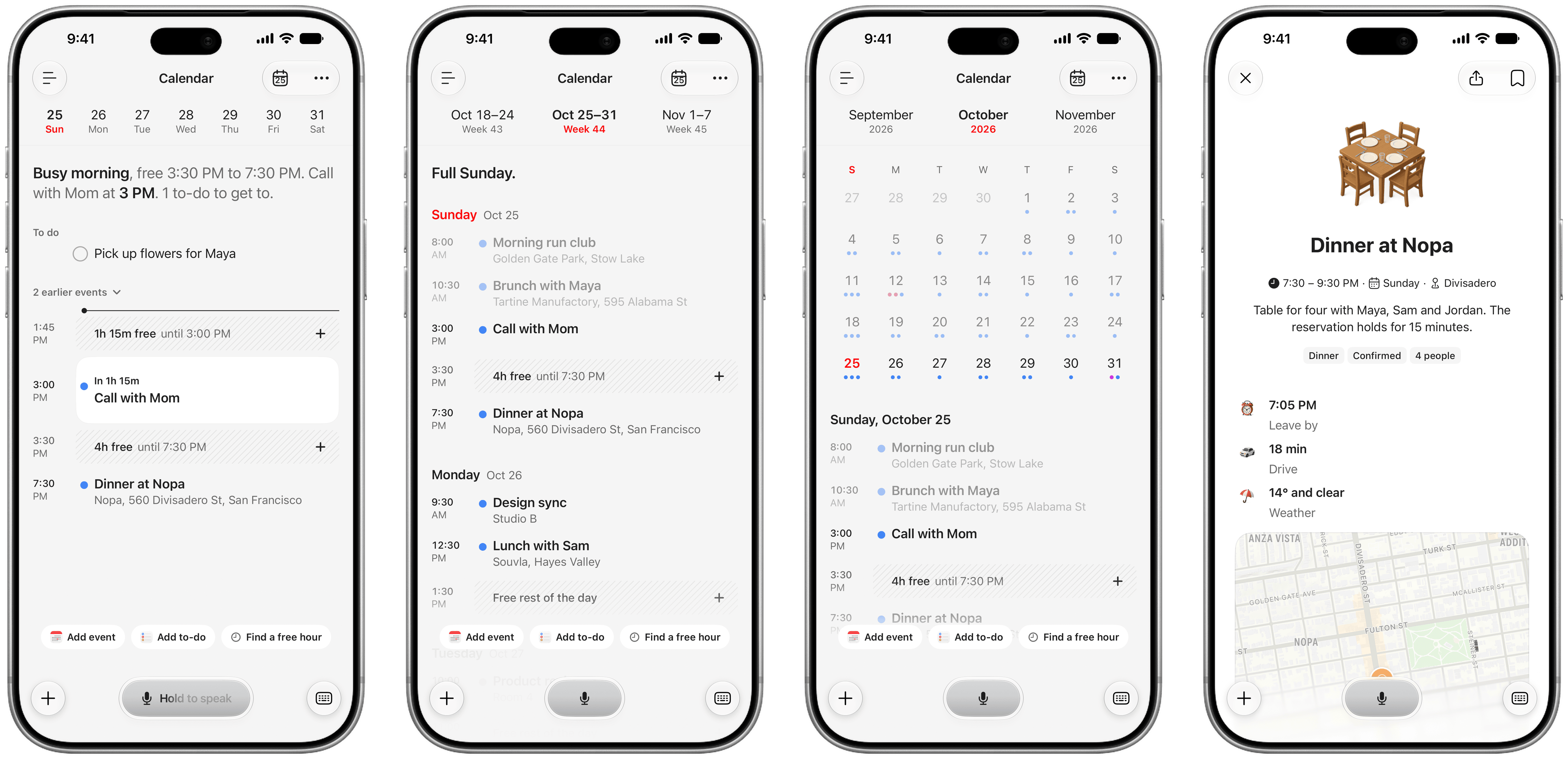
- Calendar you can tap into. Your iPhone calendar, Reminders and Google Calendar in one place, by day, week or month. It shows your free time, and every event opens into its own page with timing, a map and what to do next. Add events and to-dos from the dock.
- Weather. One card with the current conditions, the hours ahead and the week. Tap a day to see its hours.
- Anodized themes. Light or dark, with accent colors like Aluminum, Space Black, Blue and Purple.
- Connectors. Gmail and Google Calendar through Composio. Apple Calendar, Reminders and Apple Music on the phone.
- Any model. Any OpenRouter model with tool calling and structured outputs (tested with Claude, Gemini, DeepSeek, Mistral and GPT-6 Luna), Cerebras, OpenAI, Google or Groq. Or Apple Intelligence on the phone.
- 3D object icons and step illustrations. Generated once with fal (or Gemini without a fal key), then cached.
How it works
- You ask by voice or text.
- If the request is open-ended, the server sends back a few questions first.
- Research. The model calls tools: web search, places, weather, hotels and your connected apps.
- Compose. A second call writes the page as typed JSON blocks and streams them to the phone.
- SwiftUI renders each block the moment it arrives. Photos and icons load alongside.
The app is SwiftUI with an EmblemCore Swift package for models, streaming and networking. The server is Next.js with Convex for data, scheduled pages and rate limits. docs/architecture.md goes deeper.
Services
Only Convex and one model provider are required. Everything else turns on when you add its key to server/.env.local.
| Service | Used for |
|---|---|
| Convex | Database, scheduled pages, rate limits (required) |
| Cerebras, OpenAI, Google, Groq or OpenRouter | The model (one is required) |
| Exa | Web search and photos |
| Clerk | Sign-in (otherwise everyone is a guest) |
| Composio | Gmail and Google Calendar |
| fal or Gemini | Generated 3D object icons and step illustrations |
| LiteAPI | Hotel search |
| TMDB and OMDb | Movie and TV posters |
| xAI | Spoken answers |
| Open-Meteo and Wikipedia | Weather and photos (free, no key) |
On the phone, Emblem uses Apple Intelligence (on device or Private Cloud Compute), EventKit for Calendar and Reminders, Apple Music and MapKit.
Run it
You need a Mac with Xcode 27, XcodeGen, Node.js 22+ and a Cerebras or OpenAI API key.
1. Start the server
cd server
npm ci
cp .env.example .env.local
npx convex dev
Leave convex dev running. It creates a Convex deployment and writes its URL to .env.local. In a second terminal, still in server/, share a rate-limit secret with Convex:
SECRET=$(openssl rand -hex 32)
echo "RATE_LIMIT_SECRET=$SECRET" >> .env.local
npx convex env set RATE_LIMIT_SECRET "$SECRET"
Add your model key to .env.local: CEREBRAS_API_KEY, or LLM_PROVIDER=openai with OPENAI_API_KEY. Then start the API on port 3000:
npm run dev
2. Run the app
cd ios
./generate-project.sh
open Emblem.xcodeproj
Pick an iPhone simulator, press Run, tap Continue as guest and ask anything.
3. On your iPhone (optional)
Copy ios/Local.xcconfig.example to ios/Local.xcconfig and set EMBLEM_SERVER_URL to an address your phone can reach. Then:
EMBLEM_DEVICE_BUNDLE_ID=com.you.emblem ios/run-device.sh
server/README.md lists every key and model option.
Contributing
cd server && npm run check:fast checks the server files you changed. scripts/ios-check.sh lints the Swift code, builds the app and runs the iOS tests. See CONTRIBUTING.md.
How it was built
Emblem was built with Claude Code and Codex. It started as a project inspired by Monogram and is not affiliated with it.
License
AGPL-3.0. You can use, change and share Emblem, including commercially, as long as you release your full source under the same license. That also applies when you run a modified version as a hosted service or ship it in an app. Third-party notices are in NOTICE.
The 3D object icons in my own build come from Thiings, a licensed pack that is not included here. The build bundles it only when EMBLEM_OBJECT_ASSET_DIR points at a local copy. Without it, Emblem generates matching icons with fal or Gemini, and falls back to SF Symbols.
Dependencies keep their own licenses. cd server && npm ls --omit=dev --all lists the server's, and ios/Package.resolved pins the Swift packages.
Explore related projects
freeCodeCamp/freeCodeCamp
freeCodeCamp.org's open-source codebase and curriculum. Learn math, programming, and computer science for free.
459,050 starsdonnemartin/system-design-primer
Learn how to design large-scale systems. Prep for the system design interview. Includes Anki flashcards.
377,707 starsreact/react
The library for web and native user interfaces.
252,554 starsvuejs/vue
This is the repo for Vue 2. For Vue 3, go to https://github.com/vuejs/core
212,526 stars