
hubeiqiao/IELTS-Speaking-Simulator
hubeiqiao/IELTS-Speaking-Simulator has 357 GitHub stars and 28 forks. GitHot measured +1 stars in 24 hours. Last checked 2026-11-18 16:23 UTC. Last push 2026-03-12.
Measured star growth
- in 24h
- +1
- in 7 days
- Collecting history
- in 15 days
- Collecting history
- in 1 month
- Collecting history
Net star changes over overlapping periods, not daily totals. Missing measurements are left blank. Stars measure attention, not software quality.
About
Original open-source IELTS Speaking Simulator GPT. 100K+ conversations and the foundation of Joe Speaking.
Developer ToolsREADME_EN.md
Original
IELTS Speaking Simulation
The original open-source IELTS Speaking Simulator GPT, and the project that later became Joe Speaking.
4.4 Ratings(500+), 100K+ Conversations
Trusted by 50,000+ Learners
JoeSpeaking.com · The current standalone product built from this open-source foundation
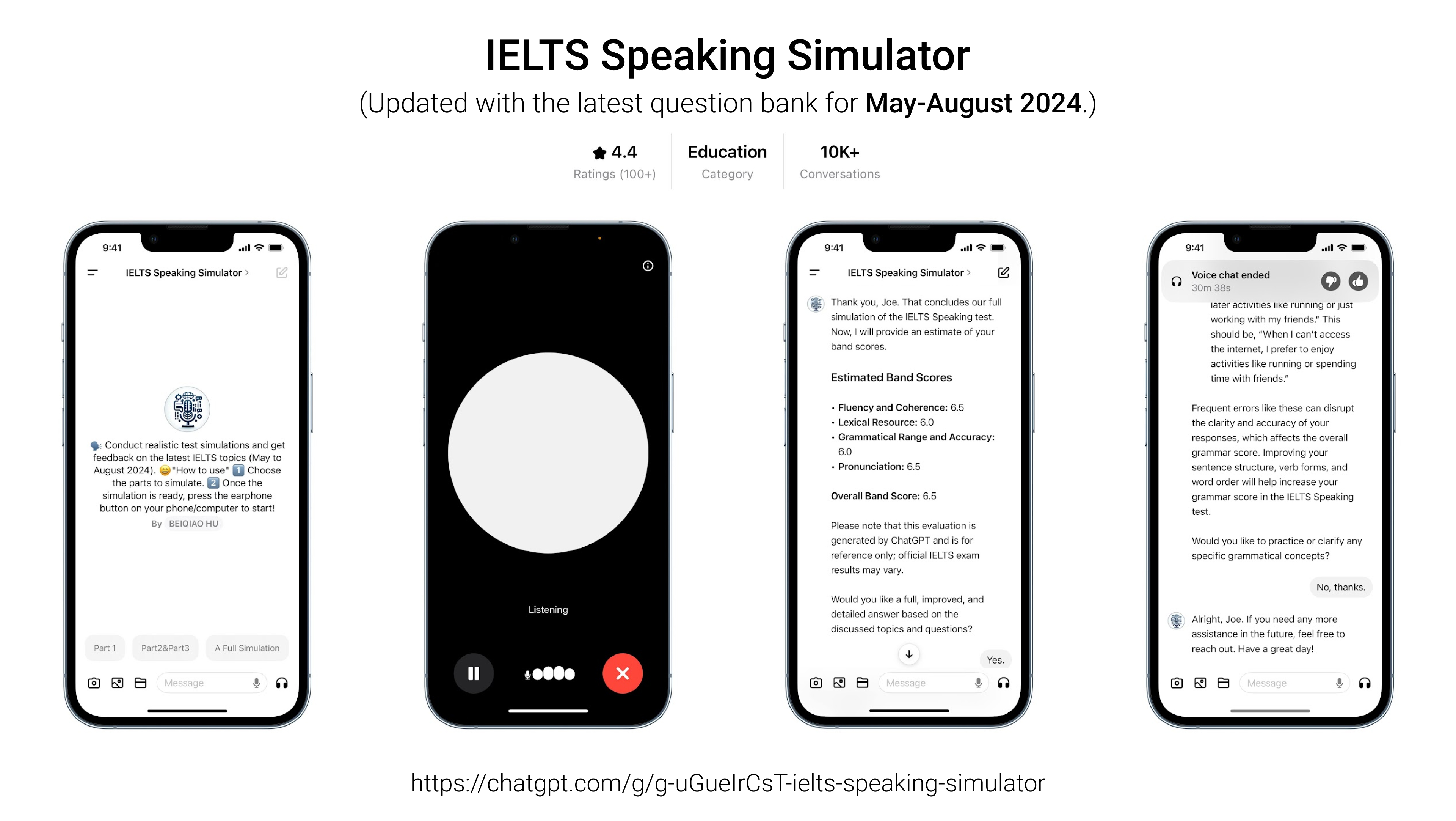
Introduction
IELTS Speaking Simulator is the original open-source GPT project I built for realistic IELTS speaking practice. It was designed to simulate Part 1, 2, and 3 of the IELTS speaking test with natural AI conversation, structured question-bank coverage, and instant feedback after each session.
Built by a learner, for learners, this project started from a real problem in my own life: spoken English held me back for years. I wanted something more realistic, more repeatable, and far more affordable than traditional one-on-one practice. So I built the GPT I wished had existed when I was preparing.
Over time, the project grew far beyond a simple prompt experiment. The GPT reached 100K+ conversations, earned a 4.4 rating from 500+ ratings, and became part of the practice journey for 50,000+ learners. It also became the product foundation for JoeSpeaking.com, the newer standalone experience built from everything I learned by shipping and maintaining this open-source project.
Current Status
- 100K+ conversations
- 4.4 rating from 500+ ratings
- Trusted by 50,000+ learners
- This repo stays public as the open-source foundation of the original GPT
- It keeps the prompts, workflows, question banks, and release history public
- JoeSpeaking.com is the current standalone product that grew out of this work
Why This Repo Still Matters
This repository is not just an old snapshot. It is the public record of how the original simulator was built and improved. If you are a learner, you can understand how the GPT works and reuse parts of it. If you are a builder, you can study the prompt structure, workflow design, question-bank setup, and release history behind a widely used AI language-learning project.
Keeping this repo public also matters to me because the original decision was to share the work, not hide it. I wanted learners and builders to have something practical they could inspect, adapt, and learn from.
About Joe Speaking
JoeSpeaking.com is where this work goes further.
Joe Speaking keeps the core idea of realistic speaking practice, but expands it into a more complete daily product:
- Real-time natural AI conversation
- Instant band-score style feedback
- Personal collections, repeated review, and practice history
- A smoother standalone product experience beyond a single GPT workflow
If you want the newest product experience, start with JoeSpeaking.com. If you want the original open-source GPT foundation, keep reading here.
(Currently, free users can have 16 conversations every 3 hours, which is sufficient for trial purpose. For full practice, consider subscribing to ChatGPT Plus.)
V3 Update
IELTS Speaking Simulation GPT V3 update:
- Updated with the latest question bank for May-August 2024.
- Improved stability in random question selection.
- Better experience by automatically asking if you want to improve your answers after the simulation.
Note: The section below documents the original GPT workflow and V3 release history.
User Guide
To help more people understand and use this tool, here is the complete user guide and the open-source project details.
Prerequisites
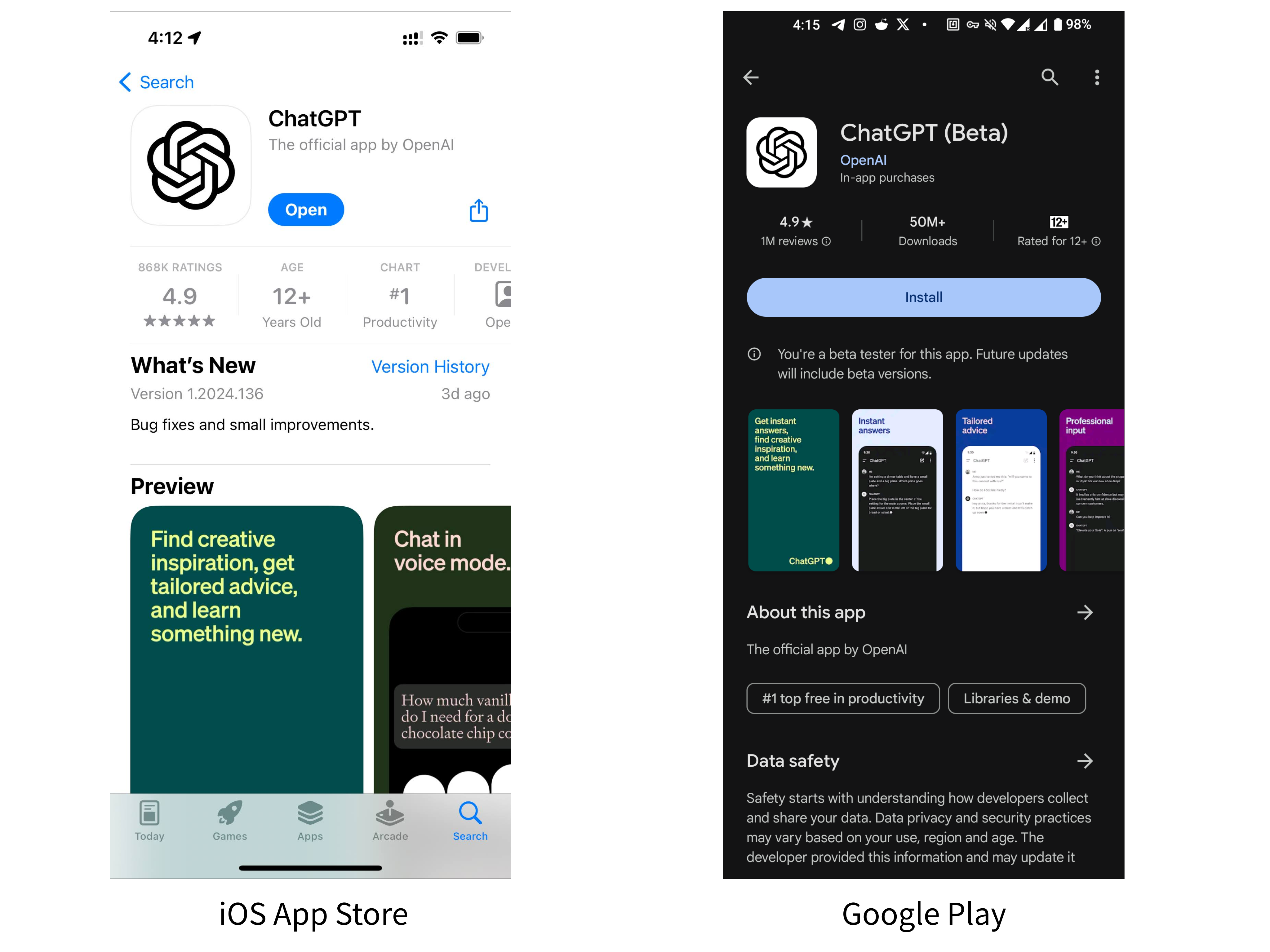
- IELTS Speaking Simulation is based on ChatGPT’s GPTs and voice functionality. Currently, the voice feature is only available in the official ChatGPT app. Download the ChatGPT app from the App Store and Google Play.
- Visit the IELTS Speaking Simulation link. If you can’t interact with it, your account may not have free access to GPTs. To use it, subscribe to ChatGPT Plus.
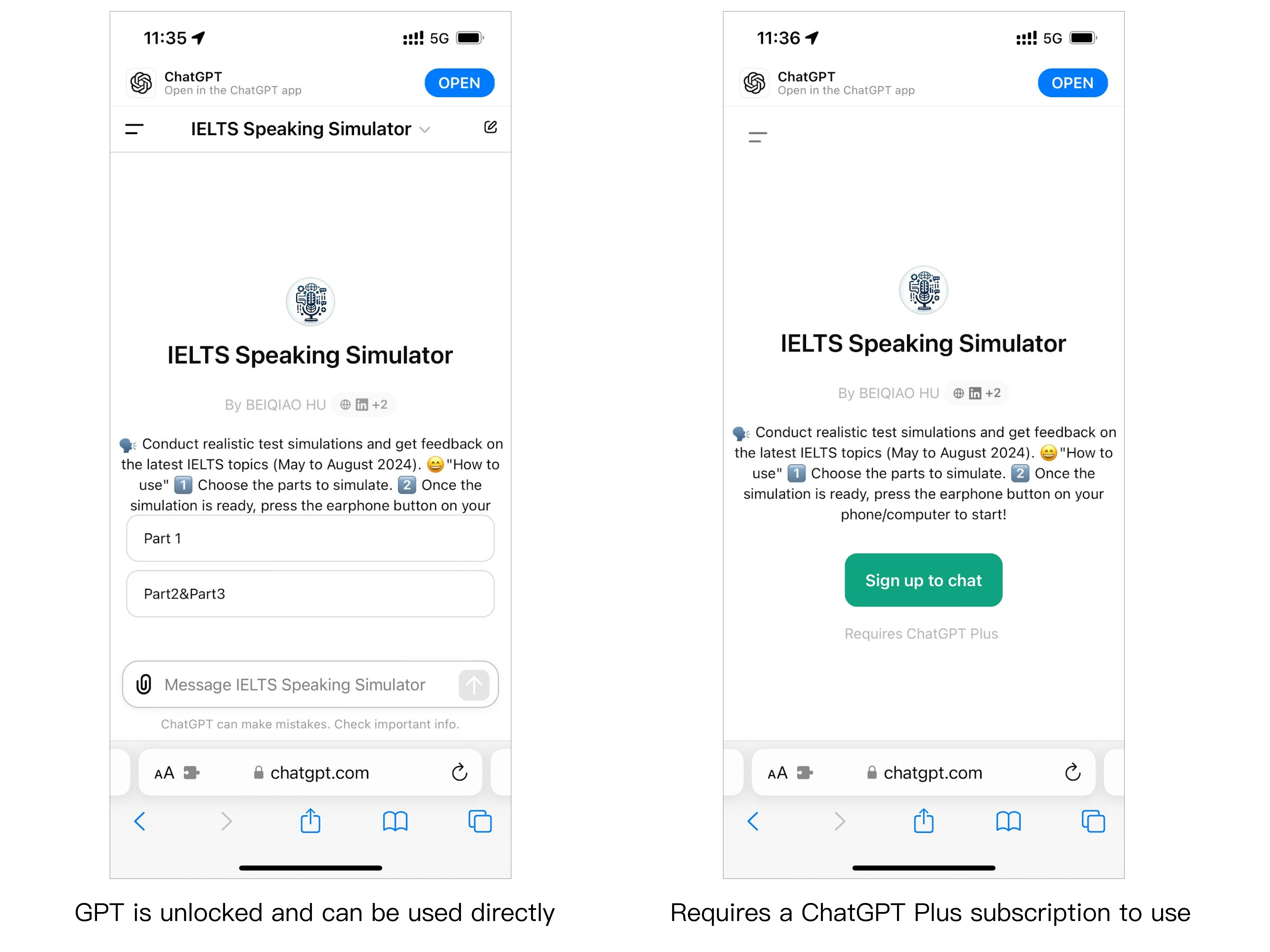
If you have subscribed to ChatGPT Plus, you can also download the macOS version of the ChatGPT app (requires at least M1 chip) to interact directly on your computer. I think it provides a better experience in voice mode.
Finding the IELTS Speaking Simulation
Method 1: Through the Link
With the ChatGPT app installed, use Chrome/Safari browser to open the IELTS Speaking Simulation link. This will directly open the GPT in the ChatGPT app.
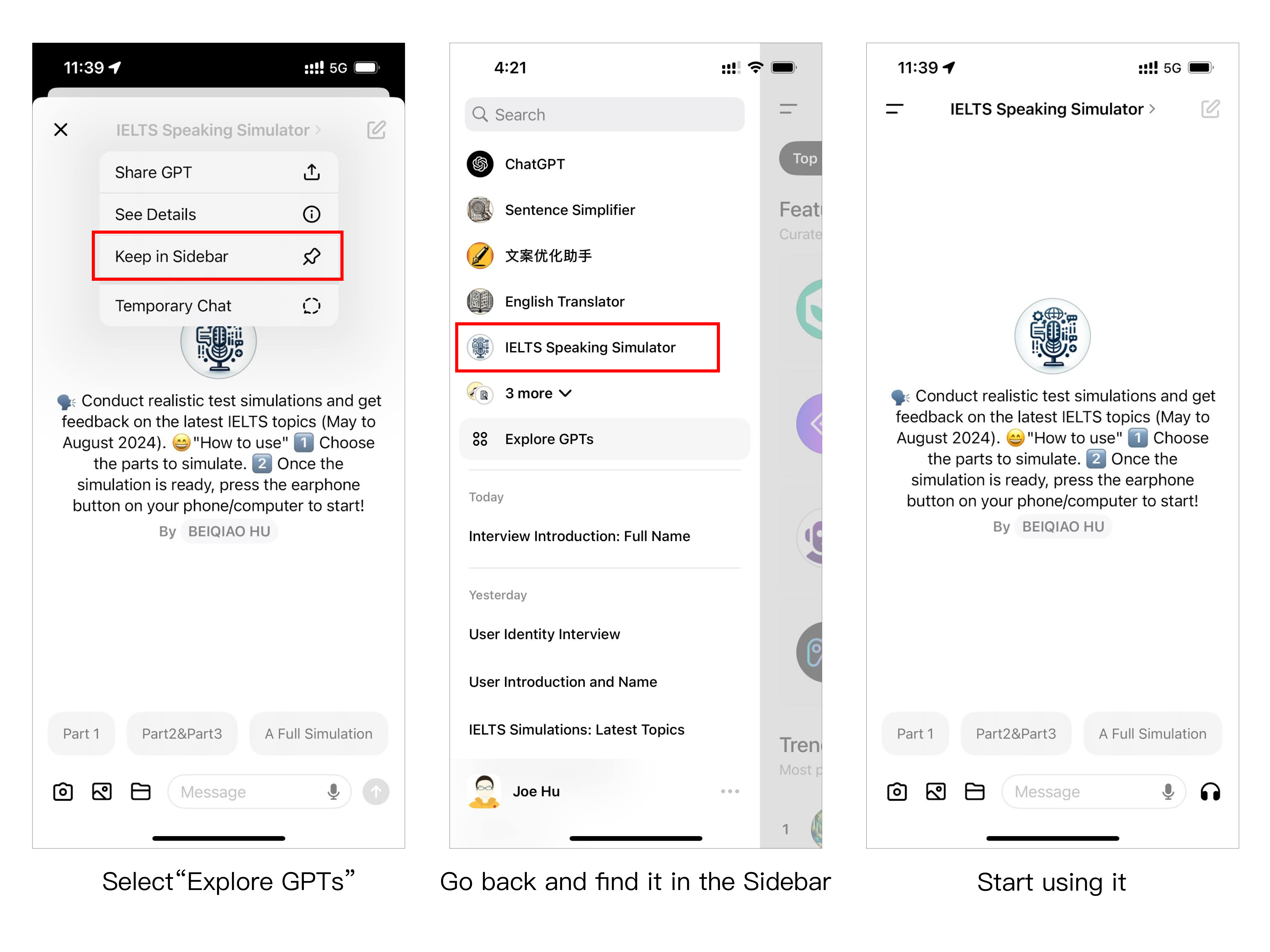
To make it easier to access next time, click on the name at the top of the page, then select “Keep in Sidebar.” This will allow you to access it directly from the sidebar in the future.
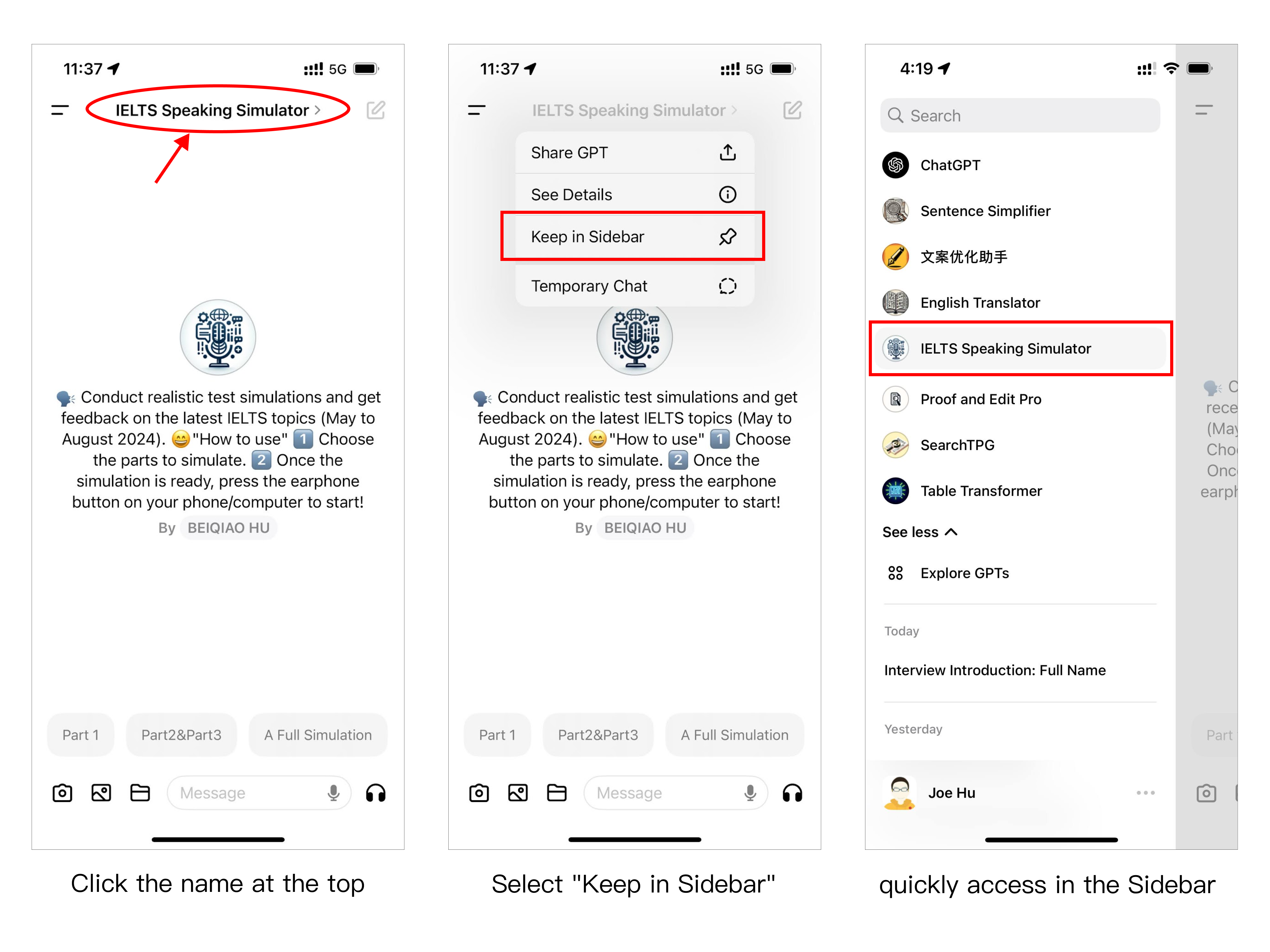
Finally, to better simulate a fully English conversation environment, it is recommended to set the main language of SPEECH to English in the ChatGPT application settings.
Method 2: Search
If the link doesn’t open the app directly, you can find it through search.
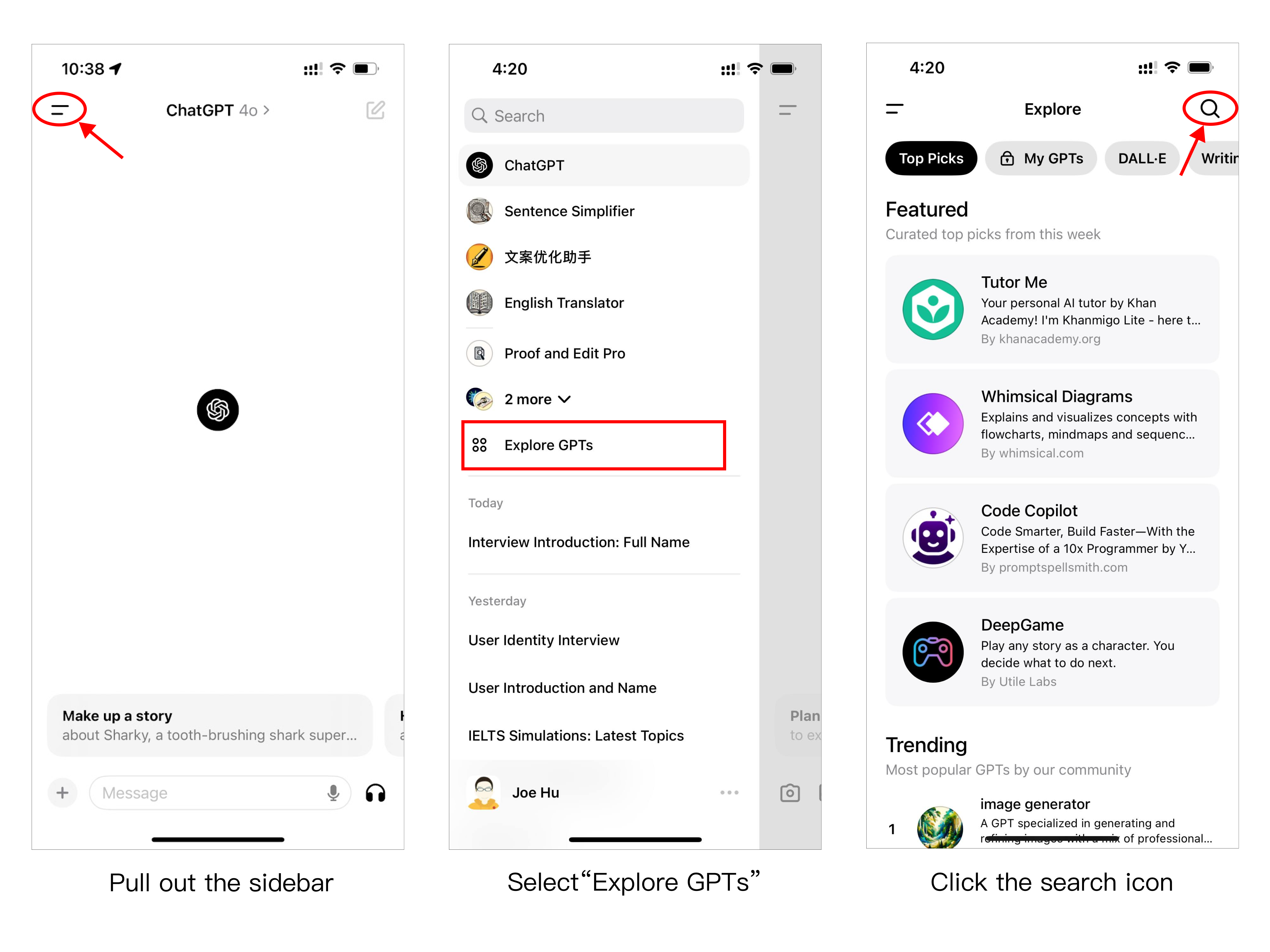
- Open the ChatGPT app, pull out the sidebar, click “Explore GPTs”, then click the search button at the top right.
- In the search box, type ”IELTS Speaking Simulator”, and find the GPT with the information shown in the image.
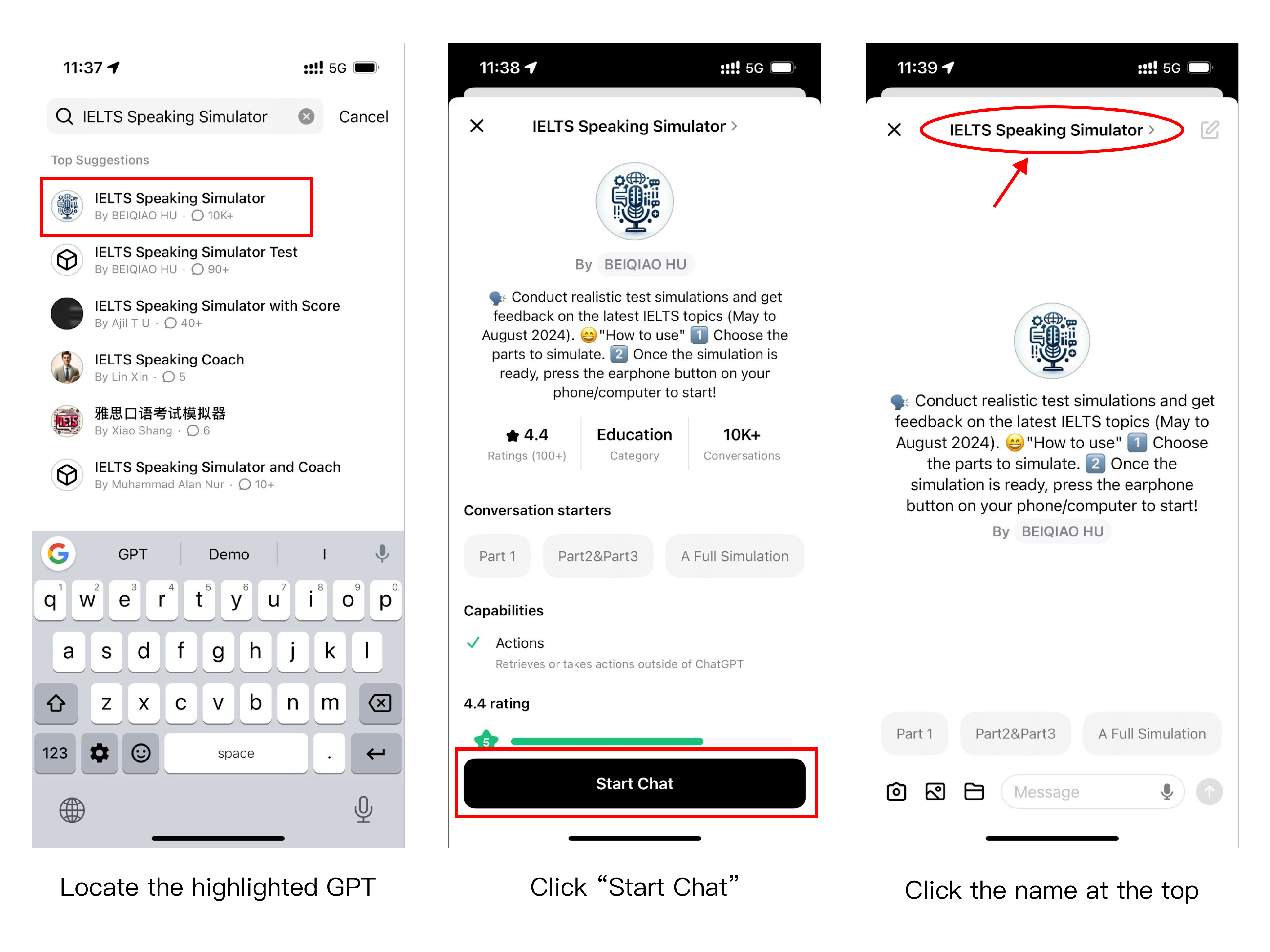
- Since the temporary page from the search result doesn’t support the voice feature, click the name at the top of the page and select “Keep in Sidebar.” Then, return to the homepage, find the GPT in the sidebar, and click to use it.
- Finally, to better simulate a fully English conversation environment, it is recommended to set the main language of SPEECH to English in the ChatGPT application settings.
Daily Use
Note: As of May 2024, the real-time voice feature of GPT-4o is not publicly available. The current version still uses the old version functionality released last year.
- Find the IELTS Speaking Simulation in the Sidebar and select the module you want to simulate. For first-time use, you need to grant permission for external interface calls; choose “Always allow.” After the questions are drawn, click the voice mode button at the bottom right to start the simulation.
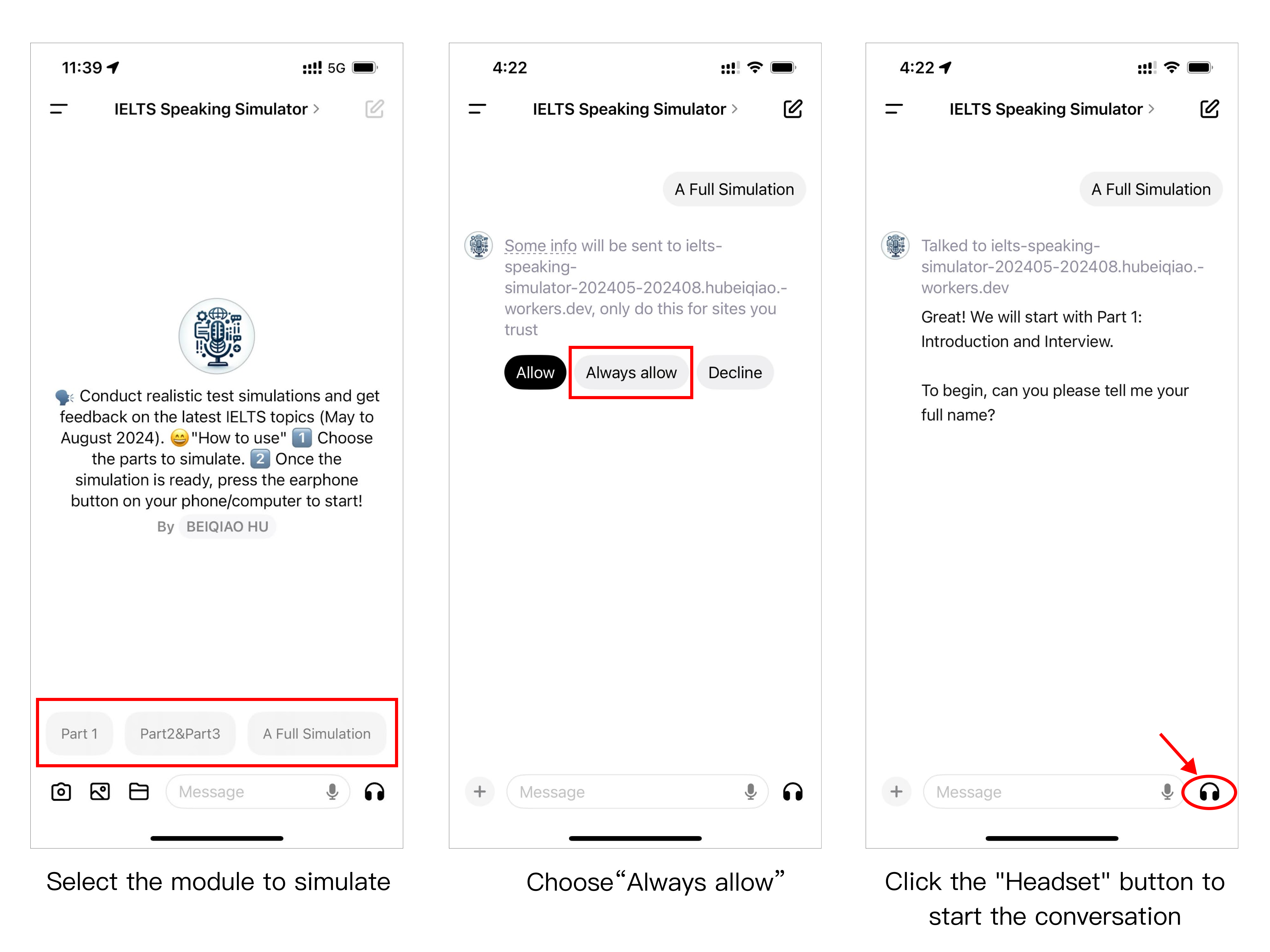
(You can also start the conversation directly by telling it which module you want to simulate. However, sometimes it may not call the interface to draw questions, so it is recommended to manually select the module for more stability).
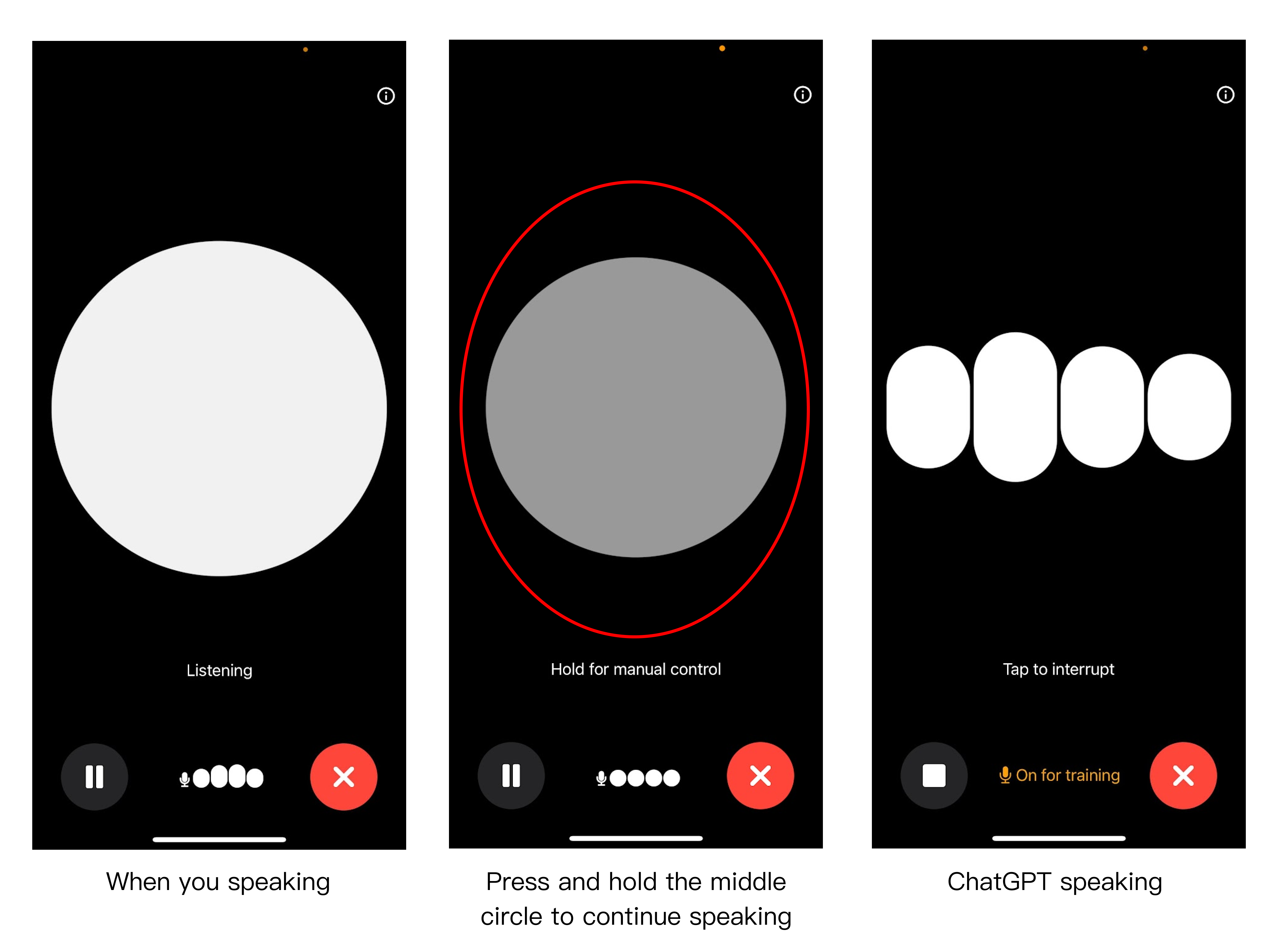
- During the conversation, if there is a pause, the current input will be interrupted and sent to ChatGPT. If your speech is not fluent enough (especially in Part 2 & Part 3), you can press and hold the center circle while speaking to ensure continuous recording even during pauses. For Part 2, after being informed of the topic, you need to time yourself for 1 minute before starting to speak.
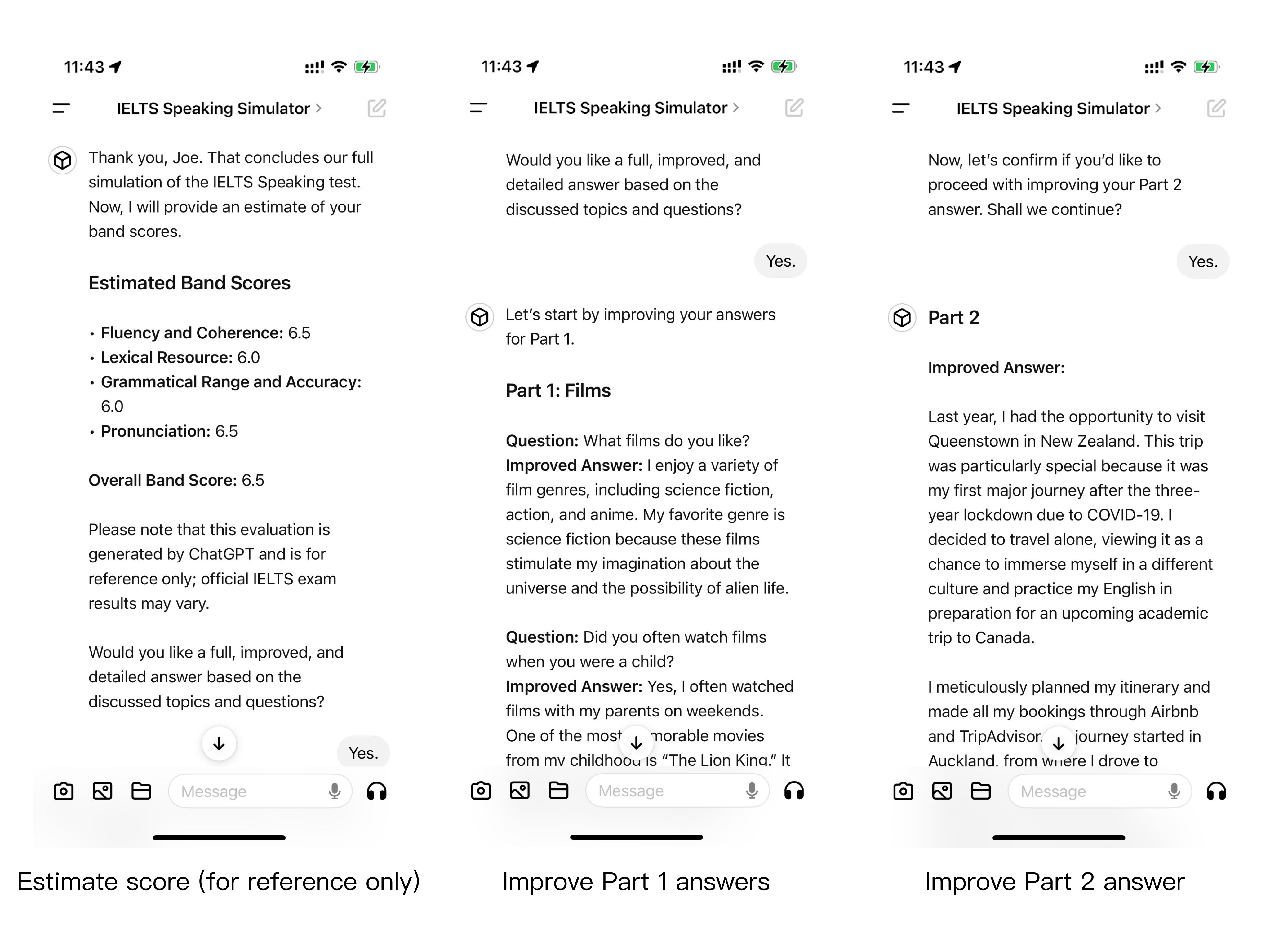
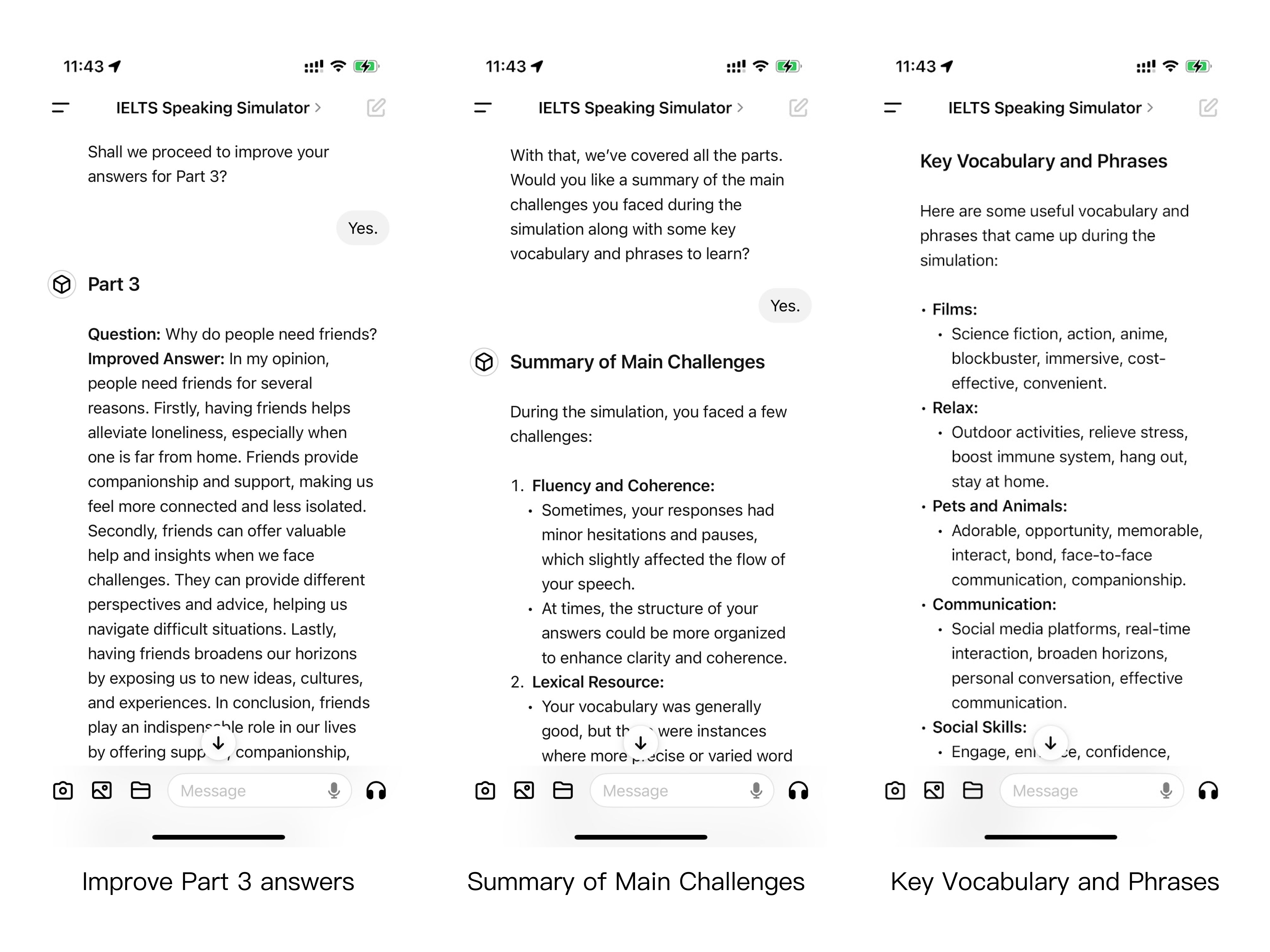
- After completing the specified module simulation, the system will automatically score your speaking. You can then follow the system prompts to optimize your answers. Due to the length of the content, each part will be output separately.
- Finally, according to the system prompts, you can summarize the questions and vocabulary used in the simulation. If you have additional needs, you can input them to get further feedback.
Current Issues
- The score estimation is for reference only (pronunciation is completely inaccurate because the current voice mode converts speech to text. Future real-time voice conversation with GPT-4o may improve this). The main benefit of this GPT is that it offers an authentic practice experience.
- Part 1 can sometimes be problematic:
- Although the number of questions in Part 1 is limited, it sometimes still ask more than ten questions.
- Even when the prompt clearly states not to repeat questions, it sometimes continues to ask questions that were answered or mentioned in the previous answer.
- When providing revised answers, it might miss questions. For example, Part 1 might only give partial answers, or Part 2 might provide insufficient information. You will need to correct it explicitly in such cases.
- In rare cases, it might display all the drawn questions at once. Fortunately, V3 is much better than before.
If you encounter other issues, feel free to provide feedback or optimize the prompt yourself (I have shard the prompt and question bank for each version. You can download them by clicking on Releases).
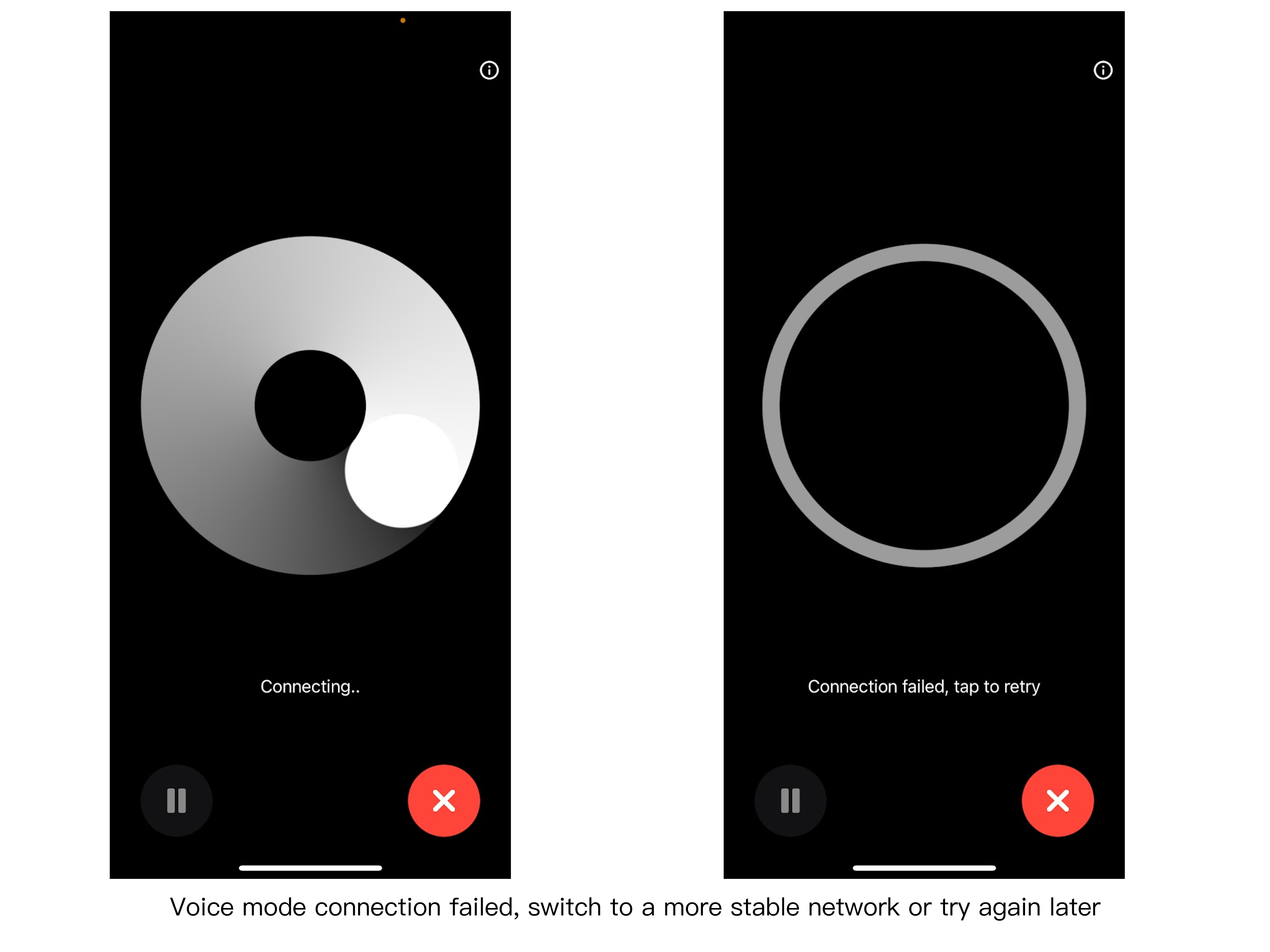
Additionally, the voice mode is relatively unstable (affected by OpenAI and your network). Sometimes it might not connect. Try switching to a more stable network or wait a while before trying again. When the network is unstable, not only might you fail to connect, but you might also find that after speaking for a while, ChatGPT informs you that the current usage is high and asks you to try again. 😂😂😂
Additional Thoughts
- After the GPT-4 update to version 20240409 in April 2024, the initial success rate of question selection with the Code Interpreter significantly improved. However, a week later, it deteriorated, requiring multiple retries to successfully select questions. After trying various methods without success, I updated the random question selection module from ChatGPT’s built-in Code Interpreter to using external interfaces with Actions. This was my first time creating my own interface, indirectly indicating that ChatGPT’s capabilities are still lacking. I look forward to future improvement with GPT-5.
- Time flies; it has been nearly six months since this GPT was released. During this period, I have simulated multiple times myself, but honestly, I feel my score has only improved by about 0.5 at most. It hasn’t led to significant leaps in improvement. This is partly because I don’t have an immediate need for the exam and haven’t reviewed each practice session thoroughly. If future AI can actively identify unknown issues based on my practice and provide targeted exercises and feedback, that would be impressive.
- For me, the more important aspect is gaining confidence and having something to talk about on various topics. I hope to use this when I retake the IELTS exam in two years (my goal is modest—scoring a 7 in speaking is sufficient).
- In terms of experience, current AI still has a long way to go. Otherwise, I wouldn’t need to write such detailed usage guides. 😂😂😂
Thoughts at the Initial Release
(Written in December 2023)
Thoughts During Learning
- I've tried other speaking practice GPTs, but they often revolve around familiar topics. However, for IELTS practice, a framework with clear standards seems more suitable, even though I don't currently need it for IELTS.
- Memorization or sticking to specific topics isn't necessary for IELTS speaking preparation. Treating it as spontaneous practice works better. For topics that are difficult to explain, just remembering the framework and keywords afterwards is enough.
- Honestly, this is the best GPT I've used so far. Considering the cost of individual speaking practice, paying $20 or more per month offers great value. I hope consistent practice will help reduce my conversation anxiety. This is just a start, and I might explore GPTs for behavioral interviews next year.
- A friend once said any method works for learning English, as long as you stick with it. Seeking efficiency might be a trap if you want fluency. This insight comes from my last preparation experience. Here's an article I wrote previously: "Expectation vs. Reality: A Deep Dive into AI-Assisted Language Learning"
Sharing the Making Process
- I've attached the current instructions for this GPT in an attachment. You can copy them to create your own GPTs and customize the process or question bank.
- The biggest challenge in creating this GPT was figuring out how to enable it to randomly select questions from the question bank. Despite many prompt modifications, it wasn't random but followed a fixed cycle. Fortunately, with @goldengrape's hint, I realized that Knowledge can upload Python scripts for execution with the Code Interpreter, which solved the issue. I also considered using Actions to connect to external interfaces, but using external Actions on a GPT prevents it from being used on mobile, thereby losing the voice conversation feature.
- Other similar GPT experiences usually present all questions under a Topic. Initially, I encountered the same issue, but after numerous modifications, I managed to somewhat resolve it (not guaranteed, retry if needed).
- The question bank in the attachment is compiled by IETLS Brother and covers the months from September to December 2023. The question bank in the current GPT has been updated to include questions from January to April 2024.
Why share
- This GPT is for my use and exploring possibilities, and it's all still very new. Practicing daily, I've come to think of it as the best in its category, silently admiring its capabilities. Since I've created it, I figured why not let friends with similar interests benefit from it too.
- More frankly, there's nothing to hide, as the Instructions can be obtained through Prompt skills(I didn't consider adding protection to the Prompt, as there are always ways to get around it). So, it's better to make it public for everyone.
- From a product perspective, with hundreds of users now, I need to be more careful with updates. Sharing it publicly allows everyone to tweak it to their needs and provide feedback for improvements.
- It's not just about conversation practice. What's equally important is the organized learning afterwards. Seeing different methods of use and discovering new content or skills that I'm unaware of would be fantastic.
- ChatGPT is like a big toy right now. But, in language learning, it shows immense promise. I hope this inspires developers to create even better products.
Besides this speaking GPT, I've also created GPTs for reading and writing. For reference.
- IELTS Reading Tutor: Please provide the Reading article, questions, and your thoughts or concerns, so that I can offer detailed feedback and explanations.
- IELTS Writing Mentor: Get personalized IELTS writing assistance, focusing on in-depth analysis and enhancement of both Task 1 and Task 2. Simply paste your task and essay to receive expert guidance.
Finally, a big thank you to Sam and OpenAI("A Year with ChatGPT: Personal Reflections and Transformation"). I never imagined I could create such a product so quickly on my own. It indirectly shows how Artificial General Intelligence (AGI) will revolutionize society in the coming years. For ordinary people like us, the most practical advice is to experience these products in real scenarios. This is just the beginning and requires more patience.