
centre-for-humanities-computing/tweetopic has 37 GitHub stars and 4 forks. Star changes are not measured yet. Last checked 2026-11-11 16:07 UTC. Last push 2026-10-05.
Blazing fast topic modelling for short texts.
What you can do
- Scalable :collision:
- High consistency and coherence :dart:
- High quality topics :fire:
- Easy visualization and inspection :eyes:
Measured star growth
- in 24h
- Update delayed
- in 7 days
- Update delayed
- in 15 days
- Update delayed
- in 1 month
- Update delayed
Net star changes over overlapping periods, not daily totals. Missing measurements are left blank. Stars measure attention, not software quality.
README.md
Original
tweetopic
:zap: Blazing Fast topic modelling over short texts in Python



Features
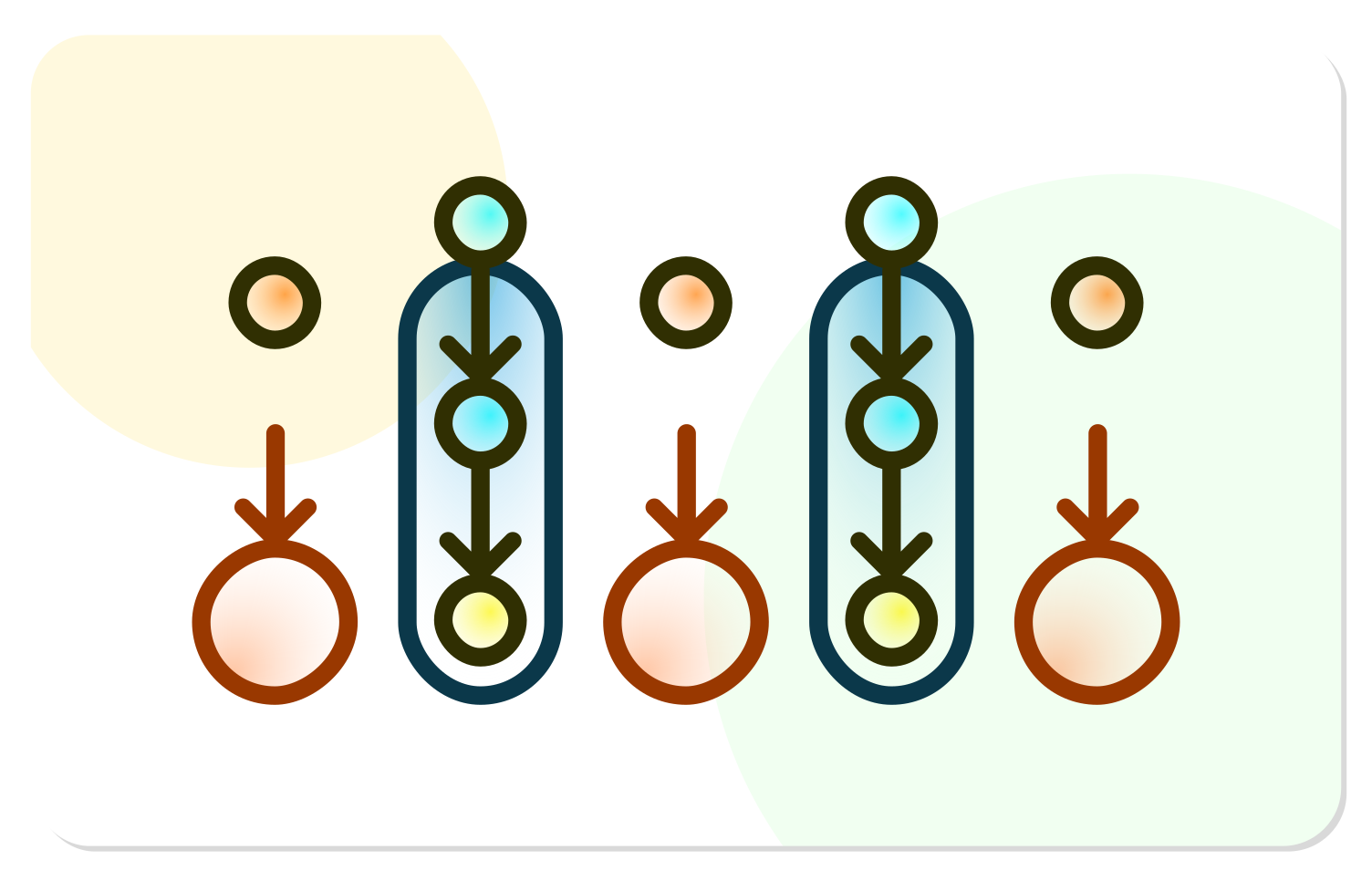
- Fast :zap:
- Scalable :collision:
- High consistency and coherence :dart:
- High quality topics :fire:
- Easy visualization and inspection :eyes:
- Full scikit-learn compatibility :nut_and_bolt:
New in version 0.4.0 ✨
You can now pass random_state to topic models to make your results reproducible.
from tweetopic import DMM

model = DMM(10, random_state=42)
🛠 Installation
Install from PyPI:
pip install tweetopic
👩💻 Usage (documentation)
Train your a topic model on a corpus of short texts:
from tweetopic import DMM
from sklearn.feature_extraction.text import CountVectorizer
from sklearn.pipeline import Pipeline

# Creating a vectorizer for extracting document-term matrix from the
# text corpus.
vectorizer = CountVectorizer(min_df=15, max_df=0.1)

# Creating a Dirichlet Multinomial Mixture Model with 30 components
dmm = DMM(n_components=30, n_iterations=100, alpha=0.1, beta=0.1)

# Creating topic pipeline
pipeline = Pipeline([
    ("vectorizer", vectorizer),
    ("dmm", dmm),
])
You may fit the model with a stream of short texts:
pipeline.fit(texts)
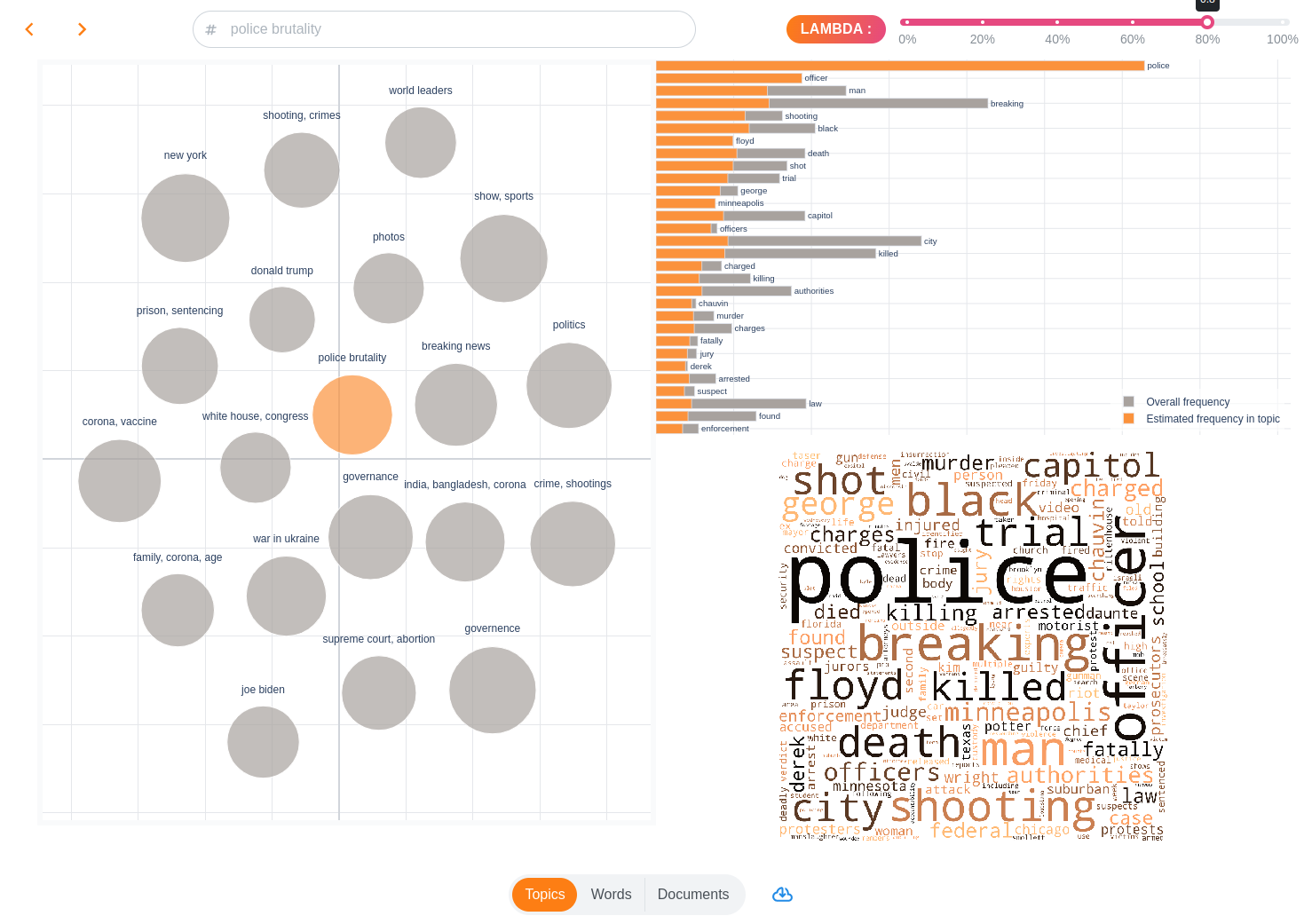
To investigate internal structure of topics and their relations to words and indicidual documents we recommend using topicwizard.
Install it from PyPI:
pip install topic-wizard
Then visualize your topic model:
import topicwizard

topicwizard.visualize(pipeline=pipeline, corpus=texts)
🎓 References
- Yin, J., & Wang, J. (2014). A Dirichlet Multinomial Mixture Model-Based Approach for Short Text Clustering. In Proceedings of the 20th ACM SIGKDD International Conference on Knowledge Discovery and Data Mining (pp. 233–242). Association for Computing Machinery.
Explore related projects
tensorflow/tensorflow
An Open Source Machine Learning Framework for Everyone
201,505 starshuggingface/transformers
🤗 Transformers: the model-definition framework for state-of-the-art machine learning models in text, vision, audio, and multimodal models, for both inference and training.
168,815 starsAUTOMATIC1111/stable-diffusion-webui
Stable Diffusion web UI
165,289 starsComfy-Org/ComfyUI
The most powerful and modular diffusion model GUI, api and backend with a graph/nodes interface. The fastest local inference engine in the world.
146,271 stars