
b-arac/rtmpose3d
b-arac/rtmpose3d has 46 GitHub stars and 3 forks. GitHot measured 0 stars in 24 hours and +1 in 7 days. Last checked 2026-11-09 13:24 UTC. Last push 2025-11-21.
MMPose PyTorch Inference
What you can do
- 133 keypoints: body (17) + feet (6) + face (68) + hands (42)
- Both 2D and 3D outputs with confidence scores
- HuggingFace Hub integration with auto-download
- Single-person detection mode
Measured star growth
- in 24h
- 0
- in 7 days
- +1
- in 15 days
- Update delayed
- in 1 month
- Update delayed
Net star changes over overlapping periods, not daily totals. Missing measurements are left blank. Stars measure attention, not software quality.
README.md
OriginalRTMPose3D
Standalone PyTorch package for real-time whole-body 3D pose estimation. Provides both simple inference API and HuggingFace Transformers-style interface with automatic checkpoint download and caching.
Visual Examples

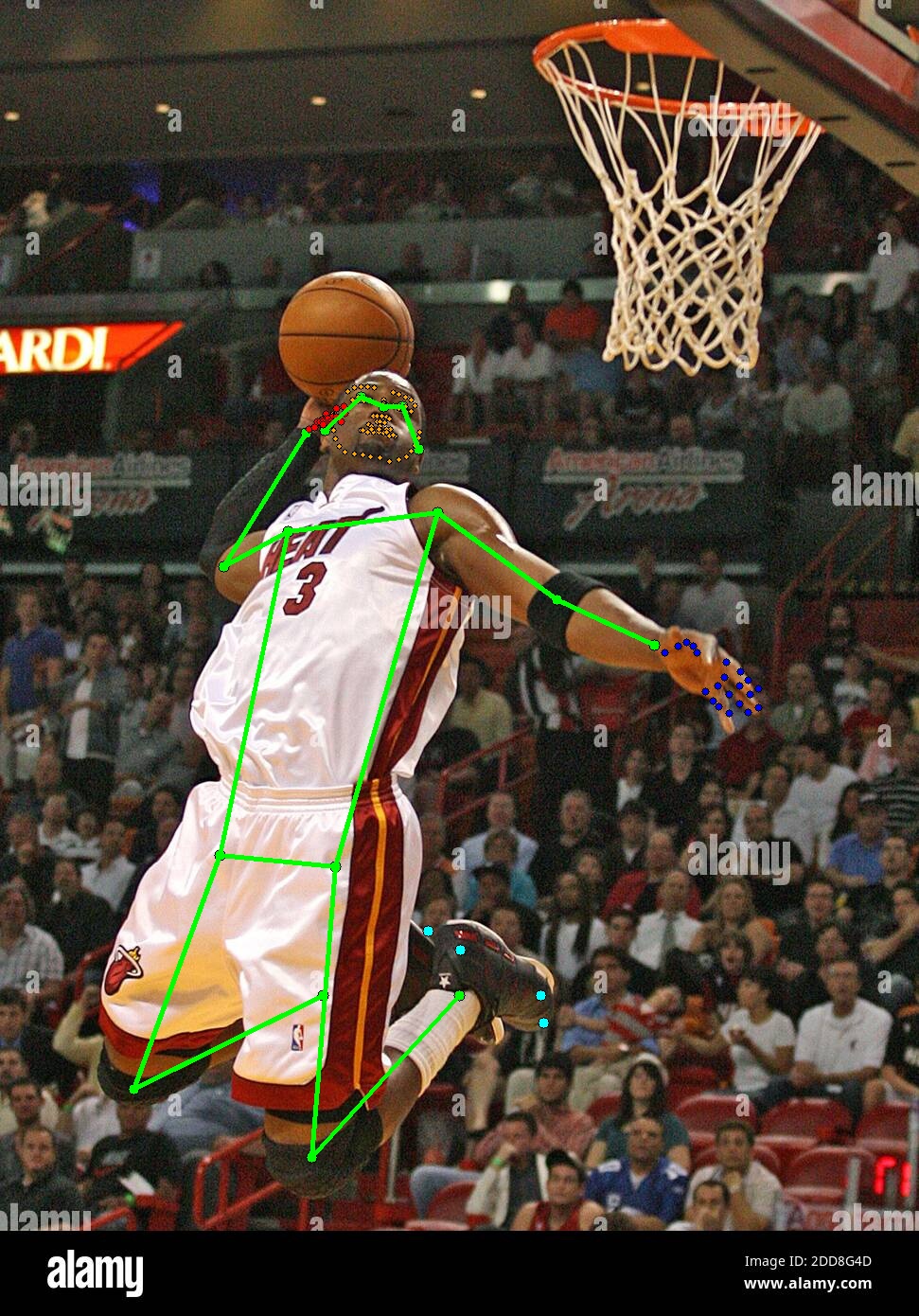
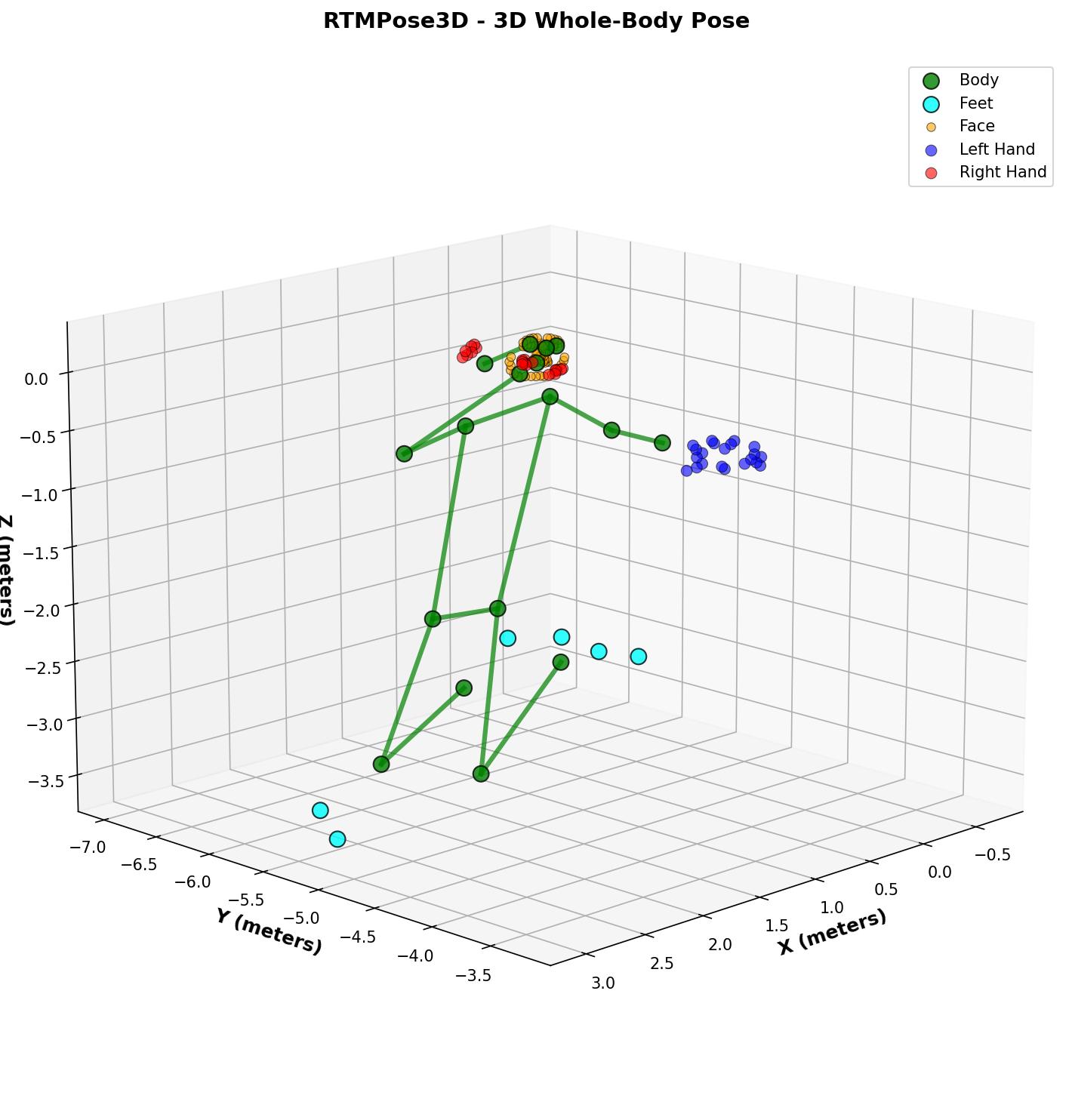
Left: 2D keypoint detection with skeleton overlay. Right: Reconstructed 3D skeleton with color-coded body parts.
Features
- 133 keypoints: body (17) + feet (6) + face (68) + hands (42)
- Both 2D and 3D outputs with confidence scores
- HuggingFace Hub integration with auto-download
- Single-person detection mode
- Batch processing support
Requirements
- Python >= 3.8, PyTorch >= 2.0.0
- CUDA-capable GPU (recommended, 4GB+ VRAM)
Installation
# Clone repository
git clone https://github.com/b-arac/rtmpose3d.git
cd rtmpose3d

# Install PyTorch (adjust CUDA version as needed)
pip install torch>=2.0.0 torchvision --index-url https://download.pytorch.org/whl/cu121

# Install mmcv pre-built wheel (required - avoids long compilation)
pip install mmcv==2.2.0 -f https://download.openmmlab.com/mmcv/dist/cu121/torch2.4/index.html

# Install package
pip install -r requirements.txt
pip install -e .
Model checkpoints (~330MB) auto-download from HuggingFace Hub on first use and cache to ~/.cache/rtmpose3d/checkpoints/.
Quick Start
HuggingFace Transformers-Style API (Recommended)
import cv2
from rtmpose3d import RTMPose3D

# Initialize model (auto-downloads checkpoints)
model = RTMPose3D.from_pretrained('rbarac/rtmpose3d', device='cuda:0')

# Run inference
image = cv2.imread('person.jpg')
results = model(image, return_tensors='np')

# Access results
keypoints_3d = results['keypoints_3d']  # [N, 133, 3] - 3D coords in meters
keypoints_2d = results['keypoints_2d']  # [N, 133, 2] - pixel coords
scores = results['scores']              # [N, 133] - confidence [0, 1]
Simple Inference API
from rtmpose3d import RTMPose3DInference

model = RTMPose3DInference(device='cuda:0')
results = model(image)
print(results['keypoints_3d'].shape)  # [N, 133, 3]
Single Person Detection
Detect only the most prominent person (largest bbox × highest confidence):
# Works with both APIs
results = model(image, single_person=True)  # Returns N=1
Output Format
{
    'keypoints_3d': np.ndarray,  # [N, 133, 3] - (X, Y, Z) in meters
    'keypoints_2d': np.ndarray,  # [N, 133, 2] - (x, y) pixel coords
    'scores': np.ndarray,        # [N, 133] - confidence [0, 1]
    'bboxes': np.ndarray         # [N, 4] - [x1, y1, x2, y2]
}
N = number of detected persons
Coordinate Systems
2D Keypoints: Pixel coordinates
- X: horizontal [0, image_width]
- Y: vertical [0, image_height]
3D Keypoints: Camera-relative in meters (Z-up convention)
- X: horizontal (negative=left, positive=right)
- Y: depth (negative=closer, positive=farther)
- Z: vertical (negative=down, positive=up)
Keypoint Format
133 keypoints in COCO-WholeBody format:
| Index | Body Part | Count | Description |
|---|---|---|---|
| 0-16 | Body | 17 | Nose, eyes, ears, shoulders, elbows, wrists, hips, knees, ankles |
| 17-22 | Feet | 6 | Foot keypoints |
| 23-90 | Face | 68 | Facial landmarks |
| 91-111 | Left Hand | 21 | Left hand keypoints |
| 112-132 | Right Hand | 21 | Right hand keypoints |
Advanced Usage
Return PyTorch Tensors
results = model(image, return_tensors='pt')
keypoints_3d = results['keypoints_3d']  # torch.Tensor on device
Model Size Selection
# Large model (default, best balance)
model = RTMPose3DInference(model_size='l')

# Extra large model (higher accuracy, slower)
model = RTMPose3DInference(model_size='x')
Detection Threshold
results = model(image, bbox_thr=0.5) # Higher = fewer, more confident detections
Custom Cache Directory
model = RTMPose3DInference(cache_dir='/path/to/cache')
Save/Load Configuration
# Save
model.save_pretrained('./my_model')

# Load from local directory
model = RTMPose3D.from_pretrained('./my_model', device='cuda:0')
Clear Cache
from rtmpose3d import clear_cache
clear_cache()  # Removes all cached checkpoints
Model Information
RTMW3D-L (Large) - Default
- 65M parameters
- Input: RGB image (auto-resized to 384×288)
- Output: 133 3D keypoints per person
- Speed: Real-time on modern GPUs
RTMW3D-X (Extra Large)
- 98M parameters
- Higher accuracy, slower inference
Checkpoints (~330MB total):
- Person Detector (RTMDet-M): ~99MB
- Pose Estimator (RTMW3D-L): ~231MB
- Source: rbarac/rtmpose3d on HuggingFace Hub
- Cache:
~/.cache/rtmpose3d/checkpoints/
Technical Notes
- 2D Keypoints: Extracted from MMPose's
transformed_keypointsfor accurate pixel coordinates in original image space - 3D Coordinates: Transformed via
-kpts[..., [0, 2, 1]]to achieve Z-up convention (swap Y/Z axes, negate all) - Height Measurement: Typical nose-to-ankle range is 1.5-3.0 meters depending on camera perspective and distance. Relative positions are more reliable than absolute measurements.
Examples
python examples/basic_usage.py [image_path]
Citation
@misc{rtmpose3d2025,
  title={RTMPose3D: Real-Time Multi-Person 3D Pose Estimation},
  author={Arac, Bahadir},
  year={2025},
  publisher={GitHub},
  url={https://github.com/b-arac/rtmpose3d}
}
License
Apache 2.0
Acknowledgments
Built on MMPose by OpenMMLab.
Explore related projects
ytdl-org/youtube-dl
Command-line program to download videos from YouTube.com and other video sites
141,500 starsexcalidraw/excalidraw
Virtual whiteboard for sketching hand-drawn like diagrams
135,396 starsgodotengine/godot
Godot Engine – Multi-platform 2D and 3D game engine
119,840 starsmrdoob/three.js
JavaScript 3D Library.
117,905 stars