
SmallThingz/reverb
SmallThingz/reverb has 27 GitHub stars and 1 forks. GitHot measured +1 stars in 24 hours. Last checked 2026-11-18 17:47 UTC. Last push 2026-11-17.
What you can do
- Rolling buffer with disk-backed restore
- Material audio blob driven live from the recorder, with visualization work disabled when the capture UI is not visible
- Streamed WAV export without loading the whole history into memory
- In-app player, rename, delete, and move flows
Measured star growth
- in 24h
- +1
- in 7 days
- Collecting history
- in 15 days
- Collecting history
- in 1 month
- Collecting history
Net star changes over overlapping periods, not daily totals. Missing measurements are left blank. Stars measure attention, not software quality.
About
Rolling audio buffer recorder for Android
SecurityREADME.md
Original
 Reverb




Rolling audio buffer recorder for Android. Keeps recent audio alive, survives restarts, and exports past audio fast.
Forked from Echo, now reworked and shipped as Reverb.
✨ Highlights
- Rolling buffer with disk-backed restore
- Material audio blob driven live from the recorder, with visualization work disabled when the capture UI is not visible
- Streamed WAV export without loading the whole history into memory
- In-app player, rename, delete, and move flows
- Hardware-aware sample format, rate, source, route, and channel selection
Screenshots
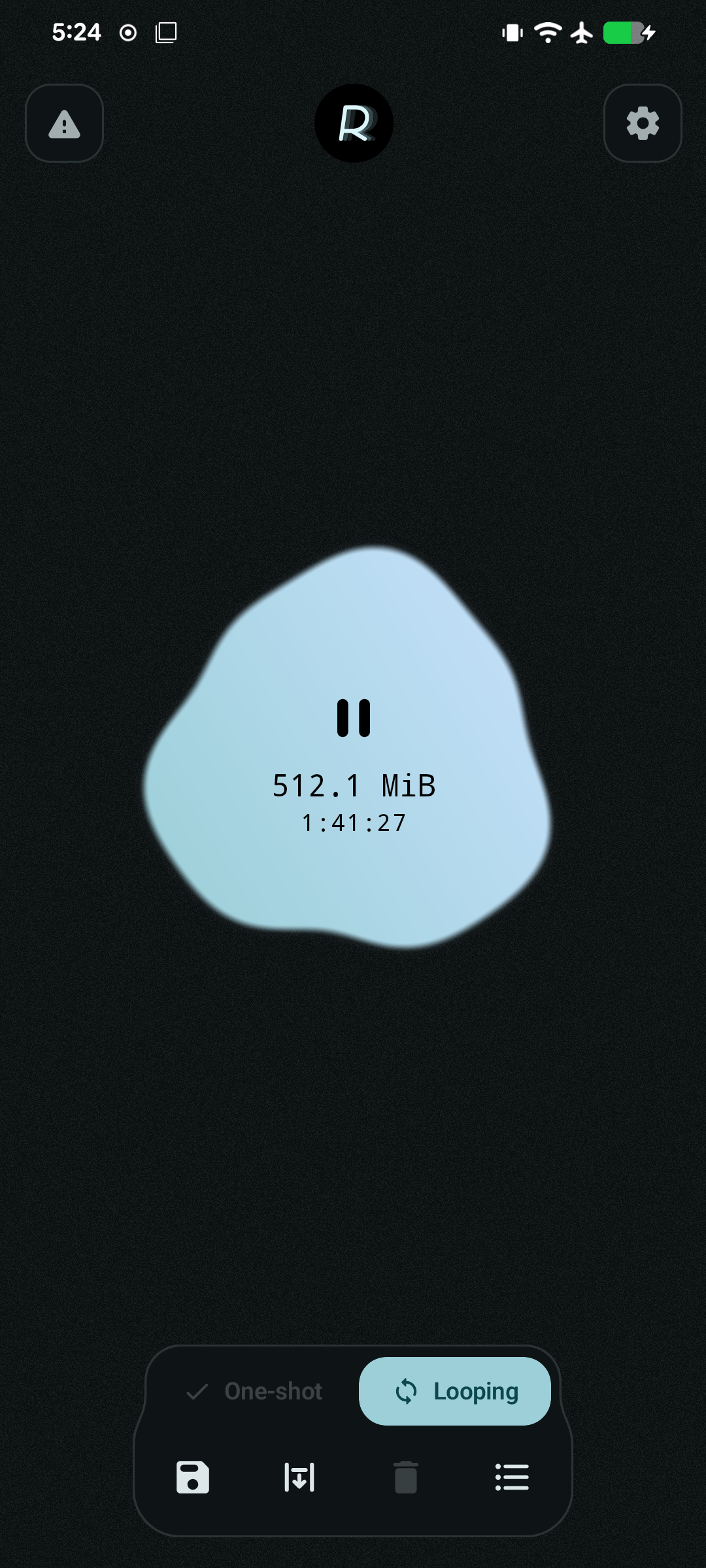
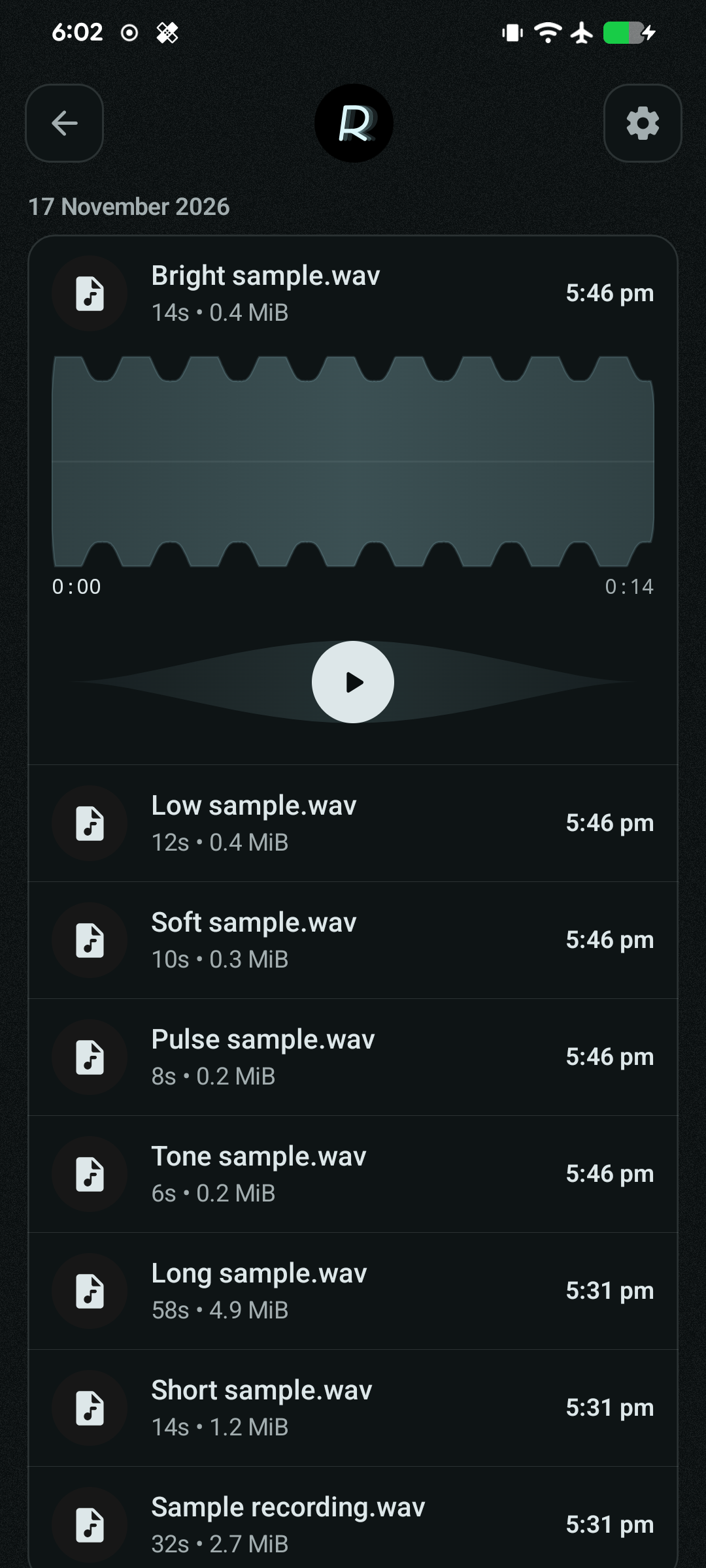
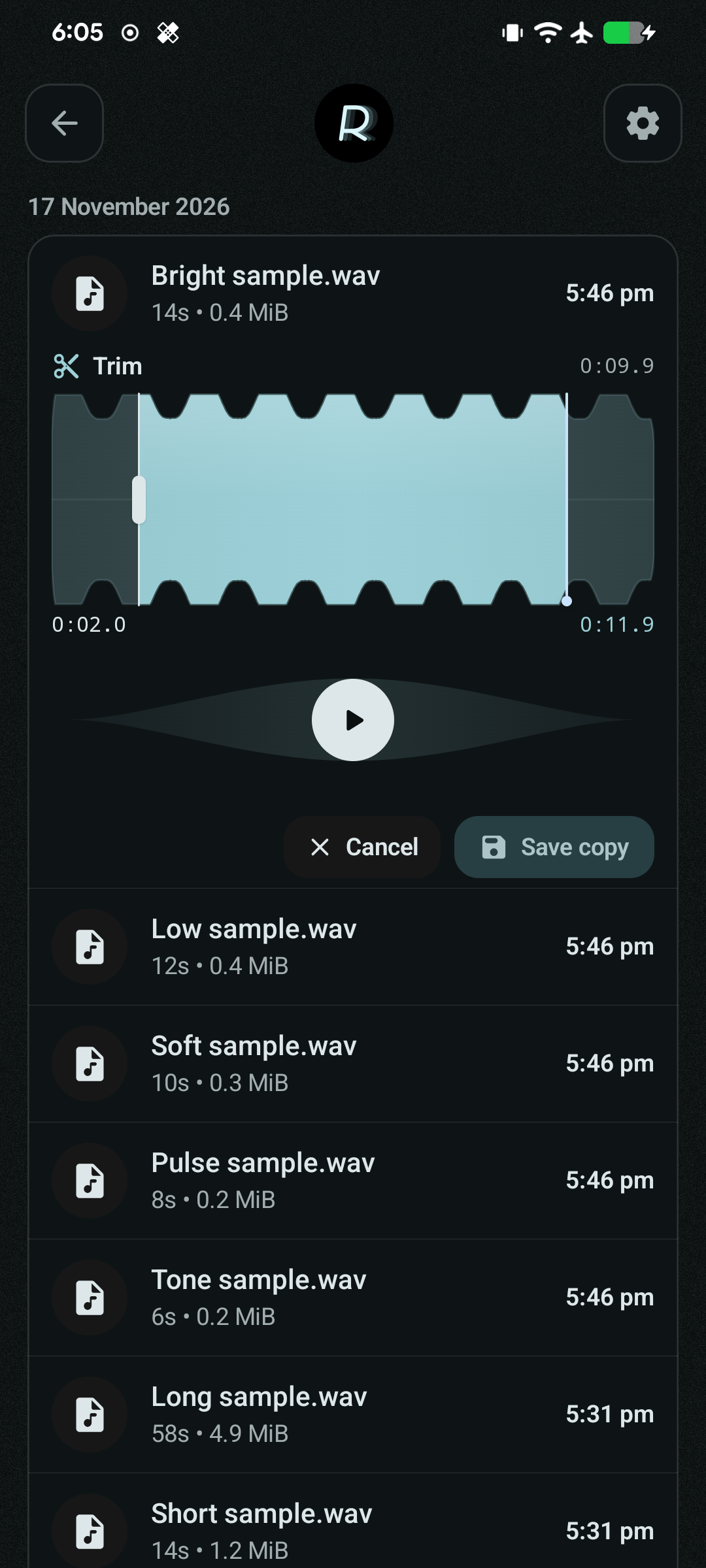
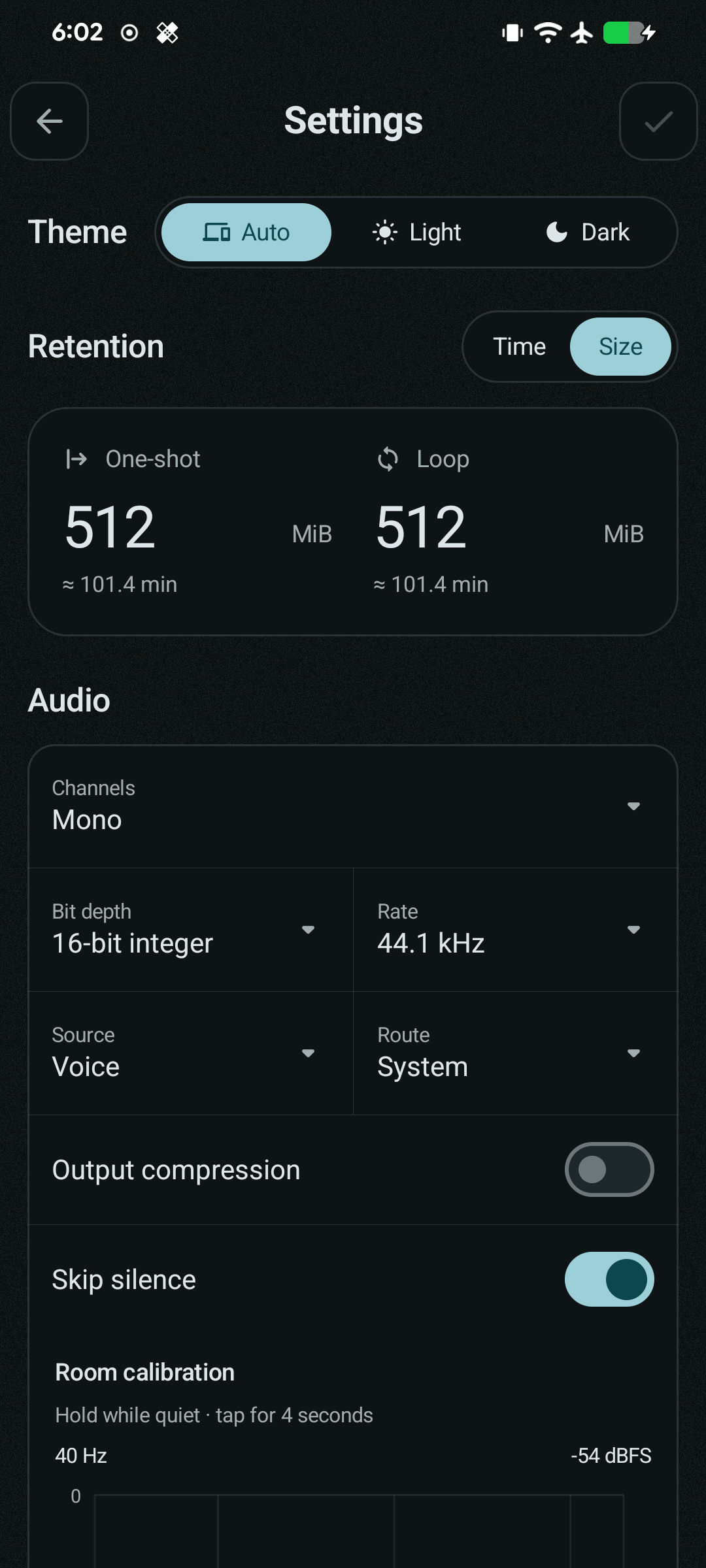
Screenshots use sample recordings.
📦 App
- Package:
app.smallthingz.reverb - Module:
app
🛠️ Build
python3 scripts/bootstrap-native-ui.py
./gradlew :app:assembleDebug
./gradlew :app:assembleRelease
The native UI library is a separate Git repository pinned as native-ui, with
https://github.com/SmallThingz/kotlin-ui.git as its upstream locator.
The bootstrap command verifies and restores it from the committed offline bundle;
it does not fetch from a network or overwrite local library changes. Use the same
step after a plain clone, in a fresh CI checkout or in a source archive. Standard
Git submodule commands use the upstream network locator; the bootstrap remains
the offline alternative. See Native UI.