
Past-da-king/agent has 58 GitHub stars and 7 forks. GitHot measured 0 stars in 24 hours, +4 in 7 days, and +6 in 15 days. Last checked 2026-11-15 20:58 UTC. Last push 2026-11-05.
Measured star growth
- in 24h
- 0
- in 7 days
- +4
- in 15 days
- +6
- in 1 month
- Update delayed
Net star changes over overlapping periods, not daily totals. Missing measurements are left blank. Stars measure attention, not software quality.
About
An autonomous, always-on agent on your Android phone. It has its own browser, keeps a wiki memory of you, and hands the heavy jobs to your own machines. Free and open source, and you bring the model.
AIREADME.md
Original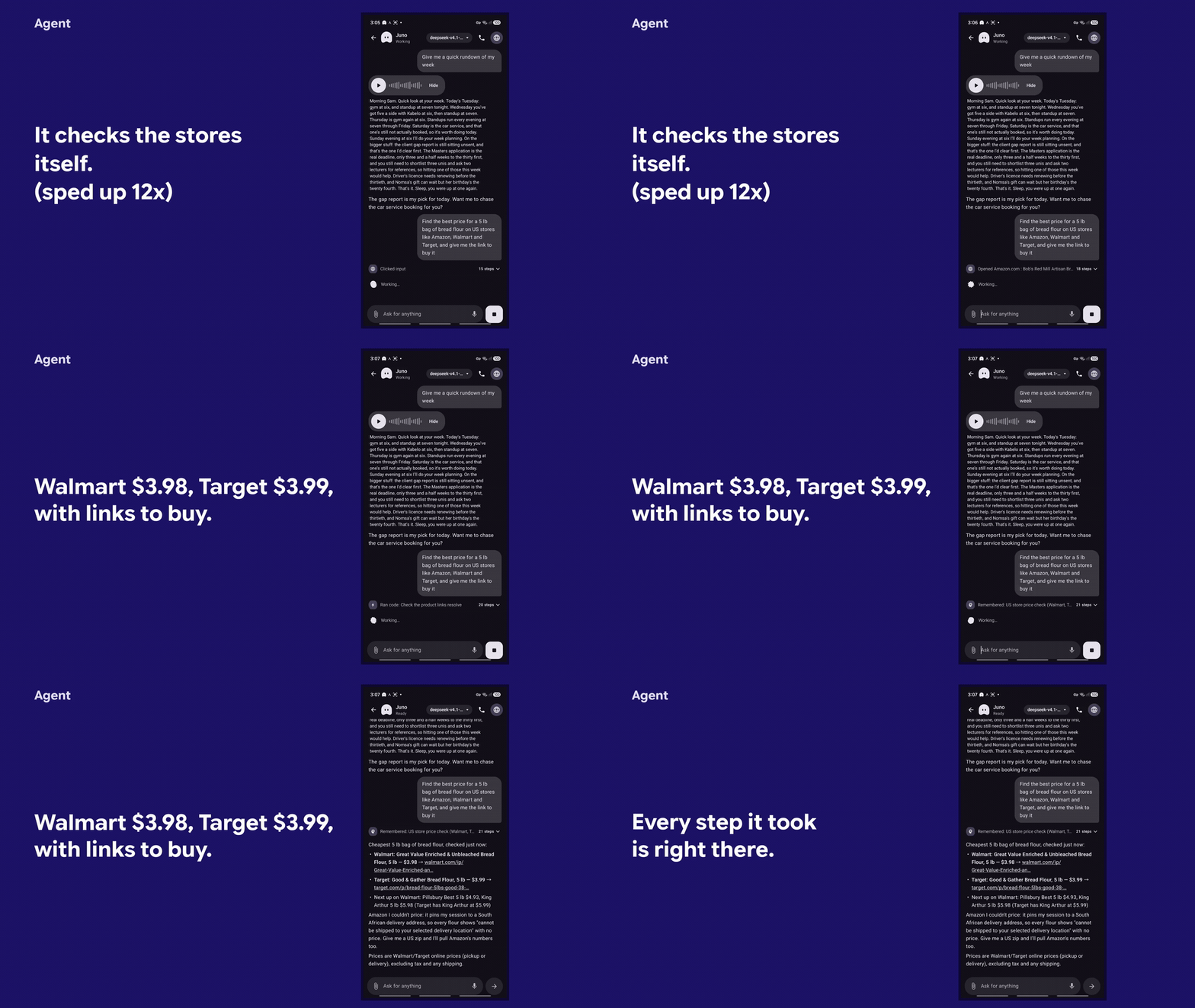
Agent
An autonomous, always-on agent that is yours alone. It has its own browser, keeps a wiki memory of everything it learns about you, and hands the heavy jobs to your own machines.
It lives in two places, and you can use either or both: on your phone, or on your computer with the phone as the window. Same agent, same memory, same approvals; the heavy work and the keys stay where you put them.
You bring the model. Paste an API key, or sign in with the ChatGPT or Claude plan you already pay for.
Get the APK | Get the desktop app | Build it from source
Free and open source, MIT. No account, no subscription, no server of ours.
What it looks like
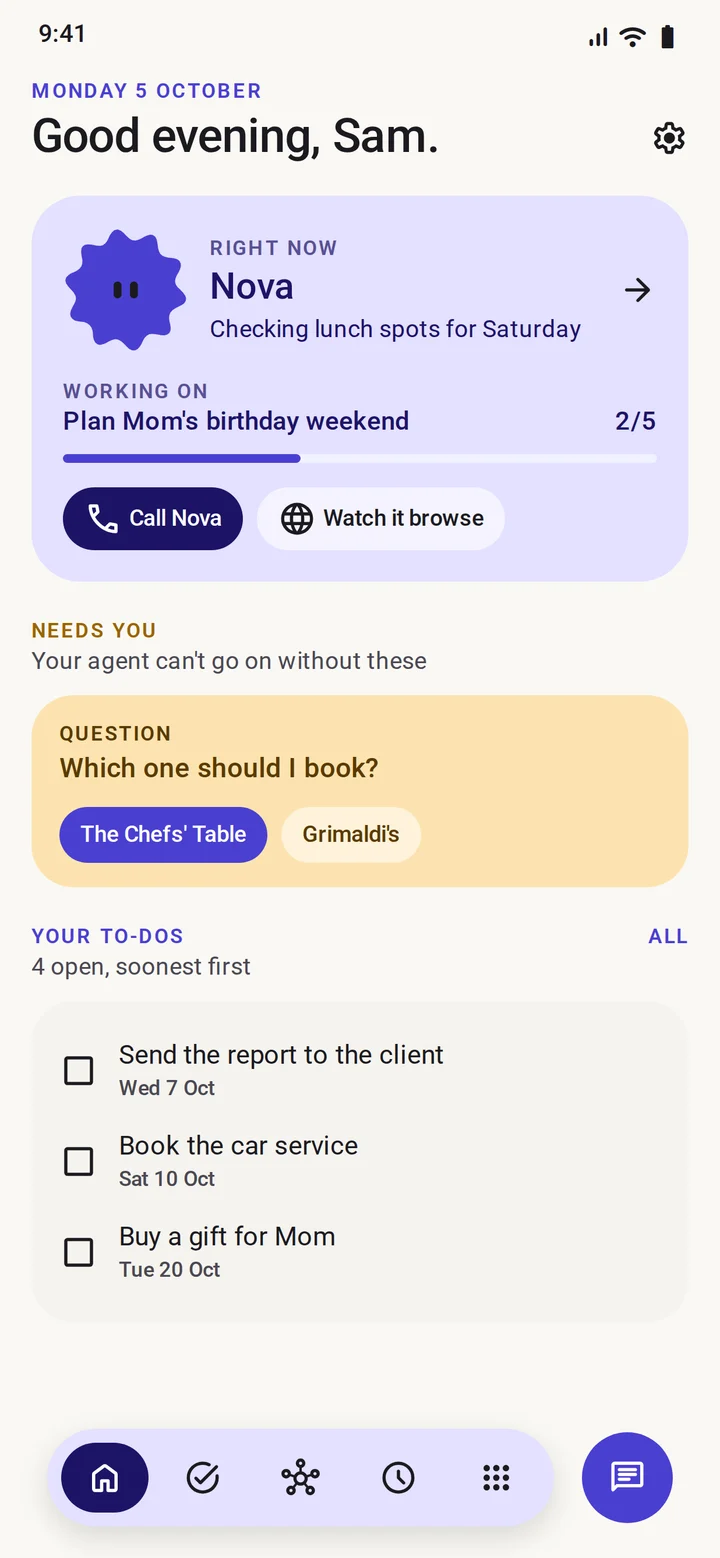
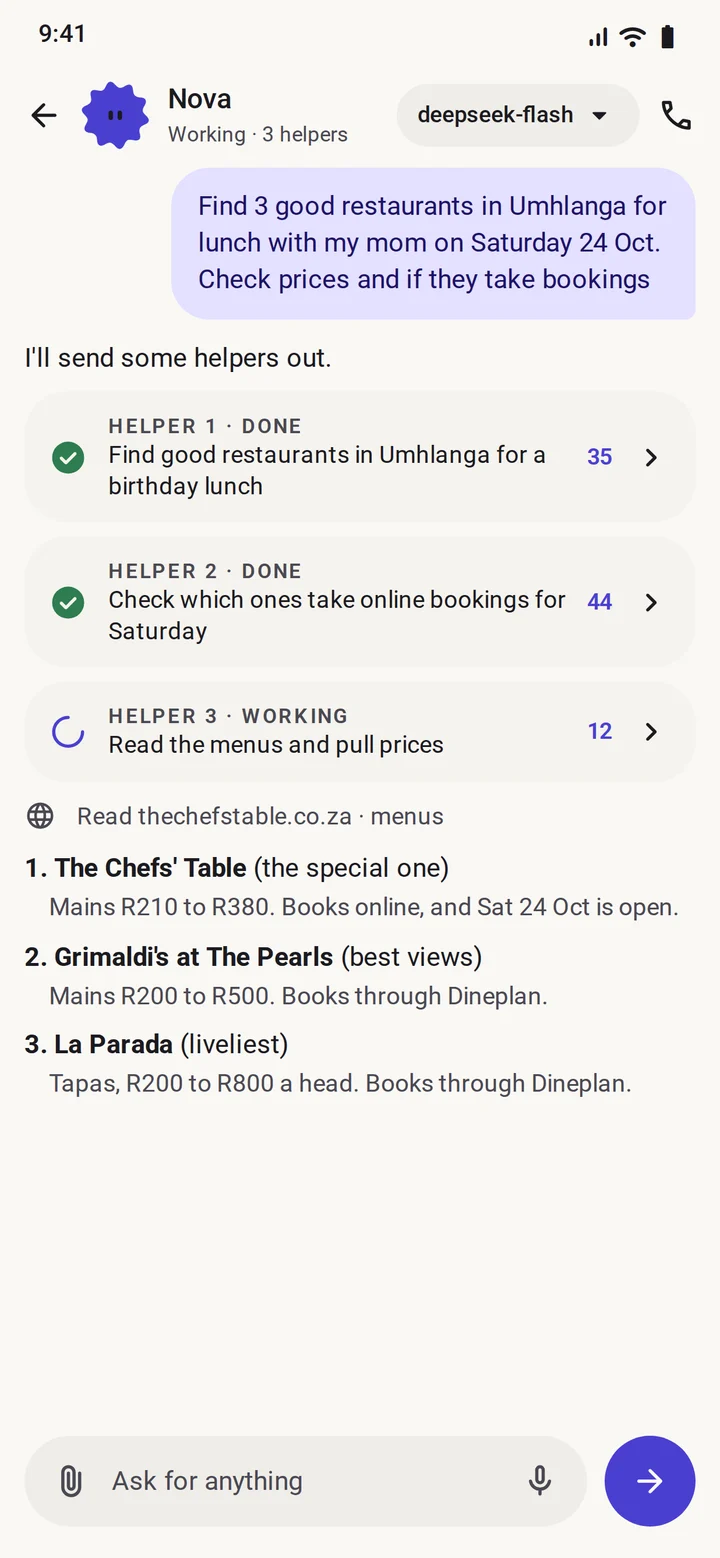
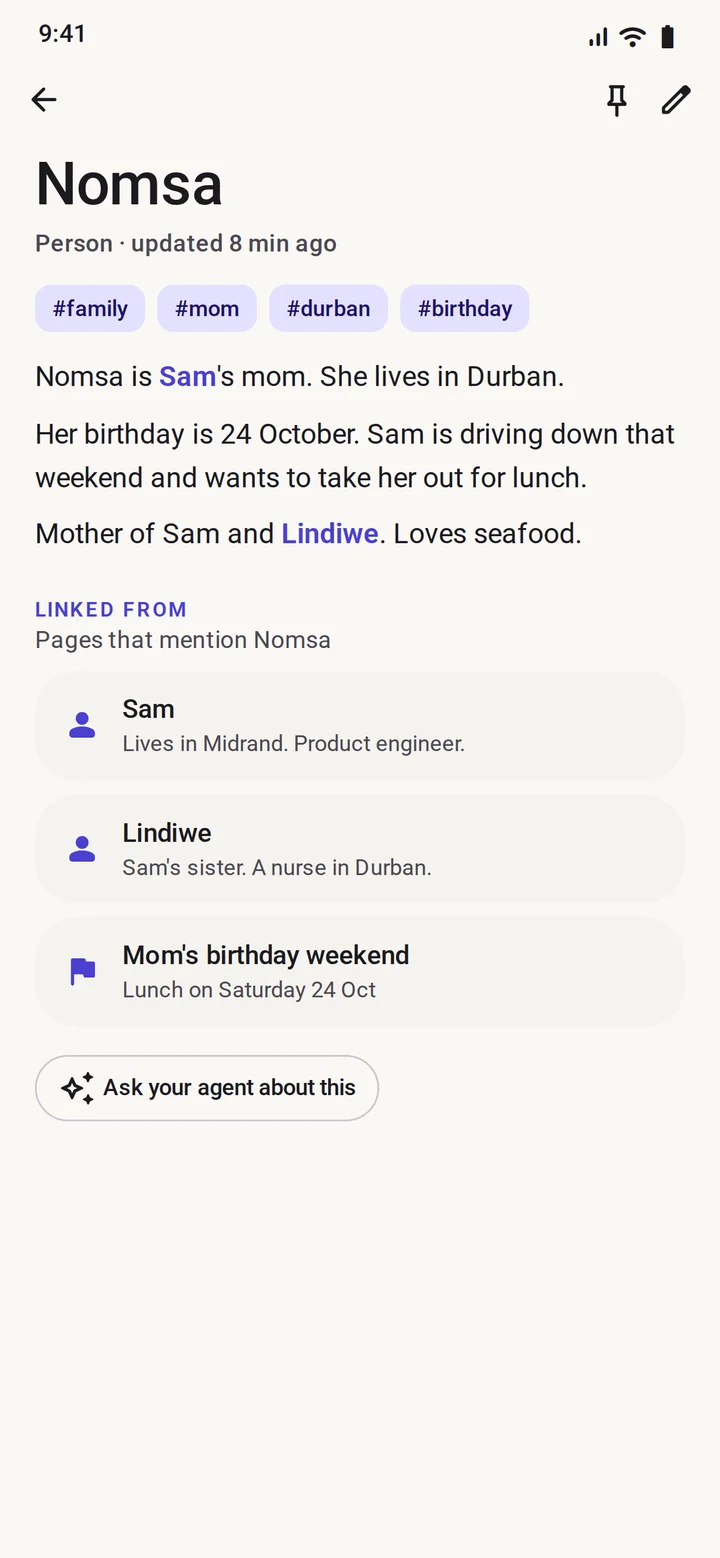
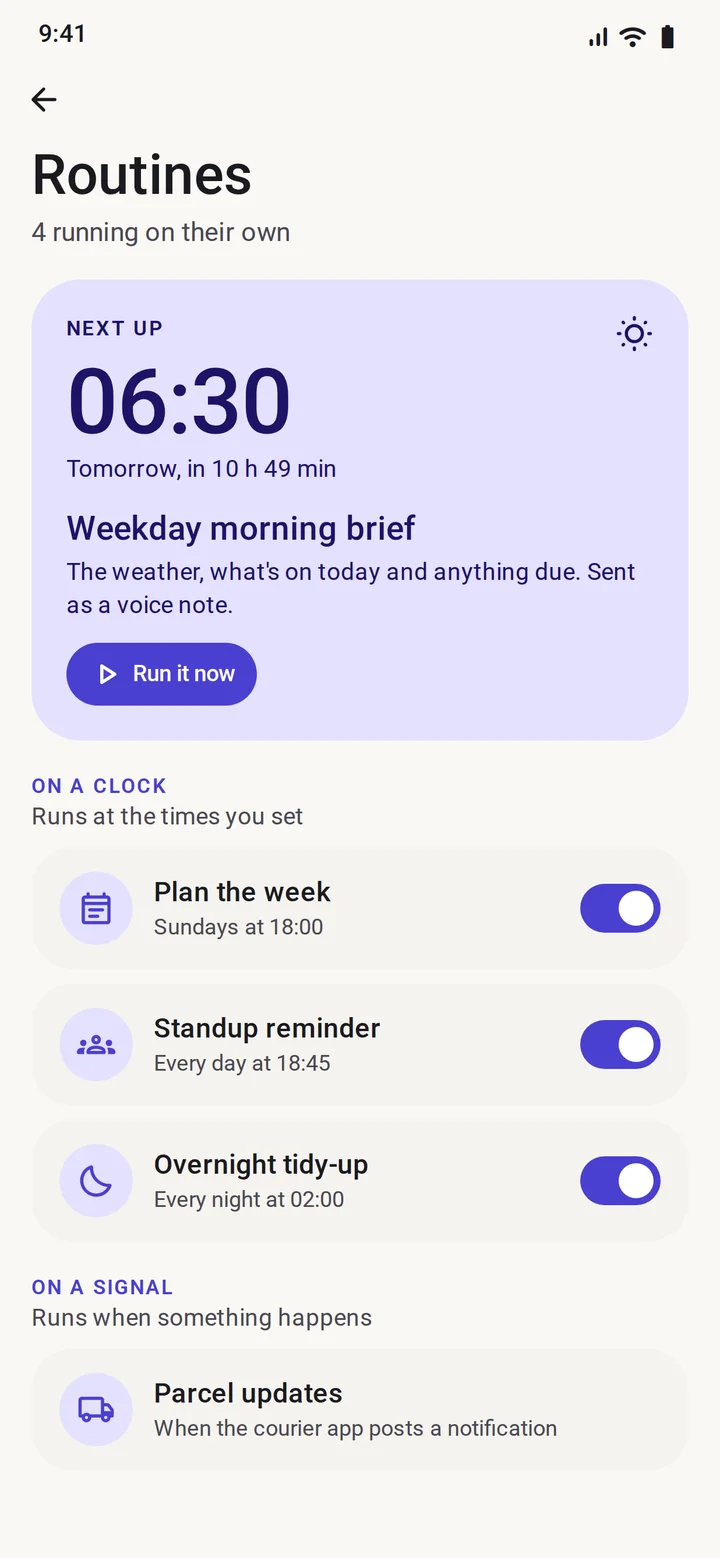
Home, chat, memory, routines. The two demo recordings are on the project page.
Install
It is not on the Play Store. You sideload the APK.
- Open Releases and download the latest
Agent-*.apkon your phone. - Tap the file and allow the install when Android asks. That is the whole sideload.
- Open Agent, give it a name, pick how it looks, then pick how to power it. See Setup.
- On a Samsung, Xiaomi or OnePlus phone, set the app's battery to Unrestricted under Settings, or Android will kill the browser and the routines while they work.
You need Android 8 or newer on an arm64 phone, which is every phone sold in the last few years. The APK is about 36 MB without the bundled subscription runtimes, and about 360 MB with them, so leave room for it and for its data.
Two ways to run it
On the phone. The agent loop, the browser, memory, tasks and routines all run in the app. Nothing else is needed, and no other computer has to exist.
On your computer, with the phone as the window. Pair the phone with the desktop app (Settings, Devices, Add a device). From then on the phone shows the same chats, cards, approvals and reports, and the work runs on the computer with its accounts, its files and its bigger keys. It behaves like one agent, not two:
- The phone knows which computer is answering. A message goes to the brain that should take it; if that computer says nothing within a few seconds, the next one gets the same message id, so the work still runs exactly once.
- A card is only "working" while the computer that published it is answering. A stopped machine says so instead of spinning.
- Your computer's files stay on your computer. When the agent shows a video or a picture, the phone asks for exactly the part of the file it needs, by a token the computer made for that one card, and nothing else is reachable.
What it can actually do
It goes and looks. The agent drives its own built-in browser. It cannot control your existing Chrome tabs, so you sign in to your sites inside it. That browser runs in a foreground service, so it keeps working while you are in another app or the screen is off. When a site throws a captcha or a sign-in at it, it hands the page to you and carries on when you are done. Profiles keep Personal and Work apart, and helper agents can split a big job up.
It remembers you. Everything it learns gets a page in a wiki, linked to the pages around it. Read it, change it, pin it or delete it. Nothing is kept that you cannot see.
It answers in cards, not walls of text. A table, a chart, a set of steps, a row of buttons, one card per listing: the answer is something you can read at a glance, tap, and edit. Pictures and videos the agent finds or makes play inside the chat.
It runs on a clock. A routine can fire at a set time, on a new email, or the moment an app you chose sends a notification. It can watch a price for weeks and only speak up when it actually moves. A routine works with the same tools the agent has, including your task list.
It learns the web apps you use. Show it a site once and it can write its own tools for that site, so the next visit is one call instead of a hundred clicks. You decide whether those tools may act without asking.
It builds little apps for you. A mini-app is a small dashboard or tracker it makes and keeps up to date, on the phone and on the computer, with only the permissions you grant it.
It uses the accounts you have. Apps connect through Composio with your own key: Gmail, Calendar, Drive, Slack and a few hundred more. It asks to connect one only when a job needs it, and the sign-in opens inside the app. You can hold several accounts per app, like two Outlooks or four Gmails.
It hands heavy work to a real computer. Any server or PC you can SSH into becomes a machine it can use. Run a command, start a long job that keeps going in the background, move files both ways. Looking around just runs. Anything that changes the machine shows you the exact command first.
It answers in voice, and reads your files. Voice notes in and out, live calls if you add a Gemini key, photos and documents in chat, including scanned PDFs read on the device.
It tidies up overnight. At 02:00, and only while charging and online, it sorts its memory, writes notes from the day and builds your morning screen.
It waits for your yes. Anything that spends money or sends something in your name stops at an approve button.
What it is not
- Not a product. No account, no subscription, nobody to pay.
- Not on the Play Store, so nobody at Google has looked at it. Read the source, or build it yourself, if that matters to you.
- Not finished. It has mostly been tested on one Samsung phone, and the phone-and-computer pairing is the newest part.
- Not faultless. It is an agent with a browser and access to whatever you connect, so it will get things wrong. Read what you approve.
- Not for everyone yet. It expects you to be comfortable sideloading an APK and pasting a key.
Permissions and privacy
Nothing is read until you allow it. Location, files, notifications and the rest are asked for at the moment a job needs them, and the app runs with all of them denied. The one most people want is notifications, and even then you pick the apps it may read, one at a time, and take it back whenever you like.
- Keys are stored on the phone in
EncryptedSharedPreferences, locked by the Android Keystore. - Memory, tasks, routines and chat live in a Room database on the phone.
- Traffic leaves the phone only to the model you picked, the sites the agent browses, Composio if you added a key, your voice provider if you added one, and the computers you paired.
- Machine secrets stay encrypted on the phone and the agent only ever sees a machine's name. A machine is pinned the first time you connect, and refused if its identity changes later.
- A file the agent shows you is served by the computer that holds it, to the paired phone, by an opaque token with no path in it, read-only. A made up token gets nothing.
Star it if you want it to exist
If an agent that lives on your own hardware and answers to you is something you want to keep existing, give the repo a star. It is the only signal this project has, and it is what puts Agent in front of the next person looking for it.
Setup
Onboarding walks you through this. In order:
Name and style. Name your agent, pick a colour and a face. The face becomes the app's icon.
Power. Choose one:
Option What you need Notes Your own computer The Agent desktop app with Devices turned on The phone becomes the window; nothing to pay, keys stay on the computer API key A key from DeepSeek, OpenRouter, Gemini, Claude, OpenAI or OpenCode (Zen or Go) Runs in the app's own agent loop. Quickest to set up. Any OpenAI-compatible endpoint Base URL, model name and a key Hosted services, or your own server. See Self-hosted servers. ChatGPT subscription A ChatGPT account (the free tier worked in testing) Runs Codex on the phone through the bundled runtime. Sign in inside the app. Claude subscription Claude Pro or Max Runs Claude Code on the phone through the bundled runtime. Read Risks first. Once a key is checked you can pick the model, and switch from the chip at the top of the chat at any time.
Connections, if you want them. Paste your Composio API key under Connections, then connect the apps you use. The agent can also ask for one mid-job, and that sign-in opens inside the app's browser.
Voice, if you want it. Under Settings, Voice, add a Gemini, OpenAI or ElevenLabs key for spoken replies. A Gemini key also turns on live calls.
Notifications, if you want them. Choose which apps the agent may read. Nothing is read until you pick.
Self-hosted servers (Ollama, LM Studio, vLLM)
Pick Other (OpenAI-compatible), then enter the server's base URL, usually ending in /v1, the model name and a key. Any placeholder works if your server does not check keys.
- HTTPS is the default and the way to do it. Put the server behind a reverse proxy with a certificate such as Caddy or nginx, or use
tailscale serveto get anhttps://address on your tailnet. - Plain HTTP on your LAN (
http://192.168.1.20:8080/v1and the like) is blocked unless you opt in. When the URL starts withhttp://you get a warning and a checkbox, Allow unencrypted HTTP for this server. Requests and your API key then travel in clear text, so only tick it on a network you trust. The opt-in is saved with that server and cleared when you switch provider. - Built-in providers always use HTTPS.
Machines, over SSH
Your phone can be the remote, not the engine. Under Connections, Machines you can add any computer you can SSH into: a VPS, a university or work server, your own PC.
- Sign in with a password, a private key you already use, or a new key made on the phone. You paste its public half into
~/.ssh/authorized_keysonce, and no password is stored. - Through a gateway, so a machine behind a login host can be reached as well.
- Commands that change things ask first. The card shows the exact command, unless you switch on Run without asking for that machine.
- At home, put the phone and the computer on the same Tailscale network and use the computer's tailnet address. On Windows, turn on OpenSSH Server under Settings, Optional features, or run
sshdinside WSL.
Build from source
You need JDK 17, the Android SDK (compileSdk 37), and for the runtime pack curl, ar, patchelf and Node/npm.
git clone https://github.com/Past-da-king/agent
cd agent
# Downloads Termux's Node build, Codex and ripgrep and packs them as jniLibs plus assets,
# which are git-ignored. Only needed for the subscription paths. API keys work without it.
./tools/build-runtime-pack.sh
./gradlew assembleDebug
adb install -r app/build/outputs/apk/debug/app-debug.apk
Release builds are signed from a properties file that is never in this repository: pass -PsigningProps=<file>.
Tests: ./gradlew testDebugUnitTest, which runs the unit tests plus Robolectric and Roborazzi screenshots in light and dark.
How it works, in short
- Kotlin and Jetpack Compose (Material 3 Expressive), Room, WorkManager.
- On the API key path, a provider-neutral agent loop in Kotlin that speaks both chat formats.
- On the subscription path, Node 24 (Termux's Android build) ships inside the APK as
lib*.sofiles, because Android only lets an app execute files from its native library folder, and the Agent SDK runs on it. Codex and Claude Code ship the same way as their arm64 musl builds; Claude Code gets the musl loader aslibldmusl.so, and a local proxy resolves DNS for both. The app's own tools are served to them over a local MCP server on127.0.0.1with a per-install token. - The browser is an Android WebView hosted in a foreground service.
- With a computer paired, the phone and the computer replicate chats, tasks and memory over an encrypted link of their own: no relay of ours, no account.
Risks
- Your own risk. The agent can browse, fill in forms, read the notifications you allow and act in the apps you connect. Approvals guard payments and sends, so check what you approve.
- The Claude subscription login is not officially sanctioned. The option is there because it works. Using it is a call you make about your own account. A Claude API key is the safe way to use those models here.
- Sideloaded. It is not reviewed by Google.
- Battery. Background browsing and routines use battery. The overnight routine only runs while charging.
- Early software. Tested mainly on one Samsung phone.
History
This repository started as an early version of the app and carries the work of its contributors. The line that has been
shipping since was developed privately and was merged into main in November 2026, keeping the earlier history and the
licence intact. See Releases for what changed when.
License
MIT. See LICENSE.