
Lu1sDV/wafmeow
Lu1sDV/wafmeow has 88 GitHub stars and 10 forks. GitHot measured 0 stars in 24 hours and +2 in 7 days. Last checked 2026-11-14 16:45 UTC. Last push 2026-11-02.
Measured star growth
- in 24h
- 0
- in 7 days
- +2
- in 15 days
- Collecting history
- in 1 month
- Collecting history
Net star changes over overlapping periods, not daily totals. Missing measurements are left blank. Stars measure attention, not software quality.
About
wafw00f's fingerprints. Go speed. Pipeline-native. WAF detection from live HTTP and offline captures.
SecurityREADME.md
Original
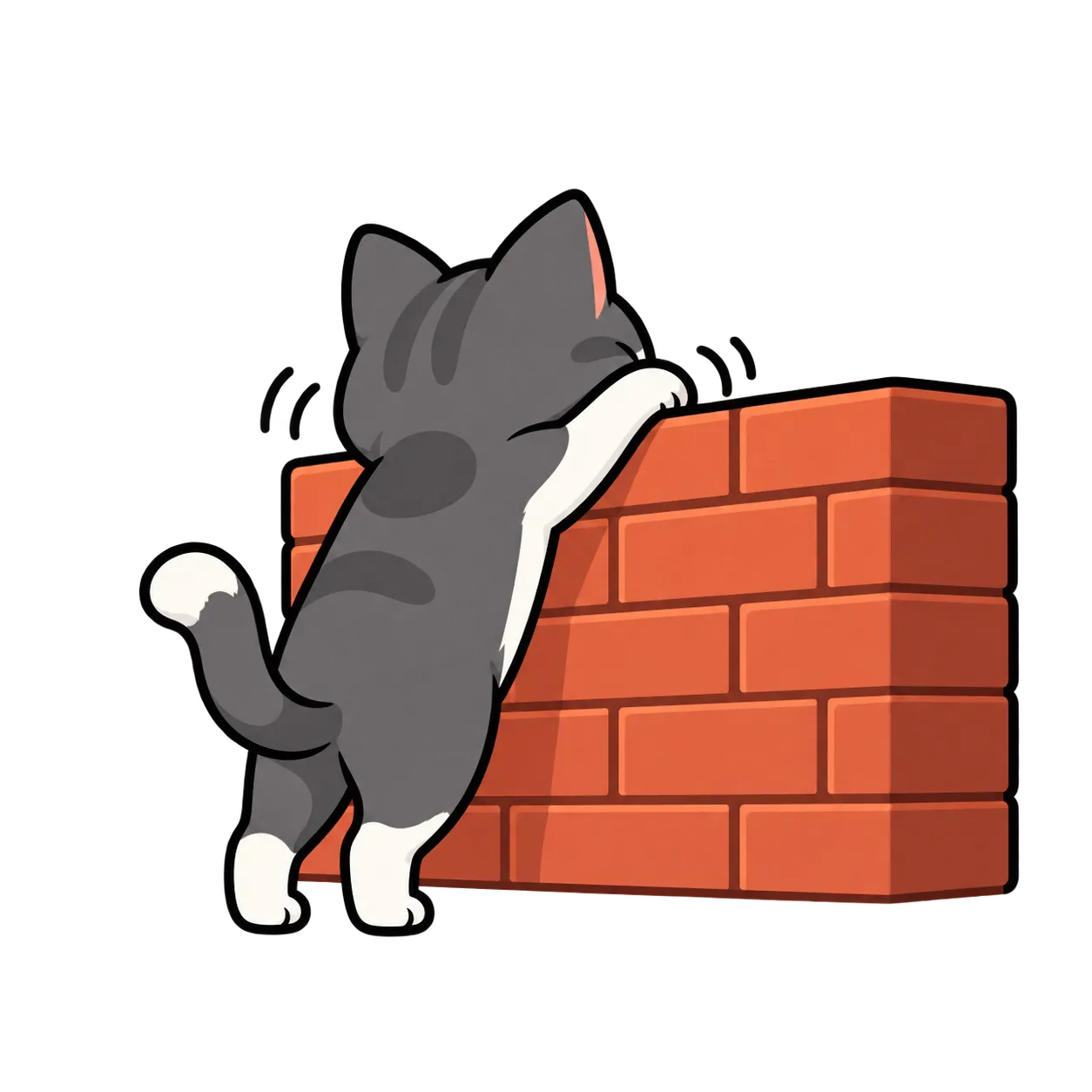
Wafme0w
wafw00f's fingerprints. Go speed. Pipeline-native.
172 WAF product identities, built on wafw00f's fingerprints.
A Go CLI and library for live HTTP and offline saved-response analysis.






Quick start · Moving from wafw00f · Benchmarks · Documentation

Why wafmeow?
wafmeow is a wafw00f alternative for WAF detection in Go, built on the upstream project's fingerprint work. It brings fast WAF fingerprinting into concurrent, structured pipelines for teams that need to detect WAF at scale.
- 172 product identities in the catalogue. Fingerprints are ported from wafw00f, with upstream credit and licence notices. Probe behavior and evidence semantics differ; catalogue size does not prove equivalent detection on every target.
- Static Go release binaries. No Python, pip or virtualenv is required to scan or classify saved responses. Optional browser capture needs Chromium.
- JSONL, JSON and CSV output. Stream to
jq, notification tools or a database, while keeping human diagnostics on stderr. - Offline response analysis. Re-analyse native captures or supported httpx exports without sending another request.
- Request, redirect and connection budgets. Bound acquisition and apply explicit scope rules across redirects.
- An importable Go library. Use the same evidence classifier in your own application through the v3 API.
From discovery to JSONL
# Set AUTHORIZED_DOMAIN to a domain you own or are authorized to test.
set -o pipefail
subfinder -d "${AUTHORIZED_DOMAIN:?set an authorized domain}" -silent |
  httpx -silent |
  wafmeow --target-file - --fast --jsonl --silent
This pipeline uses --fast for a quick active scan of each discovered URL.
For existing httpx response exports, use the
offline import pipeline.
1. Build
Build with Go 1.26 or newer, using a security-patched toolchain. Release builds use Go 1.27.3.
git clone https://github.com/Lu1sDV/wafmeow.git
cd wafmeow
go build -o wafmeow ./cmd/wafmeow
./wafmeow --help
Source checkouts show Go module/VCS identity; published release binaries
show their exact release tag in --version, the human banner and JSON
result provenance. The release workflow embeds that tag automatically and
checks it before packaging. Installed binaries do not change versions
until replaced by an update.
For production, use a release that passes the release validation gates. The v1.0.0 downloads predate the security hardening in this source tree.
Prebuilt binaries, the Go module and Homebrew install are in Releases and installation:
go install github.com/Lu1sDV/wafmeow/v3/cmd/wafmeow@latest
brew install Lu1sDV/tap/wafmeow
The /v3 Go install command requires a published v3 release. Before that
release, build from the source checkout above; Homebrew continues installing the
latest published stable version.
2. Scan an authorized target
# Use your own local HTTP server on port 8080.
./wafmeow --target http://127.0.0.1:8080 --fast
This prints a human-readable result. Use --target / -t for a URL and repeat
it for several URLs. Use --target-file PATH for a file of URL lines, or
--target-file - for stdin.
--input PATH and -I PATH remain equivalent spellings of --target-file PATH.
Choose one input source; saved responses use --evidence for offline analysis.
| Goal | Choose | Collection |
|---|---|---|
| Quick active fingerprinting | --fast |
Normal, no-user-agent and combined probe |
| Broader active probing | --deep |
Eight selected request types; also the default when no mode is given |
| Inspect normal responses only | --baseline |
One normal request, without active probes |
| Reuse saved responses | --evidence FILE |
Offline classification, without new requests |
--baseline can find fingerprints already present in an ordinary response. Use
it when you want normal HTTP inspection without active probes; it is not a setup
step for --fast or --deep. The three live modes are mutually exclusive, and
redirects and budgets affect actual request counts. See
collection modes and payloads for the trade-offs.
ProjectDiscovery httpx pipelines
# Discover URLs, then send new wafmeow requests:
httpx -l authorized-hosts.txt -silent |
  ./wafmeow --target-file - --fast --jsonl --silent

# Classify exported responses without additional requests:
httpx -l authorized-hosts.txt -silent -json -irr -probe -rstr 1048576 -rsts 1048576 |
  ./wafmeow --evidence - --evidence-format httpx --jsonl --silent
The importer targets httpx v1.12.0. Exported bodies lack completeness proof:
content matching stays unknown, while faithful status/header/cookie evidence can
match. This is not equivalent to active acquisition or proof of WAF absence.
Use set -o pipefail when upstream process failures must fail the shell pipeline.
Encoding, limitations, limits and downstream recipes.
The Go library uses module github.com/Lu1sDV/wafmeow/v3. Result JSON uses
schema 1; module and report versions are separate contracts.
3. Automate and save results
# targets.txt: one authorized URL per line.
./wafmeow --target-file targets.txt --fast --jsonl --output results.json --strict
--jsonl streams results on stdout; --output / -O writes an atomic report.
Use .json, .jsonl, .ndjson, .csv or .txt to choose its format;
extensionless filenames select TXT and unknown suffixes fail early. Human diagnostics go to stderr. --strict checks evidence quality:
it exits 2 after publishing incomplete, failed or diagnosed results, not
merely because a WAF matched. Configuration, input and output failures exit 1;
cancellation exits 130. Reports contain results, not replayable response
captures. Add --require-results to fail an empty input stream without replacing
an existing report. For safe jq filters, missing arrays, partial streams,
report formats and exit semantics, start with the JSONL pipeline guide.
See also output contracts and
rate and deadline tuning.
Benchmarks
The broader-probe mode was labeled full in these historical measurements;
it is now --deep. The figures below were not rerun for the rename.
Median elapsed time for 600 live HTTP/HTTPS targets — 500 non-CDN plus 100 known-CDN targets sampled from Tranco top 10,000 — with three runs per configuration on a Hetzner Helsinki VPS (4 vCPU, 7.6 GiB RAM), completed 31 October 2026. Lower is better.
| Workers / processes | wafw00f 2.4.2 |  wafmeow fast |
wafmeow deep |
Speedup fast | Speedup deep |
|---|---|---|---|---|---|
| 1 | 31m 38s | 7m 49s | 15m 50s | 4.04× | 2.00× |
| 5 | 6m 53s | 2m 18s | 3m 10s | 2.99× | 2.17× |
| 10 | 4m 47s | 1m 16s | 1m 35s | 3.79× | 3.03× |
| 50 | 1m 59s | 16.1s | 26.6s | 7.40× | 4.49× |
| 100 | 1m 52s | 9.0s | 21.9s | 12.45× | 5.12× |
Detection compared at 100 workers/processes — targets out of 600, range across three runs.
| Targets with… | wafw00f 2.4.2 | wafmeow fast |
wafmeow deep |
|---|---|---|---|
| Named WAF match | 155–157 | 157–158 | 157–160 |
| Generic WAF signal | 121–126 | 118–120 | 145–146 |
| Returned result | 580–581 | 600 | 600 |
| Complete evidence | Not reported | 529–531 | 523–528 |
Named and generic signals can overlap; these counts are not an accuracy comparison. Detection semantics, transport checks and per-block accounting.
Reproducible offline comparison
Run the reproducible offline comparison against wafw00f 2.4.2 from a clean committed checkout. The runner records source and binary hashes, compiler and Python package versions, CPU details, the exact synthetic corpus, repeated blocks and a verified result manifest. Workers replay saved responses with network access isolated by bubblewrap.
The shipped synthetic-conformance fixture links cover 29 of 172 products; this checks conformance to fixture expectations. The live table measures end-to-end CLI elapsed time, while the offline comparison isolates saved-response classification. Keep each result attached to its workload and measured build.
Major caveats
- Scan only systems you own or are authorized to test. Both
--deep(default) and--fastsend active probes. - A fingerprint match is evidence, not proof of WAF enforcement. No match is not proof of absence; incomplete is not negative.
- Optional Chromium capture is not an OS-enforced network or resource sandbox.
Documentation
| Guide | Contents |
|---|---|
| CLI usage | Modes, headers, scope, byte limits and cancellation |
| JSONL pipelines | Parsing results, filtering matches, output formats, exit handling and recovery |
| Moving from wafw00f | Common flag mappings, changed semantics and pipeline migration |
| Browser capture | Chromium setup, screenshots and sanitized exports |
| Operations | Result semantics, safe report consumption, deployment and soak checks |
| Releases | Installation, Docker, validation, security scans and publication controls |
| Go library | Working example, ownership and streaming contracts |
| Architecture decisions | Design rationale, alternatives, experiments and decision status |
| Benchmarks | Measurement methodology, results and offline conformance checks |
| Contributing | Development setup, reviewed fingerprint fixtures and starter tasks |
| Security policy | Private vulnerability reporting and supported versions |
| Launch checklist | Evidence-backed messaging, publication and repository settings |
MIT license · Fingerprints from wafw00f · Contributor @Fibonaccispiralz