
HughYau/qiushi-skill
HughYau/qiushi-skill has 3,857 GitHub stars and 287 forks. GitHot measured +2 stars in 24 hours and +7 in 7 days. Last checked 2026-11-11 05:18 UTC. Last push 2026-10-01.
Qiushi-Skill: Build agents that investigate first, focus on the main contradiction, validate in practice, and keep pushing until the work is actually done. 求是Skill——从经典唯物辩证法与实践哲学中提炼出一条总原则和九大方法论工具武装AI大脑。
Measured star growth
- in 24h
- +2
- in 7 days
- +7
- in 15 days
- Update delayed
- in 1 month
- Update delayed
Net star changes over overlapping periods, not daily totals. Missing measurements are left blank. Stars measure attention, not software quality.
README.en.md
Original
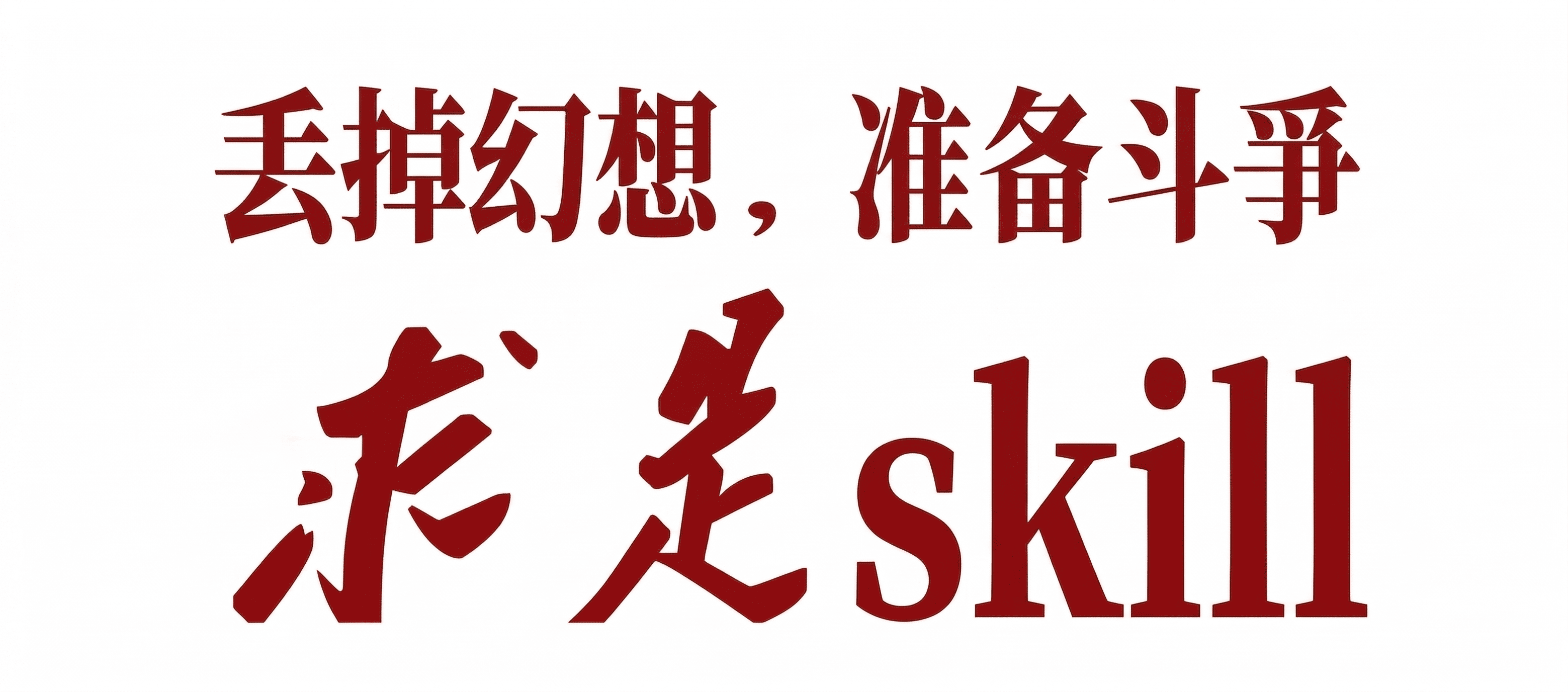
Qiushi Skill: 'Seeking Truth' Skills for AI Agents
Build agents that investigate first, focus on the main contradiction, validate in practice, and keep pushing until the work is actually done.
qiushi-skill is a collection of reusable methodology skills, commands, and session-start hooks. It turns a set of problem-solving methods into installable assets for Claude Code, Cursor, Codex, OpenCode, OpenClaw, Hermes Agent, and other prompt-driven hosts.
Why This Exists
Many agents can generate text, but they still fail at disciplined work:
- they answer before collecting facts
- they scatter effort across too many tasks
- they stop at the first blocker
- they skip verification and call that "done"
qiushi-skill is meant to correct that with one core principle and nine concrete methods:
seeking truth from factsas the governing principle- contradiction analysis
- practice -> cognition -> practice iteration
- investigation first
- mass line feedback synthesis
- criticism and self-criticism
- protracted strategy
- concentrate forces
- spark a prairie fire
- overall planning
Support author's other repo!: AcademicForge: One Forge, All Skills. An interactive, cross-platform tool to generate simple, one-click installation commands for multiple AI Agent Skills.
Install
Preferred: npx qiushi-skill
npx qiushi-skill
Interactive by default: it detects installed hosts and copies into the right directories. Non-interactive:
npx qiushi-skill install --target claude-code --scope user
npx qiushi-skill install --target all --scope user
npx qiushi-skill uninstall --target claude-code
The CLI is zero-dependency, writes a .qiushi-skill-install.json manifest per target so uninstall only removes what it installed, and ships validate for self-checks.
Claude Code Official Marketplace
This repository now ships .claude-plugin/marketplace.json, so Claude Code can discover it directly from GitHub:
/plugin marketplace add HughYau/qiushi-skill
/plugin install qiushi-skill@qiushi-skill
Source Install
git clone https://github.com/HughYau/qiushi-skill
cd qiushi-skill
claude --plugin-dir .
Other Hosts
The same CLI targets Cursor, Codex, OpenCode, OpenClaw, Hermes Agent, and nanobot (--target cursor|codex|opencode|openclaw|hermes|nanobot|all). Any host that reads Markdown skills can also just copy the skills/ directory. Target paths and native entrypoints are listed in docs/platforms.md.
Validate
Preferred:
npx qiushi-skill validate
If you are working from a source checkout, legacy fallback scripts are also available:
bash tests/validate.sh
# or on Windows
powershell -NoLogo -NoProfile -ExecutionPolicy Bypass -File tests/validate.ps1
Validation checks:
- JSON validity, including
.claude-plugin/marketplace.json - version consistency between
package.jsonand marketplace metadata - presence of CLI files, hooks, commands, and the marketplace bundle
- frontmatter completeness for skills, commands, and agents
- local Markdown link integrity
How to Use It
The session-start entry skill is skills/arming-thought/SKILL.md, a ~50-line always-on kernel. Its job is intentionally narrow:
- enforce
seeking truth from factsthrough four hard rules: claims follow evidence, separate fact / inference / unknown, verified means done, diagnose before giving up - route to a downstream skill only when it clearly helps; direct-execution tasks trigger nothing
- defer to the host's own plan / review / todo flows when they exist
Every method skill keeps only five sections: use / don't use (trigger boundary), procedure (concrete actions), output template (an observable artifact), discipline (hard constraints), and handoff (which skill usually comes next). Original quotations and lookup guides live in sibling files and are loaded on demand.
Two host-discoverable sub-agents live in agents/: investigator (read-only, returns a fact / inference / unknown ledger) and self-critic (fresh-context reviewer that reads artifacts, not narratives).
Manual command entrypoints live in commands/*.md for hosts that support Markdown slash commands.
Project Layout
qiushi-skill/
├── .claude-plugin/
│   ├── marketplace.json
│   └── plugin.json
├── .cursor-plugin/plugin.json
├── bin/                 # npx qiushi-skill CLI
├── skills/              # entry kernel + nine method skills + workflows
├── commands/            # manual slash-command entrypoints
├── hooks/               # SessionStart injection (POSIX + PowerShell)
├── agents/              # investigator, self-critic
├── docs/                # site page + platforms.md
├── CHANGELOG.md
├── README.md
└── README.en.md
License
MIT
Explore related projects
n8n-io/n8n
Fair-code workflow automation platform with native AI capabilities. Combine visual building with custom code, self-host or cloud, 400+ integrations.
210,235 starslanggenius/dify
Build Agentic workflows, RAG pipelines, with rich AI model and tool support on one collaborative workspace. Deploy on cloud, VPC, or self-hosted, so teams move from prototype to production without rebuilding the stack.
160,951 starsmicrosoft/PowerToys
Microsoft PowerToys is a collection of utilities that supercharge productivity and customization on Windows
140,888 starsstablyai/orca
Orca is the place for working with a fleet of agents (e.g. Grok Bot, Claude Code). Run any coding agent with your own subscription. Available on desktop, mobile and remote runtime.
122,628 stars