DmitryUlyanov/texture_nets
DmitryUlyanov/texture_nets has 1,225 GitHub stars and 213 forks. GitHot measured 0 stars in 24 hours. Last checked 2026-11-09 07:38 UTC. Last push 2018-01-07.
Code for "Texture Networks: Feed-forward Synthesis of Textures and Stylized Images" paper.
Measured star growth
- in 24h
- 0
- in 7 days
- Update delayed
- in 15 days
- Update delayed
- in 1 month
- Update delayed
Net star changes over overlapping periods, not daily totals. Missing measurements are left blank. Stars measure attention, not software quality.
README.md
OriginalTexture Networks + Instance normalization: Feed-forward Synthesis of Textures and Stylized Images
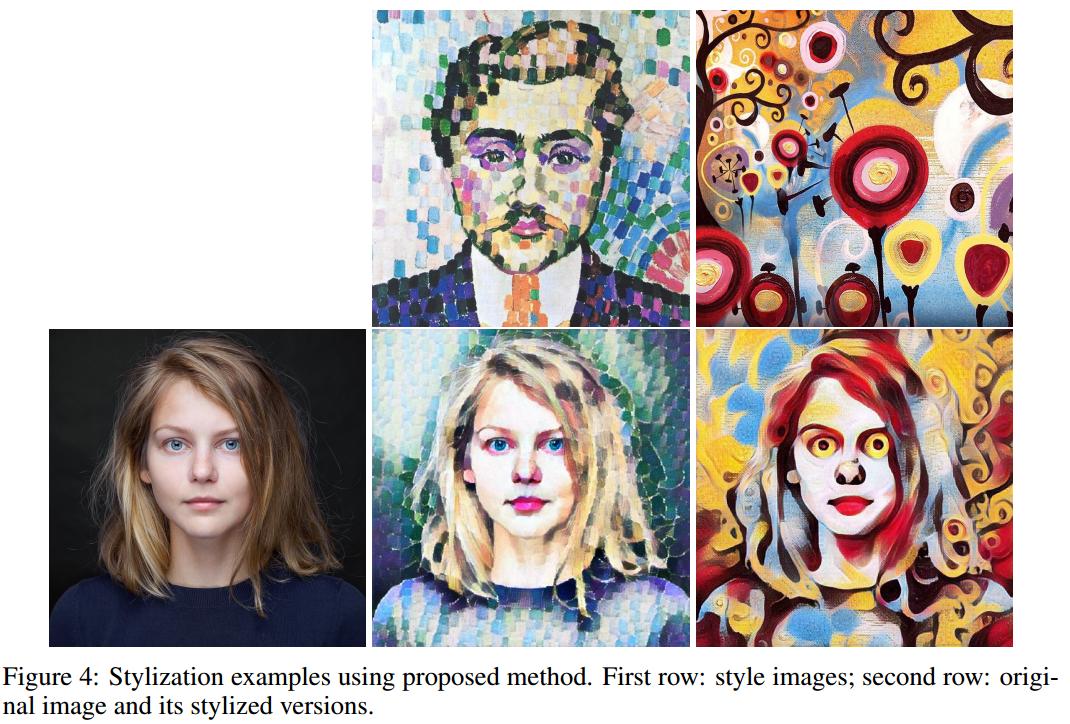
In the paper Texture Networks: Feed-forward Synthesis of Textures and Stylized Images we describe a faster way to generate textures and stylize images. It requires learning a feedforward generator with a loss function proposed by Gatys et al.. When the model is trained, a texture sample or stylized image of any size can be generated instantly.
Improved Texture Networks: Maximizing Quality and Diversity in Feed-forward Stylization and Texture Synthesis presents a better architectural design for the generator network. By switching batch_norm to Instance Norm we facilitate the learning process resulting in much better quality.
This also implements the stylization part from Perceptual Losses for Real-Time Style Transfer and Super-Resolution.
You can find an oline demo here (thanks to RiseML).
Prerequisites
Download VGG-19.
cd data/pretrained && bash download_models.sh && cd ../..
Stylization
Training
Preparing image dataset
You can use an image dataset of any kind. For my experiments I tried Imagenet and MS COCO datasets. The structure of the folders should be the following:
dataset/train
dataset/train/dummy
dataset/val/
dataset/val/dummy
The dummy folders should contain images. The dataloader is based on one used infb.resnet.torch.
Here is a quick example for MSCOCO:
wget http://msvocds.blob.core.windows.net/coco2014/train2014.zip
wget http://msvocds.blob.core.windows.net/coco2014/val2014.zip
unzip train2014.zip
unzip val2014.zip
mkdir -p dataset/train
mkdir -p dataset/val
ln -s `pwd`/val2014 dataset/val/dummy
ln -s `pwd`/train2014 dataset/train/dummy
Training a network
Basic usage:
th train.lua -data <path to any image dataset> -style_image path/to/img.jpg
These parameters work for me:
th train.lua -data <path to any image dataset> -style_image path/to/img.jpg -style_size 600 -image_size 512 -model johnson -batch_size 4 -learning_rate 1e-2 -style_weight 10 -style_layers relu1_2,relu2_2,relu3_2,relu4_2 -content_layers relu4_2
Check out issues tab, you will find some useful advices there.
To achieve the results from the paper you need to play with -image_size, -style_size, -style_layers, -content_layers, -style_weight, -tv_weight.
Do not hesitate to set -batch_size to one, but remember the larger -batch_size the larger -learning_rate you can use.
Testing
th test.lua -input_image path/to/image.jpg -model_t7 data/checkpoints/model.t7
Play with -image_size here. Raise -cpu flag to use CPU for processing.
You can find a pretrained model here. It is not the model from the paper.
Generating textures
soon
Hardware
- The code was tested with 12GB NVIDIA Titan X GPU and Ubuntu 14.04.
- You may decrease
batch_size,image_sizeif the model do not fit your GPU memory. - The pretrained models do not need much memory to sample.
Credits
The code is based on Justin Johnson's great code for artistic style.
Explore related projects
codecrafters-io/build-your-own-x
Master programming by recreating your favorite technologies from scratch.
561,392 starspublic-apis/public-apis
A collective list of free APIs
497,671 starsmorluto/rea
Reverse engineer anything with agents, from app behavior down to native binaries.
447,429 starsopenclaw/openclaw
The AI that really does things. Any OS. Any Platform. The lobster way. 🦞
394,259 stars