
ple1n/nsproxy
ple1n/nsproxy has 87 GitHub stars and 4 forks. GitHot measured 0 stars in 24 hours. Last checked 2026-11-19 17:56 UTC. Last push 2026-11-10.
측정된 스타 증가
- in 24h
- 0
- in 7 days
- 기록 수집 중
- in 15 days
- 기록 수집 중
- in 1 month
- 기록 수집 중
서로 겹치는 기간의 순증가량이며 일별 합계가 아닙니다. 측정값이 없으면 비워 둡니다. 스타는 관심도를 나타내며 품질을 보장하지 않습니다.
소개
Network-native containerization system for the desktop
보안README.md
OriginalNetwork-native containerization system
nsproxy, network-namespace with SOCKS5 proxy
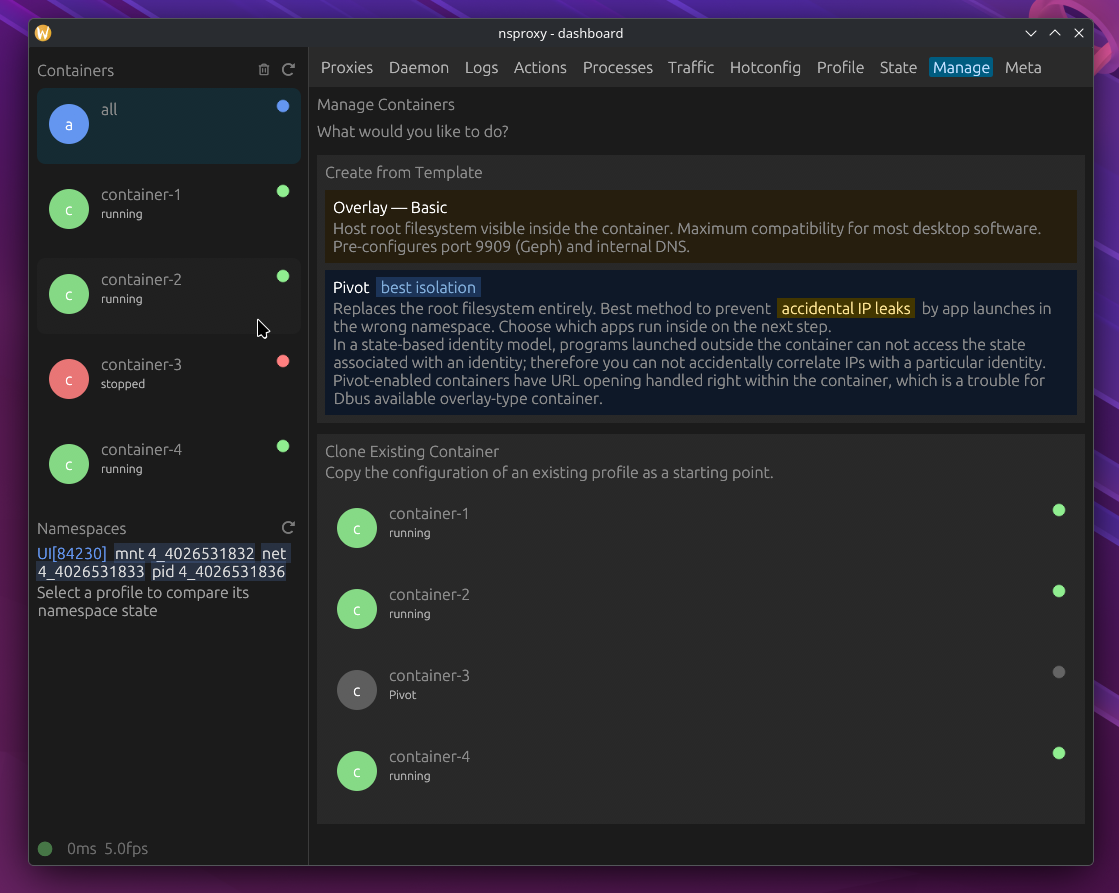
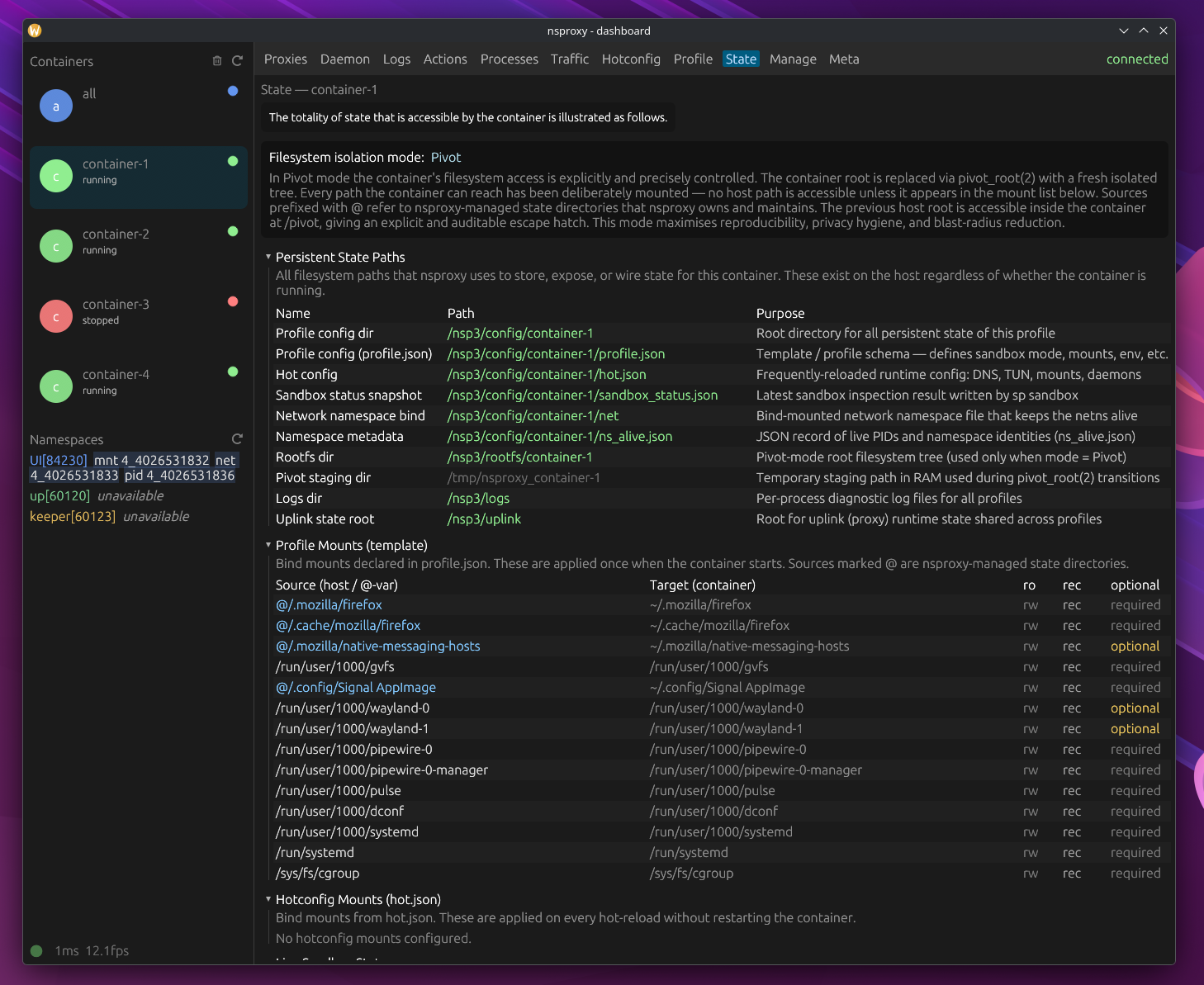
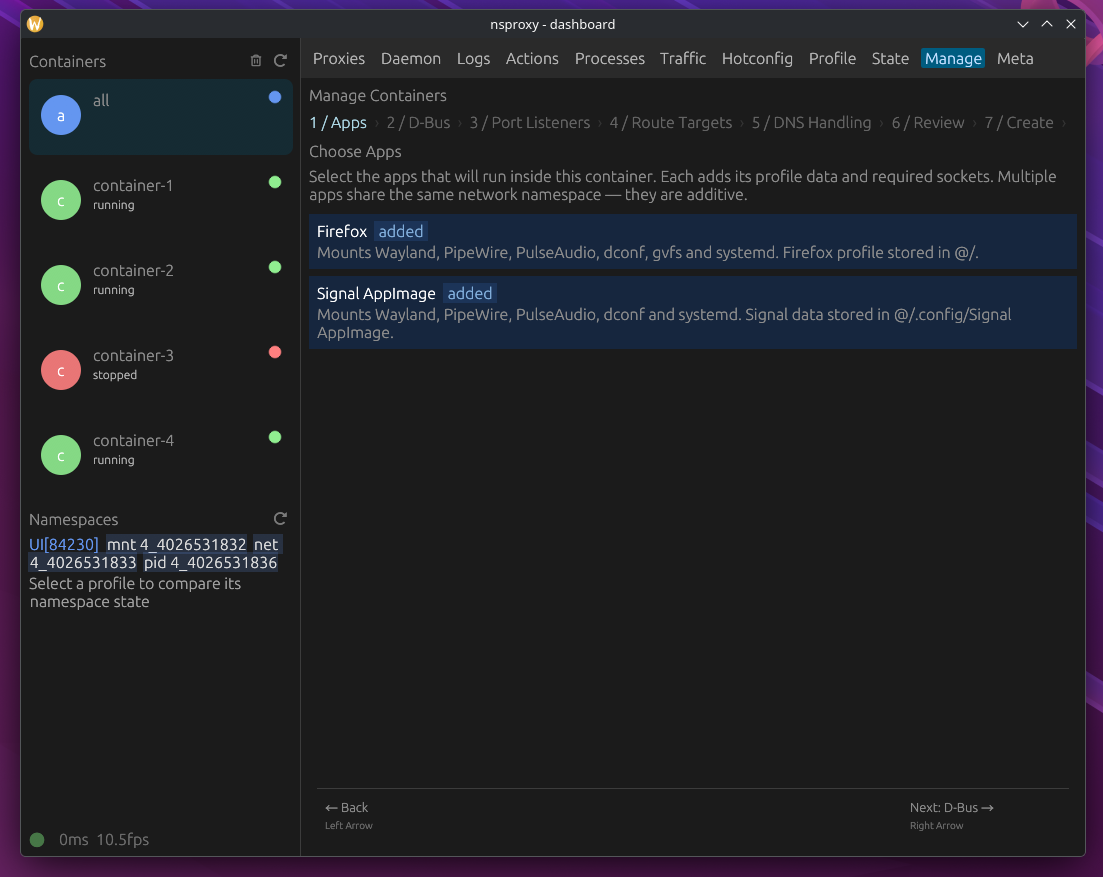
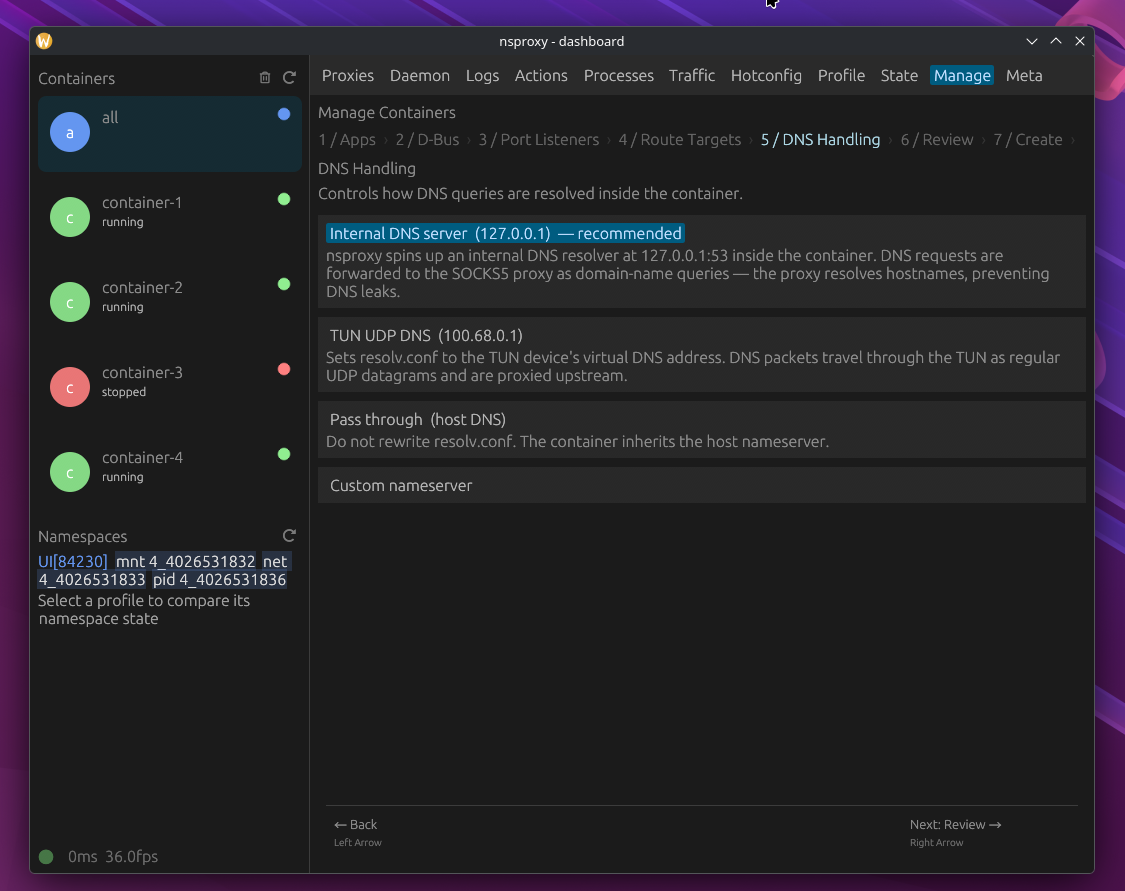
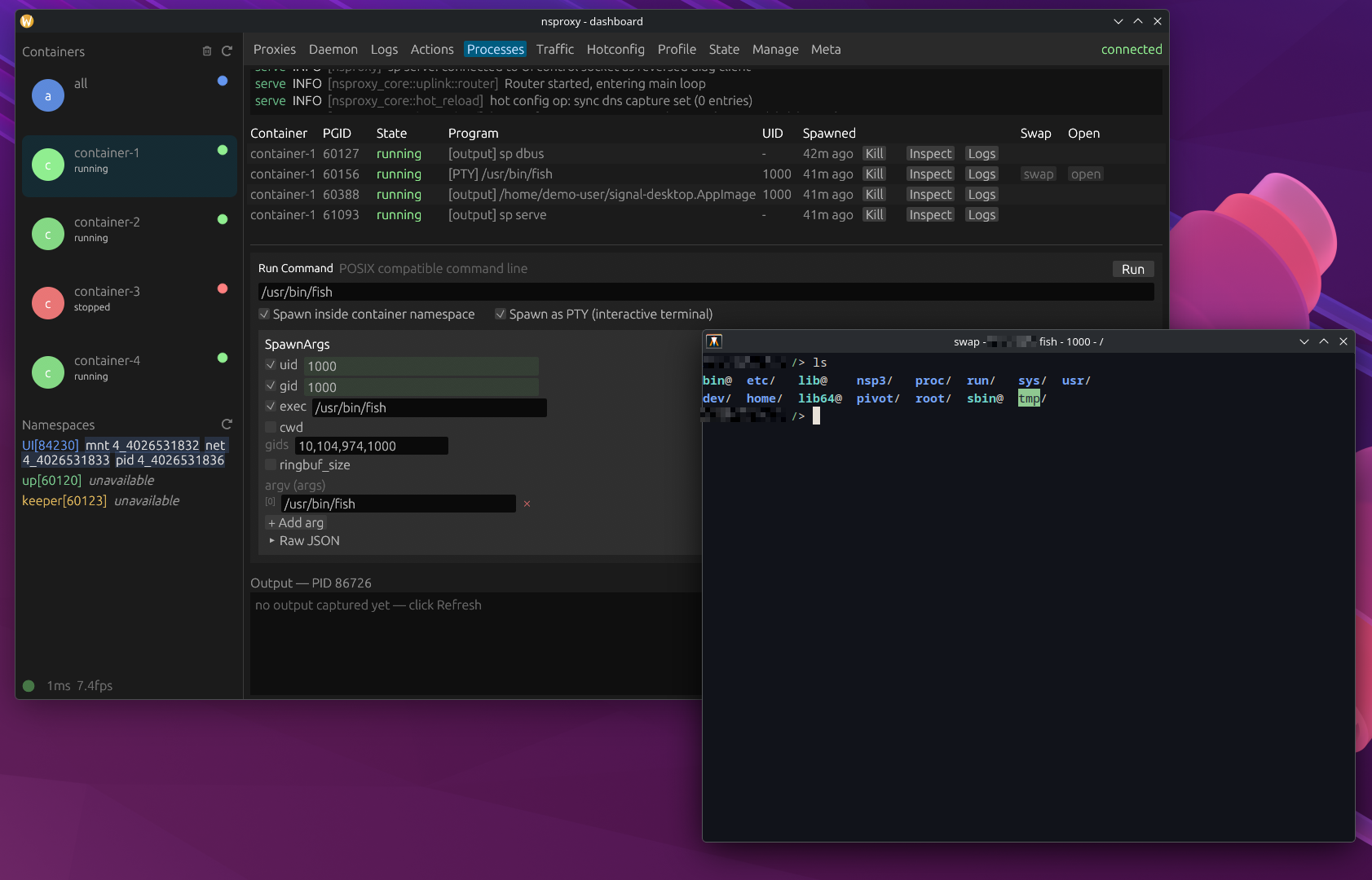
- You can run dockerd within a container, with everything proxied by a SOCK5 proxy
- The sandbox may defend against casual attackers, or otherwise unnecessary state-cross-contamination of softwares
- The codebase is a singleton in full Rust. You are expected to modify the code.
- Native alacritty integration at full speed
- It's shipped with a GUI written with EGUI, meant to daily-drive desktop with paranoia-level of network control
- You can control the degree of isolation. In the least isolated case, only network namespace is unshared, such that no softwares break.
- status, branch
mainis always production-ready
Building
Build both application binaries (including the serve console by default):
./build-ui.sh
nsproxy and the network daemon are separate processes. Build nsproxy normally:
./build-ui.sh
Initialize and run the standalone daemon when you want it available:
nix run .#lokinet-socks6d -- init --bootstrap-file ./bootstrap.signed
nix run .#lokinet-socks6d
init creates writable config/data paths and optionally imports Lokinet's
signed bootstrap router-contact file. The daemon defaults to XDG user paths;
--socket, --config, and --data-dir override them. The data directory must
be private because it holds key material. nsproxy never starts the daemon;
configure the same SOCKS6 endpoint in a profile's network settings and select
SOCKS6 as the default route or for specific host rules. The general SOCKS6 route
supports domain and IP-addressed destinations. In pivot profiles, start the
daemon before sandboxing so its Unix socket directory can be bound into the
profile. TCP endpoints are unencrypted and should be limited to trusted networks.
Exercise proxy endpoints with the separate protocol-adaptable test lab:
nix run .#socks6-lab -- proxy
nix run .#socks6-lab -- responder
nix run .#socks6-lab -- client --proxy tcp://127.0.0.1:1086 --responder 127.0.0.1:19090
nix run .#socks6-lab -- probe --proxy unix:///path/to/proxy.socks6
nix run .#socks6-lab -- bench --proxy unix:///path/to/proxy.socks6 --responder 127.0.0.1:19090
nix run .#socks6-lab -- suite --proxy unix:///path/to/proxy.socks6 --tcp-responder 127.0.0.1:19090 --udp-responder 127.0.0.1:19090
nix run .#socks6-lab -- lokinet tcp --proxy unix:///run/lokinet-socks6/lokinet.socks6 --target peer.loki:443
nix run .#socks6-lab -- lokinet http --proxy unix:///run/lokinet-socks6/lokinet.socks6 --url https://service.loki/
See SOCKS6 Lab for echo listeners, stream benchmarks, parallelism sweeps, and feature-suite options.