
SedulousWorks/SedulousEngine
SedulousWorks/SedulousEngine has 154 GitHub stars and 10 forks. Star changes are not measured yet. Last checked 2026-11-11 04:06 UTC. Last push 2026-11-11.
Open source game engine written in Beeflang
What you can do
- Written in Beef: the runtime, the editor and the tools are one Beef workspace, over Beef bindings for the native libraries they use.
- Rendering hardware interface (RHI) with Vulkan 1.3, Direct3D 12 and WebGPU (desktop through wgpu-native, and the browser) backends.
- Renderer: a render graph driving forward PBR with a depth prepass and clustered lights; cascaded sun shadows and shadowed point and spot lights; image-based lighting and reflection probes; decals, sprites, particles, skinned and instanced meshes; render textures for in-game cameras.
- Post-processing: ambient occlusion, SSR, screen-space GI, bloom, TAA, MSAA, FXAA, auto exposure and colour grading. A game sets them in shared environment and post profiles.
측정된 스타 증가
- in 24h
- 업데이트 지연
- in 7 days
- 업데이트 지연
- in 15 days
- 업데이트 지연
- in 1 month
- 업데이트 지연
서로 겹치는 기간의 순증가량이며 일별 합계가 아닙니다. 측정값이 없으면 비워 둡니다. 스타는 관심도를 나타내며 품질을 보장하지 않습니다.
README.md
Original


A game engine and editor written in Beef. It provides a complete game development ecosystem, combining an integrated editor, asset pipeline, runtime and toolchain with advanced rendering, gameplay scripting and a CSS styled UI framework. Games made in the editor export to a desktop player, to the browser (WebGPU through emscripten) and to the Steam Deck. Its agentic workflow, through an MCP host, enables AI agents to build entire games, from initial project setup to fully playable experiences.
This is the second iteration of the engine. The previous one continues on the v0 branch;
Documentation/Changes.md shows what changed between the two.
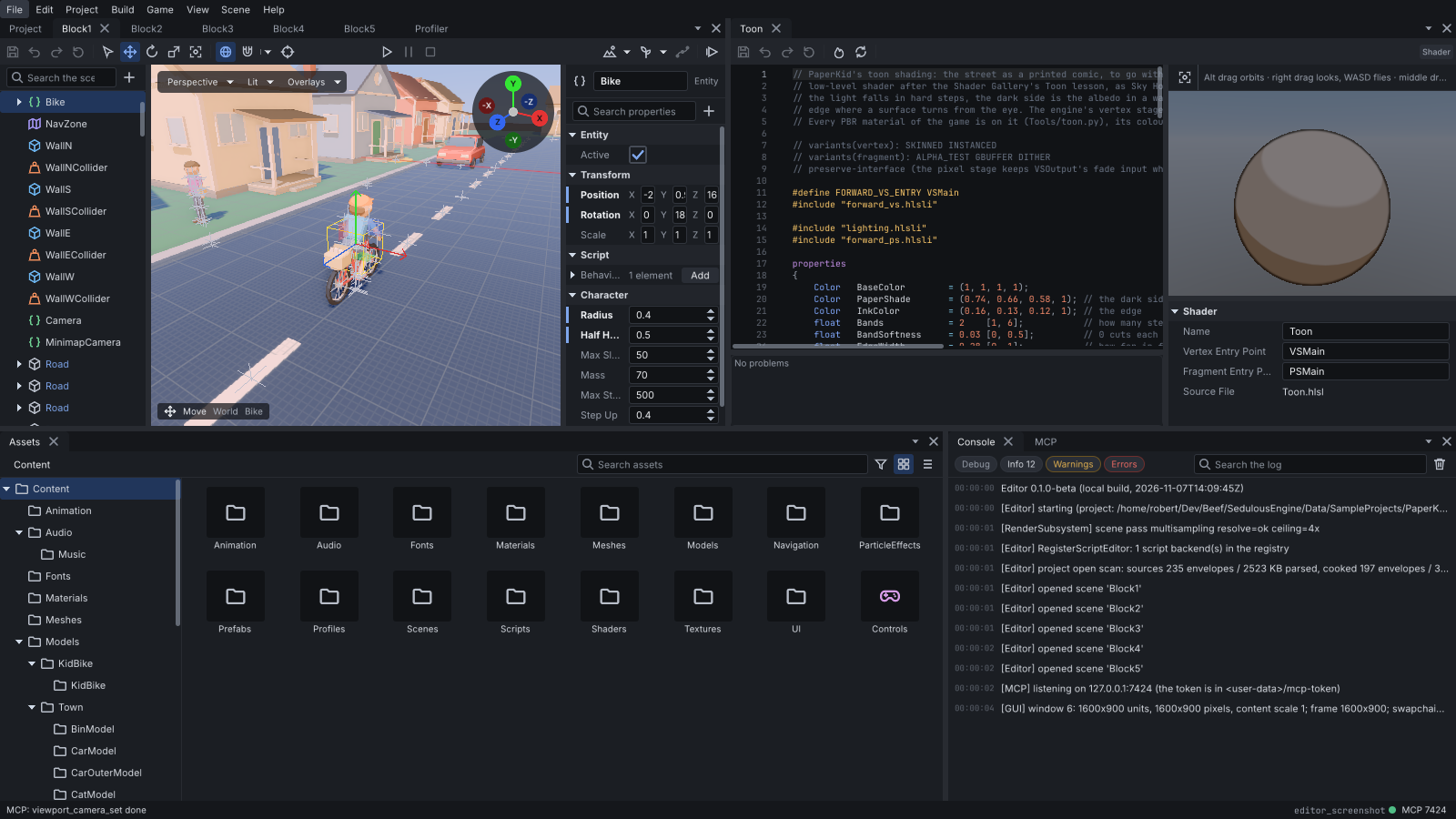
Features
- Written in Beef: the runtime, the editor and the tools are one Beef workspace, over Beef bindings for the native libraries they use.
- Rendering hardware interface (RHI) with Vulkan 1.3, Direct3D 12 and WebGPU (desktop through wgpu-native, and the browser) backends.
- Renderer: a render graph driving forward PBR with a depth prepass and clustered lights; cascaded sun shadows and shadowed point and spot lights; image-based lighting and reflection probes; decals, sprites, particles, skinned and instanced meshes; render textures for in-game cameras.
- Post-processing: ambient occlusion, SSR, screen-space GI, bloom, TAA, MSAA, FXAA, auto exposure and colour grading. A game sets them in shared environment and post profiles.
- Shaders: HLSL compiled through DXC, cross-compiled to WGSL for the web, cooked into packs, and custom shaders per project.
- Scene system: entities with hierarchical transforms, component managers per domain, prefabs with overrides, and scene serialization.
- Gameplay systems: physics (Jolt), navigation (Recast/Detour), audio (miniaudio, four fixed buses plus custom ones with effect chains), input maps, save data, splines, terrain and vegetation.
- Animation: skeletal clips, animation graphs, IK, root motion and property animation.
- Networking with state replication.
- Scripting in AngelScript over a generated binding of the engine's
[Scriptable]surface: behaviours per entity, a level script per scene and a game script per run, with coroutines, events and an in-editor debugger. - UI: a retained-mode GUI with flex, grid and stack layouts,
.xmlmarkup, CSS sheets (cascade, variables, transitions, animations, media queries), shaped bidirectional text, keyboard and gamepad navigation, data binding, world-space UI, a game kit for screens and prompts, and an editor toolkit (docking, property grids, a code editor). Scripts can create and control any widget. - Vector graphics and fonts: a vector graphics layer with SVG, and distance field and coverage fonts.
- Editor (
Sedulous.Tools.Editor): project manager, scene hierarchy, viewport with gizmos and per-domain tools (terrain sculpting and painting, vegetation, splines), inspectors from reflection, an asset browser, undo and redo, play in editor (several instances side by side), a profiler, and a page per asset type. - Asset pipeline: importers for glTF, FBX, OBJ, images, audio and fonts; cooks per asset type; BC7 and ASTC texture compression.
- Export to the desktop player, the web (WebAssembly with WebGPU) and the Steam Deck, from per-target presets and player templates. Headless tools can run all of it from the command line.
- Agent tooling: an MCP host (
Sedulous.Tools.Mcp) exposes the engine's reflection, the script API and project operations (import, cook, scene validation, export, health checks). The editor serves the same tools over HTTP for its open project, plus its pages and play in editor, where an agent plays the game with scripted input and reads back probes and screenshots. AGENTS.md describes how an agent works on the engine itself. - Samples: five sample games, a custom shaders gallery and a native plugin sample (below), and low-level Beef samples per engine area (Code/Samples/README.md).
Download
Releases and the sample games are on the releases page. The editor's project manager downloads the samples from the release of its own version.
Building
See Documentation/BUILDING.md for the requirements, the build commands and how to run the editor.
Sample projects
Game projects under Data/SampleProjects/, opened from the editor's project manager. Each was
built through the engine's MCP tools by an AI agent, its authoring scripts kept in its Tools/.
SedulousDemos plays the games and the Shader
Gallery in a browser, Masquerade not yet.
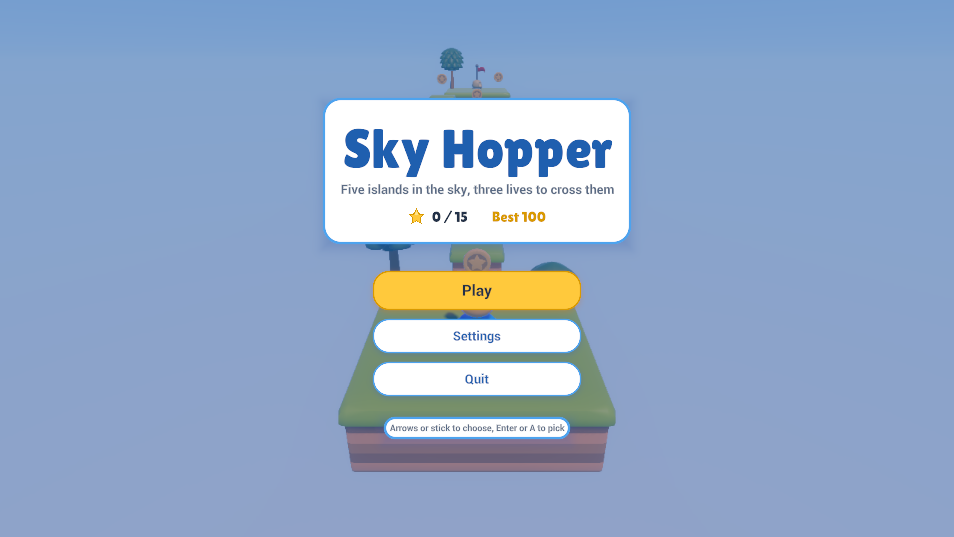
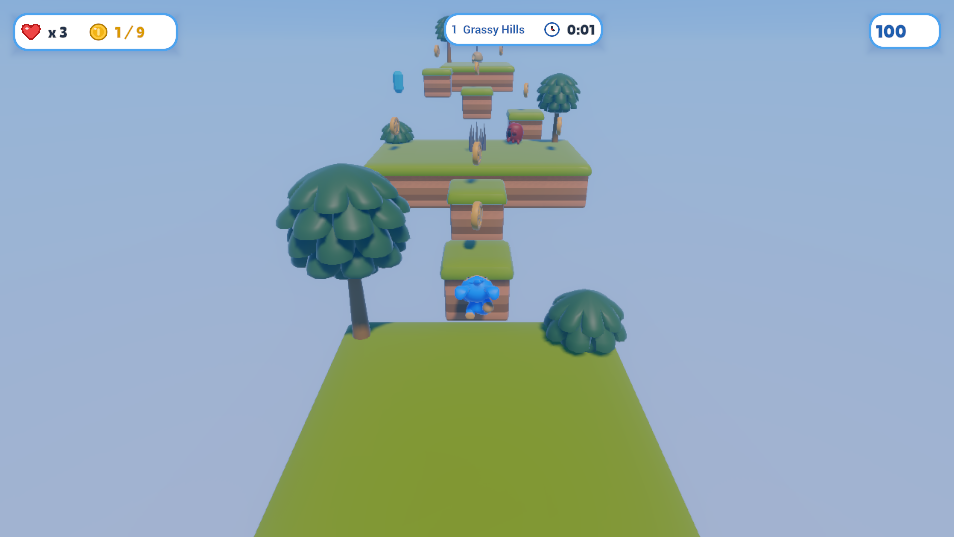
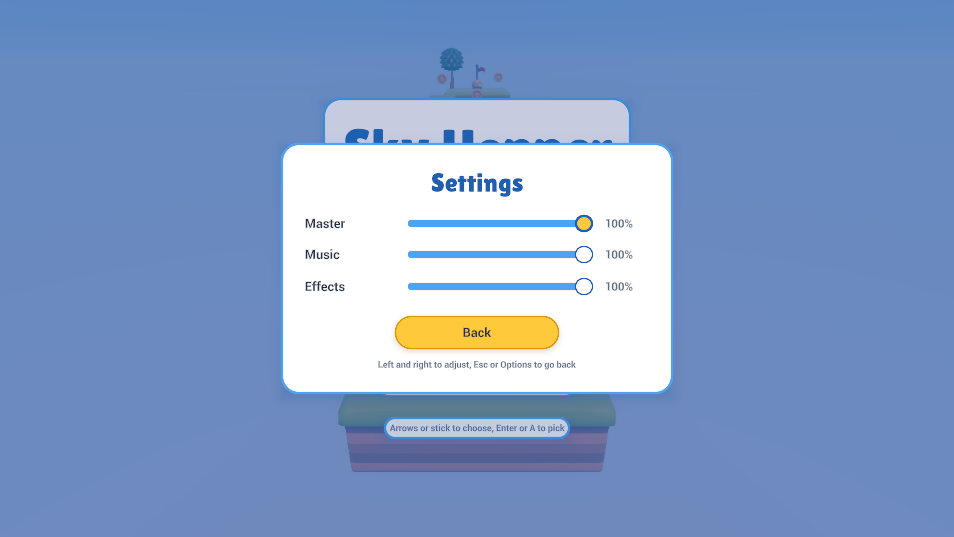
Sky Hopper (SkyHopper) is a small 3D platformer, also shipped to a Steam Deck: five
floating islands, coins, enemies and hazards, menus with volume settings, music and effects,
and gamepad support throughout.
| Title | Level 1 | Settings |
|---|---|---|
 |
 |
 |
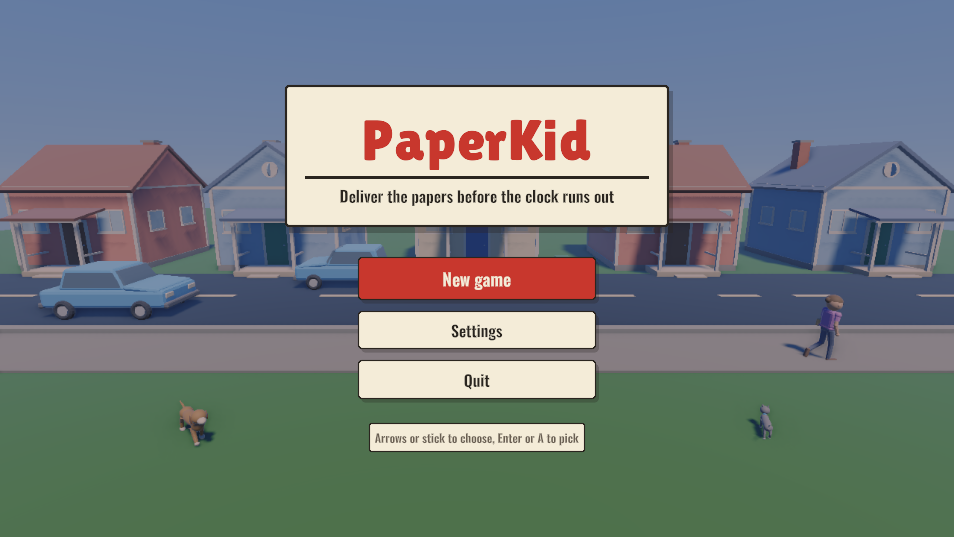
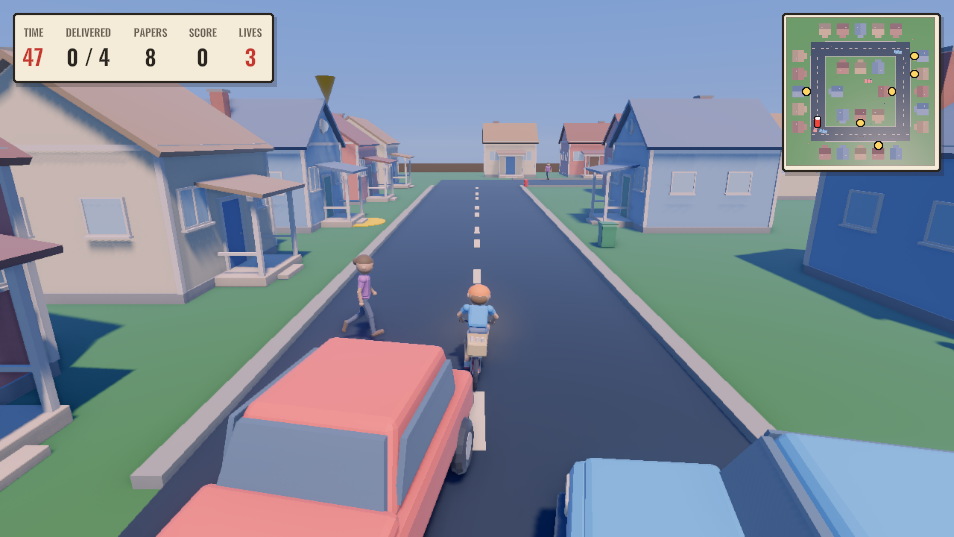
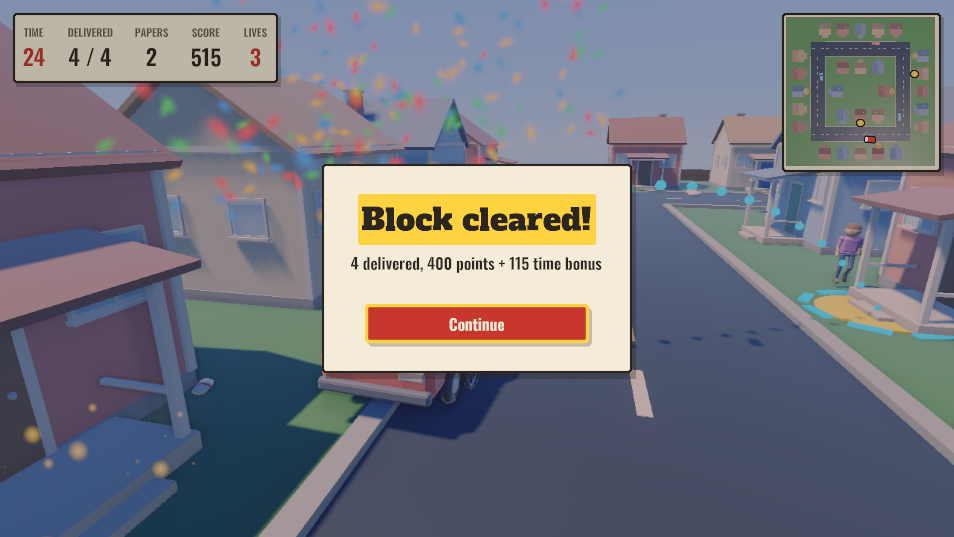
PaperKid is an arcade paper-route game: five town blocks on a difficulty ramp, papers thrown with a soft auto-aim, traffic and pedestrians on the navmesh, lives, a live minimap drawn by a top-down camera into a render texture, particle effects, a newsprint UI theme, and music that speeds up when the clock runs low. The kid and his bike, the houses, cars, people and animals are modelled, rigged and animated by Blender scripts.
| Title | Riding a block | Block cleared |
|---|---|---|
 |
 |
 |
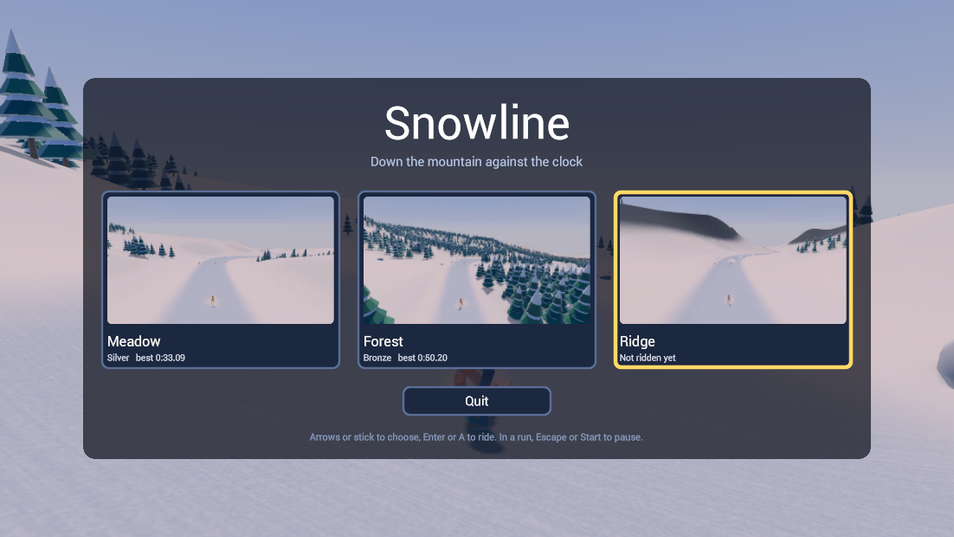
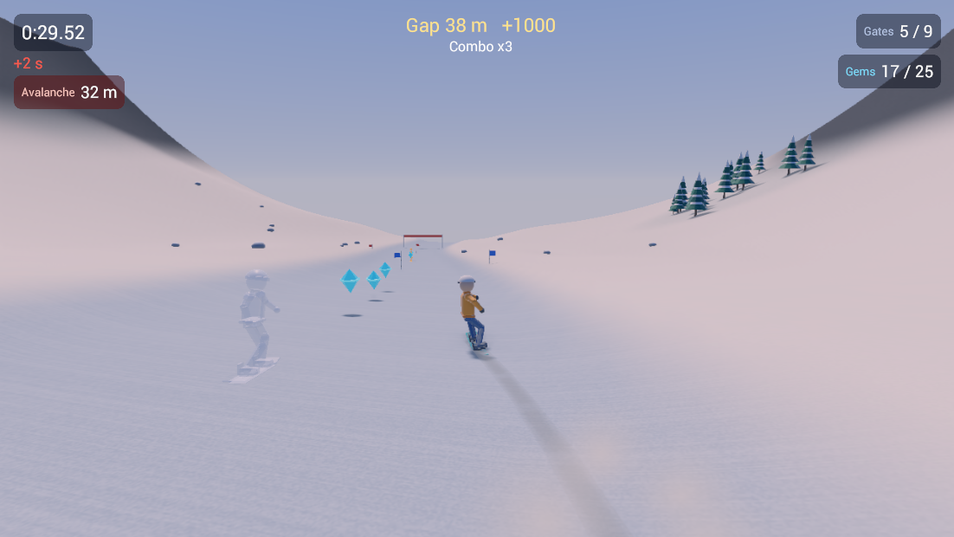
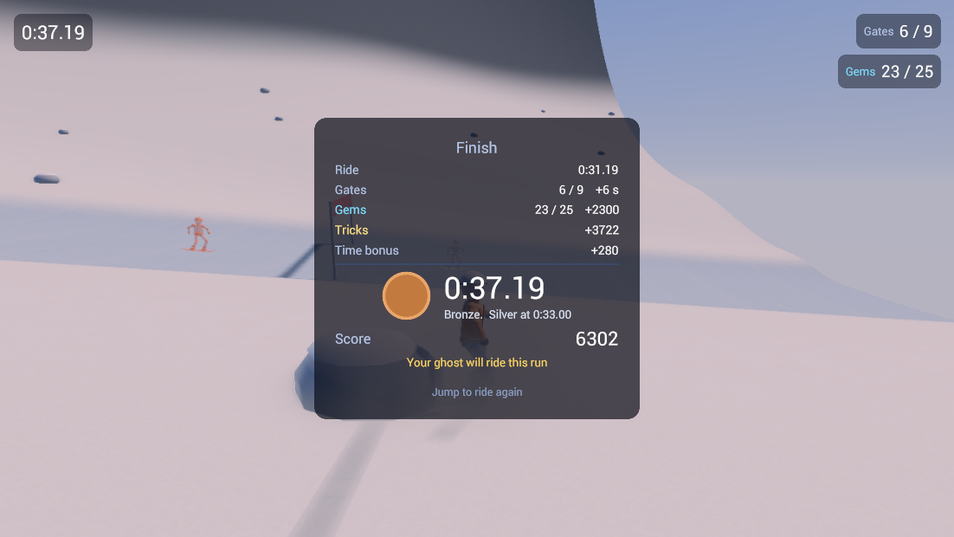
Snowline is a snowboard time trial with tricks: three courses on generated terrain with vegetation, slalom gates, gems and kickers, spins and grabs scored into combos, medal ghosts and your own best run alongside, and an avalanche on the last course. The rider is driven through an animation graph by parameters, and the board leaves decal tracks in the snow. Its rider, trees and props are modelled by Blender scripts.
| Courses | Ridge, past the gap | A run's results |
|---|---|---|
 |
 |
 |
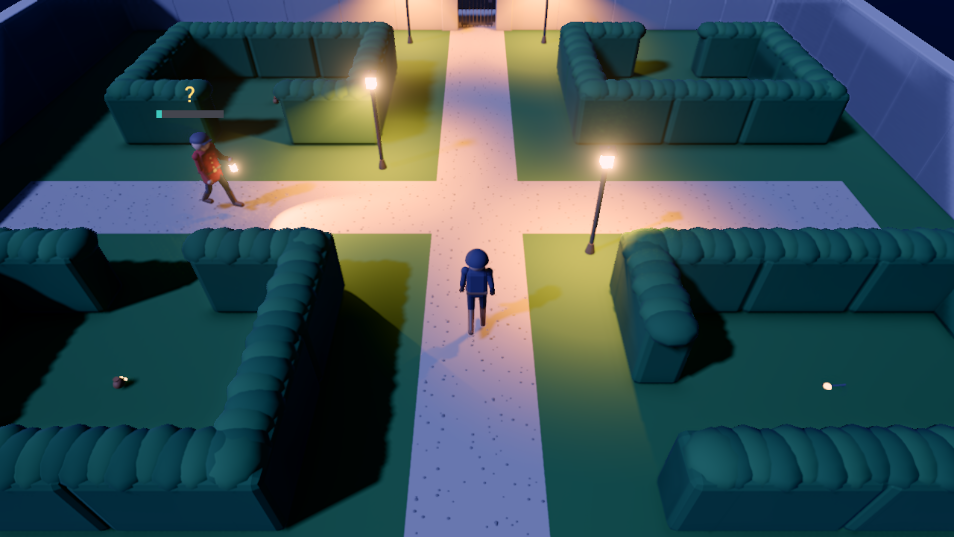
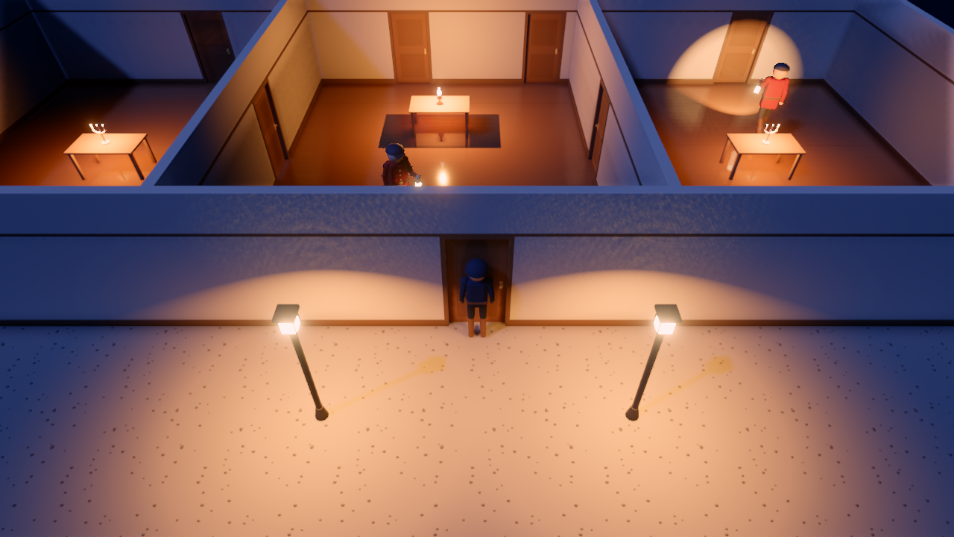
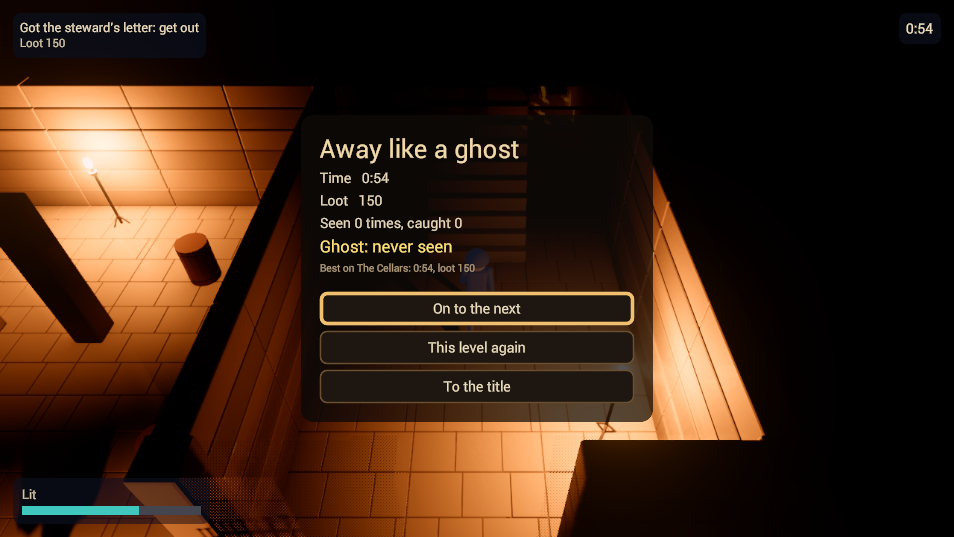
Lamplight is a night-time manor heist in pure stealth: lamplight and lantern shadows, a light meter that reads the renderer's own lights (a guard's eye reads the same), guards on navigation rounds who see by their lantern's cone, hear footsteps on each surface and come to a thrown pebble, doors and gates to pick, walls that dither away between the camera and the thief, rain, reverb per room, and auto exposure from moonlit grounds into torch-lit cellars. Five levels, from the gardens to the vault on the upper floor.
| The Gardens | The Ground Floor | Away like a ghost |
|---|---|---|
 |
 |
 |
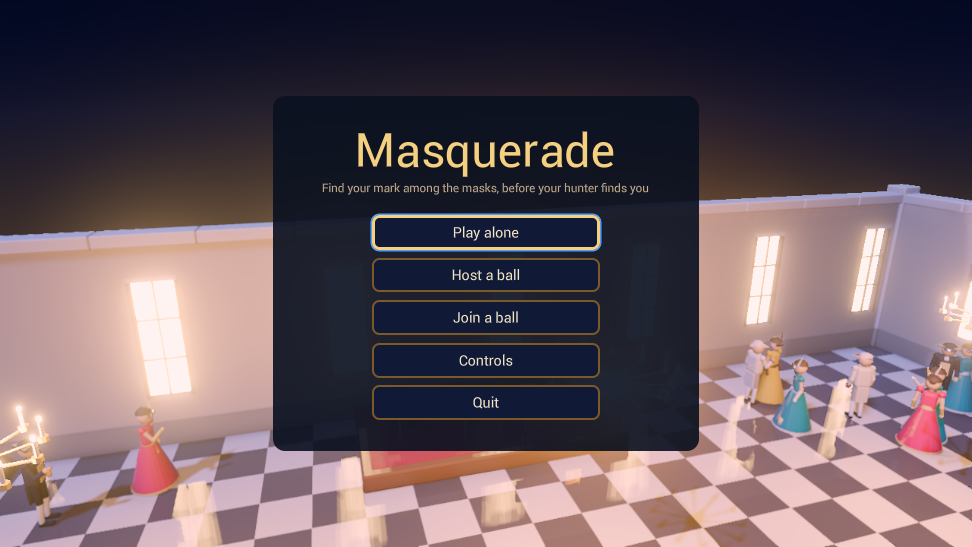
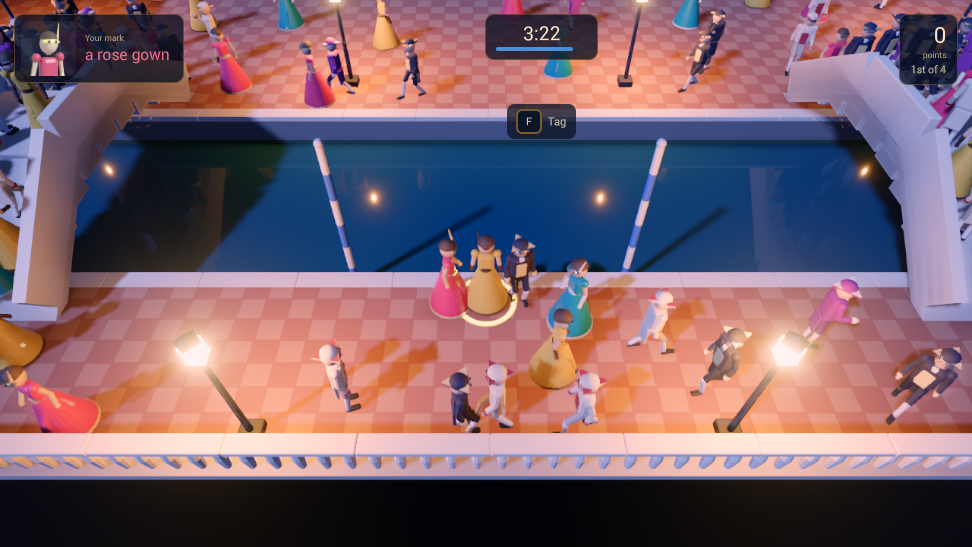
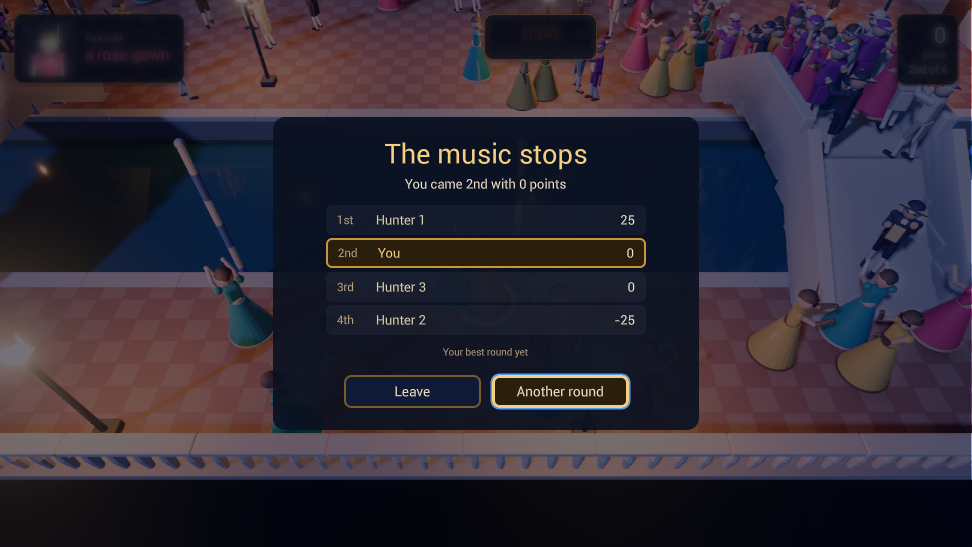
Masquerade is social stealth at a masked ball, alone against bots or with up to four players over the network, chosen to show the network stack and crowds: an authoritative host that plays and players joining it (natively, or from a browser through its gateway), replicated script state, and some 150 guests on navigation drawn as instances of six costumes. Each hunter is given a mark, a guest in one of those costumes, and is someone else's mark; guests stroll, gather and dance to the orchestra's cues, and a hunter who sprints or stands still through a dance stands out. Three maps: the Palace, the Canal with its gondolas, and the Gardens. Masks and silk on custom shaders, music the crowd follows, and the models, the music and the sounds all made by its scripts. More in its README; it is not on SedulousDemos or the Deck yet.
| The title | On the Canal | The music stops |
|---|---|---|
 |
 |
 |
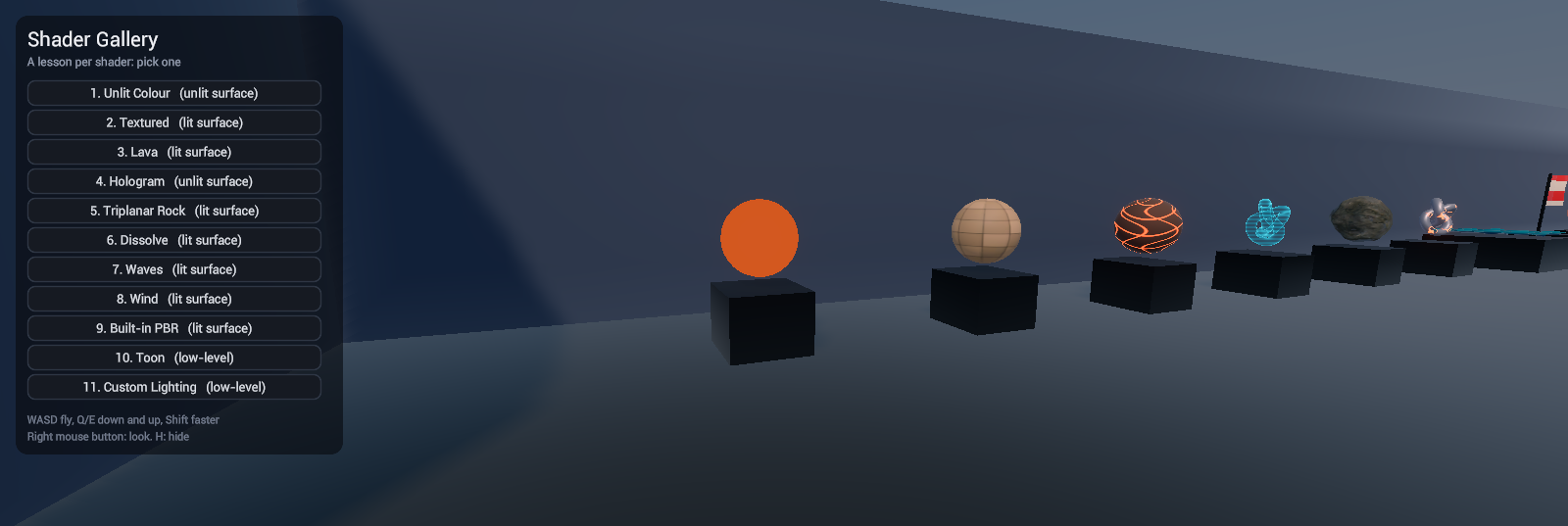
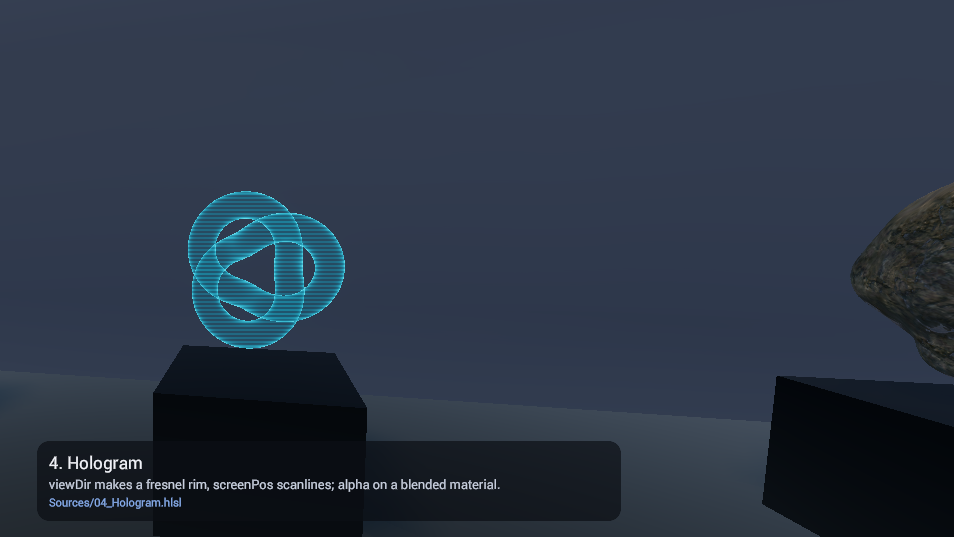
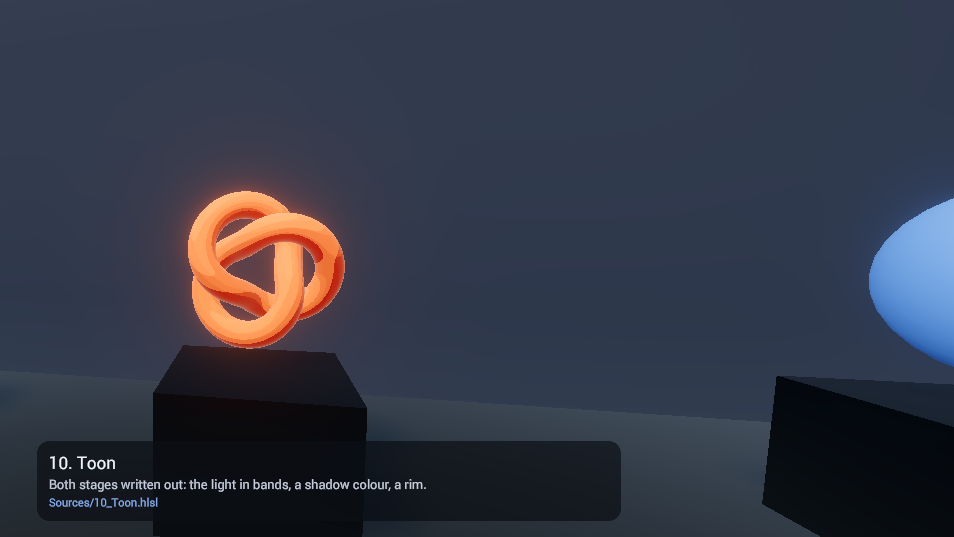
The Shader Gallery is the custom shaders sample: a hall of eleven lesson shaders to fly
through, each on its own plinth and each .hlsl a short commented lesson that builds on the one
before, surface shaders first (an unlit colour, textures, lava, a hologram, triplanar rock, a
dissolve, waves and a flag that move their vertices, the built-in PBR) and then two low-level ones
(a toon and lighting of its own). Pick a lesson in the list and the camera glides to it.
| The hall | Hologram | Toon |
|---|---|---|
 |
 |
 |
NativeSample is the reference for a game's own native Beef code: a plugin package with all four parts (runtime, pipeline, tooling and editor), built into the project's own editor and player (Project > Build Project), and a scene of cubes its native Spin component turns.
Repository layout
Code/
  Foundation/     Core, RHI and backends, Shell, Resource, VFS, Scene, Render, GUI, VG,
                  Fonts, Audio, Physics, Navigation, Net, Script, Shaders, ...
  Engine/         The subsystems over Foundation, the default application, the player
  Pipeline/       Importers and cooks per asset type, the export
  Editor/         Editor core and one module per domain
  Tools/          Editor, Cook, Export, ShaderPack and Mcp executables; the Steam Deck build
  Samples/        Engine, web, UI and RHI samples (see Code/Samples/README.md)
  Integration/    Cross collection flow tests
Data/             Engine data (shaders, fonts, themes, environments) and the sample projects
Dependencies/     Beef bindings for the native libraries, with prebuilt binaries
Bin/              Naga and Tint, the WGSL tools the shader cook drives
Documentation/    Shipping documentation, served to agents through the MCP host
Each Foundation and Engine module has a sibling .Tests project; Integration/ holds the
flows that cross collections.
Platform support
- Linux and Windows: the development platforms, on Vulkan and D3D12; the editor and the player run on both. WebGPU also runs on the desktop through wgpu-native.
- Web: games export to the browser as WebAssembly with WebGPU.
- Steam Deck: games export through a Deck player template, built in a container by
Code/Tools/SteamDeck/build-steamdeck.sh. - macOS: no backend yet.
Dependencies
Beef bindings, vendored under Dependencies/: Bulkan (Vulkan), Win32-Beef (D3D12 and
DXGI), wgpu-Beef, SDL3, Dxc-Beef, joltc-Beef, recastnavigation-Beef,
miniaudio (with stb_vorbis for Ogg), AngelScript-Beef, cgltf and ufbx, meshoptimizer,
msdfgen, stb_image and stb_truetype, HarfBuzz, SheenBidi, astcenc, bc7enc and bcdec, Mbed TLS,
zlib, cimgui. Each keeps its licence beside it, and those that ship in a binary are gathered into
Dependencies/THIRD-PARTY-NOTICES.txt, beside every player, editor and export.
Community
Join the Discord for discussion and support.
Inspiration
Sedulous draws inspiration from ezEngine, LumixEngine and Traktor.
License
MIT. See LICENSE. The SedulousEngine name and logo are not: they stay the project's own, under the terms in Data/Branding/LICENSE.txt.