
PaddlePaddle/PARL has 3,455 GitHub stars and 808 forks. GitHot measured 0 stars in 24 hours and -2 in 7 days. Last checked 2026-11-14 13:01 UTC. Last push 2026-11-02.
측정된 스타 증가
- in 24h
- 0
- in 7 days
- -2
- in 15 days
- 기록 수집 중
- in 1 month
- 기록 수집 중
서로 겹치는 기간의 순증가량이며 일별 합계가 아닙니다. 측정값이 없으면 비워 둡니다. 스타는 관심도를 나타내며 품질을 보장하지 않습니다.
소개
A high-performance distributed training framework for Reinforcement Learning
학습README.md
Original

English | 简体中文


PARL is a flexible and high-efficient reinforcement learning framework.
- About PARL
- Install:
- Getting Started
- Examples
- Waymax-RL(2025 Update, GPU-RL Autonomous Driving)
- xparl Security
About PARL
Features
Reproducible. We provide algorithms that stably reproduce the result of many influential reinforcement learning algorithms.
Large Scale. Ability to support high-performance parallelization of training with thousands of CPUs and multi-GPUs.
Reusable. Algorithms provided in the repository could be directly adapted to a new task by defining a forward network and training mechanism will be built automatically.
Extensible. Build new algorithms quickly by inheriting the abstract class in the framework.
Abstractions
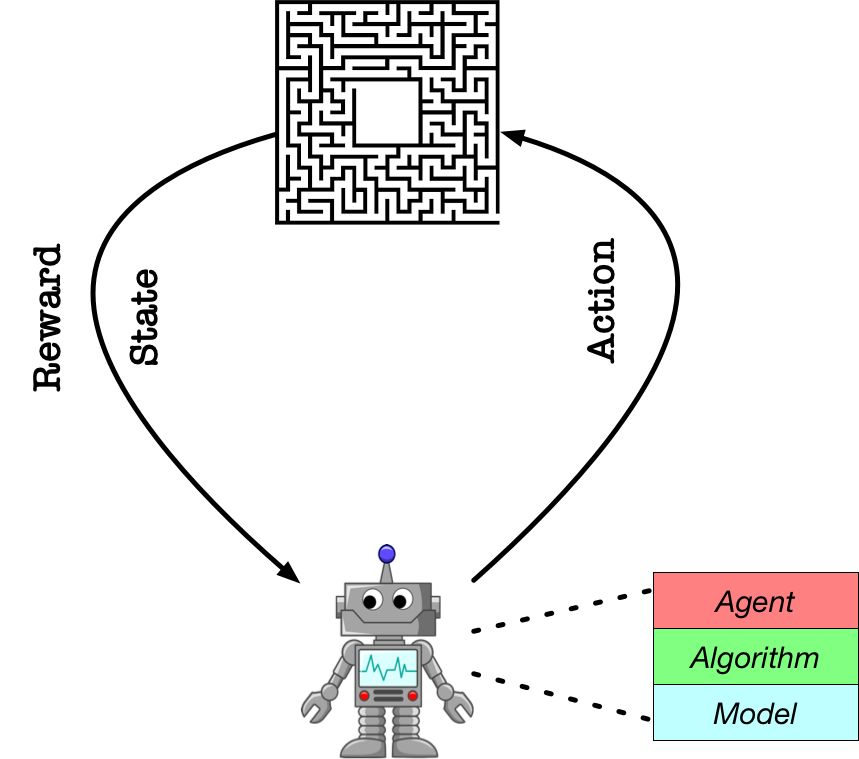 PARL aims to build an agent for training algorithms to perform complex tasks.
The main abstractions introduced by PARL that are used to build an agent recursively are the following:
Model
Model is abstracted to construct the forward network which defines a policy network or critic network given state as input.
Algorithm
Algorithm describes the mechanism to update parameters in Model and often contains at least one model.
Agent
Agent, a data bridge between the environment and the algorithm, is responsible for data I/O with the outside environment and describes data preprocessing before feeding data into the training process.
Note: For more information about base classes, please visit our tutorial and API documentation.
Parallelization
PARL provides a compact API for distributed training, allowing users to transfer the code into a parallelized version by simply adding a decorator. For more information about our APIs for parallel training, please visit our documentation.
Here is a Hello World example to demonstrate how easy it is to leverage outer computation resources.
#============Agent.py=================
@parl.remote_class
class Agent(object):

    def say_hello(self):
        print("Hello World!")

    def sum(self, a, b):
        return a+b

parl.connect('localhost:8037')
agent = Agent()
agent.say_hello()
ans = agent.sum(1,5) # it runs remotely, without consuming any local computation resources
Two steps to use outer computation resources:
- use the
parl.remote_classto decorate a class at first, after which it is transferred to be a new class that can run in other CPUs or machines. - call
parl.connectto initialize parallel communication before creating an object. Calling any function of the objects does not consume local computation resources since they are executed elsewhere.
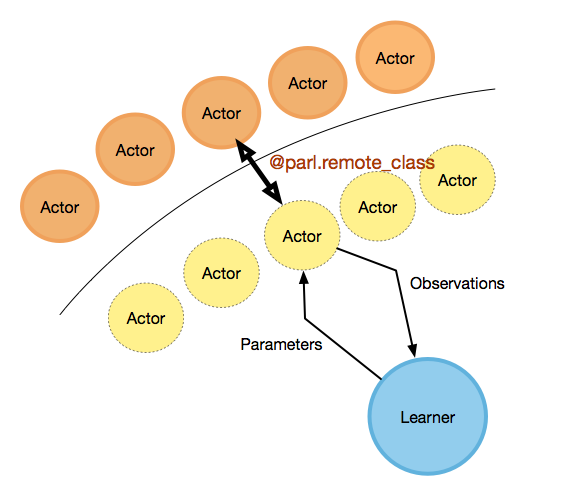 As shown in the above figure, real actors (orange circle) are running at the cpu cluster, while the learner (blue circle) is running at the local gpu with several remote actors (yellow circle with dotted edge).
For users, they can write code in a simple way, just like writing multi-thread code, but with actors consuming remote resources. We have also provided examples of parallized algorithms like IMPALA, A2C. For more details in usage please refer to these examples.
Install:
Dependencies
- Python 3.6+(Python 3.8+ is preferable for distributed training).
- paddlepaddle>=2.3.1 (Optional, if you only want to use APIs related to parallelization alone)
pip install parl
Detailed Installation Guide (Continuously Updated)
Getting Started
Several-points to get you started:
- Tutorial : How to solve cartpole problem.
- Xparl Usage : How to set up a cluster with
xparland compute in parallel. - Advanced Tutorial : Create customized algorithms.
- API documentation
For beginners who know little about reinforcement learning, we also provide an introductory course: ( Video | Code )
Examples
- QuickStart
- DQN
- ES
- DDPG
- A2C
- TD3
- SAC
- QMIX
- MADDPG
- PPO
- CQL
- IMPALA
- Winning Solution for NIPS2018: AI for Prosthetics Challenge
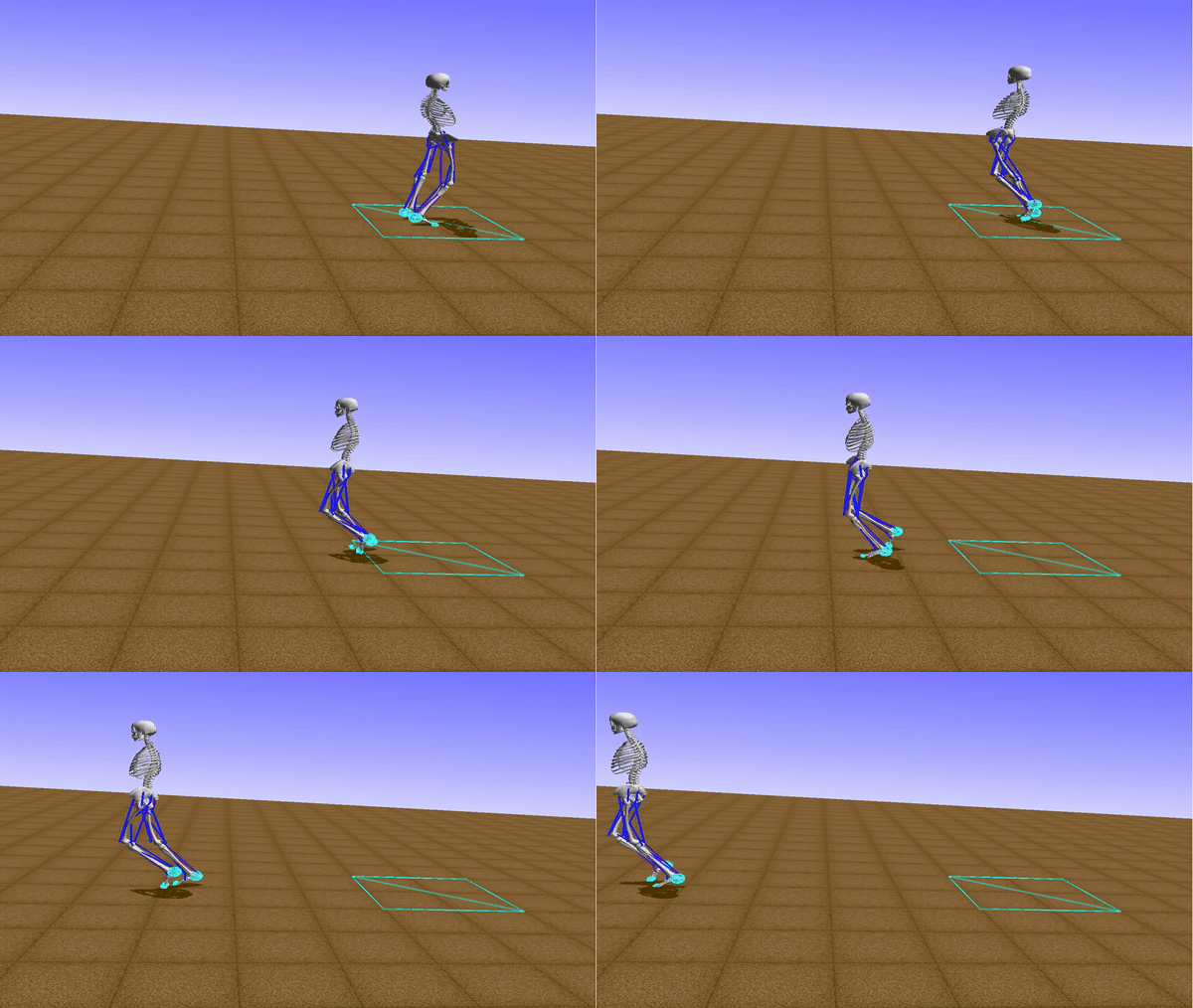
- Winning Solution for NIPS2019: Learn to Move Challenge
- Winning Solution for NIPS2020: Learning to Run a Power Network Challenge
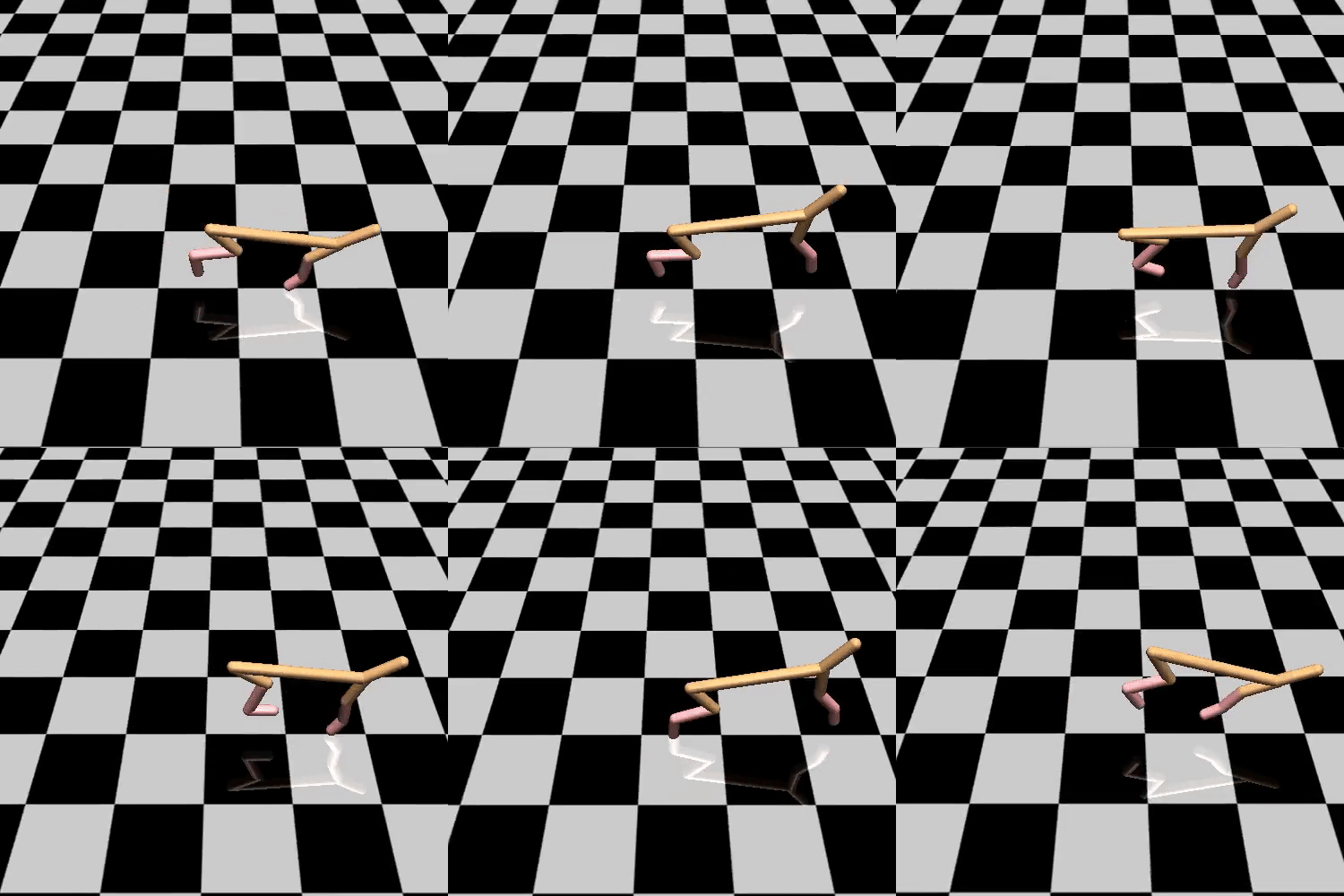

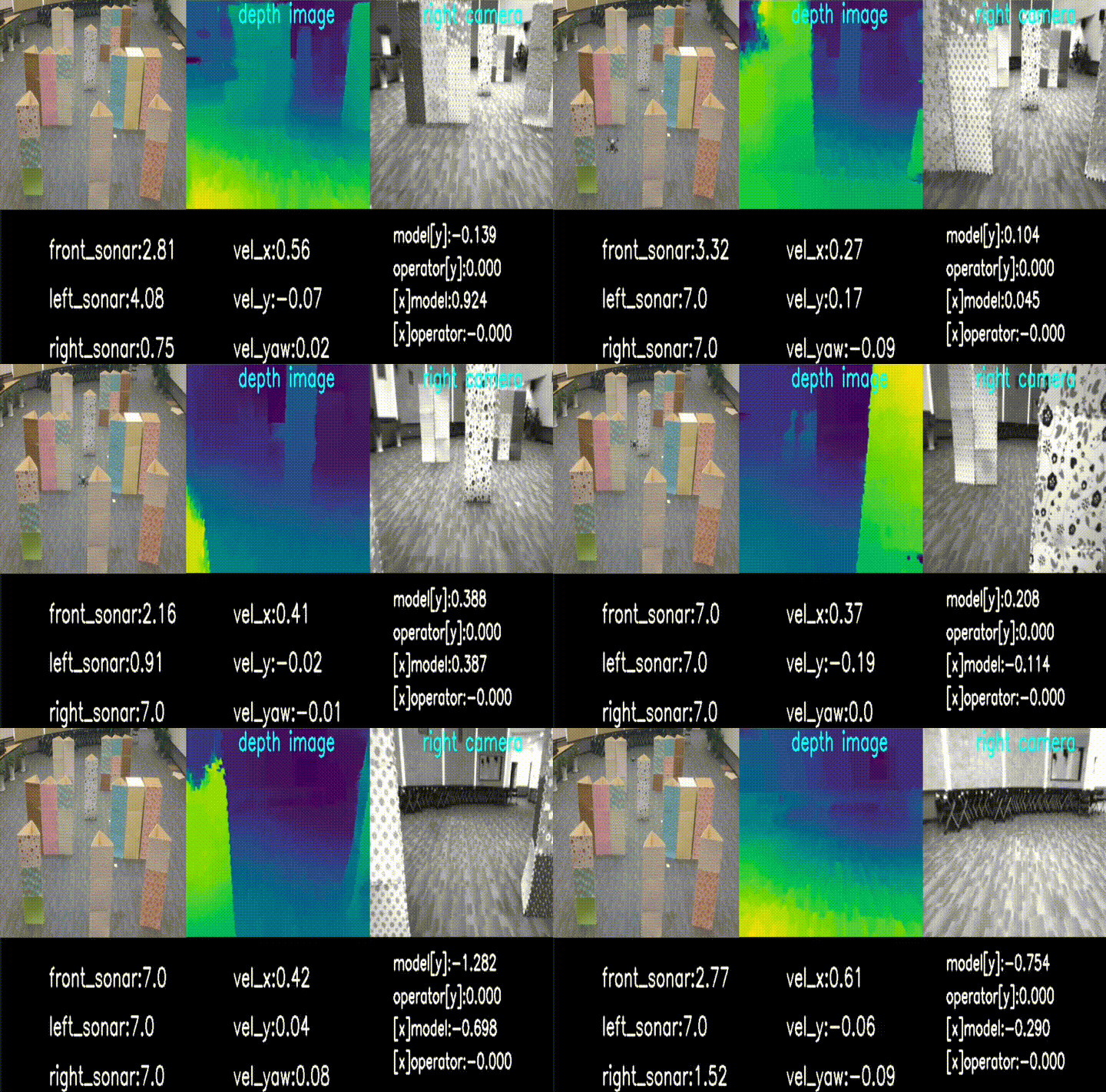
Waymax-RL(2025 Update, GPU-RL Autonomous Driving)
- End-to-End GPU Reinforcement Learning for Waymax Autonomous Driving Simulation.
Full documentation and instructions: waymax_rl/README.md
xparl Security
xparl runs Python code on trusted cluster machines. Set a shared, randomly generated XPARL_AUTH_TOKEN of at least 32 bytes on every master, worker, and client before startup. All ZeroMQ connections require CURVE authentication and encryption; control metadata uses validated JSON. The master and HTTP services bind to loopback by default, and HTTP monitoring/log routes require credentials.
Security Considerations
- Only trusted users and machines may hold the cluster secret or submit code.
- Keep all cluster and heartbeat ports on a private network behind a firewall.
- Upgrade all nodes and clients together; older processes cannot use the new protocol.
- Existing published packages require an upgrade to patched source or a release containing the fix.
See the security and upgrade guide for configuration, monitoring access, and migration steps.