プロジェクト

taki0112/SENet-Tensorflow has 754 GitHub stars and 265 forks. GitHot measured 0 stars in 24 hours. Last checked 2026-11-15 11:16 UTC. Last push 2018-08-14.
計測したスター増加
- 24時間
- 0
- 7日間
- 履歴を収集中
- 15日間
- 履歴を収集中
- 1か月
- 履歴を収集中
期間ごとの純増数です。期間は重複しており、日別の値ではありません。未計測の値は空欄です。スター数は注目度の指標であり、品質の保証ではありません。
概要
Simple Tensorflow implementation of "Squeeze and Excitation Networks" using Cifar10 (ResNeXt, Inception-v4, Inception-resnet-v2)
機械学習README.md
オリジナルSENet-Tensorflow
Simple Tensorflow implementation of Squeeze Excitation Networks using Cifar10
I implemented the following SENet
If you want to see the original author's code, please refer to this link
Requirements
- Tensorflow 1.x
- Python 3.x
- tflearn (If you are easy to use global average pooling, you should install tflearn)
Issue
Image_size
- In paper, experimented with ImageNet
- However, due to image size issues in Inception network, so I used zero padding for the Cifar10
input_x = tf.pad(input_x, [[0, 0], [32, 32], [32, 32], [0, 0]]) # size 32x32 -> 96x96
NOT ENOUGH GPU Memory
- If not enough GPU memory, Please edit the code
with tf.Session() as sess : NO
with tf.Session(config=tf.ConfigProto(allow_soft_placement=True)) as sess : OK
Idea
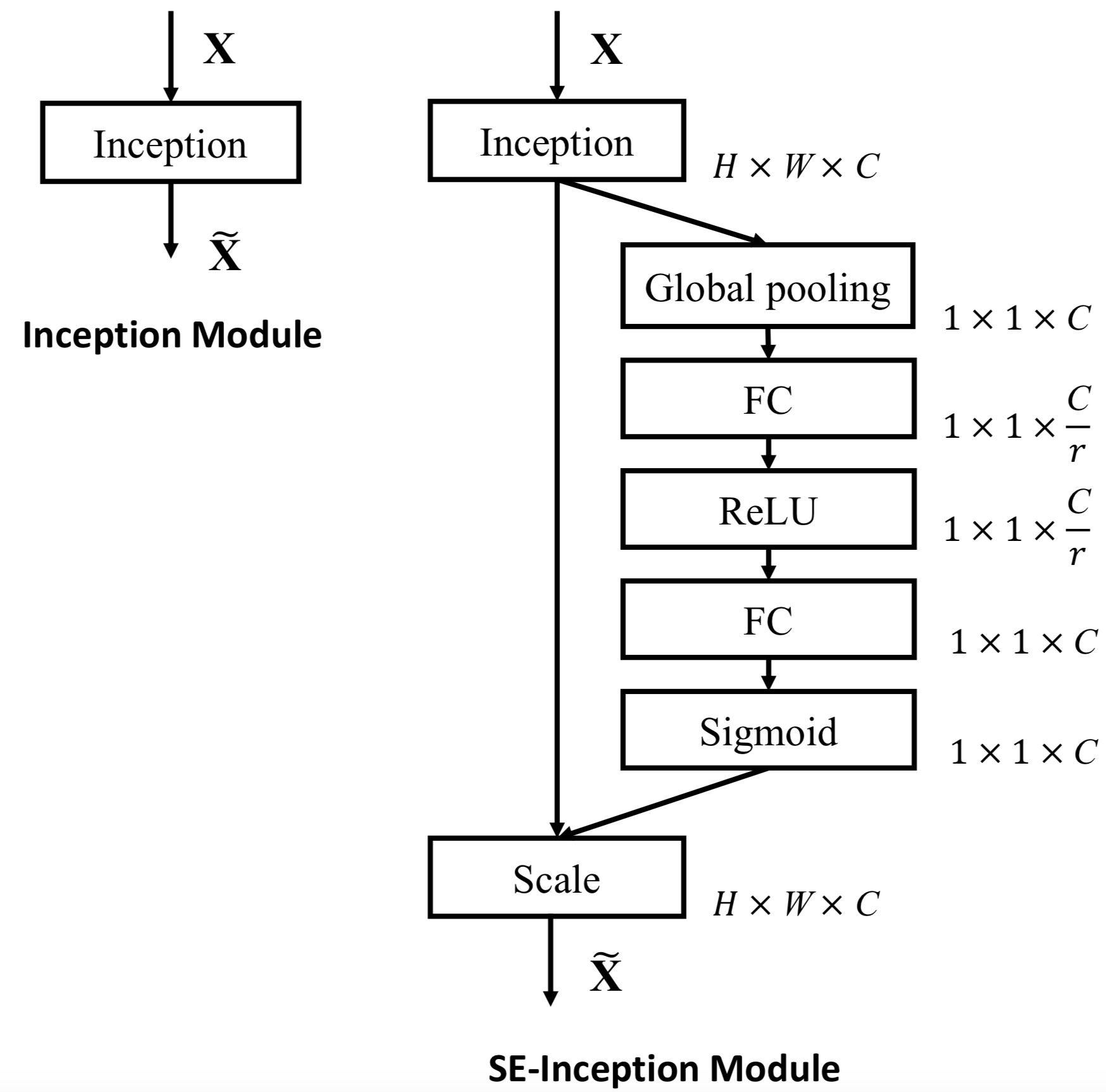
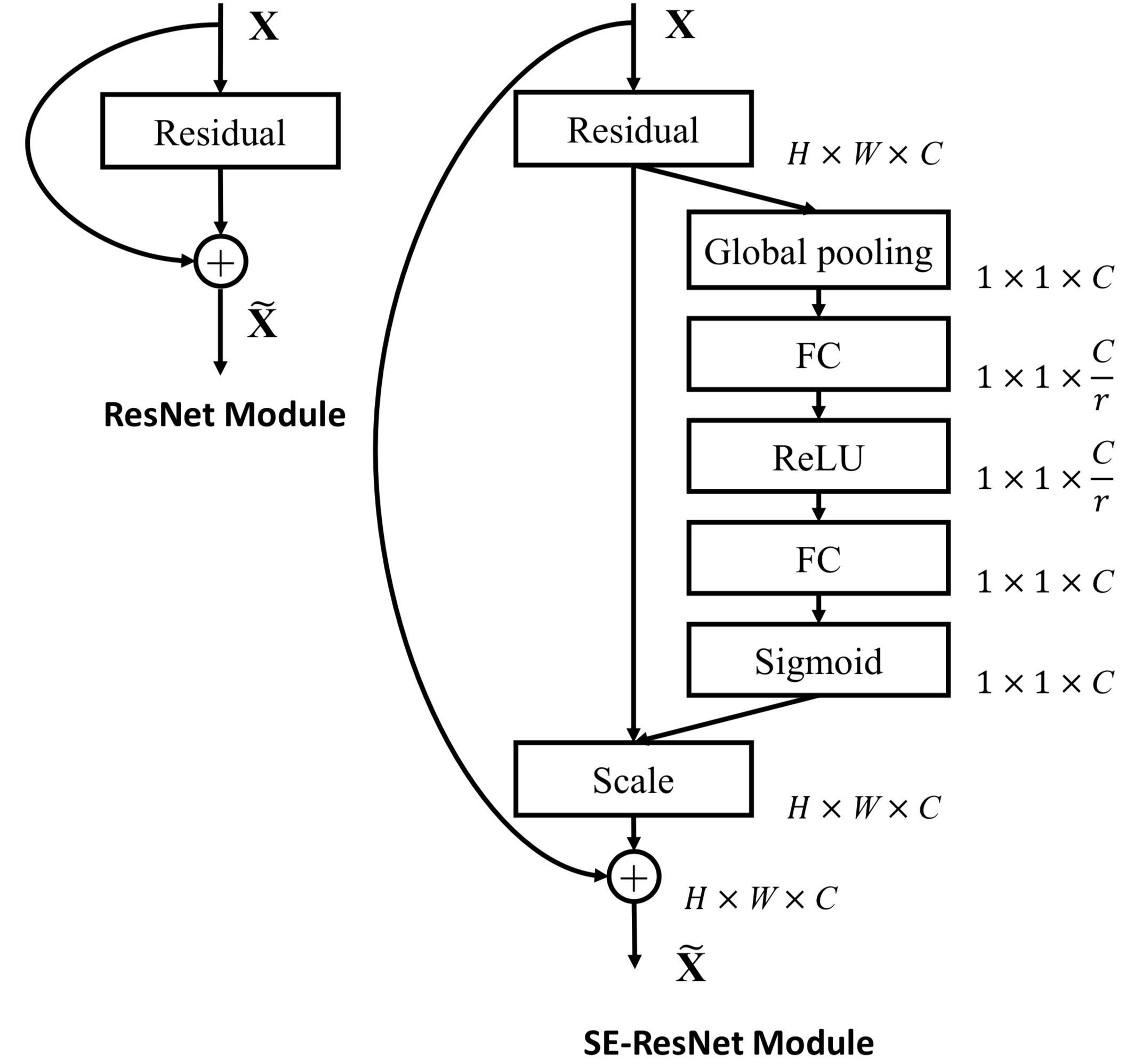
What is the "SE block" ?

def Squeeze_excitation_layer(self, input_x, out_dim, ratio, layer_name):
    with tf.name_scope(layer_name) :
        squeeze = Global_Average_Pooling(input_x)

        excitation = Fully_connected(squeeze, units=out_dim / ratio, layer_name=layer_name+'_fully_connected1')
        excitation = Relu(excitation)
        excitation = Fully_connected(excitation, units=out_dim, layer_name=layer_name+'_fully_connected2')
        excitation = Sigmoid(excitation)

        excitation = tf.reshape(excitation, [-1,1,1,out_dim])

        scale = input_x * excitation

        return scale
How apply ? (Inception, Residual)
How "Reduction ratio" should I set?

- original refers to ResNet-50
ImageNet Results
Benefits against Network Depth

Incorporation with Modern Architecture

Comparison with State-of-the-art

Cifar10 Results
Will be soon
Related works
Reference
Author
Junho Kim