
mohaseeb/shaplets-python
Tentang
Python implementation of the Learning Time-Series Shapelets method, that learns a shapelet-based time-series classifier with gradient descent.
PembelajaranPertumbuhan bintang terukur
- dalam 24 jam
- 0
- dalam 7 hari
- 0
- dalam 15 hari
- Mengumpulkan riwayat
- dalam 1 bulan
- Mengumpulkan riwayat
Perubahan bersih pada periode yang tumpang tindih, bukan total harian. Pengukuran yang belum tersedia dibiarkan kosong. Bintang menunjukkan perhatian, bukan kualitas.
README.md
Aslishaplets
Python implementation of the Learning Time-Series Shapelets method by Josif Grabocka et al., that learns a shapelet-based time-series classifier with gradient descent.
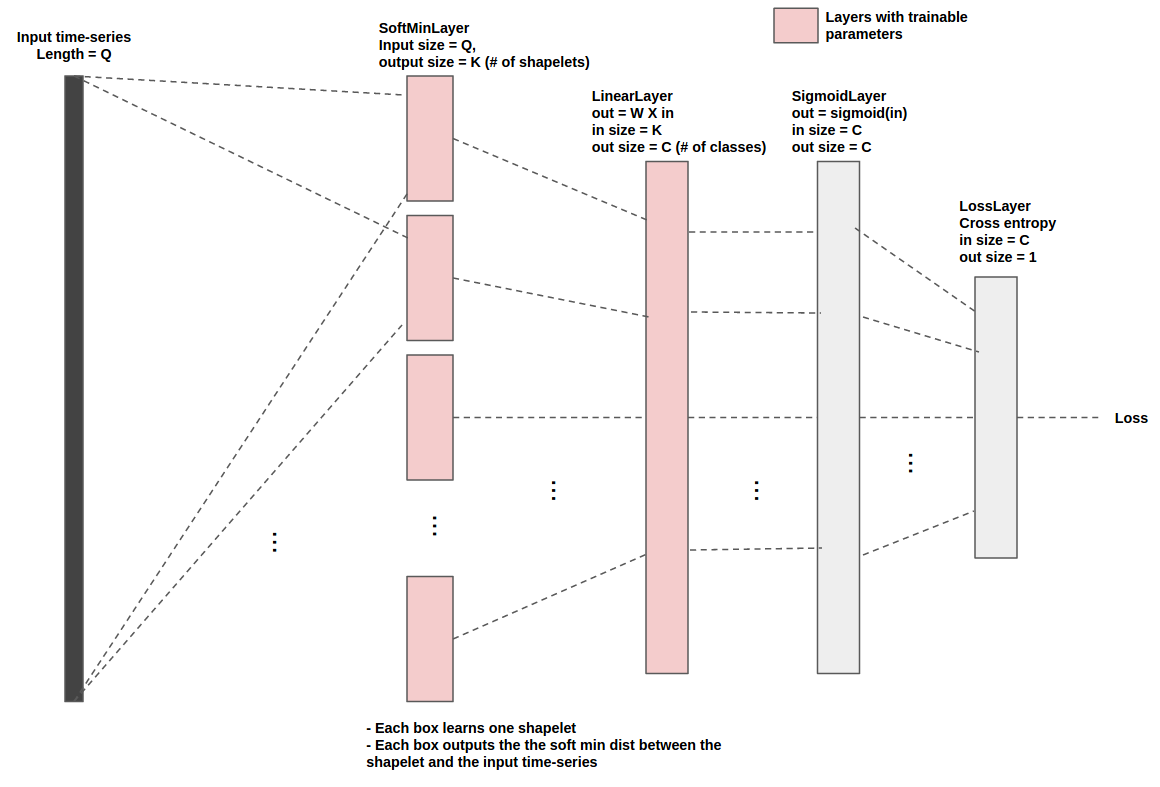
This implementation views the model as a layered graph, where each layer
implements a forward, backword and parameters update methods (see below
diagram). This abstraction simplifies thinking about the algorithm and implementing it.
Differences from the paper
- This implmenetation employs two (LinearLayer + SigmoidLayer) pairs instead of one (LinearLayer + SigmoidLayer) pair as in the paper (and shown in above diagram). This (using two pairs) has yielded improved results on some datasets. To have a similar setup as in the paper, simply update
shapelets_lts/classification/shapelet_models.py:LtsShapeletClassifier._init_network(). - The loss in this implementation is an updated version of the one in the
paper to allow training a single model for all the classes in the dataset (rather than one model/class). The impact on performance was not analysed. For details check
shapelets_lts/network/cross_entropy_loss_layer.py
Installation
git clone [email protected]:mohaseeb/shaplets-python.git
cd shaplets-python
pip install .
# or, for dev
# pip install .[dev]
Usage
from shapelets_lts.classification import LtsShapeletClassifier

# create an LtsShapeletClassifier instance
classifier = LtsShapeletClassifier(
    K=20,
    R=3,
    L_min=30,
    epocs=50,
    lamda=0.01,
    eta=0.01,
    shapelet_initialization='segments_centroids',
    plot_loss=True
)

# train the classifier.
# train_data.shape -> (# train samples X time-series length)
# train_label.shape -> (# train samples)
classifier.fit(train_data, train_label, plot_loss=True)

# evaluate on test data.
# test_data.shape -> (# test samples X time-series length)
prediction = classifier.predict(test_data)

# retrieve the learnt shapelets
shapelets = classifier.get_shapelets()


# and plot sample shapelets
from shapelets_lts.util import plot_sample_shapelets
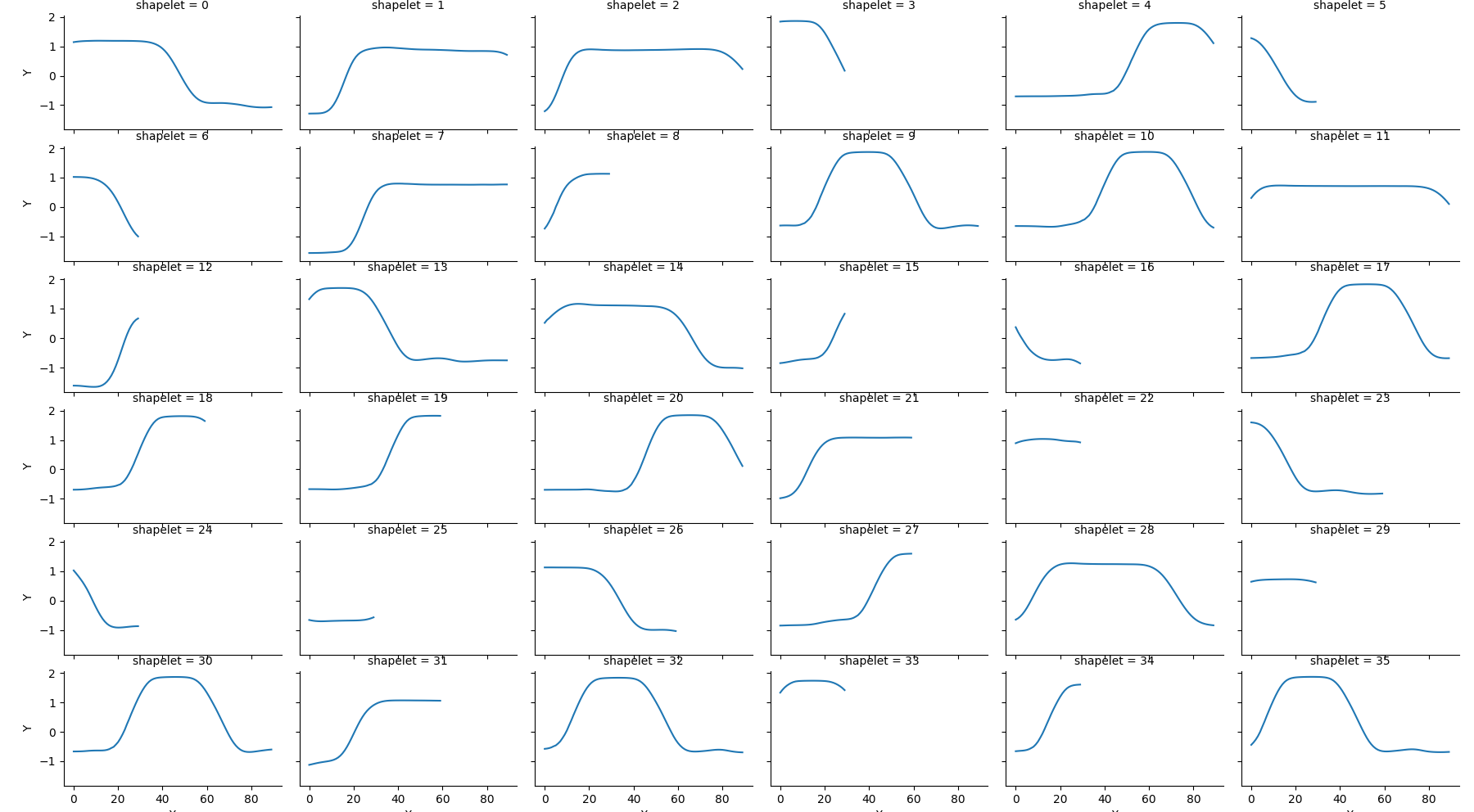
plot_sample_shapelets(shapelets=shapelets, sample_size=36)
Also have a look at example.py. For a stable training, the samples might need to be scaled.
Example plot from plot_sample_shapelets.
Jelajahi proyek terkait
Memuat…