
rosinality/vq-vae-2-pytorch
À propos
Implémentation dans PyTorch de la génération d’images diverses et haute fidélité avec VQ-VAE-2
Apprentissage automatiqueProgression mesurée des étoiles
- in 24h
- 0
- in 7 days
- +1
- in 15 days
- +1
- in 1 month
- Historique en cours
Variations nettes sur des périodes qui se chevauchent, pas des totaux quotidiens. Les mesures absentes restent vides. Les étoiles indiquent l’intérêt, pas la qualité.
README.md
Originalvq-vae-2-pytorch
Implementation of Generating Diverse High-Fidelity Images with VQ-VAE-2 in PyTorch
Update
- 2020-06-01
train_vqvae.py and vqvae.py now supports distributed training. You can use --n_gpu [NUM_GPUS] arguments for train_vqvae.py to use [NUM_GPUS] during training.
Requisite
- Python >= 3.6
- PyTorch >= 1.1
- lmdb (for storing extracted codes)
Checkpoint of VQ-VAE pretrained on FFHQ
Usage
Currently supports 256px (top/bottom hierarchical prior)
- Stage 1 (VQ-VAE)
python train_vqvae.py [DATASET PATH]
If you use FFHQ, I highly recommends to preprocess images. (resize and convert to jpeg)
- Extract codes for stage 2 training
python extract_code.py --ckpt checkpoint/[VQ-VAE CHECKPOINT] --name [LMDB NAME] [DATASET PATH]
- Stage 2 (PixelSNAIL)
python train_pixelsnail.py [LMDB NAME]
Maybe it is better to use larger PixelSNAIL model. Currently model size is reduced due to GPU constraints.
Sample
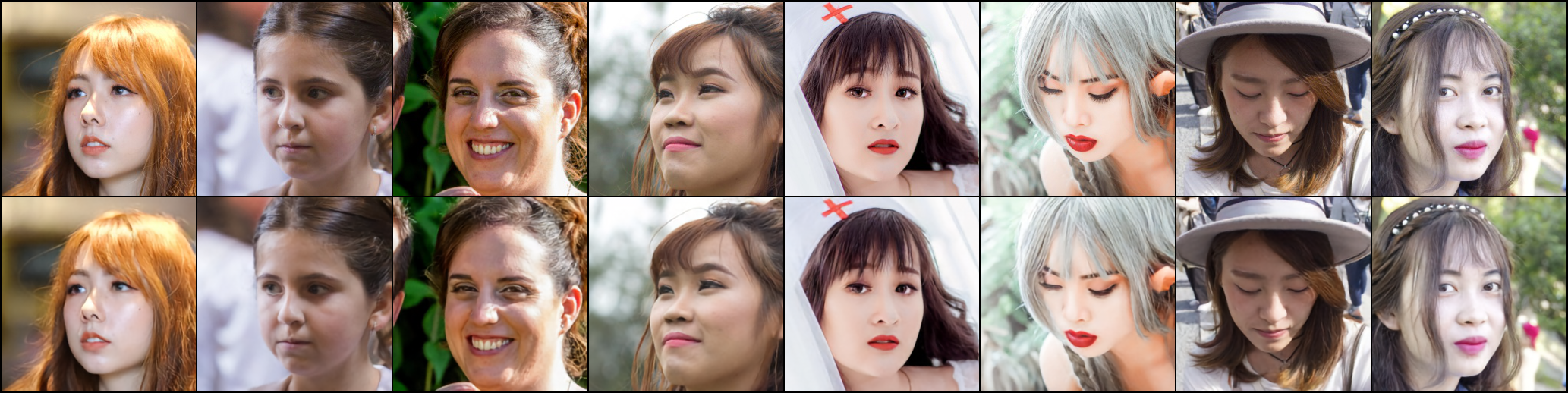
Stage 1
Note: This is a training sample
Explorer des projets similaires
Chargement…