
malvads/sqlmc
malvads/sqlmc has 378 GitHub stars and 51 forks. GitHot measured 0 stars in 24 hours and +1 in 7 days. Last checked 2026-11-21 21:03 UTC. Last push 2026-04-27.
What you can do
- Scans a domain for SQL injection vulnerabilities
- Crawls the given URL up to a specified depth
- Checks each link for SQL injection vulnerabilities in all GET params
- Reports vulnerabilities along with server information and depth
Progression mesurée des étoiles
- in 24h
- 0
- in 7 days
- +1
- in 15 days
- Historique en cours
- in 1 month
- Historique en cours
Variations nettes sur des périodes qui se chevauchent, pas des totaux quotidiens. Les mesures absentes restent vides. Les étoiles indiquent l’intérêt, pas la qualité.
À propos
Official Kali Linux tool to check all urls of a domain for SQL injections :)
DonnéesREADME.md
OriginalSQLMC - SQL Injection Massive Checker
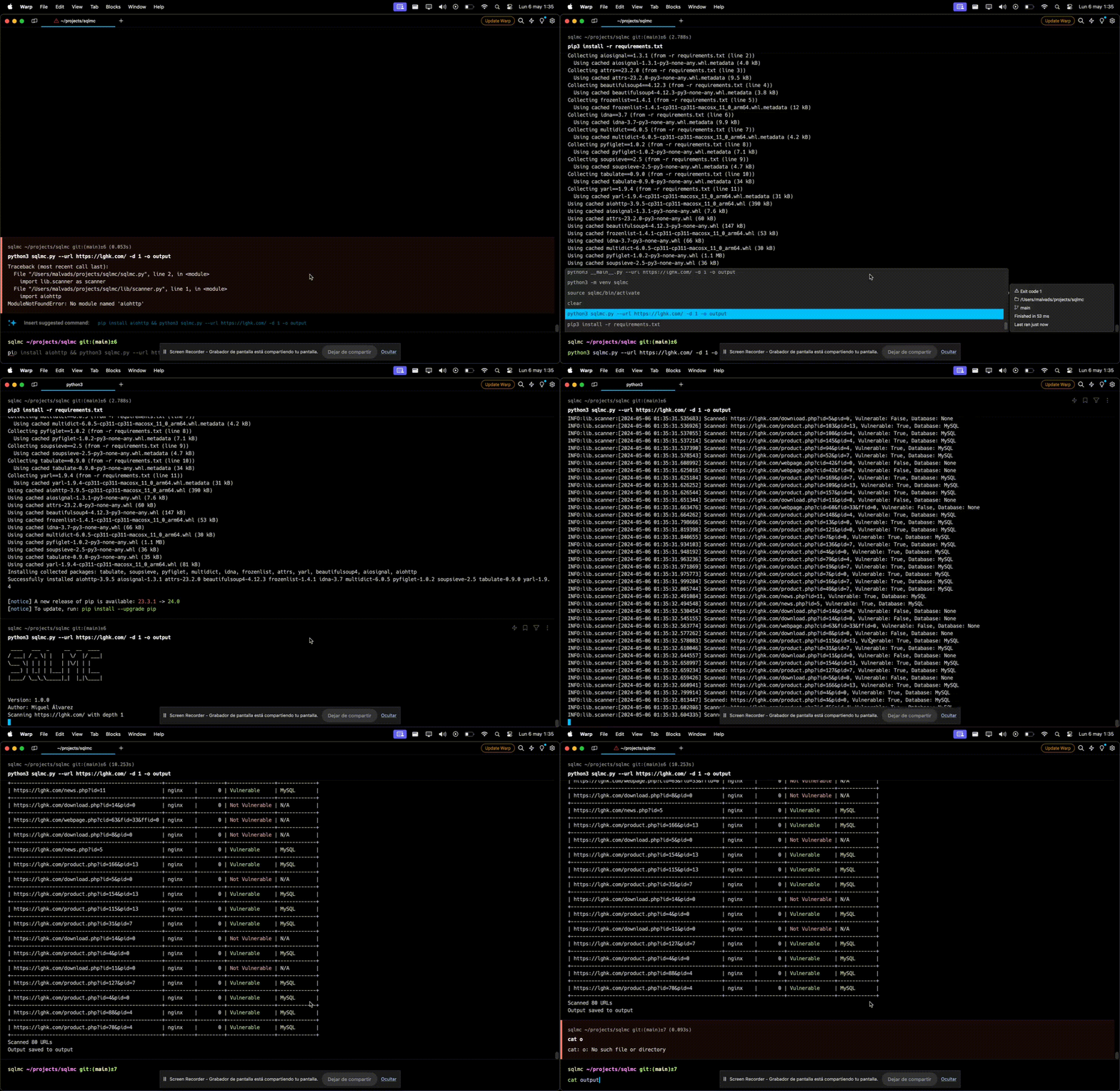
Demo
Information
This tool is for educational purpose only, usage of SQLMC for attacking targets without prior mutual consent is illegal. Developers assume no liability and are not responsible for any misuse or damage cause by this program.
Overview
SQLMC (SQL Injection Massive Checker) is a tool designed to scan a domain for SQL injection vulnerabilities. It crawls the given URL up to a specified depth, checks each link for SQL injection vulnerabilities, and reports its findings.
Features
- Scans a domain for SQL injection vulnerabilities
- Crawls the given URL up to a specified depth
- Checks each link for SQL injection vulnerabilities in all GET params
- Reports vulnerabilities along with server information and depth
Installation
- Install the required dependencies:
pip3 install sqlmc
Usage
Run sqlmc with the following command-line arguments:
-u, --url: The URL to scan (required)-d, --depth: The depth to scan (required)-o, --output: The output file to save the results
Example usage:
sqlmc -u http://example.com -d 2
Replace http://example.com with the URL you want to scan and 3 with the desired depth of the scan. You can also specify an output file using the -o or --output flag followed by the desired filename.
The tool will then perform the scan and display the results.
ToDo
- Check for multiple GET params - Done in #3
- Better injection checker trigger methods
- Allow to use cookies like sessions to auth requests
Credits
- Developed by Miguel Álvarez
License
This project is licensed under the GNU Affero General Public License v3.0.
Explorer des projets similaires
Chargement…