
duyongan/sunstreaker
duyongan/sunstreaker has 98 GitHub stars and 3 forks. GitHot measured 0 stars in 24 hours and 0 in 7 days. Last checked 2026-11-22 19:01 UTC. Last push 2026-10-20.
Progression mesurée des étoiles
- in 24h
- 0
- in 7 days
- 0
- in 15 days
- Historique en cours
- in 1 month
- Historique en cours
Variations nettes sur des périodes qui se chevauchent, pas des totaux quotidiens. Les mesures absentes restent vides. Les étoiles indiquent l’intérêt, pas la qualité.
À propos
以jax为后端的类似keras的框架
Apprentissage automatiqueREADME.md
Original
Sunstreaker
源码清晰明了,使用简单好搞
目标
- 源码清晰简洁,利于算法学习与实验
- 快速实验新改进想法
- 快速复现新论文
- 快速分布式训练一个大模型
- 快速使用开源模型权重(Qwen3 / Qwen3-MoE)
说明
- 本项目采用小步快走的形式,欢迎start,但不建议fork,因为更新速度比较快。
- 本项目用于学习与实验,切勿用于生产
欢迎关注公众号:无数据不智能

安装
tensorflow只是加载demo数据需要,也可以不装
jax 0.12.0 需要 Python 3.12 及以上
windows
- 安装jax
- cpu
pip install --upgrade "jax[cpu]==0.12.0"- gpu Windows 原生暂不提供 CUDA 版本的 jax 轮子,请使用 WSL2 或 Linux 环境安装:
pip install --upgrade "jax[cuda12]==0.12.0" - 安装Graphviz
- exe安装下载
- pygraphviz(安装 Graphviz 后执行)
pip install pygraphviz - pip install -r requirements.txt
- pip install sunstreaker
linux
安装jax
- cpu
pip install --upgrade "jax[cpu]==0.12.0"- gpu
pip install --upgrade "jax[cuda12]==0.12.0"pip install -r requirements.txt
pip install sunstreaker
使用
用tensorflow_datasets搞些数据
import tensorflow as tf

tf.config.set_visible_devices([], 'GPU')
import math
import asyncio
import tensorflow_datasets as tfds
from sunstreaker.data import Dataloader
from sunstreaker.layers import Flatten
from sunstreaker.layers.activations import Softmax
import jax.numpy as jnp
from sunstreaker.losses import categorical_crossentropy
from sunstreaker.metrics import categorical_accuracy
from sunstreaker.optimizers import RMSProp


def load(batch_size: int, func):
   async def tfds_load_data() -> Dataloader:
      ds, info = tfds.load(name="mnist", split=["train", "test"], as_supervised=True, with_info=True,
                           shuffle_files=True, batch_size=batch_size)
      train_ds, valid_ds = ds
      train_ds, valid_ds = func(train_ds), func(train_ds)
      train_ds, valid_ds = train_ds.cache().repeat(), valid_ds.cache().repeat()
      input_shape = tuple(list(info.features["image"].shape))
      num_train_batches = math.ceil(info.splits["train"].num_examples / batch_size)
      num_val_batches = math.ceil(info.splits["test"].num_examples / batch_size)
      return Dataloader(
         train_data=iter(tfds.as_numpy(train_ds)), val_data=iter(tfds.as_numpy(valid_ds)),
         input_shape=input_shape, batch_size=batch_size,
         num_train_batches=num_train_batches, num_val_batches=num_val_batches
      )

   return asyncio.run(tfds_load_data())


def load_dataset(batch_size: int):
   def func(ds):
      return ds.map(lambda x, y: (tf.divide(tf.cast(x, dtype=tf.float32), 255.0), tf.one_hot(y, depth=10)))

   return asyncio.run(load(batch_size, func))


def load_dataset_muti(batch_size: int):
   def func(ds):
      return ds.map(lambda x, y: ({"img": tf.divide(tf.cast(x, dtype=tf.float32), 255.0)}, {"out1": tf.one_hot(y, depth=10)}))

   return asyncio.run(load(batch_size, func))
序贯式编程
from sunstreaker.engine.sequential import Model

data = load_dataset(batch_size=1024)
model = Model([Input(input_shape=(28, 28, 1)), Flatten(), Dense(100), Dense(10), Softmax()])
函数式编程
data = load_dataset_muti(batch_size=1024)
inputs = Input(input_shape=(28, 28, 1), name="img")
flatten = Flatten()(inputs)
dense1 = Dense(100, activation='relu')(flatten)
dense2 = Dense(10, use_bias=False)(dense1)
outputs = Softmax(name="out1")(dense2)

from sunstreaker.engine.functional import Model

model = Model(inputs=inputs, outputs=outputs)
当你是一个老手
from sunstreaker import Model

data = load_dataset(batch_size=1024)

class MyModel(Model):
    def build(self, rng=None):
        self.W = self.add_weight((784, 10))
        self.flatten = Flatten()
        self.softmax = Softmax()
        return (10,), [(self.W,)]

    def call(self, params, inputs, trainable=True, **kwargs):
        self.W, = params[0]
        x = self.flatten.forward(params=[], inputs=inputs)
        x = jnp.dot(x, self.W)
        y = self.softmax.forward(params=[], inputs=x)
        return y


model = MyModel()
编译、训练、保存
model.compile(loss=categorical_crossentropy, optimizer=RMSProp(lr=0.001), metrics=[categorical_accuracy])
model.fit(data, epochs=10)
model.save("tfds_mnist_v2")
加载 Qwen3 / Qwen3-MoE 开源权重
纯 JAX 实现,权重名称与 HuggingFace 保持一致,支持 Dense 与 MoE 模型、KV cache、生成与微调。
默认从 hf-mirror 下载,可用 HF_ENDPOINT 环境变量或 endpoint= 参数覆盖,也可以直接传入本地目录。
tokenizer 依赖可选的 transformers>=4.51。
from sunstreaker.applications.transformers.qwen3 import (
    AutoTokenizer, Qwen3ForCausalLM, Qwen3MoeForCausalLM, apply_chat_template,
)

# MoE 模型(如 Qwen/Qwen3-30B-A3B)使用 Qwen3MoeForCausalLM
model = Qwen3ForCausalLM.from_pretrained("Qwen/Qwen3-0.6B")
tokenizer = AutoTokenizer.from_pretrained("Qwen/Qwen3-0.6B")

messages = [{"role": "user", "content": "你好,介绍一下你自己"}]
prompt = apply_chat_template(tokenizer, messages)
input_ids = tokenizer(prompt, return_tensors="np")["input_ids"]

output_ids = model.generate(input_ids, max_new_tokens=64,
                            temperature=0.7, top_p=0.9)
print(tokenizer.decode(output_ids[0].tolist()))

# 前向与 KV cache
out = model(input_ids, use_cache=True)  # out["logits"], out["past_key_values"]

# 导出为 HuggingFace 格式(可被 transformers 直接加载)
model.save_pretrained("./qwen3-export")
微调(shifted cross-entropy + AdamW,支持梯度累积):
from sunstreaker.applications.transformers.qwen3.train import pad_batch

ids, mask = pad_batch([[1, 2, 3, 4]], pad_token_id=tokenizer.pad_token_id or 0)
model.fit([(ids, mask)], epochs=1, lr=1e-5, grad_accum=4)
LoRA 微调(冻结基础权重,只训练低秩适配器;支持 Dense 与 MoE):
# 在 q_proj/k_proj/v_proj/o_proj/gate_proj/up_proj/down_proj 上注入适配器
model.add_lora(rank=8, alpha=16.0)
model.fit([(ids, mask)], epochs=1, lr=1e-4)

# 推理时自动带上 LoRA 增量;也可合并进基础权重后正常导出
output_ids = model.generate(input_ids, max_new_tokens=32)
model.merge_lora()
model.save_pretrained("./qwen3-lora-merged")
target_modules=("q_proj",) 可只微调指定投影层;MoE 专家适配器按专家维度分别存储、训练与合并。
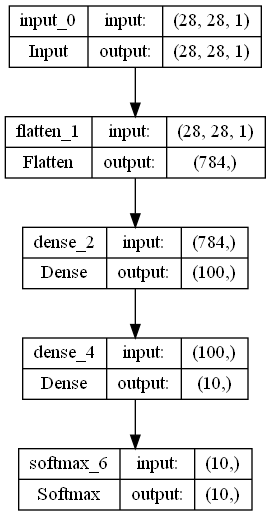
模型结构打印
model.summary()
model.plot_model()
+--------+-----------+---------+-------------+--------------+
| number | name      | class   | input_shape | output_shape |
+--------+-----------+---------+-------------+--------------+
| 0      | input_0   | Input   | (28, 28, 1) | (28, 28, 1)  |
| 1      | flatten_1 | Flatten | (28, 28, 1) | (784,)       |
| 2      | dense_2   | Dense   | (784,)      | (100,)       |
| 3      | dense_4   | Dense   | (100,)      | (10,)        |
| 4      | softmax_6 | Softmax | (10,)       | (10,)        |
+--------+-----------+---------+-------------+--------------+
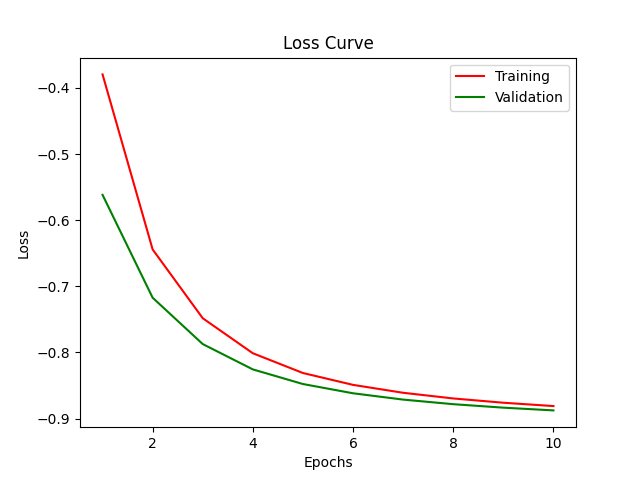
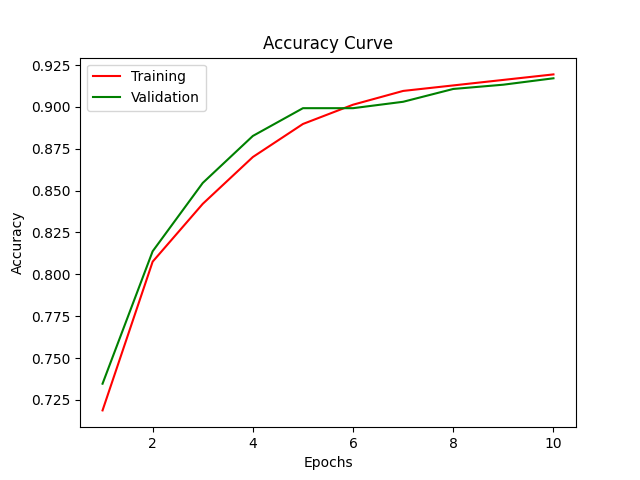
损失与评价可视化
model.plot_losses()
model.plot_accuracy()
功能
0.0.1.dev更新
| activations | layers | losses | metrics | optimizers |
|---|---|---|---|---|
| Linear | Dense | binary_crossentropy | binary_accuracy | SGD |
| Softmax | Flatten | categorical_crossentropy | accuracy | SM3 |
| Relu | Dropout | mean_squared_error | categorical_accuracy | Adagrad |
| Sigmoid | Conv2D | mean_absolute_error | sparse_categorical_accuracy | Adam |
| Elu | MaxPool2D | mean_squared_logarithmic_error | cosine_similarity_accuracy | Adamax |
| LeakyRelu | AveragePooling2D | hinge | top_k_categorical_accuracy | RMSProp |
| Gelu | GRU | kl_divergence | sparse_top_k_categorical_accuracy | FTRL |
| huber |
0.0.2.dev更新
| layers | losses |
|---|---|
| Embedding | l2_error |
| Lambda | |
| Add | |
| Concatenate | |
| Dot | |
| Multiply | |
| LayerNormalization | |
| InstanceNormalization | |
| BatchNormalization | |
| GroupNormalization | |
| LocalResponseNormalization | |
| UpSampling2D |
0.0.3.dev更新
| initializer | activations |
|---|---|
| zeros | Swish |
| ones | |
| constant | |
| uniform | |
| normal | |
| orthogonal | |
| LecunUniform | |
| LecunNormal | |
| GlorotNormal | |
| GlorotUniform | |
| HeNormal | |
| HeUniform | |
| KaimingUniform | |
| KaimingNormal | |
| XavierNormal | |
| XavierUniform | |
| Identity |
0.0.4.dev更新
内核改动
Layer call 函数不再需要传入params,build输出不再需要输出params,以dense为例
class Dense(Layer):
    def __init__(self, units, activation=None, use_bias=True, kernel_initializer=GlorotUniform(), bias_initializer=Zeros(), **kwargs):
        super().__init__(**kwargs)
        self.use_bias = use_bias
        self.activation = activations.get(activation)()
        self.units = int(units) if not isinstance(units, int) else units
        self.kernel_initializer = kernel_initializer
        self.bias_initializer = bias_initializer

    def build(self):
        output_shape = self.input_shape[:-1] + (self.units,)
        self.add_weight("kernel", (self.input_shape[-1], self.units), initializer=self.kernel_initializer, seed=k1)
        if self.use_bias:
            self.add_weight("bias", (self.units,), initializer=self.bias_initializer, seed=k2)
        return output_shape

    def call(self, inputs, **kwargs):
        kernel = self.get_weight("kernel")
        if self.use_bias:
            bias = self.get_weight("bias")
            outputs = jnp.dot(inputs, kernel) + bias
        else:
            outputs = jnp.dot(inputs, kernel)
        outputs = self.activation.forward(params=None, inputs=outputs)
        return outputs
Model params变为有序字典,方便大模型参数加载
build不再需要输入随机种子,由内核自动分配
0.0.5.dev更新
| application | layers |
|---|---|
| transformers/bert | MultiHeadAttention |
| PositionEmbedding | |
| FeedForward | |
| ScaleOffset | |
| Activation |
0.0.6.dev更新
| application | optimizers |
|---|---|
| diffusion/DDPM | AdamW |
2.0.0更新
- jax 升级到 0.12.0,需要 Python 3.12 及以上
- Windows 原生支持 CPU 版 jax(CUDA 版需 WSL2 或 Linux)
- 依赖版本更新,兼容 numpy 2.x
2.1.0更新
- 新增 Qwen3 / Qwen3-MoE 纯 JAX 实现(
sunstreaker.applications.transformers.qwen3) - 支持从本地目录或 HuggingFace 仓库(默认 hf-mirror)加载 safetensors 权重,兼容分片与 BF16
- 支持 Dense / MoE 前向、KV cache、temperature/top-k/top-p 生成
- 支持 shifted cross-entropy + AdamW 微调(含 ignore_index 与梯度累积)
- 支持 tokenizer / chat template(可选依赖 transformers)以及导出 HF 格式权重
- 新增
tests/qwen3离线单测与 HuggingFace 数值对齐测试
2.2.0更新
- Qwen3 / Qwen3-MoE 支持 LoRA 微调:
model.add_lora(rank, alpha, target_modules) - LoRA 训练时冻结基础权重,只更新低秩适配器;支持 Dense 与逐专家(MoE)适配器
model.merge_lora()将增量合并回基础权重,之后可正常推理与save_pretrained- 新增
tests/qwen3/test_lora.py覆盖零初始化、训练、合并与导出往返
引用
Explorer des projets similaires
Chargement…