
dbt-labs/dbt has 14,131 GitHub stars and 2,665 forks. GitHot measured +4 stars in 24 hours and +27 in 7 days. Last checked 2026-11-07 13:49 UTC. Last push 2026-11-04.
Comment ces chiffres sont mesurés
dbt permet aux analystes et aux ingénieurs de données de transformer les données en appliquant les mêmes pratiques que les ingénieurs logiciels pour développer des applications.
Progression mesurée des étoiles
- in 24h
- +4
- in 7 days
- +27
- in 15 days
- Historique en cours
- in 1 month
- Historique en cours
Variations nettes sur des périodes qui se chevauchent, pas des totaux quotidiens. Les mesures absentes restent vides. Les étoiles indiquent l’intérêt, pas la qualité.
README.md
Original


[!WARNING] dbt v1 development has moved to the
1.latestbranch. Themainbranch now contains all the Apache 2.0 source code of dbt v2.0 — a ground-up rewrite of dbt in Rust. If you're looking for the v1 Python implementation of the dbt framework, switch to1.latest.
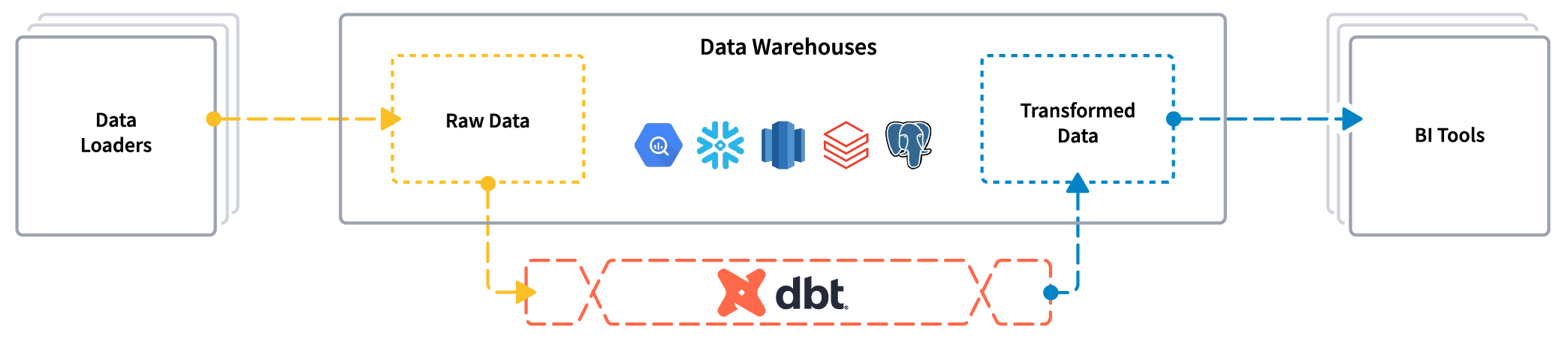
dbt enables data analysts and engineers to transform their data using the same practices that software engineers use to build applications.
About dbt v2.0
dbt v2.0 is engineered for performance at scale. It parses, compiles, and runs projects in a fraction of the time compared to v1. The source code in this repository is available to everyone under the standard Apache 2.0 license. dbt is a distribution of the dbt repository with dbt-specific customizations released under a dbt product license.
The big shifts from v1:
- Faster — parse and compile times are dramatically improved, especially on the largest dbt projects.
- Stricter — a tightly-defined language specification enforces correctness at parse time.
- More scalable artifacts — v2.0 produces Parquet artifacts that can be easily queried, joined, and analyzed to understand your dbt project. The artifacts encompass everything in the JSON artifacts (e.g.
manifest.json), which continue to be produced for backwards compatibility. - Easier to install — distributed as a single self-contained binary, with no Python runtime or dependency management required.
- A completely revamped local documentation experience — dbt docs is now powered by those new artifacts and capable of scaling to large projects.
Supported operating systems and architectures
dbt v2.0 and its drivers are compiled per operating system and architecture.
Legend:
- 🟢 — Supported today
- 🟡 — Not yet supported
| Operating system | x86-64 | ARM |
|---|---|---|
| macOS | 🟢 | 🟢 |
| Linux | 🟢 | 🟢 |
| Windows | 🟢 | 🟡 |
Understanding dbt
Analysts using dbt can transform their data by simply writing select statements, while dbt handles turning these statements into tables and views in a data warehouse.
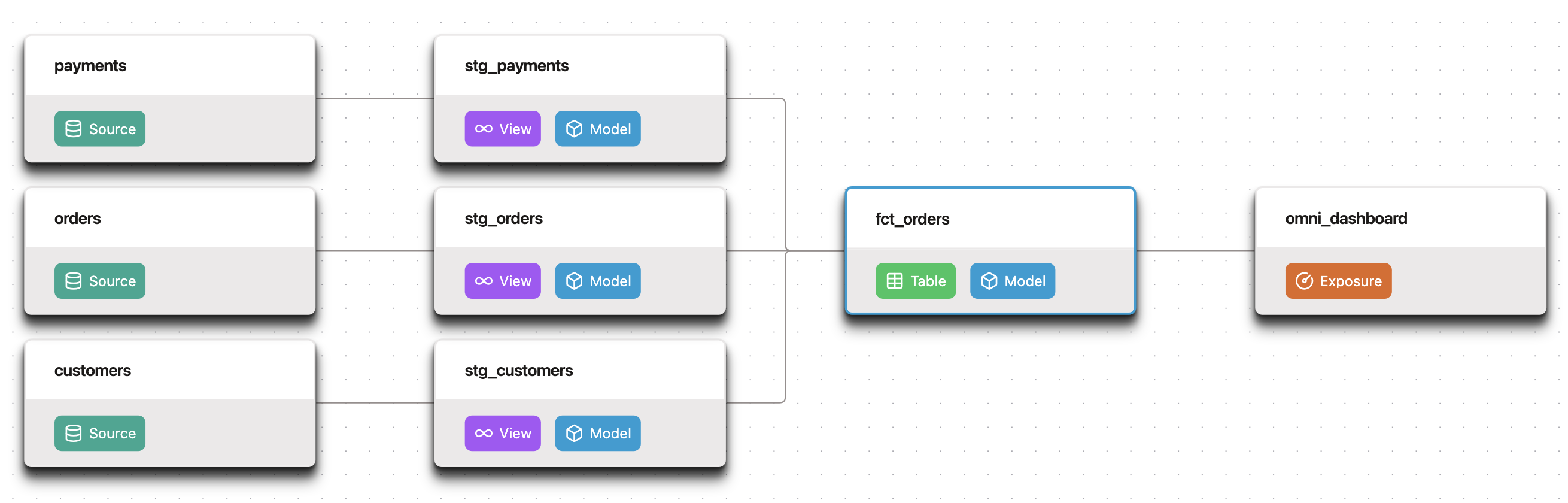
These select statements, or "models", form a dbt project. Models frequently build on top of one another – dbt makes it easy to manage relationships between models, and visualize these relationships, as well as assure the quality of your transformations through testing.
Getting started
- Install dbt
- Read the introduction and viewpoint
- Explore the dbt platform for an enhanced collaboration experience.
Join the dbt Community
- Be part of the conversation in the dbt Community Slack
- Read more on the dbt Community Discourse
Reporting bugs and contributing code
- Want to report a bug or request a feature? Let us know and open an issue
- Want to help us build dbt? Check out the Contributing Guide
Code of Conduct
Everyone interacting in the dbt project's codebases, issue trackers, chat rooms, and mailing lists is expected to follow the dbt Code of Conduct.
License
The source code in this repository is licensed under the Apache License 2.0.
Explorer des projets similaires
Asabeneh/30-Days-Of-Python
Le défi de programmation 30 Days of Python est un guide pas à pas pour apprendre le langage de programmation Python en 30 jours. Ce défi peut prendre plus de 100 jours. Avancez à votre rythme. Ces vidéos peuvent aussi vous aider : https://www.youtube.com/channel/UC7PNRuno1rzYPb1xLa4yktw
78,303 étoilesgrafana/grafana
Plateforme ouverte et composable d’observabilité et de visualisation de données. Visualise les métriques, les journaux et les traces issus de plusieurs sources, comme Prometheus, Loki, Elasticsearch, InfluxDB, Postgres et bien d’autres.
77,725 étoilesredis/redis
Pour les développeurs qui créent des applications en temps réel pilotées par les données, Redis est le cache, le serveur de structures de données et le moteur de requêtes documentaires et vectorielles préféré, le plus rapide et le plus riche en fonctionnalités.
77,268 étoilesapache/superset
Apache Superset est une plateforme de visualisation et d'exploration de données.
75,439 étoiles