
HarisIqbal88/PlotNeuralNet
HarisIqbal88/PlotNeuralNet has 25,079 GitHub stars and 3,063 forks. GitHot measured +1 stars in 24 hours. Last checked 2026-11-06 06:28 UTC. Last push 2023-08-21.
Comment ces chiffres sont mesurés
Code LaTeX pour créer des schémas de réseaux neuronaux
Progression mesurée des étoiles
- in 24h
- +1
- in 7 days
- Mise à jour retardée
- in 15 days
- Mise à jour retardée
- in 1 month
- Mise à jour retardée
Variations nettes sur des périodes qui se chevauchent, pas des totaux quotidiens. Les mesures absentes restent vides. Les étoiles indiquent l’intérêt, pas la qualité.
README.md
OriginalPlotNeuralNet

Latex code for drawing neural networks for reports and presentation. Have a look into examples to see how they are made. Additionally, lets consolidate any improvements that you make and fix any bugs to help more people with this code.
Examples
Following are some network representations:
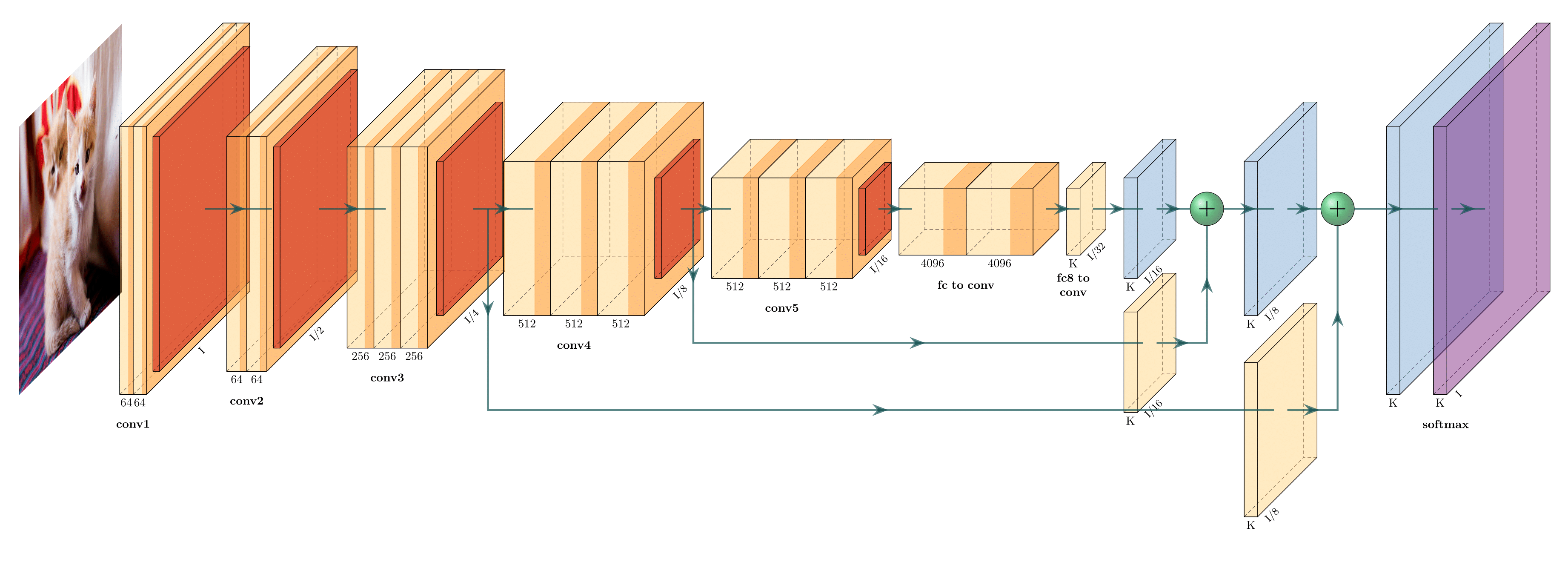
FCN-8 (view on Overleaf)
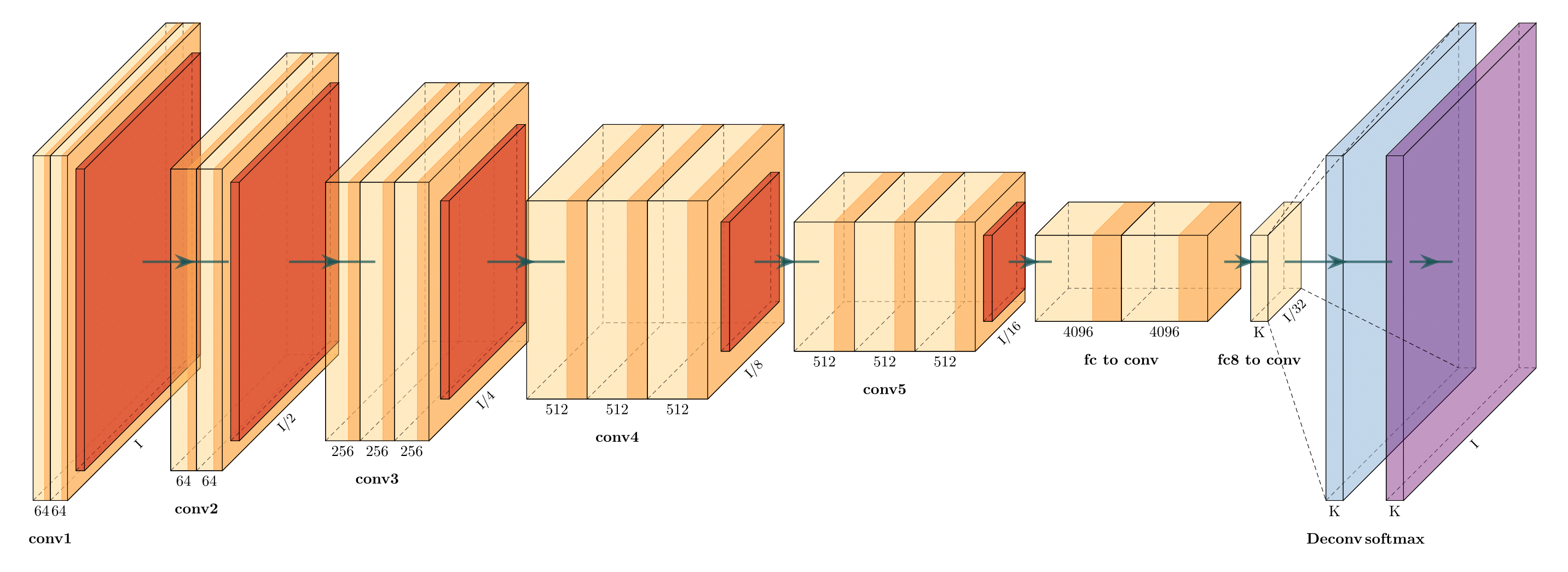
FCN-32 (view on Overleaf)

Holistically-Nested Edge Detection (view on Overleaf)
Getting Started
Install the following packages on Ubuntu.
Ubuntu 16.04
sudo apt-get install texlive-latex-extraUbuntu 18.04.2 Base on this website, please install the following packages.
sudo apt-get install texlive-latex-base
sudo apt-get install texlive-fonts-recommended
sudo apt-get install texlive-fonts-extra
sudo apt-get install texlive-latex-extra
Windows
- Download and install MikTeX.
- Download and install bash runner on Windows, recommends Git bash or Cygwin(https://www.cygwin.com/)
Execute the example as followed.
cd pyexamples/
bash ../tikzmake.sh test_simple
TODO
- Python interface
- Add easy legend functionality
- Add more layer shapes like TruncatedPyramid, 2DSheet etc
- Add examples for RNN and likes.
Latex usage
See examples directory for usage.
Python usage
First, create a new directory and a new Python file:
$ mkdir my_project
$ cd my_project
vim my_arch.py
Add the following code to your new file:
import sys
sys.path.append('../')
from pycore.tikzeng import *

# defined your arch
arch = [
    to_head( '..' ),
    to_cor(),
    to_begin(),
    to_Conv("conv1", 512, 64, offset="(0,0,0)", to="(0,0,0)", height=64, depth=64, width=2 ),
    to_Pool("pool1", offset="(0,0,0)", to="(conv1-east)"),
    to_Conv("conv2", 128, 64, offset="(1,0,0)", to="(pool1-east)", height=32, depth=32, width=2 ),
    to_connection( "pool1", "conv2"),
    to_Pool("pool2", offset="(0,0,0)", to="(conv2-east)", height=28, depth=28, width=1),
    to_SoftMax("soft1", 10 ,"(3,0,0)", "(pool1-east)", caption="SOFT"  ),
    to_connection("pool2", "soft1"),
    to_end()
    ]

def main():
    namefile = str(sys.argv[0]).split('.')[0]
    to_generate(arch, namefile + '.tex' )

if __name__ == '__main__':
    main()
Now, run the program as follows:
bash ../tikzmake.sh my_arch
Explorer des projets similaires
tensorflow/tensorflow
Un framework open source d'apprentissage automatique pour tous
201,311 étoileshuggingface/transformers
🤗 Transformers : le framework de définition de modèles pour les modèles d'apprentissage automatique de pointe en texte, vision, audio et multimodal, pour l'inférence et l'entraînement.
168,576 étoilesAUTOMATIC1111/stable-diffusion-webui
Interface web de Stable Diffusion
165,264 étoilesComfy-Org/ComfyUI
La GUI, l'API et le backend les plus puissants et modulaires pour les modèles de diffusion, avec une interface de graphes et de nœuds. Le moteur d'inférence local le plus rapide au monde.
145,310 étoiles