
Bevel-Software/code-to-knowledge-graph
Bevel-Software/code-to-knowledge-graph has 344 GitHub stars and 32 forks. GitHot measured 0 stars in 24 hours and +1 in 7 days. Last checked 2026-11-23 04:28 UTC. Last push 2025-06-04.
What you can do
- 🎯 VS Code LSP Integration: Leverages VS Code's language servers for robust, multi-language parsing
- 📊 Rich Graph Model: Comprehensive representation of code entities and relationships
- 🔄 Incremental Updates: Support for real-time graph updates based on file changes
- 📁 Smart File Discovery: Respects .gitignore patterns and project structures
Progression mesurée des étoiles
- in 24h
- 0
- in 7 days
- +1
- in 15 days
- Historique en cours
- in 1 month
- Historique en cours
Variations nettes sur des périodes qui se chevauchent, pas des totaux quotidiens. Les mesures absentes restent vides. Les étoiles indiquent l’intérêt, pas la qualité.
À propos
Toolkit designed to parse complex source code and transform it into a rich, structured, and queryable knowledge graph
Outils de développementREADME.md
Original

Code-to-Knowledge-Graph ✨
Transform your codebase into a powerful, queryable knowledge graph!


Code-to-Knowledge-Graph is a Kotlin/JVM toolkit that parses source code and creates rich, queryable knowledge graphs using VS Code's Language Server Protocol (LSP). Extract entities, relationships, and architecture insights from any codebase.
🔍 Understand Code Structure • 📈 Analyze Impact • 🏛️ Gain Architectural Insights • 🛠️ Build Custom Tools • 🤖 Augment AI & LLMs
🚀 Quick Start
Option 1: Use Pre-built VS Code Extensions (Recommended)
- Install Bevel Extension from VS Code marketplace
- Open your codebase and run
Bevel: Re-/Analyze Project - Explore with additional tools:
- Bevel Neo4j Visualization for graph exploration
- Bevel Test Generator for AI-assisted testing
Option 2: Direct Integration
Gradle:
dependencies {
    implementation("software.bevel:code-to-knowledge-graph:1.1.3")
}
Basic Usage:
import software.bevel.code_to_knowledge_graph.FactoriesKt;

String projectPath = "/path/to/your/project";
Parser parser = FactoriesKt.createVsCodeParser(projectPath);
Graphlike graph = parser.parse(List.of(projectPath));

System.out.println("Nodes: " + graph.getNodes().size());
System.out.println("Connections: " + graph.getConnections().getAllConnections().size());
🎯 Ecosystem & Use Cases
Transform your knowledge graph into powerful developer tools:
🔍 Interactive Code Visualization
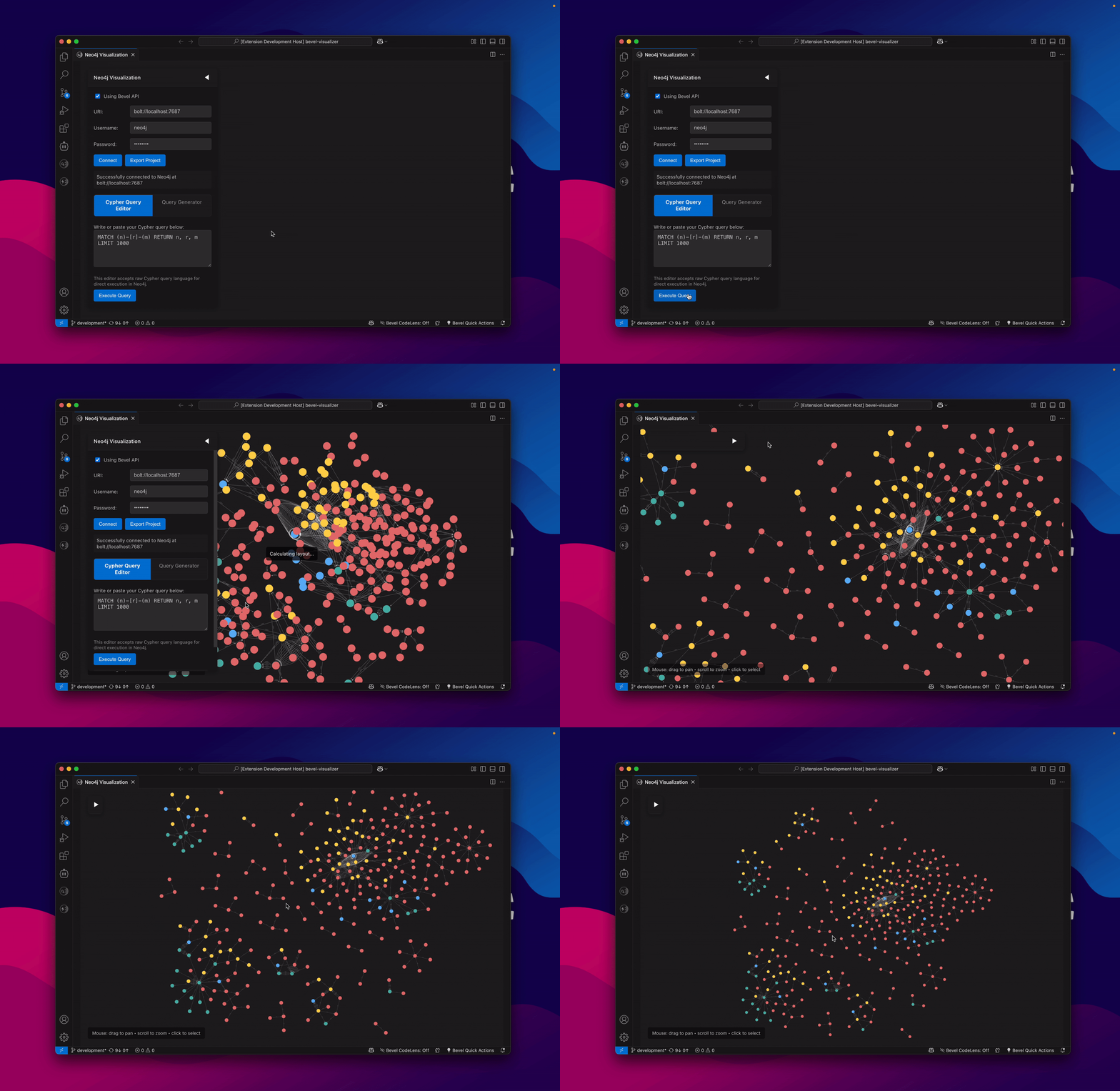 Bevel Neo4j Visualization - Explore your codebase visually
🧪 AI-Assisted Test Generation
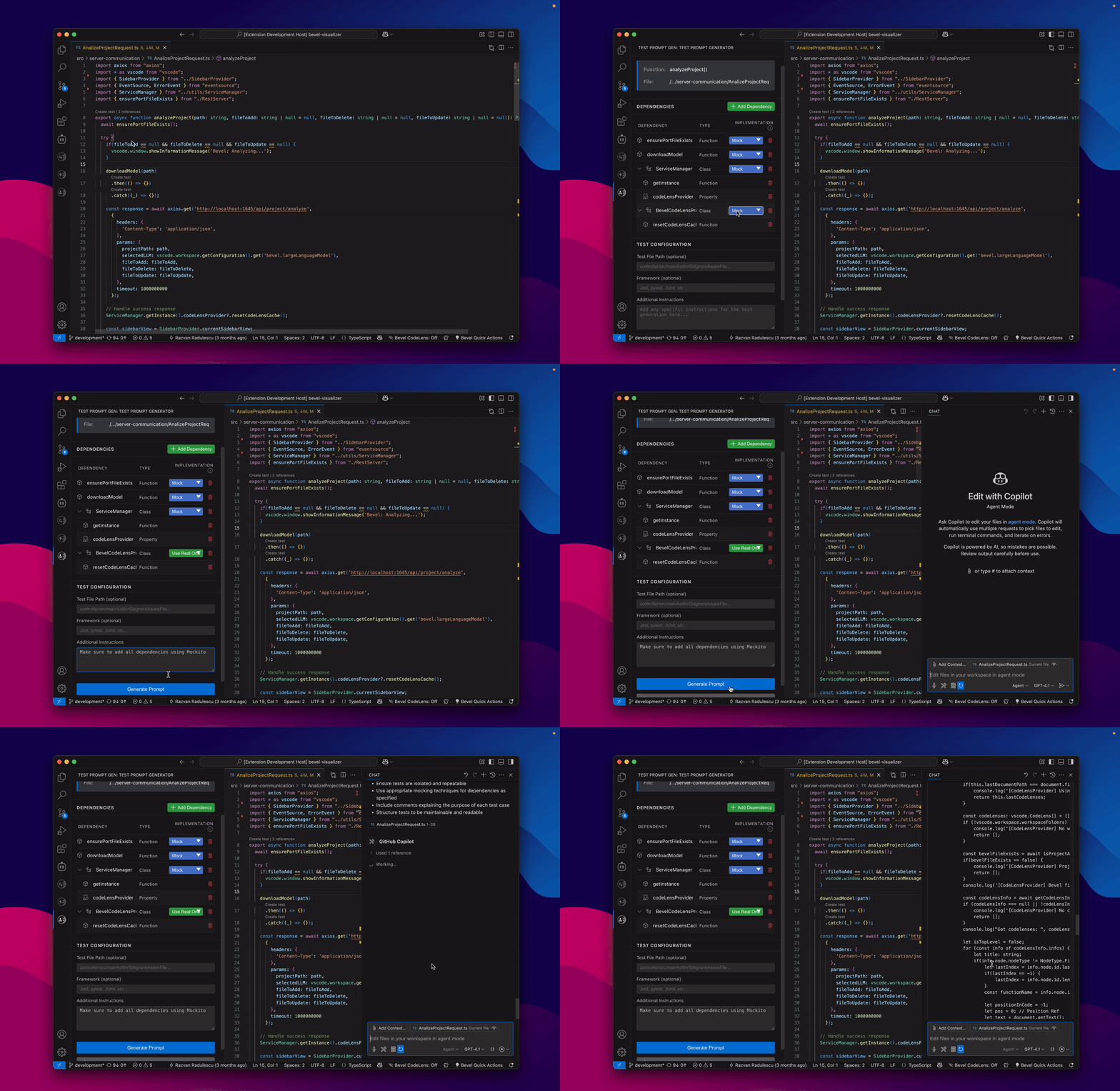 Bevel Test Generator - Generate comprehensive test prompts
📈 Sequence Diagrams & Documentation
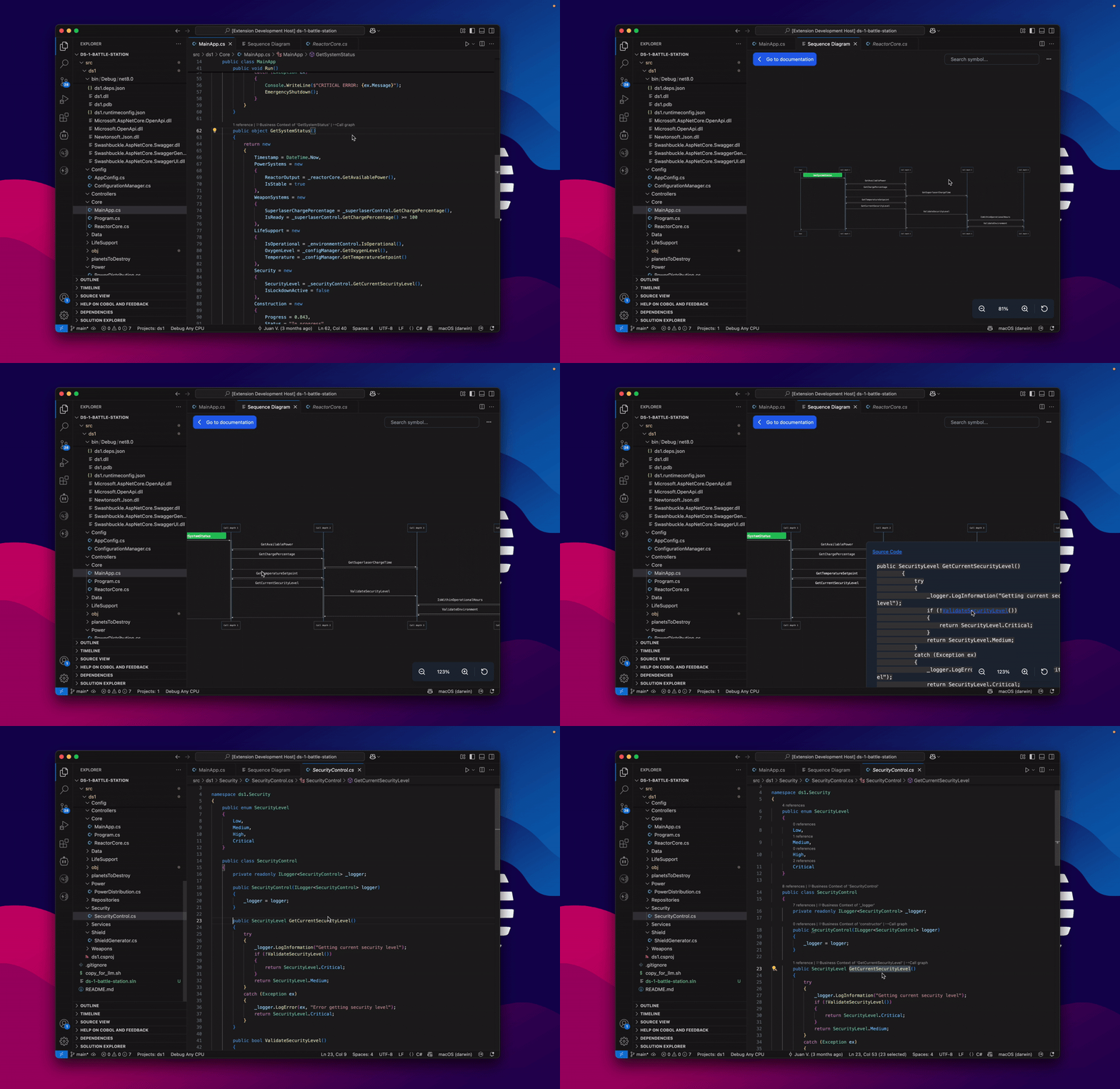 Bevel Extension - Generate interactive diagrams
🚀 Custom Tool Development
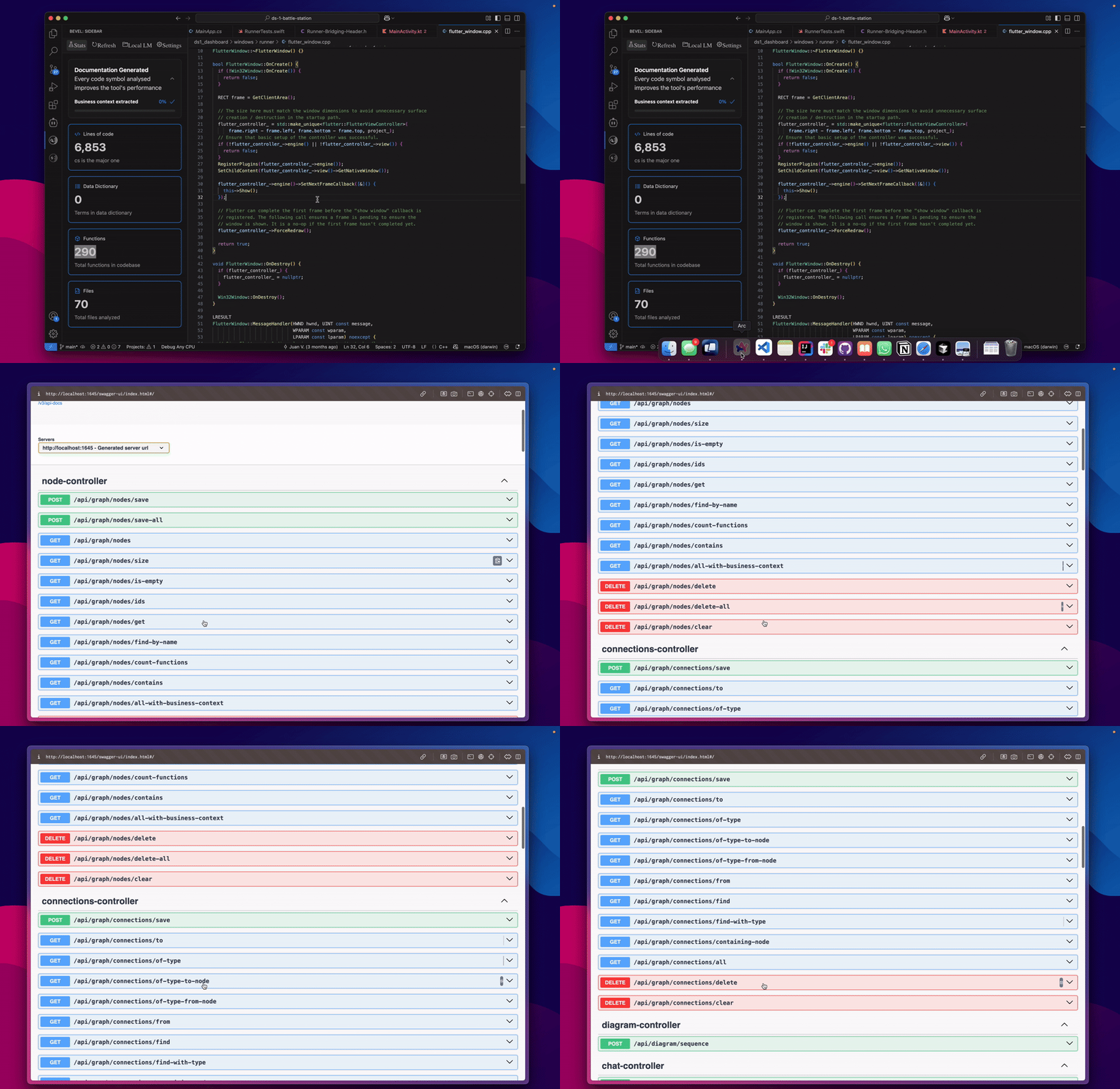 Build your own analysis tools using the knowledge graph API
✨ Key Features
- 🎯 VS Code LSP Integration: Leverages VS Code's language servers for robust, multi-language parsing
- 📊 Rich Graph Model: Comprehensive representation of code entities and relationships
- 🔄 Incremental Updates: Support for real-time graph updates based on file changes
- 📁 Smart File Discovery: Respects
.gitignorepatterns and project structures - 🔗 Similarity Detection: MinHashing for code similarity analysis
- 🏗️ Extensible Architecture: Build custom analysis tools on top of the graph
🤝 Contributing
Contributions are welcome! Whether it's bug fixes, feature enhancements, or improvements to documentation, your help is appreciated.
- Fork the repository.
- Create a new branch for your feature or fix.
- Make your changes. Adhere to Kotlin coding conventions.
- Add tests for any new functionality or bug fixes. Ensure all tests pass:
./gradlew test. - Commit your changes with clear, descriptive messages.
- Push to your branch.
- Open a Pull Request against the
mainbranch of the original repository.
Please ensure your PR description clearly explains the changes and their motivations.
📄 License
Mozilla Public License Version 2.0 - see LICENSE for details.
Unlock the hidden structure within your codebase! 🚀
Explorer des projets similaires
Chargement…