
zylwithxy/HRDiT
zylwithxy/HRDiT has 317 GitHub stars and 3 forks. GitHot measured 0 stars in 24 hours. Last checked 2026-11-11 11:48 UTC. Last push 2026-09-01.
[ECCV 2026] Official implementation of "HRDiT: Training-Free High-Resolution Image Generation with Off-the-Shelf Diffusion Transformer Models"
Crecimiento de estrellas medido
- in 24h
- 0
- in 7 days
- Actualización retrasada
- in 15 days
- Actualización retrasada
- in 1 month
- Actualización retrasada
Cambios netos en períodos que se solapan, no totales diarios. Los datos no disponibles se dejan en blanco. Las estrellas indican interés, no calidad.
README.md
OriginalHRDiT: Training-Free High-Resolution Image Generation with Off-the-Shelf Diffusion Transformer Models




Official implementation of HRDiT. Our project page is at zylwithxy.github.io/HRDiT-page.
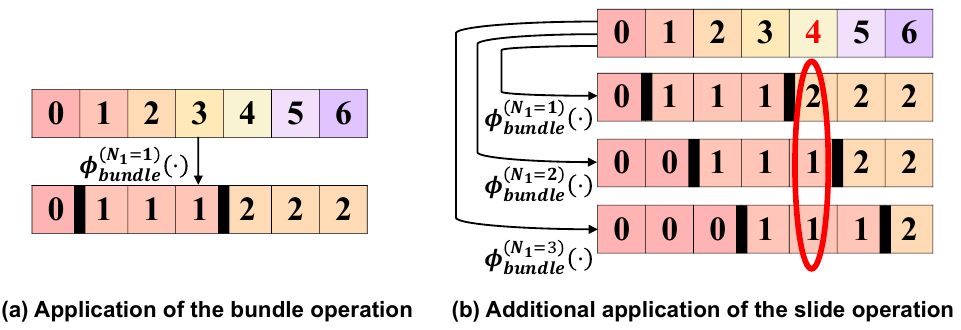
SPA: the bundle and slide operations (T = 7, N = 3).
🔔 News
- [2026-08-06] 🎉 Initial release of the HRDiT code.
- [2026-08-16] ⚙️ SPA and HAP are available as ComfyUI nodes in wildminder/ComfyUI-DyPE: SPA, HAP and HAP Calibrate, thanks for their work!
- [2026-08-27] 🤗 The Remyx AI team has reimplemented HRDiT as a diffusers pipeline at remyxai/hrdit-flux-modular, thanks for their work!
- [2026-08-28] 📺 The five-minute ECCV presentation is on YouTube.
- [2026-08-31] 🌐 The project page is live, with 4K samples and FLUX.1-dev comparisons.
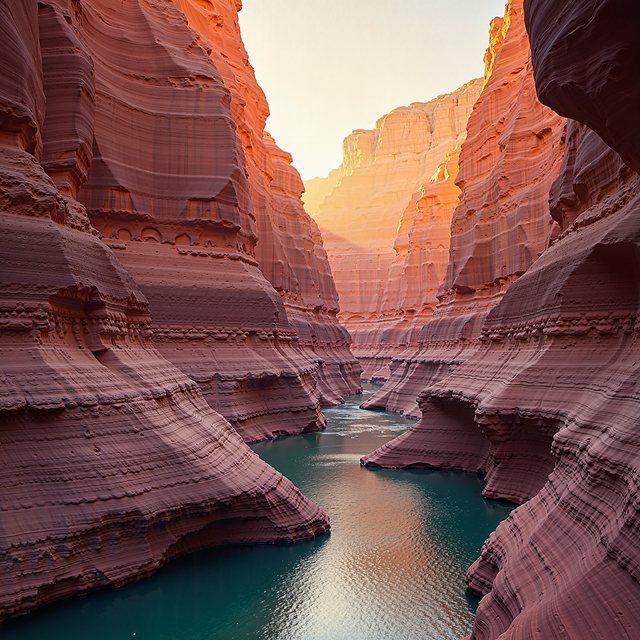
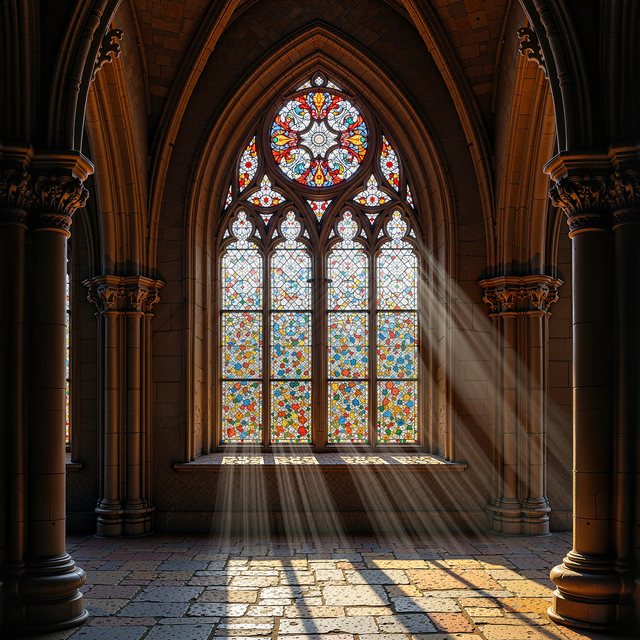
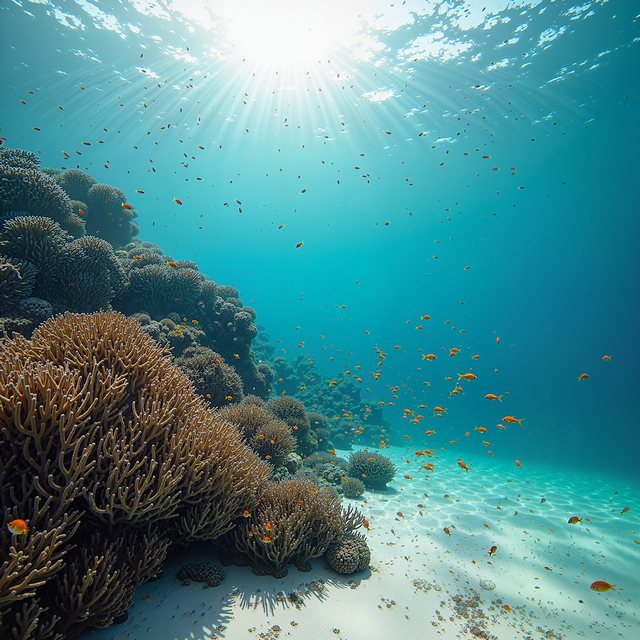
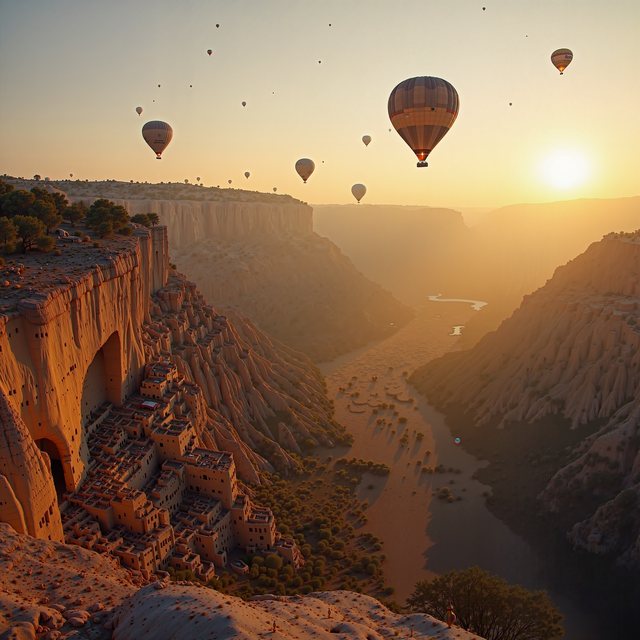
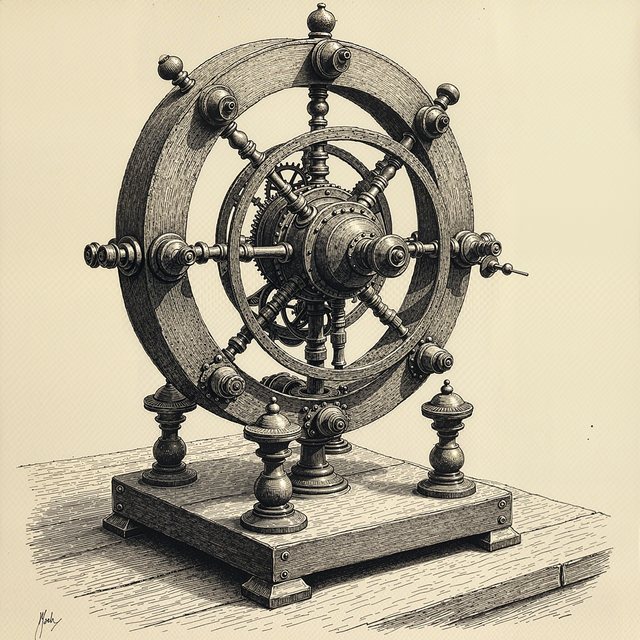
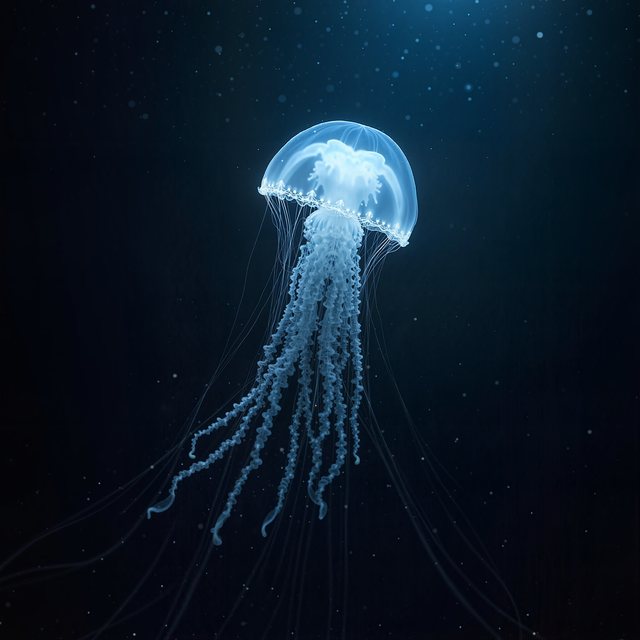
4096×4096, generated by HRDiT from off-the-shelf FLUX.1-dev. More on the
project page.
Overview
Training-free text-to-high-resolution image generation has recently attracted growing research attention. However, existing studies on this task primarily focus on adapting off-the-shelf U-Net-based diffusion models to high resolutions, with limited progress on adapting off-the-shelf Diffusion Transformer (DiT) models despite their strong text-to-image generation capabilities at limited resolutions. In this work, we find two key challenges particularly hindering the application of off-the-shelf DiT models for high-resolution image synthesis in a training-free manner, namely spatial disorder and long generation time. To address these challenges, we propose a novel method tailored to adapt off-the-shelf DiT models for high-resolution image synthesis, consisting of two components:
- SPA (Spatial Position Alignment) addresses spatial disorder by replacing each token index with a bundle index before it enters the positional encoding, and averaging over a set of bundle mappings whose boundaries slide, so that positional distinctions are restored without any training.
- HAP (Head-adaptive Attention Pruning) addresses long generation time by giving every attention head its own attention scope, derived once from the off-the-shelf model, and pruning the attention computations outside it.
HRDiT is training-free: it runs on off-the-shelf FLUX.1-dev weights and needs no fine-tuning.
🔧 Installation
Tested with CUDA 12.6 on NVIDIA GPUs. HAP is built on PyTorch FlexAttention and needs PyTorch 2.7 or newer.
conda create -n hrdit python=3.10 -y
conda activate hrdit

pip install torch==2.7.0 torchvision --index-url https://download.pytorch.org/whl/cu126
pip install -r requirements.txt
Download the off-the-shelf base model:
huggingface-cli download black-forest-labs/FLUX.1-dev --local-dir ./pretrained_models/FLUX.1-dev
🚀 Inference
Generate a 4K (4096x4096) image from a text prompt:
python inference.py \
    --prompt "A textbook shows a large group of people." \
    --model_path ./pretrained_models/FLUX.1-dev \
    --output_dir ./outputs
The image is produced progressively at 1024 -> 2048 -> 4096. The final 4K image
is written to --output_dir, and the 2048 intermediate to <output_dir>_res2k/.
To generate 2K only:
python inference.py --prompt "..." --resolutions 2048
To run several prompts from a file (one prompt per line, or a JSON list of strings):
python inference.py --prompt_file prompts.txt --num_prompts 10
Higher image quality
HAP only shortens generation; SPA is what restores spatial structure. Setting
scope_plan=None in the pipe(...) call of inference.py turns HAP off at
every step while SPA still runs: attention stays dense, generation takes
longer, and image quality is better.
Hardware
Generation runs on a single GPU; the pipeline does not shard the model across devices. A 4096x4096 image peaks at about 46 GiB, of which 33 GiB is the FLUX.1-dev weights in fp16. On a 48 GB A6000 card, run with
PYTORCH_CUDA_ALLOC_CONF=expandable_segments:True python inference.py ...
so the allocator does not fragment. --resolutions 2048 peaks at about 36 GiB.
Key arguments
| argument | default | meaning |
|---|---|---|
--resolutions |
2048 4096 |
target resolutions, generated in order |
--scope_plan |
configs/scope_plan_flux.json |
per-head attention scopes used by HAP |
--spa_steps |
3 0 |
number of leading denoising steps using SPA, per resolution stage |
--group_num |
80 |
SPA bundle granularity |
--global_anchor |
32 |
HAP keeps every N-th token block globally visible |
--seed |
3407 |
random seed |
--dtype |
fp16 |
fp16 or bf16 |
Deriving a scope plan
configs/scope_plan_flux.json holds the per-head attention scopes HAP prunes
with, and is ready to use as shipped.
To derive a plan for a different attention budget, see
HRDiT-HAP, which contains the
profiling and plan-search pipeline. Its output drops straight into
--scope_plan.
Citation
@inproceedings{xue2026hrdit,
  title={{HRDiT}: Training-Free High-Resolution Image Generation with Off-the-Shelf Diffusion Transformer Models},
  author={Xue, Yu and Qu, Haoxuan and Li, Zhuoling and Xu, Hongbin and Yin, Jianxiong and See, Simon and Rahmani, Hossein and Liu, Jun},
  booktitle={European Conference on Computer Vision (ECCV)},
  year={2026}
}
Acknowledgements
The code is built upon HiFlow, FLUX and I-Max, thanks for their work!
Explorar proyectos relacionados
ytdl-org/youtube-dl
Programa de línea de comandos para descargar vídeos de YouTube.com y otros sitios de vídeo
141,539 estrellasexcalidraw/excalidraw
Pizarra virtual para esbozar diagramas con aspecto de dibujo a mano
135,492 estrellasgodotengine/godot
Godot Engine – Motor de videojuegos 2D y 3D multiplataforma
120,003 estrellasmrdoob/three.js
Biblioteca 3D de JavaScript.
118,122 estrellas