Proyectos Ver en GitHub
xcmyz/FastSpeech
Acerca de
Implementación de FastSpeech basada en PyTorch.
Aprendizaje automáticoCrecimiento de estrellas medido
- in 24h
- 0
- in 7 days
- 0
- in 15 days
- Recopilando historial
- in 1 month
- Recopilando historial
Cambios netos en períodos que se solapan, no totales diarios. Los datos no disponibles se dejan en blanco. Las estrellas indican interés, no calidad.
README.md
OriginalFastSpeech-Pytorch
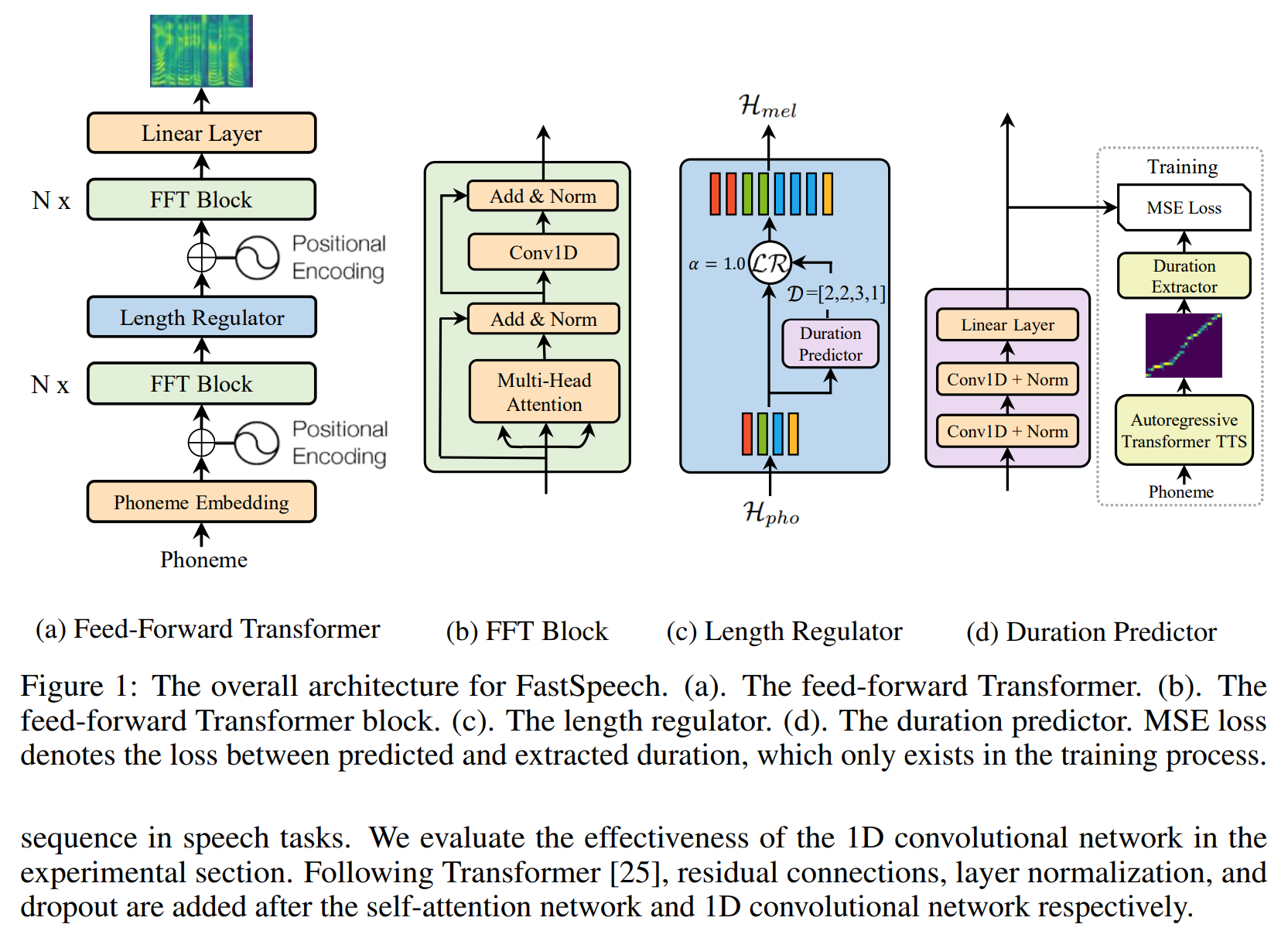
The Implementation of FastSpeech Based on Pytorch.
Update (2020/07/20)
- Optimize the training process.
- Optimize the implementation of length regulator.
- Use the same hyper parameter as FastSpeech2.
- The measures of the 1, 2 and 3 make the training process 3 times faster than before.
- Better speech quality.
Model
My Blog
Prepare Dataset
- Download and extract LJSpeech dataset.
- Put LJSpeech dataset in
data. - Unzip
alignments.zip. - Put Nvidia pretrained waveglow model in the
waveglow/pretrained_modeland rename aswaveglow_256channels.pt; - Run
python3 preprocess.py.
Training
Run python3 train.py.
Evaluation
Run python3 eval.py.
Notes
- In the paper of FastSpeech, authors use pre-trained Transformer-TTS model to provide the target of alignment. I didn't have a well-trained Transformer-TTS model so I use Tacotron2 instead.
- I use the same hyper-parameter as FastSpeech2.
- The examples of audio are in
sample. - pretrained model.
Reference
Repository
- The Implementation of Tacotron Based on Tensorflow
- The Implementation of Transformer Based on Pytorch
- The Implementation of Transformer-TTS Based on Pytorch
- The Implementation of Tacotron2 Based on Pytorch
- The Implementation of FastSpeech2 Based on Pytorch
Paper
Explorar proyectos relacionados
Cargando…