
oussamahamdaoui/forgJs
oussamahamdaoui/forgJs has 1,652 GitHub stars and 46 forks. GitHot measured +1 in 7 days. Last checked 2026-11-13 17:22 UTC. Last push 2023-10-18.
Crecimiento de estrellas medido
- in 24h
- Actualización retrasada
- in 7 days
- +1
- in 15 days
- Recopilando historial
- in 1 month
- Recopilando historial
Cambios netos en períodos que se solapan, no totales diarios. Los datos no disponibles se dejan en blanco. Las estrellas indican interés, no calidad.
Acerca de
ForgJs is a javascript lightweight object validator.
Herramientas de desarrolloREADME.md
Original
ForgJs is a JavaScript lightweight object validator. Go check the Quick start section and start coding with love :heart:
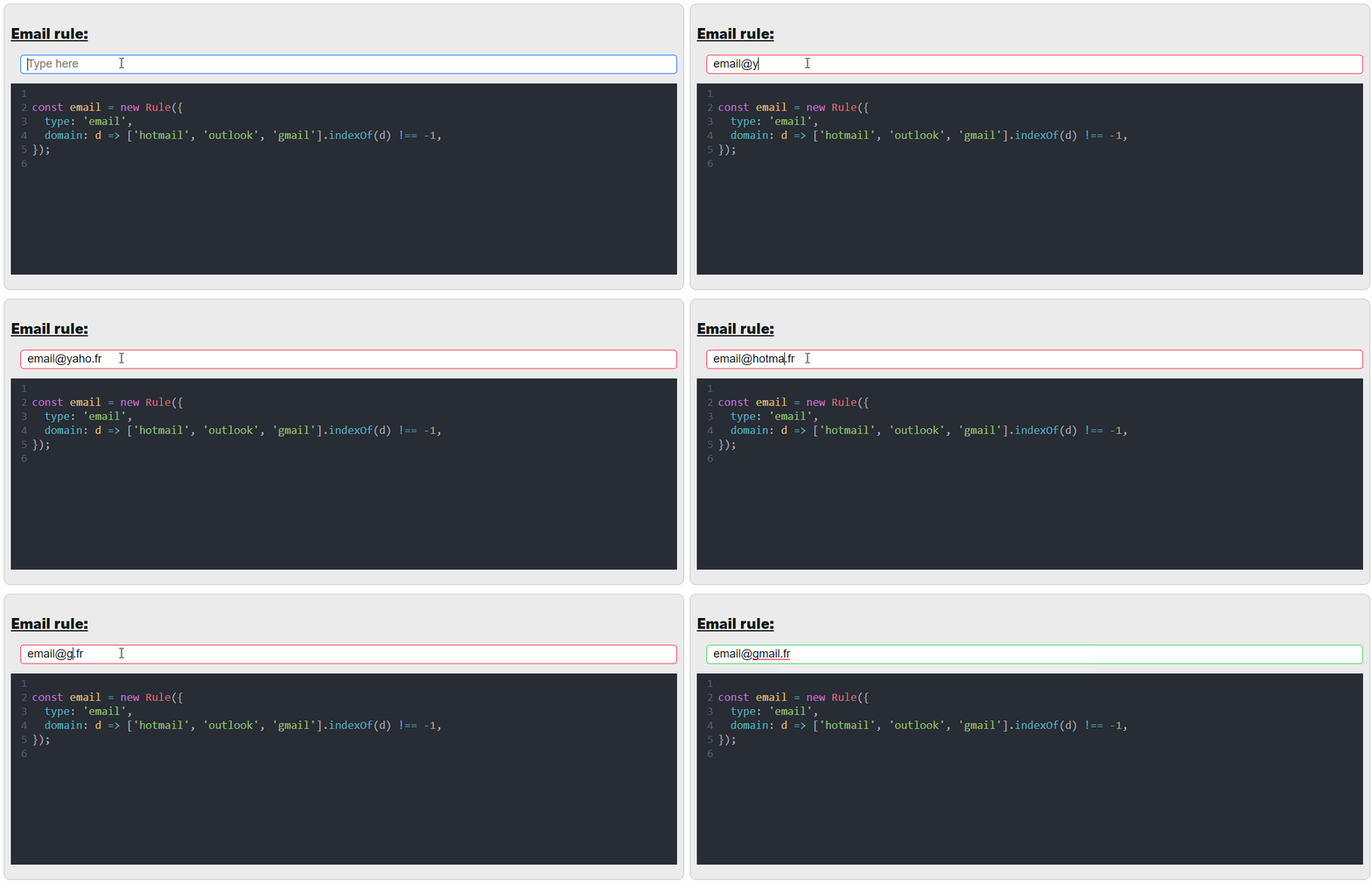
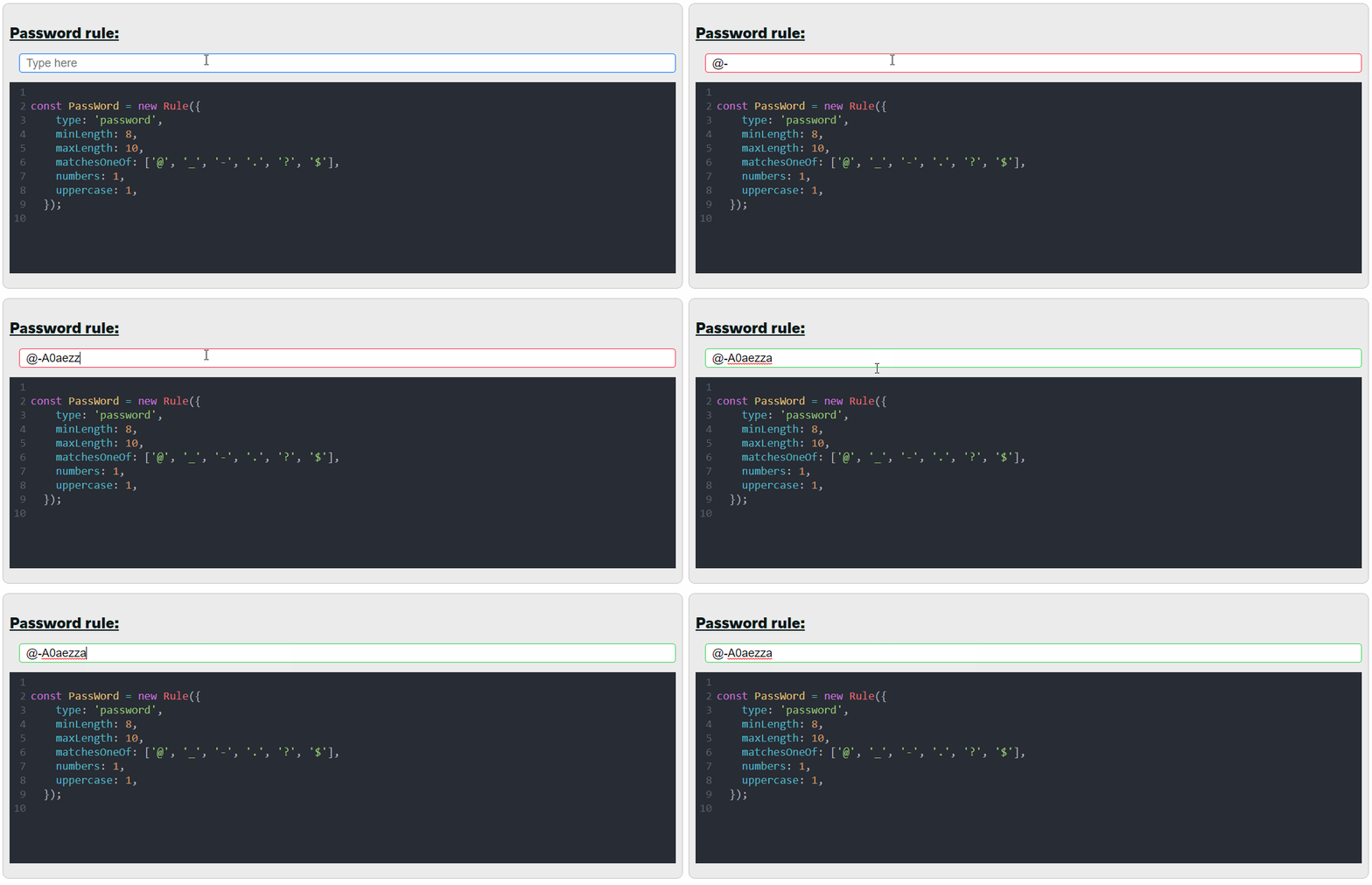
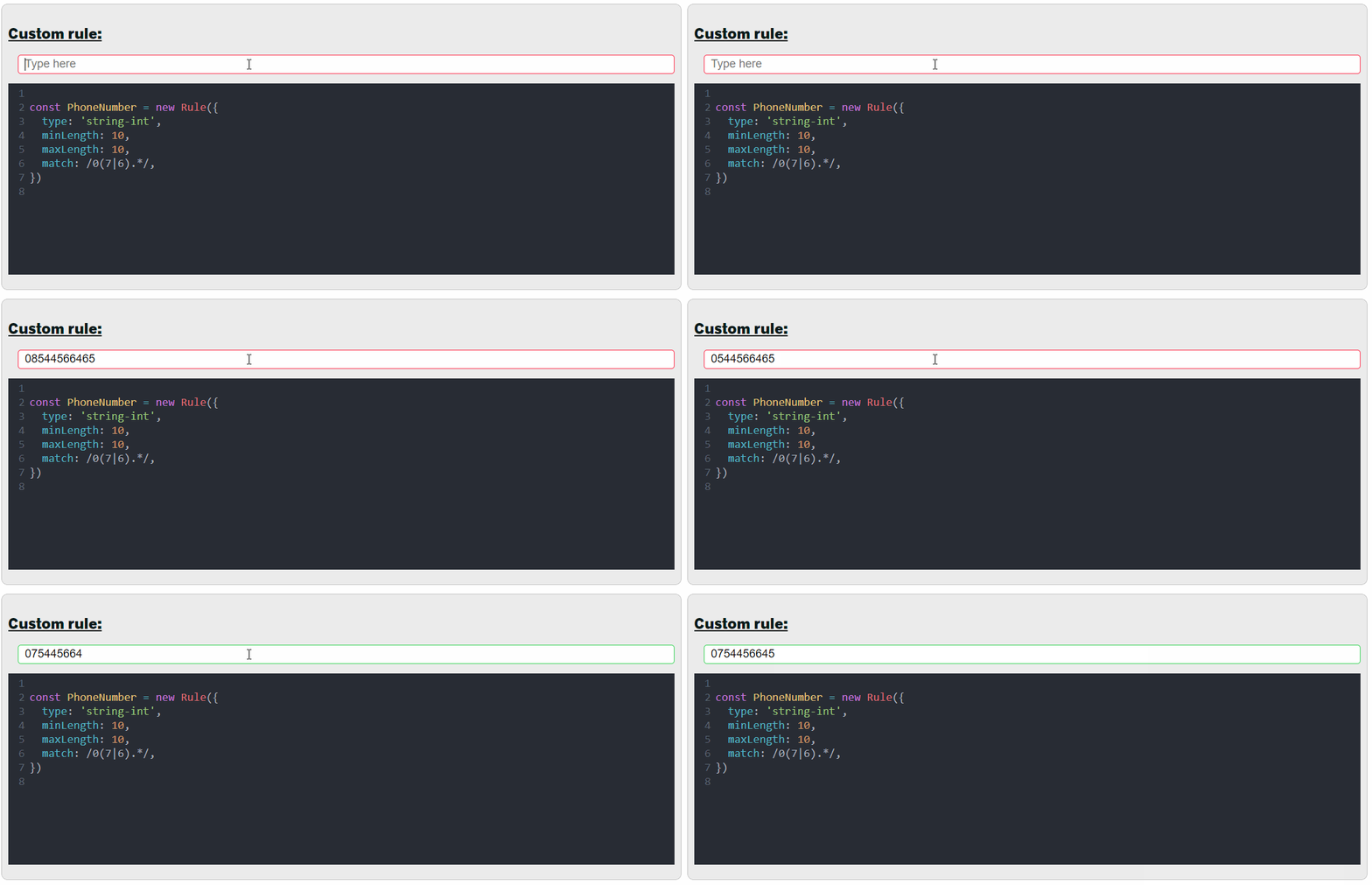
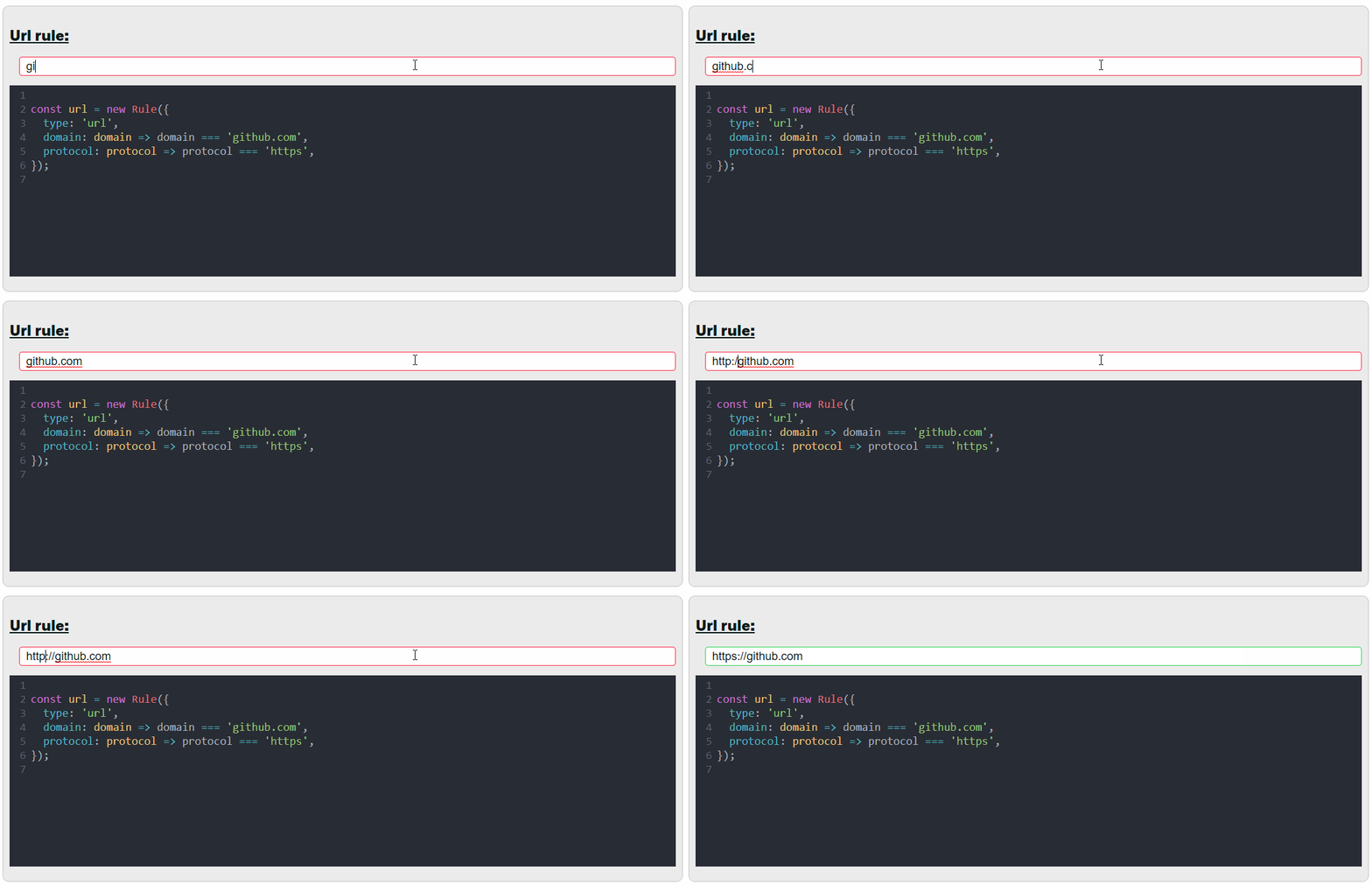
See more live examples here
Quick start
Install it via npm by running npm i @cesium133/forgjs
Your first validator
  const { Validator, Rule } = require('@cesium133/forgjs');

const emailRule = new Rule({
    type: 'email',
    user: user => user === 'dedede',
    domain: domain => ['outlook', 'gmail', 'yahoo'].indexOf(domain) !== -1,
}, null);

const passwordRule = new Rule({
    type: 'password',
    minLength: 8,
    uppercase: 1,
    numbers: 1,
    matchesOneOf: ['@', '_', '-', '.', '!'],
}, null);

const vComplex = new Validator({
    age: new Rule({ type: 'int', min: 18, max: 99 }),
    dateOfBirth: new Rule({ type: 'date' }),
    array: new Rule({ type: 'array', of: new Rule({ type: 'string' }) }),
    email: emailRule,
    password: passwordRule
});

vComplex.test({
    age: 26,
    dateOfBirth: new Date(1995, 10, 3),
    array: ['1'],
    email: '[email protected];',
    password: 'ad1_A@@Axs',
}); /// returns true
Error handling
You can get custom error messages by doing this:
const vComplexe = new Validator({
    age: new Rule({
      type: 'int', min: 18, max: 99,
    }, 'age must be integer and between 18 and 99'),
    dateOfBirth: new Rule({ type: 'date' }, 'date must be a date'),
  });

  vComplexe.getErrors({
    age: 16,
    dateOfBirth: 123,
  }); // ['age must be integer and between 18 and 99', 'date must be a date']
Test over an array
You can test over multiple arrays using this method:
const vComplexe = new Validator({
    age: new Rule({
      type: 'int', min: 18, max: 99,
    }),
  });

  vComplexe.testAll([{
    age: 19,
  }, {
    age: 16,
  }]);  // returns 1
Rules
A Rule object validates a single value, it can be used like this:
  const { Validator, Rule } = require('@cesium133/forgjs');
  const floatRule = new Rule({
    type: 'float',
    min: 100,
  }, null);

  floatRule.test(2.001); /// returns true;
The only required value is type!
You can make a rule by simply passing a string if you only need to check the type :
new Rule('int');
int
- min (int)
- max (int)
- equal (int)
boolean
- toBe (boolean)
string
- minLength (int)
- maxLength (int)
- equal (string)
- match: (regex)
- notEmpty (bool)
- minLength (int)
- maxLength (int)
- equal (string)
- match: (regex)
- notEmpty (bool)
- user (
function(user)) - domain (
function(domain))
  const emailRule = new Rule({
    type: 'email',
    user: user => user === 'dedede',
    domain: domain => ['outlook', 'gmail', 'yahoo'].indexOf(domain) !== -1,
  }, null);

  emailRule.test('[email protected]'); // returns true
password
- minLength (int)
- maxLength (int)
- equal (string)
- match: (regex)
- notEmpty (bool)
- uppercase (int)
- number (int)
- mathesOneOf (Array)
- matchesAllOf (Array)
  const passwordRule = new Rule({
    type: 'password',
    minLength: 8,
    uppercase: 1,
    numbers: 1,
    matchesOneOf: ['@', '_', '-', '.', '!'],
  }, null);

  passwordRule.test('@_-bddcd6A'); // returns true
url
- minLength (int)
- maxLength (int)
- equal (string)
- match: (regex)
- notEmpty (bool)
- protocol (
function(protocol)) - domain (
function(domain))
  const urlRule = new Rule({
    type: 'url',
    protocol: prot => prot === 'https',
    domain: domain => domain === 'google.fr',
  }, null);

  urlRule.test('https://google.fr'); // returns true
date
- after (date)
- before (date)
- between (Array of dates like this [date, date])
- equal (date)
float
- min (Number)
- max (Number)
- equal (float)
array
- of (Rule or Validator object)
- notEmpty (bool)
- length (int)
The of rule checks every element of the array against the rule.
function
- result
To explain result, what's better than an example:
  const { Validator, Rule } = require('@cesium133/forgjs');

  function someFunctionThatReturnsAnInt(int) {
    return int * 5;
  }

  const functionTest = new Rule({
    type: 'function',
    result: {
      of: 5,
      toBe: new Rule('int'),
    },
  }, null);

  functionTest.test(someFunctionThatReturnsAnInt); /// returns true;
string-int, string-float, string-date, string-boolean
These types 'inherit' from string, they have both the properties, here are some examples:
string-int
const stringInt = new Rule({
  type: 'string-int',
  minLength: 2,
  min: 5,
}, null);

stringInt.test(2) // returns false 2 is not a string
stringInt.test('2a') // returns false '2a' is not a int
stringInt.test('2.1') // returns false '2.1' is not a int
stringInt.test('5') // returns false length of '5' is smaller than 2
stringInt.test('50') // returns true
string-boolean
const stringBoolean = new Rule({
  type: 'string-boolean',
  toBe: true
}, null);

stringBoolean.test(true) // returns false true is not a boolean
stringBoolean.test('false') // returns false 'false' is not true
stringBoolean.test('true') // returns true
const stringDate = new Rule({
  type: 'string-date',
  after: new Date(2019, 11, 1),
}, null);

stringDate.test(new Date(2018, 11, 1)) // returns false new Date(2018, 11, 1) is not a string
stringDate.test('some string') // returns false 'some string' is not a valid date
stringDate.test('2018-12-17') // returns false '2018-12-17' is not after new Date(2019, 11, 1)
stringDate.test('2020-01-01') // returns true
Forgjs tries to cast the value to the right type before passing it to the validation function please be careful!
Here is an example where Javascript behaviour makes the test wrong:
const stringDate = new Rule({
  type: 'string-date',
  equal: new Date(2019, 10, 1), // month in js strart at 0
}, null);

stringDate.test('2019-11-01') // returns false
stringDate.test('2019-11-01T00:00') // returns true


// this is because:

new Date(2019, 10, 1) - new Date('2019-11-01') // equals  3600000 thats exactly 1 hour

new Date(2019, 10, 1) - new Date('2019-11-01T00:00') // equals 0
Multiple types
You can check for multiple types with OR or AND operators like this:
  const intRule = new Rule({
    type: 'int|float|number',
  }, null);

  intRule.test(2) // returns true
This means the test should verify the int, float or number rule
  const intRule = new Rule({
    type: 'int&number',
  }, null);
  intRule.test(2.1); // returns false
The result doesn't match the int rule
Common properties
Every type has these properties:
- optional
- custom
- oneOf
optional
If optional is set to true the element is optional and an undefined value is considered correct.
Example:
const { Validator, Rule } = require('@cesium133/forgjs');

const intRule = new Rule({
    type: 'int',
    optional: true,
  }, null);
intRule.test(); // returns true
custom
Custom allows you to write your own rule, an example is better than a long explanation:
  const { Validator, Rule } = require('@cesium133/forgjs');

  function isCorrectAge(age, object) {
    if (age === Math.floor((new Date() - object.dateOfBirth) / 1000 / 60 / 60 / 24 / 30 / 12)) {
      return true;
    }
    return false;
  }
  const vComplexe = new Validator({
    age: new Rule({
      type: 'int', min: 18, max: 99, custom: isCorrectAge,
    }),
    dateOfBirth: new Rule({ type: 'date' }),
  });

  vComplexe.test({
    age: 23,
    dateOfBirth: new Date(1995, 10, 3),
    array: ['1'],
  }); // returns true
oneOf
One of checks if the element is in a array
  const floatRule = new Rule({
    type: 'float',
    oneOf: [3.5, 100.1, 7.2, 0.1],
  }, null);
  floatRule.test(100.1); // returns true
Make a new type
Creating a new type is done using the Rule class like this:
  const { Validator, Rule } = require('@cesium133/forgjs');

  Rule.addCustom('customInteger', {
    min: (val, min) => val - min > 0,
    max: (val, max) => val - max < 0,
    equal: (val, equal) => val === equal,
    type: val => Number.isInteger(val) && val > 0 && val < 100,
  });

  const customInteger = new Rule({
    type: 'customInteger',
    min: 10,
  }, null);

  customInteger.test(11) // returns true

  customInteger.test(200) // returns false
How to contribute
Thank you everyone for contributing to make this code better, if you have suggestions or ideas to improve the code please feel free to leave a comment here #29. Rules:
1 Please use this template which will help developers to test and better understand your request
const someRule= new Rule({
    type: 'yourType',
    prop1: val1,
    prop2: val2, ...
  }, null);

  someRule.test(validValue) // returns true
  someRule.test(invalidValue) // returns false
2 Please if you think a comment is a good feature to be added like the comment instead of creating a new one.
3 Before submitting a new comment check if the same comment is not already present
4 If you submit a PR (pull request) and you only change the Readme please add [ci skip] to your commit message
5 If you have any questions ask them in the FAQ
6 Please have fun, and if you feel like not following the rules then don't follow them
code with love ❤️
Left TO DO for next release
Contact
Follow me on twitter at @forg_js
Explorar proyectos relacionados
codecrafters-io/build-your-own-x
Domina la programación recreando desde cero tus tecnologías favoritas.
562,300 estrellaspublic-apis/public-apis
Una lista colectiva de API gratuitas
498,729 estrellasmorluto/rea
Ingeniería inversa de cualquier cosa con agentes, desde el comportamiento de la aplicación hasta los binarios nativos.
457,157 estrellasopenclaw/openclaw
La IA que de verdad hace las cosas. Cualquier sistema operativo y cualquier plataforma. Al estilo langosta. 🦞
394,375 estrellas