
mattmacy/vnet.pytorch
mattmacy/vnet.pytorch has 762 GitHub stars and 199 forks. GitHot measured 0 stars in 24 hours. Last checked 2026-11-20 02:59 UTC. Last push 2018-07-06.
Crecimiento de estrellas medido
- in 24h
- 0
- in 7 days
- Recopilando historial
- in 15 days
- Recopilando historial
- in 1 month
- Recopilando historial
Cambios netos en períodos que se solapan, no totales diarios. Los datos no disponibles se dejan en blanco. Las estrellas indican interés, no calidad.
Acerca de
A PyTorch implementation for V-Net: Fully Convolutional Neural Networks for Volumetric Medical Image Segmentation
Aprendizaje automáticoREADME.md
OriginalA PyTorch implementation of V-Net
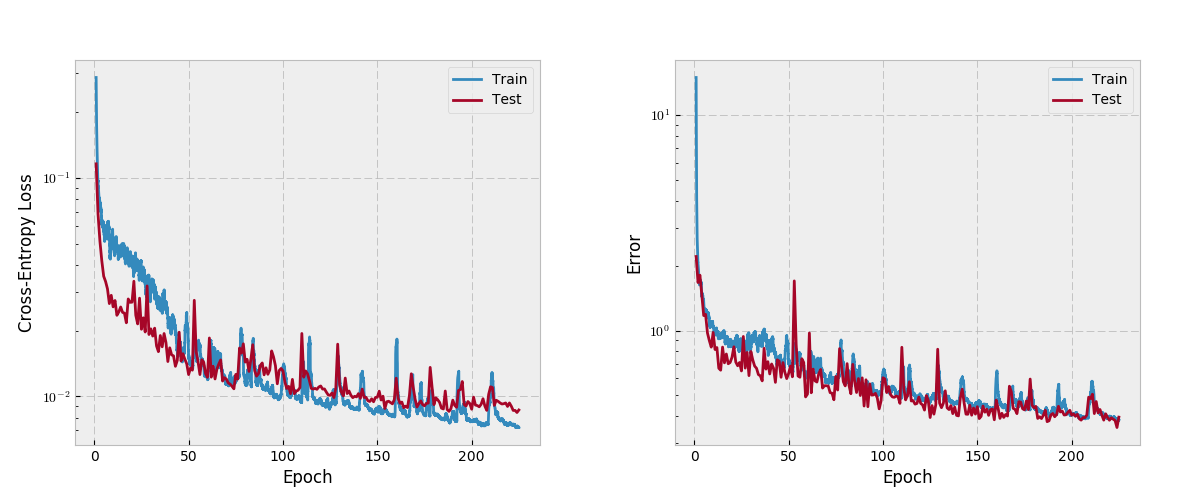
Vnet is a PyTorch implementation of the paper V-Net: Fully Convolutional Neural Networks for Volumetric Medical Image Segmentation by Fausto Milletari, Nassir Navab, and Seyed-Ahmad Ahmadi. Although this implementation is still a work in progress, I'm seeing a respectable 0.355% test error rate and a Dice coefficient of .9825 segmenting lungs from the LUNA16 data set after 249 epochs. The official implementation is available in the faustomilletari/VNet repo on GitHub.
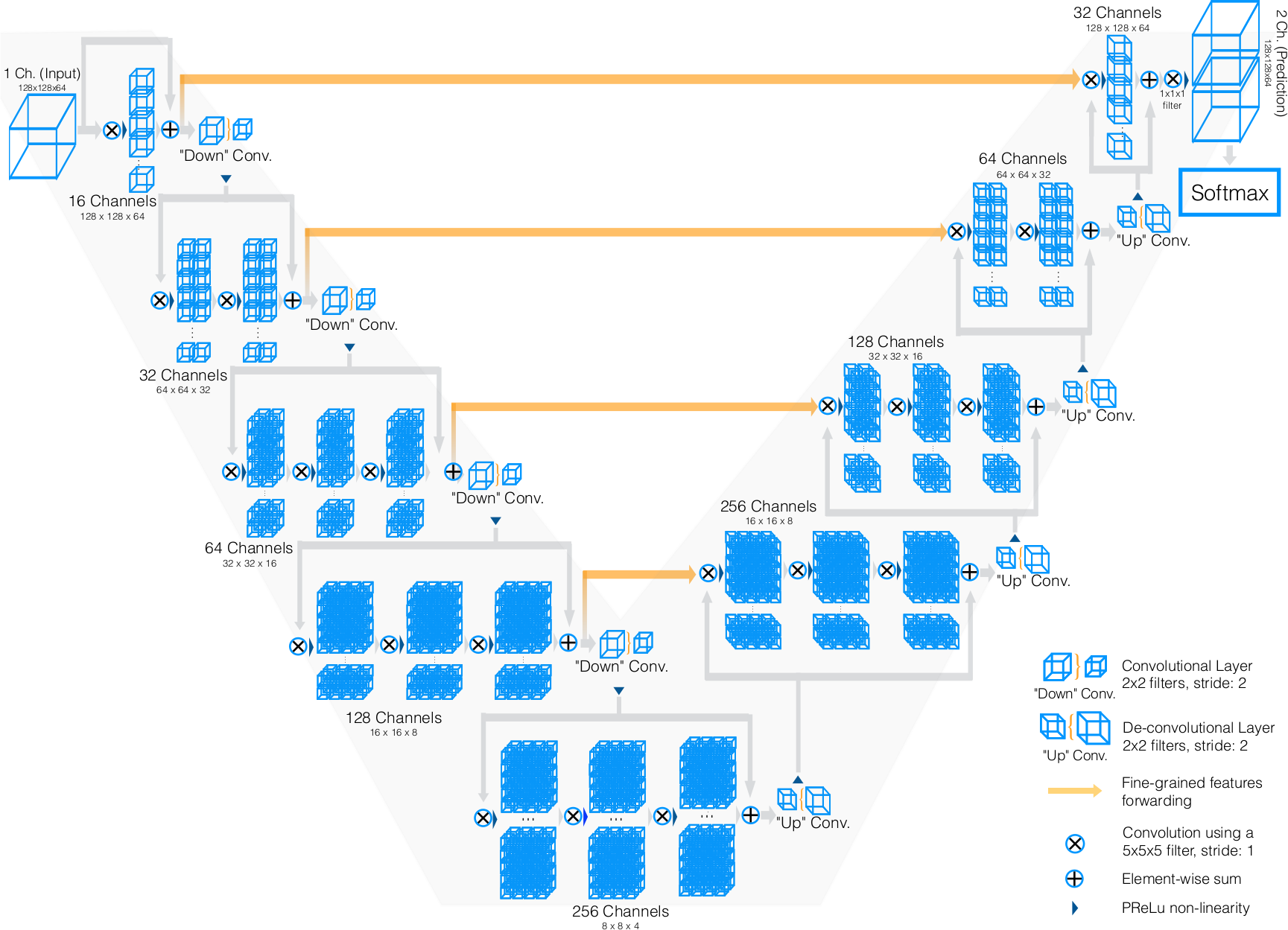
This implementation relies on the LUNA16 loader and dice loss function from the Torchbiomed package.
Differences with the official version
This version uses batch normalization and dropout. Lung volumes in CTs are ~10% of the scan volume - a not too unreasonable class balance. For this particular test application I've added the option of using NLLoss instead of the Dice Coefficient.
What does the PyTorch compute graph of Vnet look like?
You can see the compute graph here, which I created with make_graph.py, which I copied from densenet.pytorch which in turn was copied from Adam Paszke's gist.
Credits
The train.py script was derived from the one in the densenet.pytorch repo.