ultralytics/mnist has 73 GitHub stars and 5 forks. GitHot measured 0 stars in 24 hours. Last checked 2026-11-15 10:38 UTC. Last push 2026-08-28.
Gemessener Sternzuwachs
- in 24h
- 0
- in 7 days
- Verlauf wird gesammelt
- in 15 days
- Verlauf wird gesammelt
- in 1 month
- Verlauf wird gesammelt
Nettoänderungen in überlappenden Zeiträumen, keine Tagessummen. Fehlende Messwerte bleiben leer. Sterne zeigen Interesse, nicht Qualität.
Über uns
PyTorch sandbox for testing convolutional networks, ResNets, and other architectures on MNIST digits.
Maschinelles LernenREADME.md
Original
🚀 Introduction
Welcome to the repository containing innovative software developed by Ultralytics 🧠. Our code is 🌟 open-sourced and freely available for redistribution under the AGPL-3.0 license. For more insight into our work and impact, head over to https://www.ultralytics.com.


📗 Description
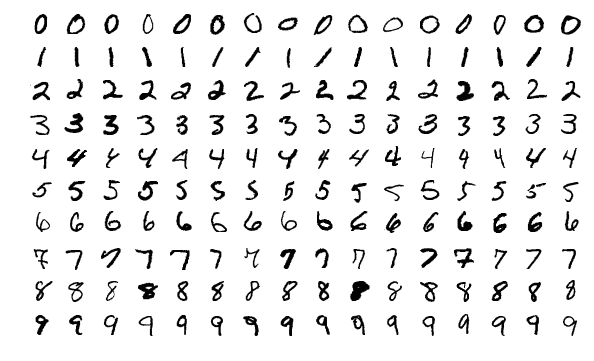
The repository at https://github.com/ultralytics/mnist is our dedicated playground for the MNIST dataset. 🖐 This repository houses sandbox code that allows for experimentation and training of different neural network architectures on the famous MNIST digit database.
📦 Requirements
Ensure you have Python 3.7 or later installed on your machine. The following packages are required, and you can install them using pip with the provided command: pip3 install -U -r requirements.txt.
numpy: A fundamental package for scientific computing in Python.scipy: Used bytrain.pyto load the bundled MATLAB.matMNIST files.torch: PyTorch, an open-source machine learning library for Python.torchvision: A PyTorch package that includes datasets and model architectures for computer vision.opencv-python: An open-source computer vision and machine learning software library.h5py: Provides HDF5 file support for reading large v7.3.matfiles intrain_xview_classes.py.tqdm: Progress bars used bydetect.pyandtrain_resnet.py.
🏃♂️ Run
To start training on the MNIST digits dataset, install the dependencies and execute train.py from the repository root:
pip3 install -U -r requirements.txt
python3 train.py
The default script trains ConvNetb for 20 epochs using the bundled data/MNISTtrain.mat and data/MNISTtest.mat files, which were initially curated from Yann LeCun's MNIST database. Additional experimental entry points include train_resnet.py, train_sandd.py, and train_xview_classes.py.
💡 Contribute
We welcome contributions from the community! Whether you're fixing bugs, adding new features, or improving documentation, your input is invaluable. Take a look at our Contributing Guide to get started. Also, we'd love to hear about your experience with Ultralytics products. Please consider filling out our Survey. A huge 🙏 and thank you to all of our contributors!
📄 License
Ultralytics is excited to offer two different licensing options to meet your needs:
- AGPL-3.0 License: Perfect for students and hobbyists, this OSI-approved open-source license encourages collaborative learning and knowledge sharing. Please refer to the LICENSE file for detailed terms.
- Enterprise License: Ideal for commercial use, this license allows for the integration of Ultralytics software and AI models into commercial products without the open-source requirements of AGPL-3.0. For use cases that involve commercial applications, please contact us via Ultralytics Licensing.
📮 Contact
For bug reports, feature requests, and contributions, head to GitHub Issues. For questions and discussions about this project and other Ultralytics endeavors, join us on Discord!