
uilianks/kiln has 27 GitHub stars and 8 forks. GitHot measured +1 stars in 24 hours. Last checked 2026-11-12 09:28 UTC. Last push 2026-11-07.
So werden diese Zahlen gemessen
Low-poly and voxel 3D game assets as code: a DSL that exports GLB with lights, agent-readable previews, a live viewer and Blender renders, turntables and camera-move videos. Sibling of vex and chirp.
What you can do
- Low-poly primitives: box, cylinder (tapering), cone, icosphere, rock, lathe, extrude (any outline, concave ok), gable prism, wedge, plus vertex jitter for a hand-made look.
- Voxels: text layers like pixel art, a function of (x, y, z), or voximg(): a pixel-art PNG extruded into voxels with one material per color; greedy-meshed.
- Tubes and terrain: torus, tube along a path (pipes, cables, branches; mitered, twist-free) and terrain heightfields from a function or a loom height map, with materials picked per triangle by height and slope. --stl exports for 3D printing.
- Structure: transforms, mirror symmetry, stamps, scatter, random groups, material-swap variants.
Gemessener Sternzuwachs
- in 24h
- +1
- in 7 days
- Verlauf wird gesammelt
- in 15 days
- Verlauf wird gesammelt
- in 1 month
- Verlauf wird gesammelt
Nettoänderungen in überlappenden Zeiträumen, keine Tagessummen. Fehlende Messwerte bleiben leer. Sterne zeigen Interesse, nicht Qualität.
README.md
Originalkiln
Low-poly and voxel 3D game assets as code. Write a small .kx.js file of primitives, voxel
layers, lights, mirrors and scatters. kiln builds flat-shaded meshes (or smooth ones with crisp creases and
baked ambient occlusion, when you ask), exports GLB for Godot,
Unity, Unreal and Three.js, renders previews an AI agent can read, and hands off to Blender
for beauty renders, turntables and camera-move videos.
Part of a family with vex (vector art, skeletal animation), pxl (pixel art), chirp (game audio) and loom (seamless textures and PBR materials), inspired by claude-pxl: sandboxed source files, lazy cached builds, errors with exact locations, and a live viewer.
Showcase
Everything below is code in showcase/, rendered by kiln and Blender. No modeling
by hand, no image models.
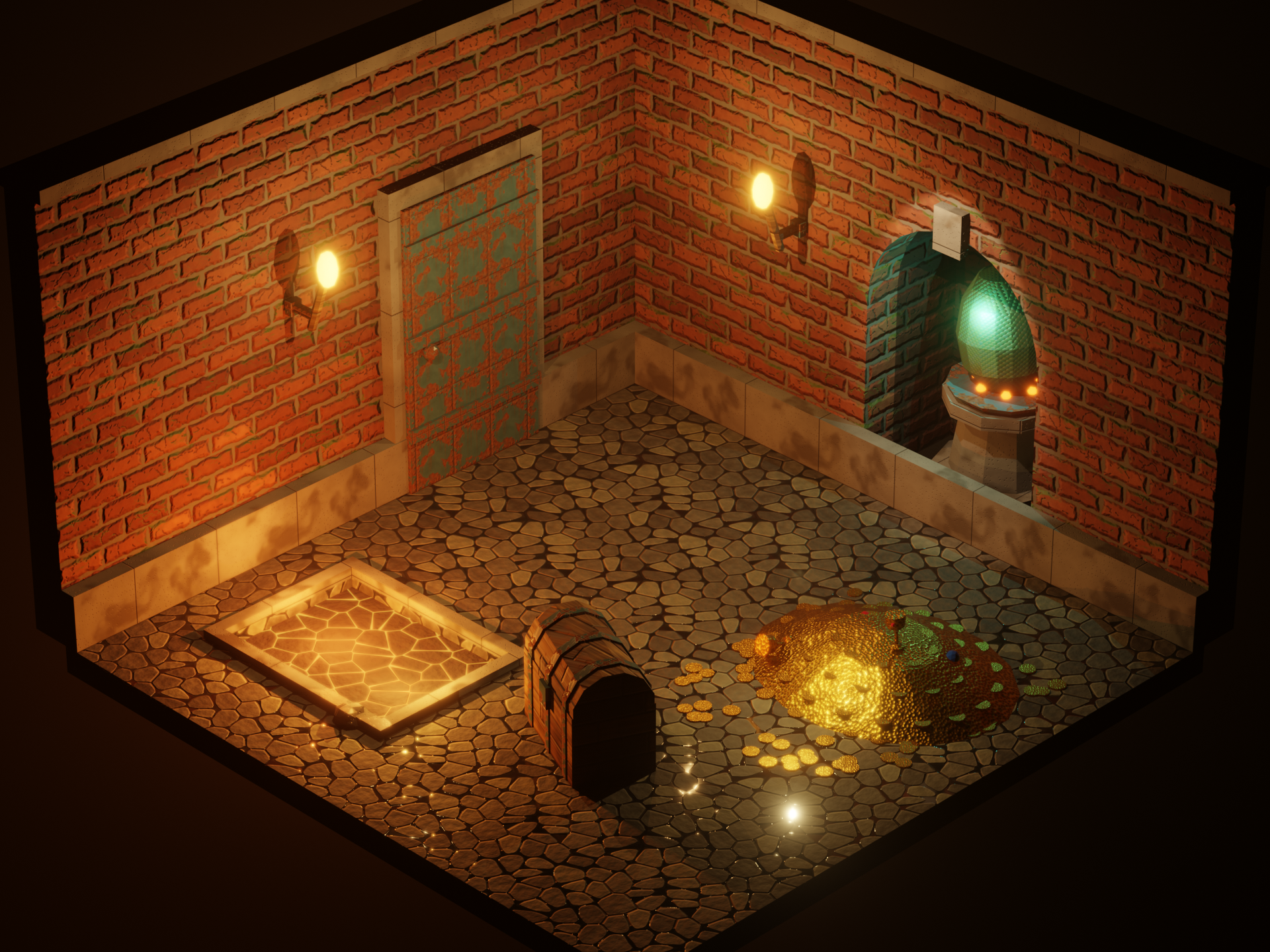
THE DRAGON'S HOARD: textured with loom
▶ Watch the camera push-in · source: dragon_hoard.kx.js
Every surface is a seamless PBR material from loom: mossy brick,
wet cobblestone, stained concrete, worn wood, rusted iron, lava rock (emissive), dragon scales and
hammered gold. A palette entry points at the loom output ({ tex: T + "brick_wall", uv: 1.5 }); kiln
box-projects UVs onto every face and embeds albedo, normal, ORM and emissive in the GLB, so Blender
(and any engine) renders real relief, roughness and glow. Lit only by the scene: a lava pit, two torches,
the egg's glow and a spot on the niche.
LAST CUP: a cyberpunk noir diorama
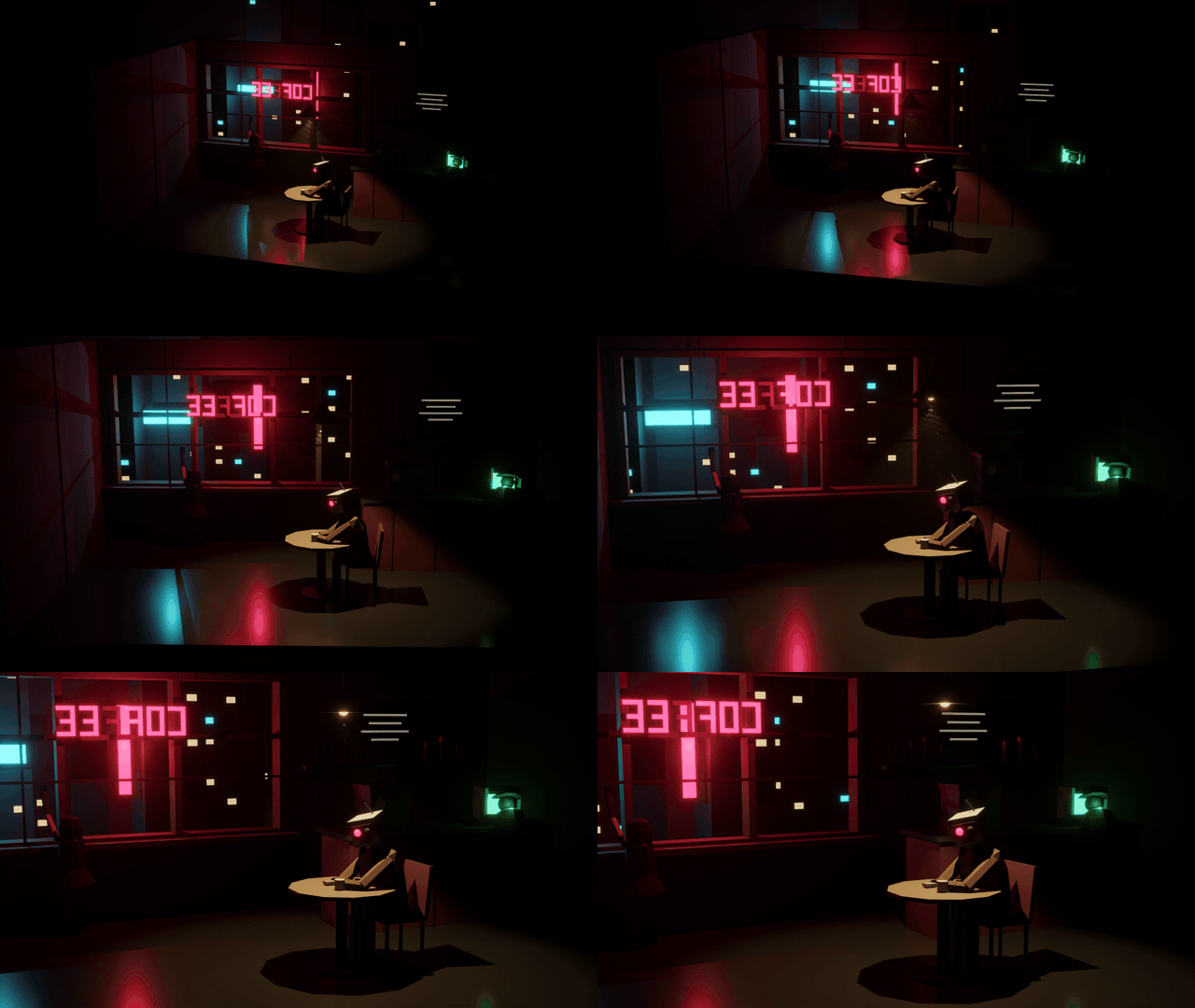
▶ Watch in 1080p with sound: a 10 s camera move, with the soundtrack synthesized
by chirp · source: last_cup.kx.js
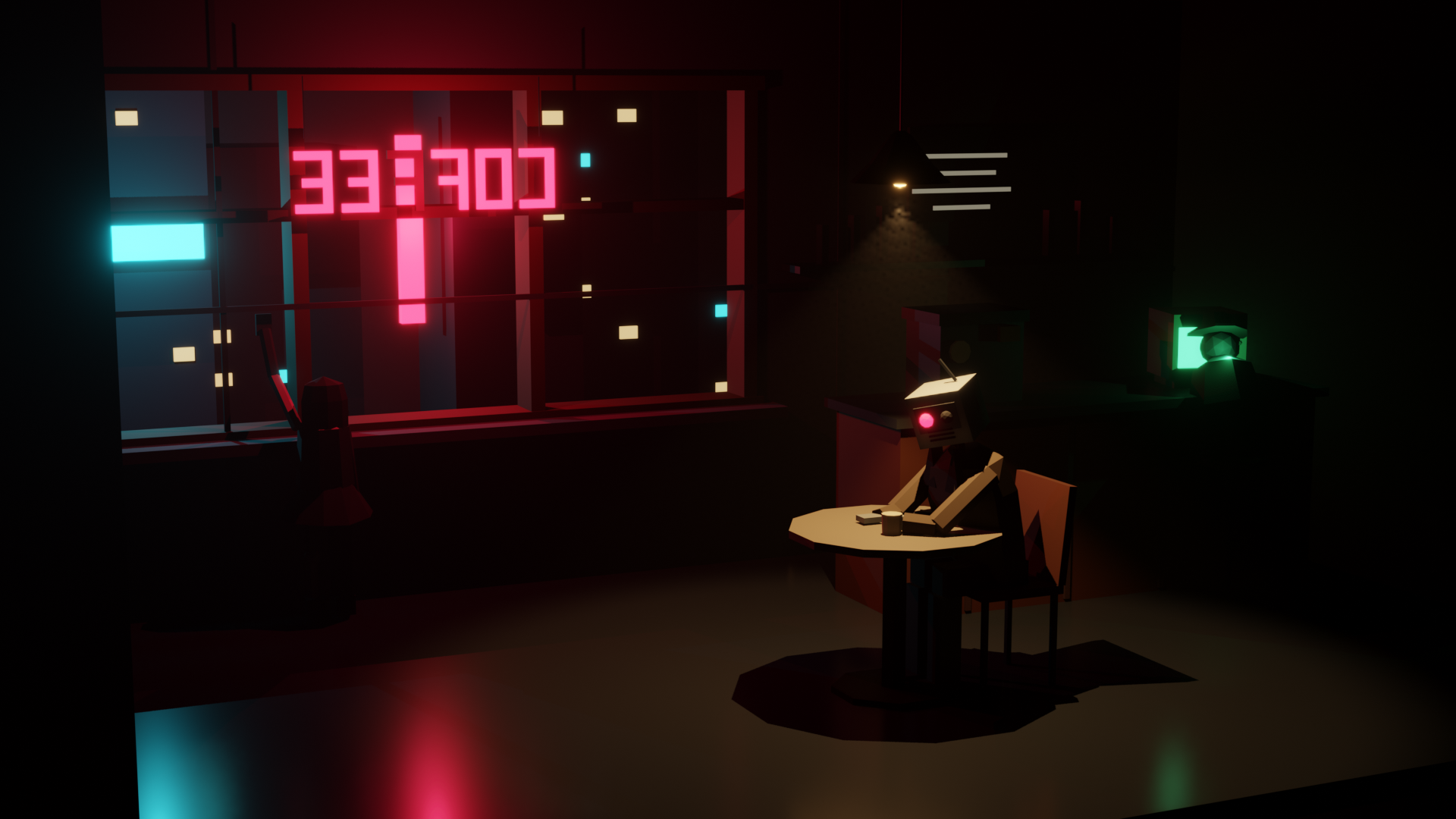
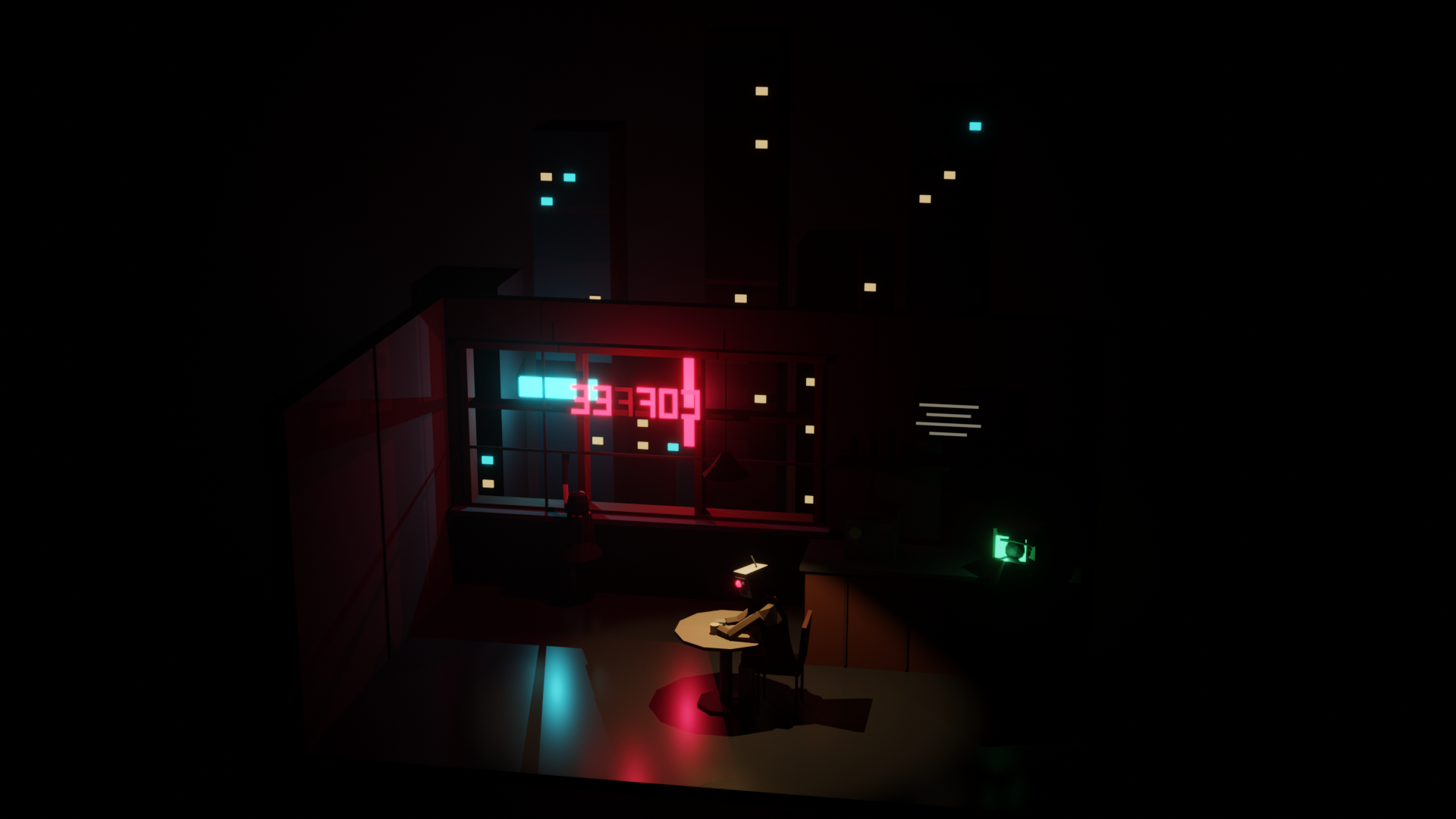
A broken robot alone at a table under the only warm lamp, one red eye still glowing. A woman with
a steel leg presses her hand to the window. COFFEE hangs backwards in the glass with a dead F, a
green CRT hums at the bar, brutalist towers stand outside, and neon bleeds across the wet floor.
It's lit only by the scene's own light() items: one spot, seven points, and emissive neon.
| close | wide |
|---|---|
 |
 |
The same scene exists as a 2D illustration in vex and as a soundscape in chirp: one world across three tools.
It moves
▶ LAST CUP, animated: 10 s with sound. The robot lifts the mug to his face and drinks, the dying F on the sign blinks, and the pendant lamp sways so its light pool drifts across the table, all while the camera pushes in. Parts are named nodes with pivots; clips export as glTF animations that Blender (and any engine) plays.
part("upper", { pivot: [0.2, 1.0, 0.14] }, limb(...),
  part("fore", { pivot: [0.22, 0.79, 0.42] }, limb(...),
    part("cup", { pivot: [0.12, 0.78, 0.55] }, stamp("_mug", { pos: [0.12, 0.755, 0.58] }))))
animate("last_cup", "sip", { frames: 240, fps: 24 }, {
  upper: { rot: [[48, [0, 0, 0]], [110, [0, 0, -60]], [160, [0, 0, -60]], [214, [0, 0, 0]]] },
  flicker: { scale: [[0, 1, "step"], [31, 0.001, "step"], [34, 1]] },
})
LAST CUP, isometric
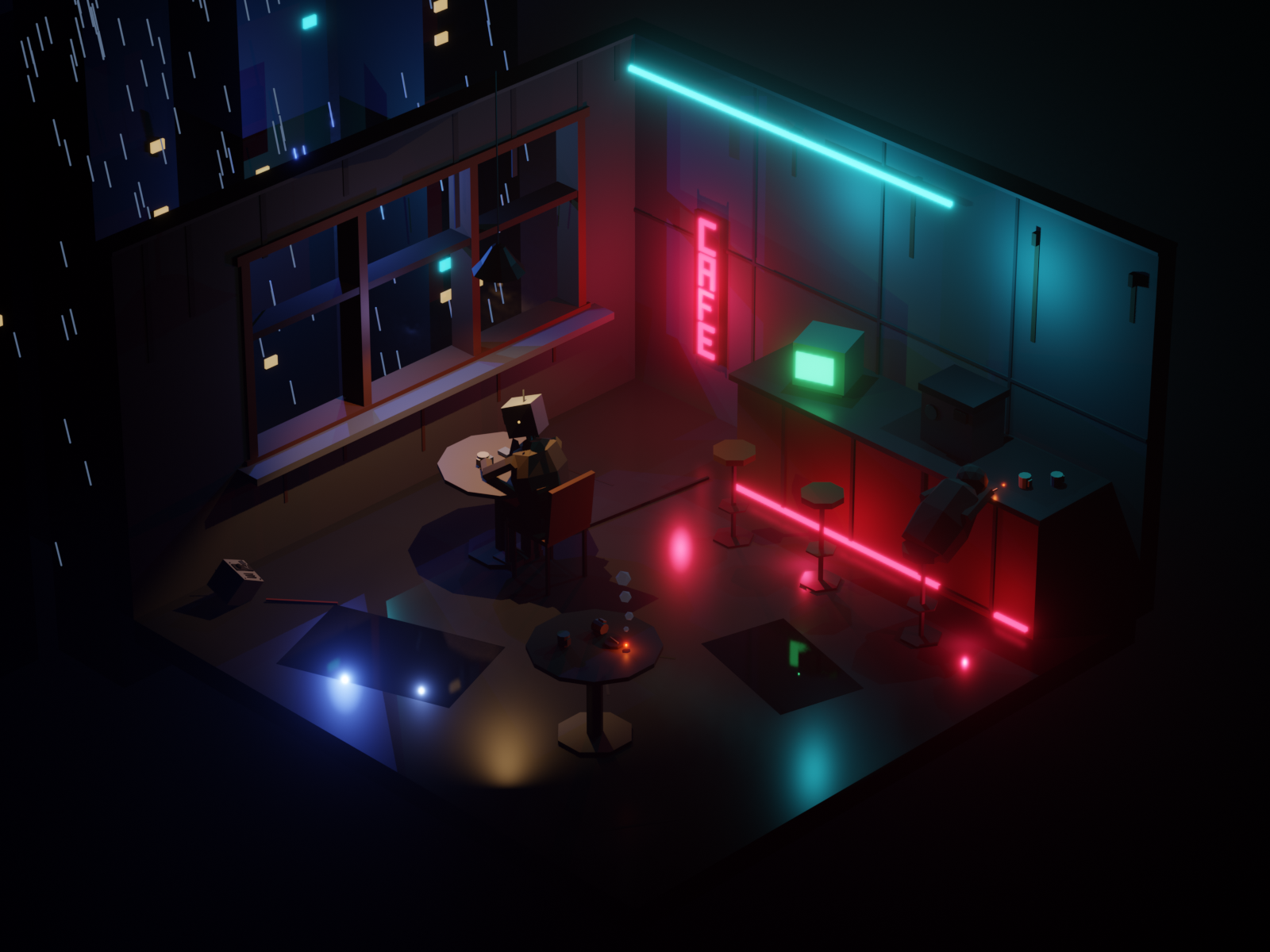
▶ 10 s with sound · source: last_cup_iso.kx.js
The pxl isometric pixel-art room rebuilt in 3D: a
cutaway cube seen from the front-right corner with a long lens (45° yaw, 30° pitch, true isometric).
The window is in the left wall with rain falling past it, and the counter, CRT and a vertical CAFE
sign are on the back wall. A hooded sleeper is slumped on the bar, another robot's dead head lies on the
floor, and the puddles hold the neon. The night clip plays rain, the dying F, smoke, the swaying bulb
and one slow sip; the soundtrack is chirp's last_cup_iso_3d mix, timed to the same frames.
kiln render showcase/last_cup_iso.kx.js last_cup_iso --mood night --fog 0.02 --yaw 45 --pitch 30 \
  --lens 135 --focus 0.1,1.3,0.1 --zoom 1.5 --no-ground --frames 240 --clip night --still-camera \
  --audio ../chirp/showcase/out/sfx/last_cup_iso_3d.wav
Forest Kit 3D: a game-ready asset pack
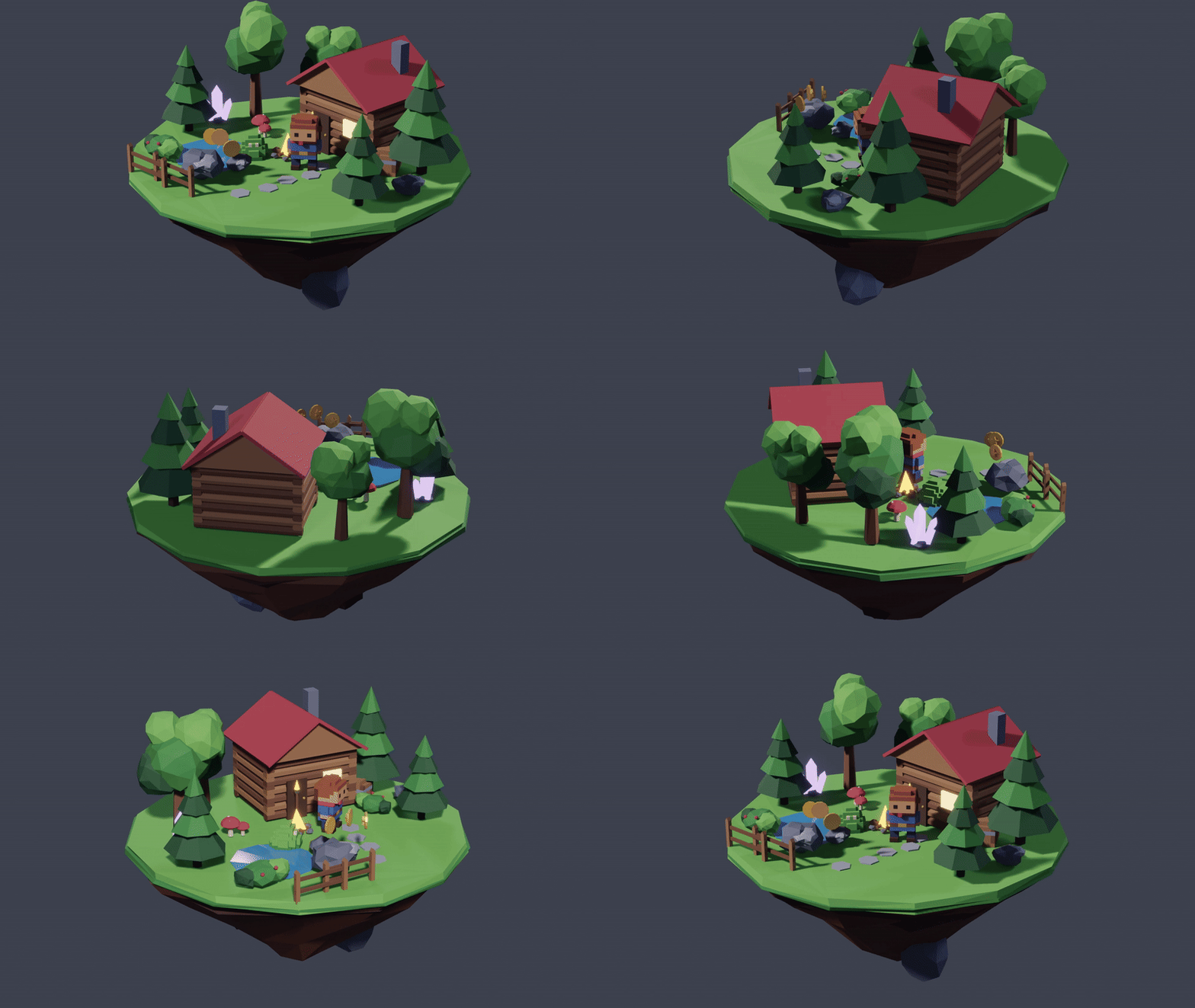
▶ 1080p turntable (MP4) · source: forest_kit.kx.js
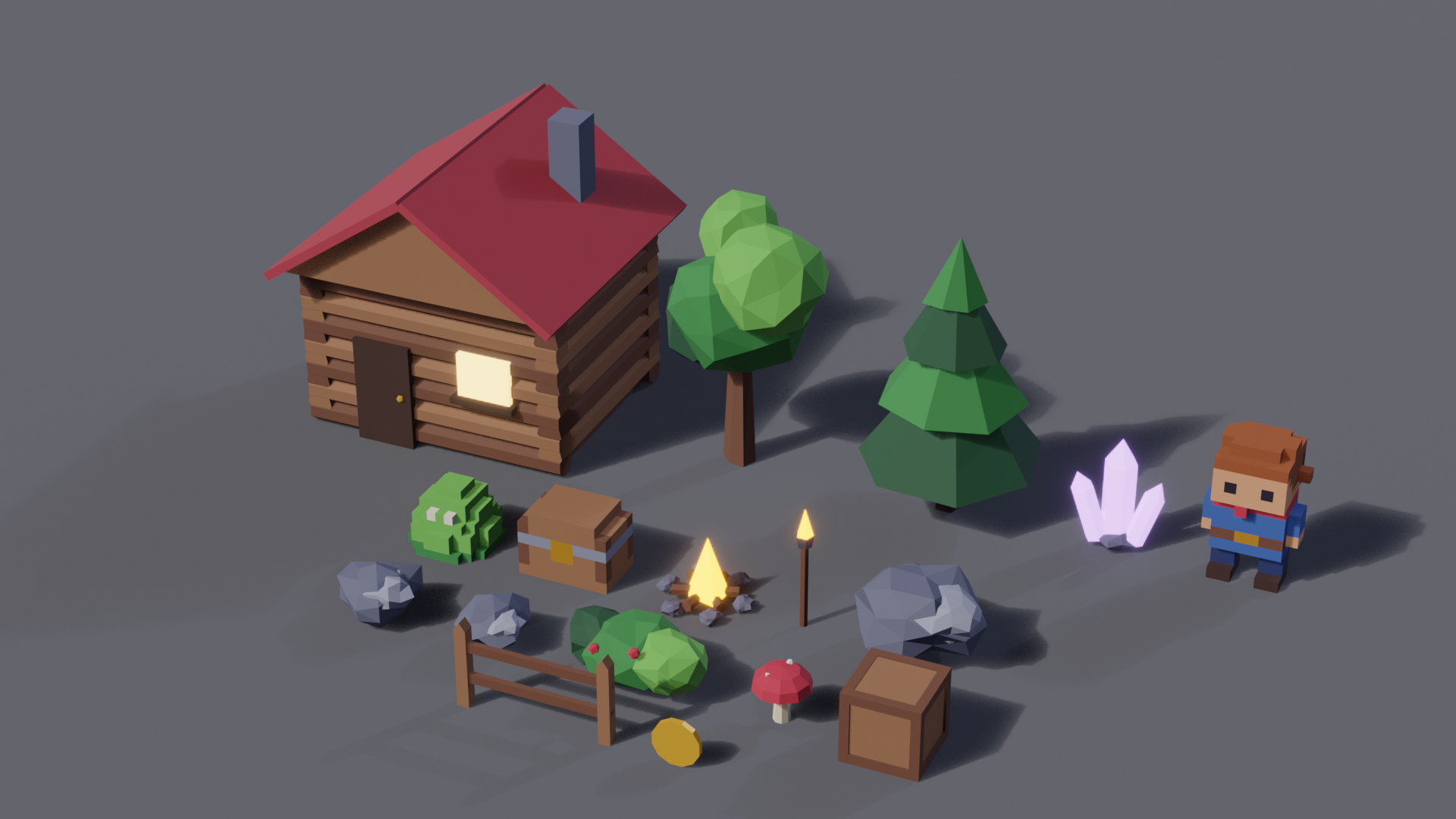
A voxel hero, slime and chest beside low-poly trees, pines, rocks, crystals, a campfire, a torch, a coin, a crate, a fence and a log cabin. It's one GLB with 17 named meshes and 3,858 triangles; the floating-island diorama is 5,514.
What the agent sees
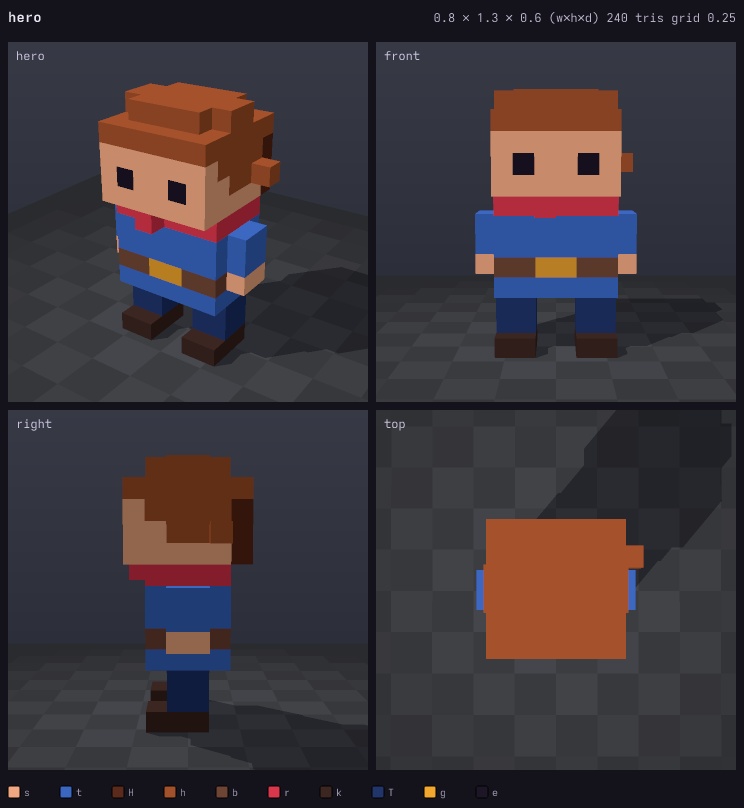
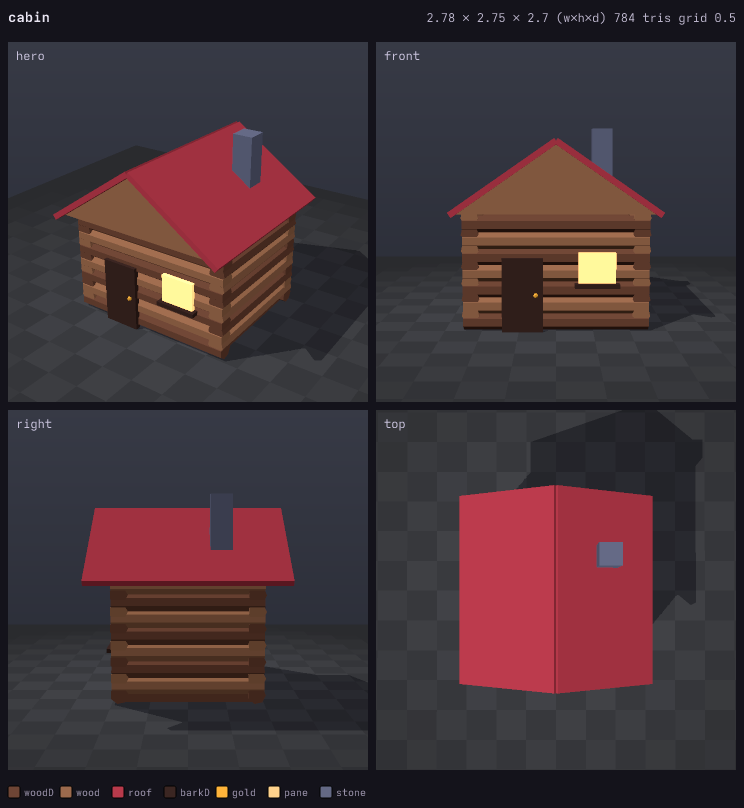
Every build writes a 4-view preview with dimensions, triangle count, grid scale and materials, drawn by kiln's own rasterizer (scenes with lights render at night). That's how the agent checks proportions and catches a roof rotated about the wrong axis, or a robot with no arms, before anyone looks.
| voxel hero | log cabin |
|---|---|
 |
 |
Examples
Every file in examples/ is built by npm run check. The images are kiln's own Blender renders
of those files, unedited.
Flat, smooth, subdivided: smooth.kx.js
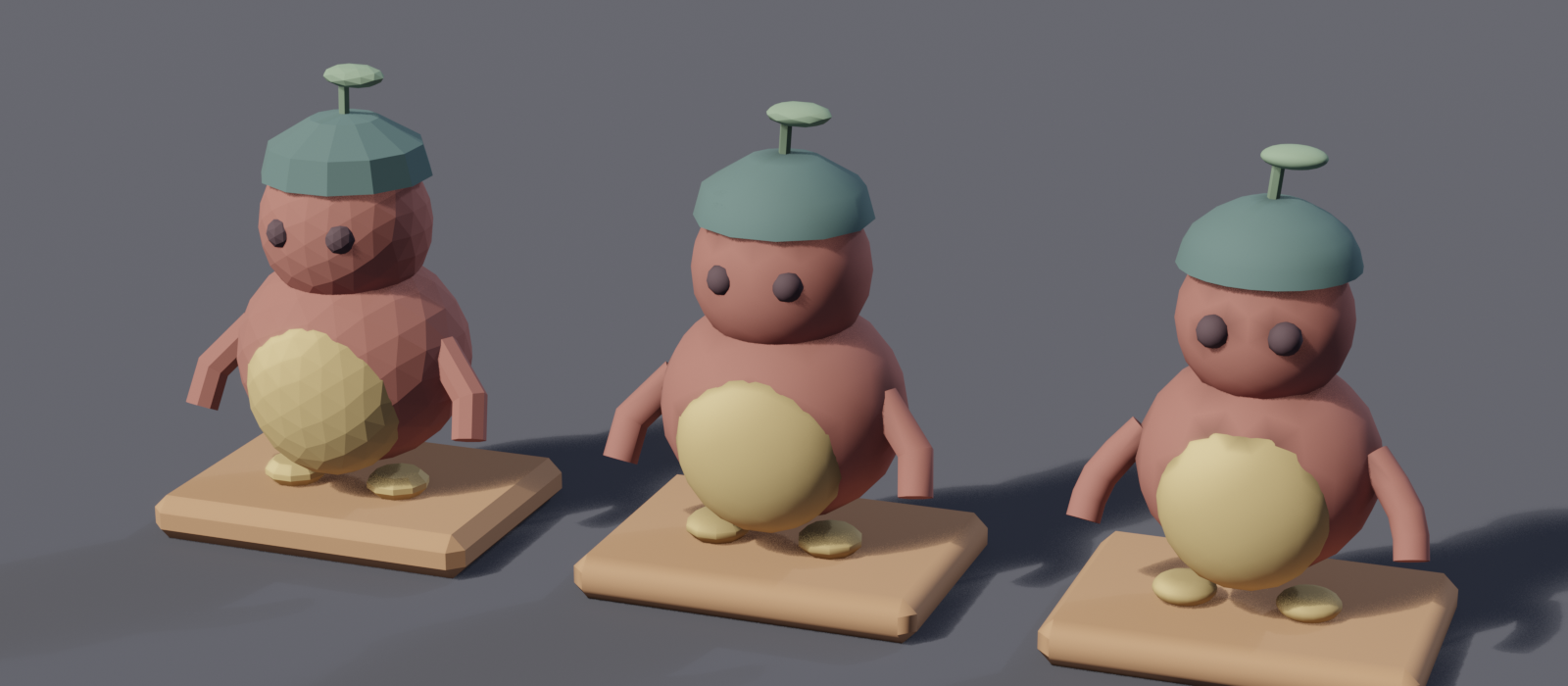
Left to right: the default flat look (1,584 triangles); the same triangles with smooth: 50 and ao: true;
and subdiv(1, ...) on the round parts (built from detail-1 spheres, 2,880 triangles).
const toy = ({ detail = 2, round = (x) => x } = {}) => [
  box(1.2, 0.16, 0.9, { mat: "wood", bevel: 0.05 }),
  round(sphere(0.42, { mat: "shell", detail, pos: [0, 0.62, 0], scale: [1, 0.92, 0.9] })),
  round(sphere(0.3, { mat: "shell", detail, pos: [0, 1.1, 0.02] })),
  // ... belly, cap, eyes, feet, arms
]
model("toy_flat", toy())
model("toy_smooth", { smooth: 50, ao: true }, toy())                     // shade across edges up to 50°, bake AO
model("toy_subdiv", { smooth: 50, ao: true }, toy({ detail: 1, round: (item) => subdiv(1, item) }))
smooth is a crease angle: edges flatter than it shade smooth, sharper ones stay crisp. subdiv rounds the
geometry itself, Loop for triangles and Catmull-Clark otherwise, and keeps sharp edges sharp: an unbevelled box
stays a box, a bevelled one becomes a soft block (--look studio render):
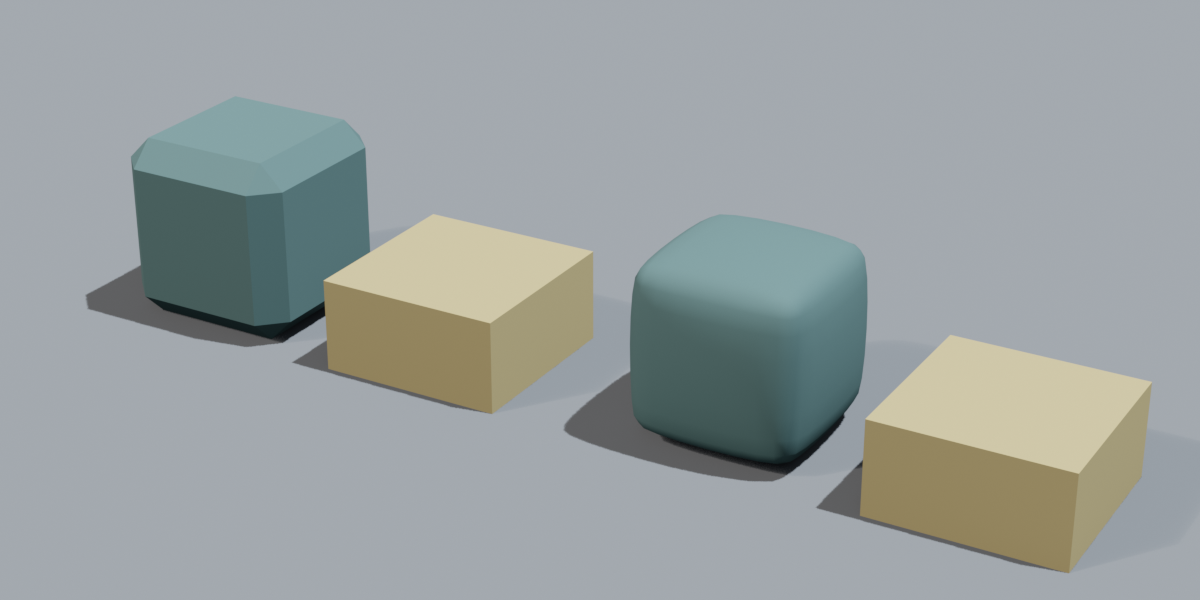
model("block_flat", box(0.6, 0.6, 0.6, { mat: "cap", bevel: 0.08 }), box(0.6, 0.3, 0.6, { mat: "belly", pos: [0.8, 0, 0] }))
model("block_subdiv", subdiv(2, box(0.6, 0.6, 0.6, { mat: "cap", bevel: 0.08 }), box(0.6, 0.3, 0.6, { mat: "belly", pos: [0.8, 0, 0] })))
Glass and cards: also in smooth.kx.js
Materials can be see-through (alpha) and double-sided (double):
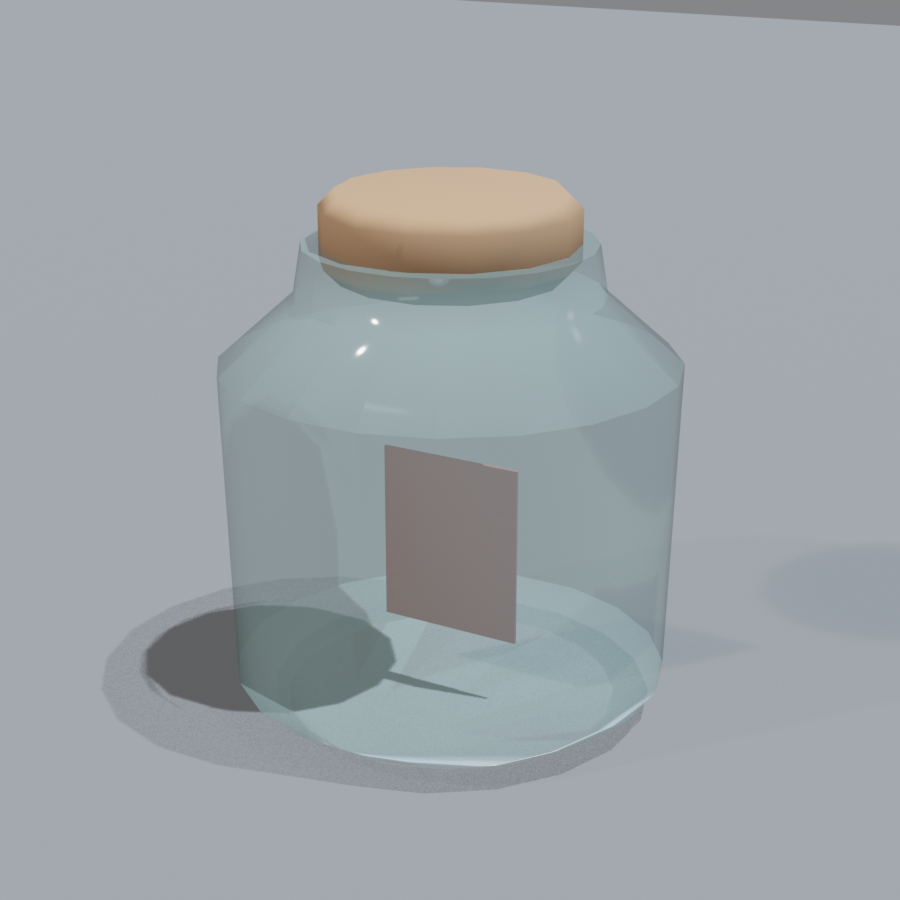
pal({ glass: { color: "#bfe3e0", alpha: 0.35, rough: 0.08, double: true }, sticker: { color: "#cb8175", double: true } })
model("jar", { smooth: 50, ao: true },
  lathe([0.2, 0, 0.26, 0.04, 0.27, 0.42, 0.18, 0.5, 0.17, 0.56], { mat: "glass", sides: 20 }),
  extrude([-0.09, 0, 0.09, 0, 0.09, 0.22, -0.09, 0.22], 0.004, { mat: "sticker", pos: [0, 0.08, 0] }),
  cyl(0.15, 0.1, { mat: "wood", sides: 14, bevel: 0.02, pos: [0, 0.52, 0] }))
Basics: basics.kx.js
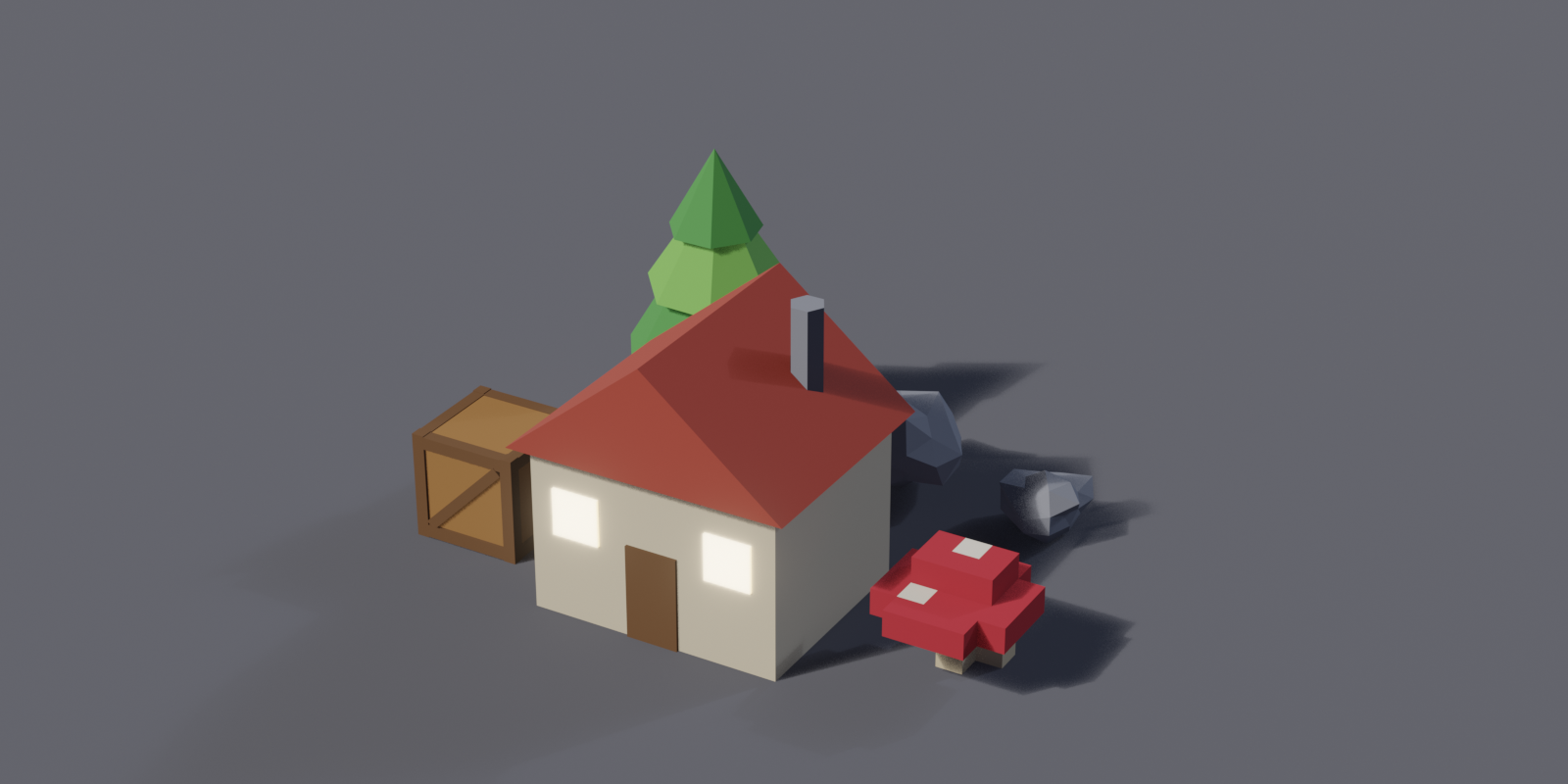
model("tree",
  cyl(0.18, 1.2, { mat: "bark", sides: 6, top: 0.12 }),
  cone(0.9, 1.4, { mat: "leaf", sides: 7, pos: [0, 0.9, 0], jitter: 0.06 }),
  cone(0.7, 1.1, { mat: "leafL", sides: 7, pos: [0, 1.6, 0], jitter: 0.05 }),
  cone(0.45, 0.8, { mat: "leaf", sides: 7, pos: [0, 2.2, 0] }))
model("house",
  box(2.4, 1.6, 2, "wall"),
  prism(2.7, 1.1, 2.3, { mat: "roof", pos: [0, 1.6, 0] }),
  box(0.5, 0.9, 0.06, { mat: "woodD", pos: [0, 0, 1.0] }),
  sym("x", box(0.45, 0.45, 0.06, { mat: "glass", pos: [0.75, 0.8, 1.0] })),
  cyl(0.16, 0.8, { mat: "stone", sides: 6, pos: [0.7, 2.0, -0.4] }))
pack("kit", ["tree", "rock*", "crate", "house", "mushroom"])
Animation: animated.kx.js
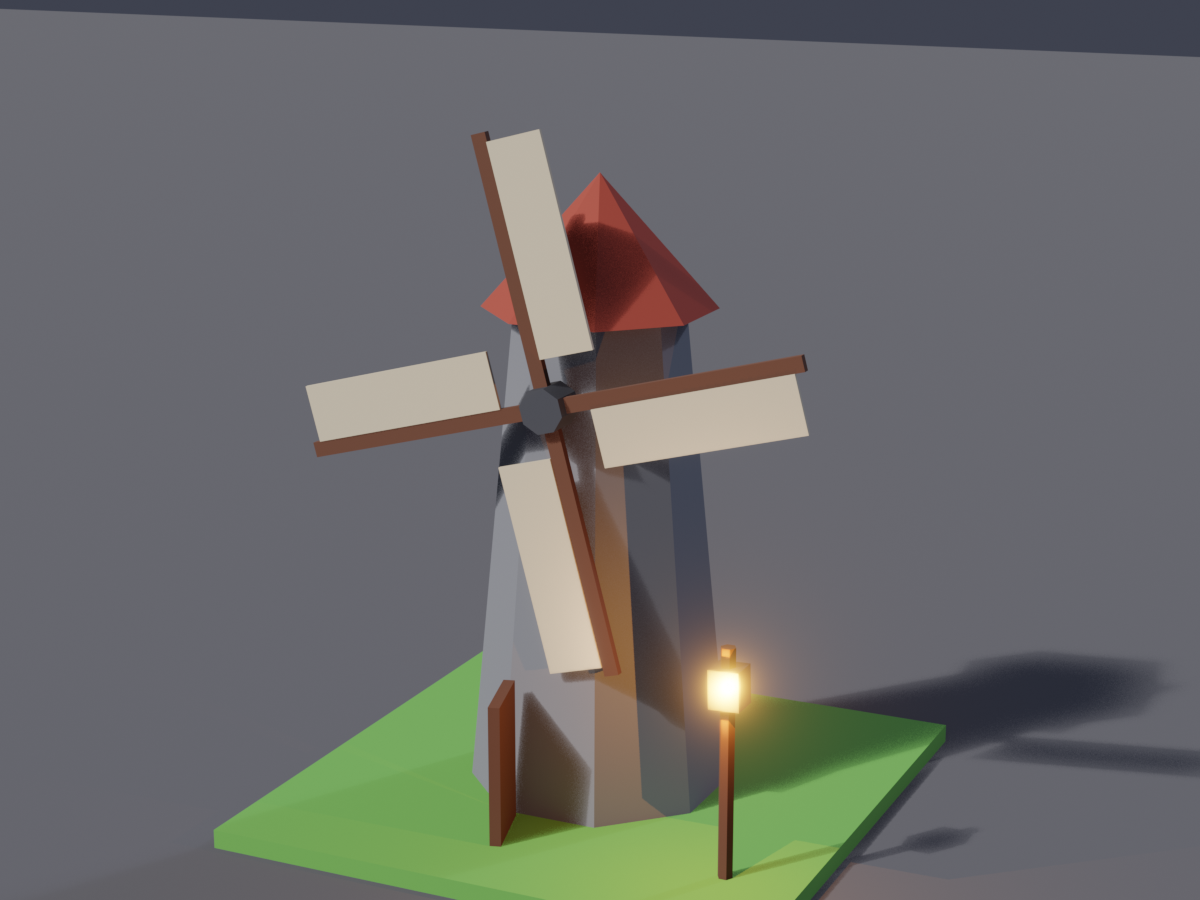
part("sails", { pivot: [0, 2.3, 0.6] }, /* hub and four sails */),
part("lantern", { pivot: [1.1, 1.3, 0.9] }, box(0.16, 0.2, 0.16, { mat: "iron", pos: [1.1, 1.0, 0.9] }),
  light({ color: "#ffa040", power: 30, pos: [1.1, 1.1, 1.05] })))
animate("windmill", "turn", { frames: 48, fps: 24 }, {
  sails: { rot: [[0, [0, 0, 0], "linear"], [48, [0, 0, -360]]] },
  door: { rot: [[0, [0, 0, 0]], [12, [0, -80, 0]], [36, [0, -80, 0]], [48, [0, 0, 0]]] },
})
kiln render examples/animated.kx.js windmill --clip turn --clip-frame 10 poses the clip at frame 10.
Quick start
git clone https://github.com/uilianks/kiln && cd kiln
npm install
node bin/kiln.js build examples/basics.kx.js          # -> examples/out/models/*.glb + previews
node bin/kiln.js serve showcase/last_cup.kx.js        # live viewer on http://127.0.0.1:4340
In the viewer, ✎ annotate (or a) freezes the camera so you can pin notes on the model and draw on
it, then send to Claude. Each pin is mapped onto the model's surface: the feedback says which material,
part and build step (with its source line) you pointed at, so "check the feedback" is enough.
pal({ bark: "#6e4535", leaf: "#3d8c48", leafL: "#74c45a", wood: "#9c6a4d", woodD: "#6e4535",
  bulb: { color: "#ffd28c", emit: "#ffc070", glow: 10 }, t: "#3b67c0" })

model("pine",
  cyl(0.12, 0.7, { mat: "bark", sides: 5 }),
  [[0.8, 0.5, 1.1], [0.6, 1.05, 0.95], [0.4, 1.55, 0.8]].map(([r, y, h], i) =>
    cone(r, h, { mat: i % 2 ? "leaf" : "leafL", sides: 7, pos: [0, y, 0], jitter: 0.035 })))

model("crate", box(0.6, 0.6, 0.6, "wood"),
  sym("x", sym("z", box(0.08, 0.62, 0.08, { mat: "woodD", pos: [0.28, -0.01, 0.28] }))))

model("lamp", sphere(0.05, { mat: "bulb" }),
  light({ type: "spot", color: "#ffbe78", power: 200, pos: [0, -0.1, 0], dir: [0, -1, 0], angle: 50 }))

model("gem", voxels([`.t.\nttt\n.t.`, `.t.`], { size: 0.1 }))

model("grove", scatter("pine", { area: [-3, -3, 3, 3], count: 6, scale: [0.7, 1.1] }), stamp("crate"))
pack("kit", ["pine", "crate", "gem"])
Renders and videos (Blender)
kiln render scene.kx.js island --size 1920x1080 --no-ground                     # beauty still
kiln render scene.kx.js island --frames 180                                     # turntable MP4
kiln render scene.kx.js last_cup --mood night --focus 0.1,2.65,2.1 --zoom 1.3 \
  --frames 300 --yaw 18 --yaw-to -28 --zoom-to 3 --audio soundtrack.wav         # camera move + sound
Features
- Low-poly primitives: box, cylinder (tapering), cone, icosphere, rock, lathe, extrude (any outline, concave ok), gable prism, wedge, plus vertex jitter for a hand-made look.
- Voxels: text layers like pixel art, a function of (x, y, z), or
voximg(): a pixel-art PNG extruded into voxels with one material per color; greedy-meshed. - Tubes and terrain:
torus,tubealong a path (pipes, cables, branches; mitered, twist-free) andterrainheightfields from a function or a loom height map, with materials picked per triangle by height and slope.--stlexports for 3D printing. - Structure: transforms, mirror symmetry, stamps, scatter, random groups, material-swap variants.
- Animation: named
part()s with pivots and keyframedanimate()clips (rotation, offset, scale, five easings), exported as glTF animations, previewed as frame strips, played in Blender renders. - Lights: point and spot
light()items that move with the model through stamps, mirrors and scatter. They export asKHR_lights_punctual. - Smooth stylised look (opt-in):
smoothcrease-angle shading (welded, indexed GLB primitives),subdiv(Loop / Catmull-Clark keeping sharp edges), and ambient occlusion baked into vertex colours (ao,COLOR_0). The default stays flat, and files that do not use them build byte-identical GLBs. - Game-ready GLB: flat or smooth normals, PBR materials (blended
alpha,double-sided), emissive strength, one primitive per material, named nodes, lights; packs for asset libraries. Models are re-centered with their base on y = 0. - Agent eyes: a built-in rasterizer with shadows, a ground grid and night lighting: 4-view
previews,
kiln info, turntable GIFs. - Live viewer: drag to orbit, replay the build step by step, download the GLB, rebuild on save.
- Blender renders: headless EEVEE with AgX and bloom. Day or night mood (moonlight, volumetric
haze), a
--look studiolook-dev mode (studio HDRI, contact AO), a--preset gamefixed-angle game camera, focus, zoom and lens; turntables and eased camera moves to MP4 with an optional soundtrack.
Tested
Every primitive's signed volume equals the exact solid, so all faces point outward. Mirrors, jitter and voxels stay closed. The GLB structure, materials and lights are checked byte by byte. Subdivision keeps an unbevelled box exactly a box and a subdivided sphere inside its cage; smooth normals of a sphere point radially; baked AO is darker in a corner than in the open; and every example builds. Every showcase GLB imports and renders in Blender 5.2, and renders fail loudly if the output file never appears (for example, a sandboxed Blender writing outside your home directory).
Agent workflow: SKILL.md · Full API: reference.md
Use as a Claude Code skill
git clone https://github.com/uilianks/kiln ~/.claude/skills/kiln-3d-assets
cd ~/.claude/skills/kiln-3d-assets && npm install
Requires Node ≥ 22.18. Blender (optional, for render, found via $KILN_BLENDER, blender on
PATH, or the org.blender.Blender flatpak) and ffmpeg (optional, for GIF/MP4).
npm run check typechecks and runs the tests.
License
MIT. Portions adapted from claude-pxl (MIT, © crsolver), via vex.
Support
If this tool helps you, you can support its development on Ko-fi.
Ähnliche Projekte entdecken
ytdl-org/youtube-dl
Kommandozeilenprogramm zum Herunterladen von Videos von YouTube.com und anderen Videoseiten
141,539 Sterneexcalidraw/excalidraw
Virtuelles Whiteboard zum Skizzieren von Diagrammen im handgezeichneten Stil
135,492 Sternegodotengine/godot
Godot Engine – Plattformübergreifende 2D- und 3D-Spiele-Engine
120,003 Sternemrdoob/three.js
JavaScript-3D-Bibliothek.
118,228 Sterne