Projekte Auf GitHub ansehen
taki0112/SENet-Tensorflow
taki0112/SENet-Tensorflow has 754 GitHub stars and 264 forks. GitHot measured 0 stars in 24 hours. Last checked 2026-11-20 03:12 UTC. Last push 2018-08-14.
Gemessener Sternzuwachs
- in 24h
- 0
- in 7 days
- Verlauf wird gesammelt
- in 15 days
- Verlauf wird gesammelt
- in 1 month
- Verlauf wird gesammelt
Nettoänderungen in überlappenden Zeiträumen, keine Tagessummen. Fehlende Messwerte bleiben leer. Sterne zeigen Interesse, nicht Qualität.
Über uns
Simple Tensorflow implementation of "Squeeze and Excitation Networks" using Cifar10 (ResNeXt, Inception-v4, Inception-resnet-v2)
Maschinelles LernenREADME.md
OriginalSENet-Tensorflow
Simple Tensorflow implementation of Squeeze Excitation Networks using Cifar10
I implemented the following SENet
If you want to see the original author's code, please refer to this link
Requirements
- Tensorflow 1.x
- Python 3.x
- tflearn (If you are easy to use global average pooling, you should install tflearn)
Issue
Image_size
- In paper, experimented with ImageNet
- However, due to image size issues in Inception network, so I used zero padding for the Cifar10
input_x = tf.pad(input_x, [[0, 0], [32, 32], [32, 32], [0, 0]]) # size 32x32 -> 96x96
NOT ENOUGH GPU Memory
- If not enough GPU memory, Please edit the code
with tf.Session() as sess : NO
with tf.Session(config=tf.ConfigProto(allow_soft_placement=True)) as sess : OK
Idea
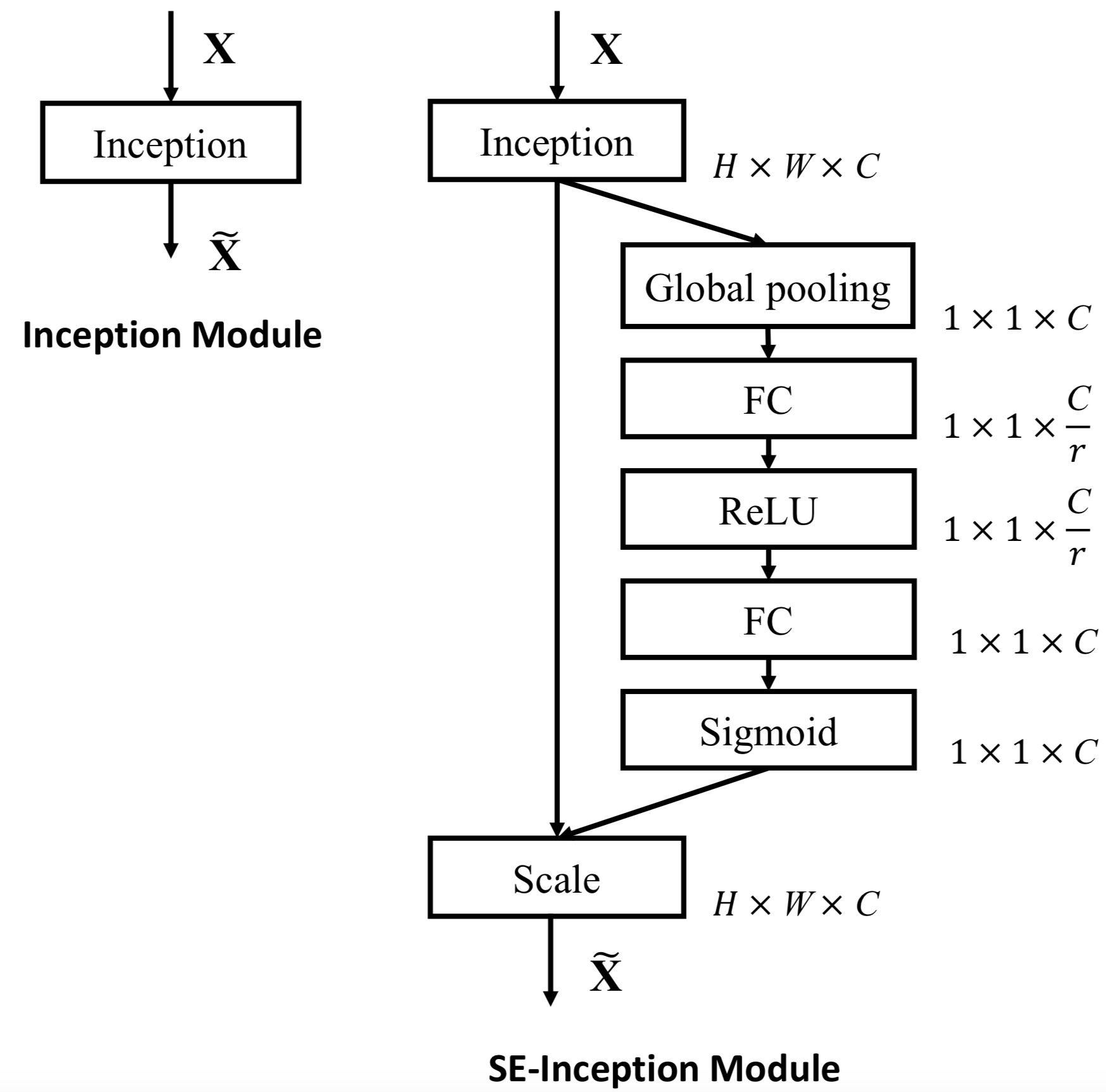
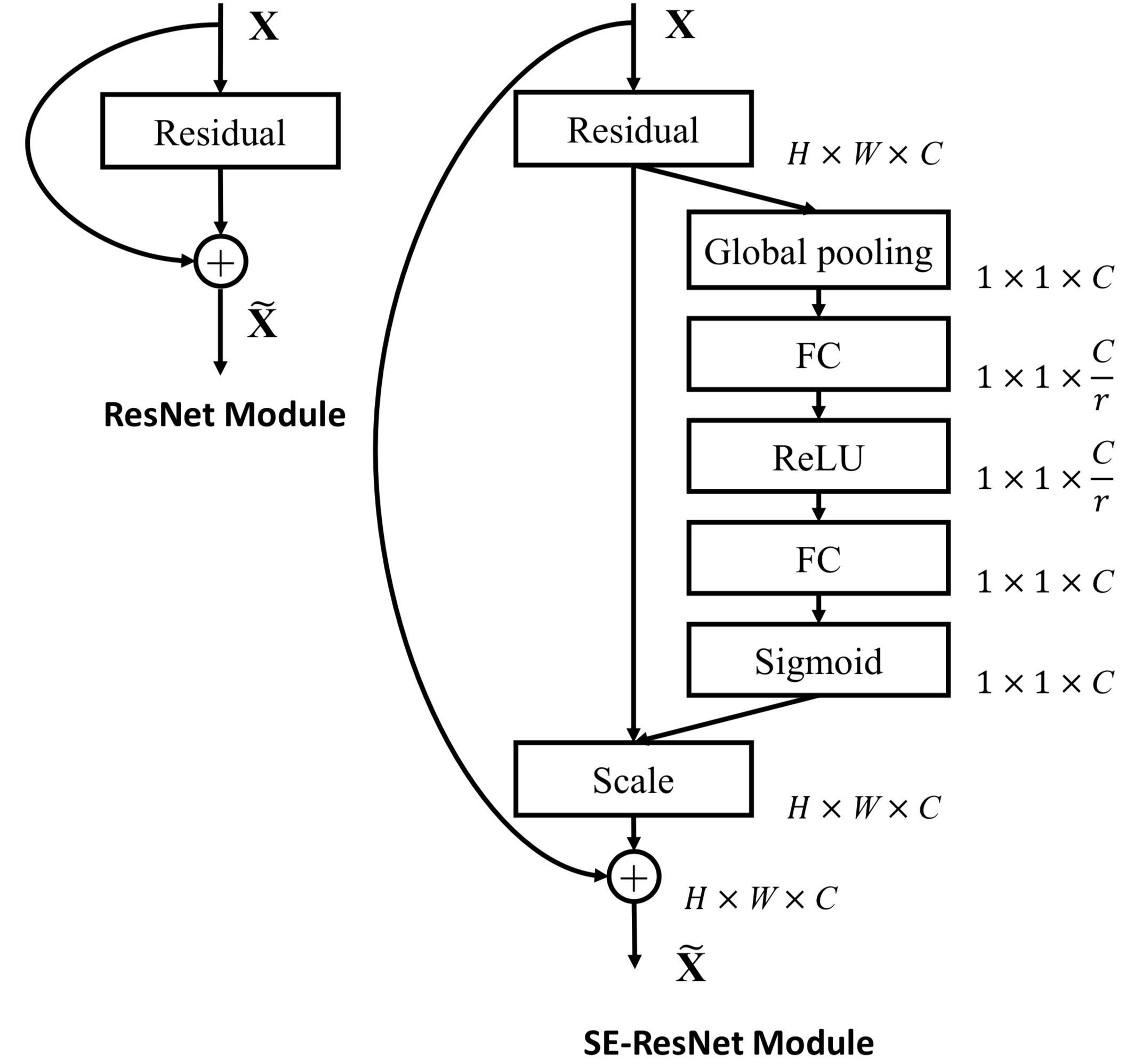
What is the "SE block" ?

def Squeeze_excitation_layer(self, input_x, out_dim, ratio, layer_name):
    with tf.name_scope(layer_name) :
        squeeze = Global_Average_Pooling(input_x)

        excitation = Fully_connected(squeeze, units=out_dim / ratio, layer_name=layer_name+'_fully_connected1')
        excitation = Relu(excitation)
        excitation = Fully_connected(excitation, units=out_dim, layer_name=layer_name+'_fully_connected2')
        excitation = Sigmoid(excitation)

        excitation = tf.reshape(excitation, [-1,1,1,out_dim])

        scale = input_x * excitation

        return scale
How apply ? (Inception, Residual)
How "Reduction ratio" should I set?

- original refers to ResNet-50
ImageNet Results
Benefits against Network Depth

Incorporation with Modern Architecture

Comparison with State-of-the-art

Cifar10 Results
Will be soon
Related works
Reference
Author
Junho Kim