
MechanicalRabbit/FunSQL.jl
MechanicalRabbit/FunSQL.jl has 173 GitHub stars and 11 forks. Star changes are not measured yet. Last checked 2026-11-10 04:24 UTC. Last push 2026-11-01.
So werden diese Zahlen gemessen
Julia library for compositional construction of SQL queries
Gemessener Sternzuwachs
- in 24h
- Aktualisierung verzögert
- in 7 days
- Aktualisierung verzögert
- in 15 days
- Aktualisierung verzögert
- in 1 month
- Aktualisierung verzögert
Nettoänderungen in überlappenden Zeiträumen, keine Tagessummen. Fehlende Messwerte bleiben leer. Sterne zeigen Interesse, nicht Qualität.
README.md
OriginalFunSQL.jl
FunSQL is a Julia library for compositional construction of SQL queries.


Overview
Julia programmers sometimes need to interrogate data with the Structured Query Language (SQL). But SQL is notoriously hard to write in a modular fashion.
FunSQL exposes full expressive power of SQL with a compositional semantics. FunSQL allows you to build queries incrementally from small independent fragments. This approach is particularly useful for building applications that programmatically construct SQL queries.
If you want to learn more about FunSQL, read about Two Kinds of SQL Query Builders, watch presentations at OHDSI DevCon 2023 (slides) and JuliaCon 2021 (slides), explore the Examples, or go straight to the Usage Guide.
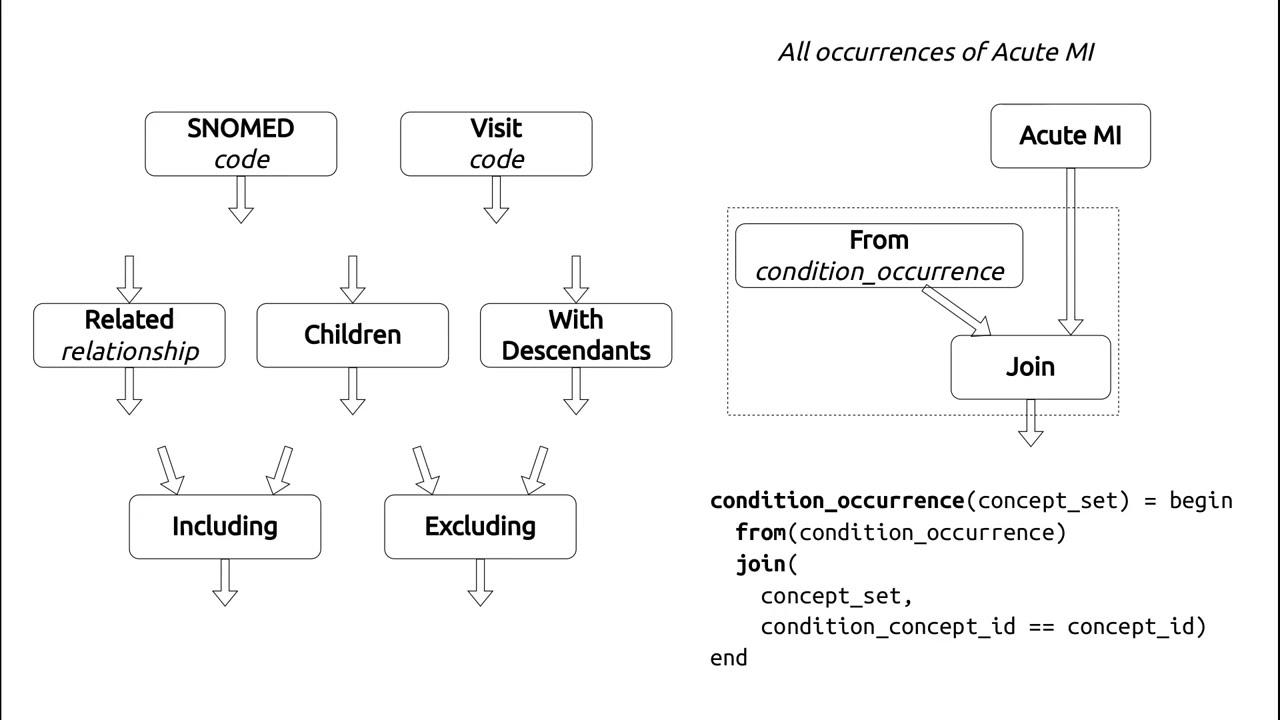

Example
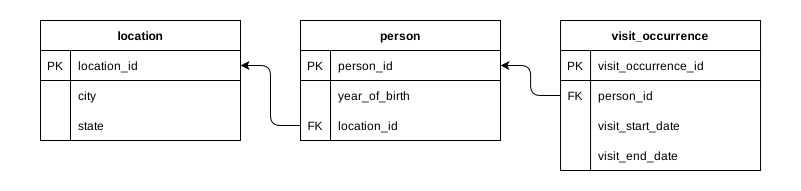
When was the last time each person born between 1930 and 1940 and living in Illinois was seen by a healthcare provider?
Database Schema
Pipeline Diagram

Julia Code
@funsql begin
    from(person)
    filter(1930 <= year_of_birth <= 1940)
    join(
        from(location).filter(state == "IL").as(location),
        on = location_id == location.location_id)
    left_join(
        from(visit_occurrence).group(person_id).as(visit_group),
        on = person_id == visit_group.person_id)
    select(
        person_id,
        latest_visit_date => visit_group.max(visit_start_date))
end
Generated SQL
SELECT
  "person_2"."person_id",
  "visit_group_1"."max" AS "latest_visit_date"
FROM (
  SELECT
    "person_1"."person_id",
    "person_1"."location_id"
  FROM "person" AS "person_1"
  WHERE
    (1930 <= "person_1"."year_of_birth") AND
    ("person_1"."year_of_birth" <= 1940)
) AS "person_2"
JOIN (
  SELECT "location_1"."location_id"
  FROM "location" AS "location_1"
  WHERE ("location_1"."state" = 'IL')
) AS "location_2" ON ("person_2"."location_id" = "location_2"."location_id")
LEFT JOIN (
  SELECT
    max("visit_occurrence_1"."visit_start_date") AS "max",
    "visit_occurrence_1"."person_id"
  FROM "visit_occurrence" AS "visit_occurrence_1"
  GROUP BY "visit_occurrence_1"."person_id"
) AS "visit_group_1" ON ("person_2"."person_id" = "visit_group_1"."person_id")
Ähnliche Projekte entdecken
Asabeneh/30-Days-Of-Python
Die Programmier-Challenge 30 Days of Python ist eine Schritt-für-Schritt-Anleitung, um die Programmiersprache Python in 30 Tagen zu lernen. Diese Challenge kann mehr als 100 Tage dauern. Gehe in deinem eigenen Tempo vor. Diese Videos können ebenfalls helfen: https://www.youtube.com/channel/UC7PNRuno1rzYPb1xLa4yktw
78,560 Sternegrafana/grafana
Offene und kombinierbare Plattform für Observability und Datenvisualisierung. Visualisiert Metriken, Logs und Traces aus mehreren Quellen wie Prometheus, Loki, Elasticsearch, InfluxDB, Postgres und vielen weiteren.
77,830 Sterneredis/redis
Für Entwickler, die echtzeitfähige, datengesteuerte Anwendungen erstellen, ist Redis der bevorzugte, schnellste und funktionsreichste Cache, Datenstrukturserver und die entsprechende Abfrageengine für Dokumente und Vektoren.
77,395 Sterneapache/superset
Apache Superset ist eine Plattform für Datenvisualisierung und Datenexploration.
75,473 Sterne